 Skip to content
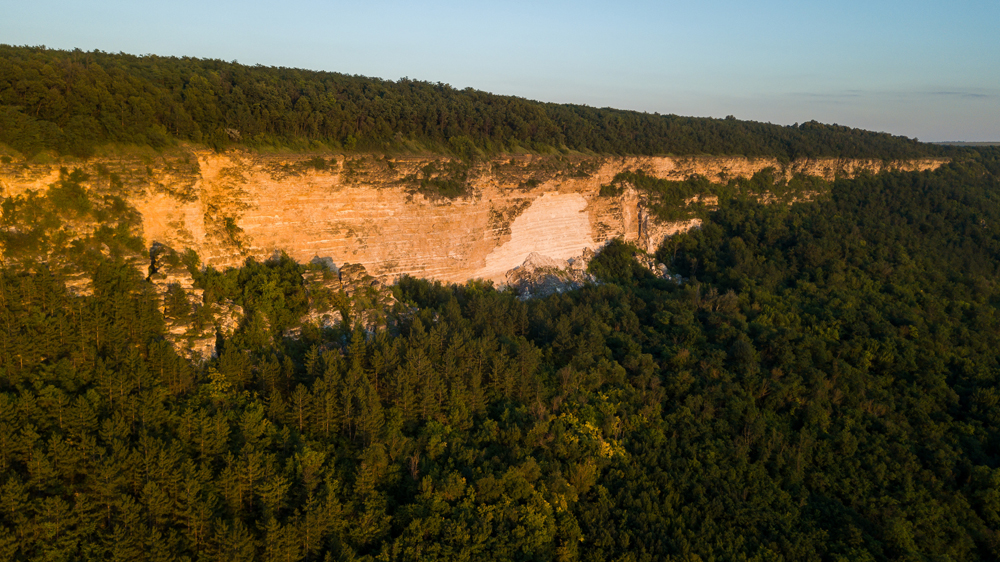
Weekend tour “Kamenka – Rashkov – Valya-Adynka – Podoyma”
Kamenka District Weekend Tour
Escape to the most historically rich and scenically dramatic corner of Pridnestrovie on this perfectly organized three-day self-drive weekend tour — a 100 km journey through the Kamenka district that takes in ancient churches, a legendary outlaw’s grotto, Stalin’s Line fortifications, an aristocratic park and one of the most charming riverside estates in the republic.
The route visits the Holy Trinity Church, the Church of St. Cajetan, the ruins of the Synagogue and Intercession Church, the house-museum of Fyodor Zharchinsky, the Grotto of Karmaliuk, the Church of St. Paraskeva of the Balkans, the Historical and Cultural Complex “Stalin’s Line” in Podoyma, the estate “At Dim Dimych” and the park and crypt of the Wittgenstein family.
Excursions at each site can be arranged on request.
Day 1 — Arrival in Kamenka: The Northern Capital Welcomes You
17:00 — Depart Tiraspol and head north through the Pridnestrovian countryside toward Kamenka.
19:30 — Arrive in Kamenka and check into your accommodation at the Emperia Recreation Center (1b Dniester Str., Kamenka):
🏨 Tourist Complex “Sport-Cruise”
🏨 Hotel-Restaurant Complex “Coliseum”
20:00 — Dinner at the Restaurant “Imperia” or at the Hotel-Restaurant Complex “Coliseum” — a warm and comfortable introduction to the cuisine of the northern district after the journey from Tiraspol.
Day 2 — Rashkov and Valya-Adynka: Ancient Churches, Rocks and an Outlaw’s Grotto
09:00 — Breakfast at Restaurant “Imperia” or “Coliseum”
10:00 — Departure for the village of Rashkov — one of the oldest settlements in Pridnestrovie, with a history stretching back to 1402 and a remarkable concentration of historical and cultural landmarks within walking distance of each other.
The Rashkov walking tour visits six extraordinary sites:
The Church of the Holy Trinity (Rashkov village, Kamenka district) — one of the oldest churches in Pridnestrovie, housing the venerated icon of the Spas Nerukotvornyi, to which the faithful have attributed miraculous powers for generations.
Just 530 meters away, the St. Cajetan Catholic Church (Rashkov village, Kamenka district) stands as a rare testament to Rashkov’s multicultural past — a Catholic church that once served the Polish community of this ancient village.
After 420 meters, the haunting Ruins of the Synagogue (Bazarnaya Str., Rashkov village) bear silent witness to the once-thriving Jewish community that shaped this village’s identity across centuries.
Just 31 meters further, Panska Krynitsa (Rashkov village) — a legendary natural spring steeped in local folklore — offers fresh water and a moment of reflection before continuing.
After 650 meters, Chervona (Red) Rock (Rashkov village) rises dramatically above the village — one of the most striking natural landmarks in the Kamenka district, its rust-red face visible from a considerable distance.
Just 62 meters away, the atmospheric Ruins of the Intercession Church (Pokrovskaya Str., Rashkov village) bring the Rashkov tour to a contemplative close — a hauntingly beautiful remnant of a once-active parish that closed with the turbulence of the 20th century.
After 1.5 km, the Museum of Hero of the Soviet Union F.I. Zharchinsky (35 Fiodora Zharchinskogo Str., Rashkov village) honors one of Rashkov’s most celebrated sons — a deeply personal museum that connects this ancient village to the defining struggles of the Great Patriotic War.
13:00 — Lunch at the Restaurant “Dubrava” (2 Sovetskaya Str., Belochi village, Rybnitsa district) — a welcoming restaurant in the nearby village of Belochi, perfectly positioned between the Rashkov and Valya-Adynka sections of the day.
14:00 — Departure for Valya-Adynka village (Kamenka district) — 15 km from Rashkov — for two of the most distinctive stops on the entire weekend.
The Grotto of Ustym Karmaliuk (Valya-Adynka village, Kamenka district) is a legendary natural cave associated with the celebrated Ukrainian folk hero and outlaw Ustym Karmaliuk, who operated in these borderlands during the early 19th century. His story — a peasant rebel who defied imperial authority and became a symbol of resistance — gives this atmospheric grotto a romantic and subversive energy that is entirely its own.
Just 4.4 km away, the Church of Saint Paraskeva of the Balkans (37 Zarechnaya Str., Valya-Adynka village, Kamenka district) brings the day’s adventure to a spiritual close — a church dedicated to the beloved healer saint of the Orthodox Balkans whose veneration spread northward along the very routes of imperial expansion.
18:00 — Dinner at Restaurant “Imperia” or “Coliseum”
Overnight at Tourist Complex “Sport-Cruise” or Hotel-Restaurant Complex “Coliseum”
Day 3 — Kamenka, Podoyma and Dim Dimych: Parks, Fortifications and a Riverside Picnic
09:00 — Breakfast at Restaurant “Imperia” or “Coliseum”
10:00 — Sightseeing tour of Kamenka city, centered on two of the district’s most atmospheric aristocratic landmarks.
The magnificent Park of Peter Wittgenstein (Lenin Str., Kamenka) — laid out at the estate of Russian Field Marshal Prince P.Kh. Wittgenstein at the beginning of the 19th century — is one of the finest examples of imperial landscape design in Pridnestrovie. Walking its tree-lined paths, with the Dniester visible through the foliage, one feels directly the aesthetic vision of a man who fell in love with this corner of the world and shaped it according to his considerable means and taste.
Just 1.8 km away, the deeply moving Crypt of the Wittgenstein Family (Kamenka) brings the park visit to its most intimate conclusion — the final resting place of the Field Marshal and his dynasty, a family tomb that stands as the most personal monument to the imperial connection between Russia and this northern stretch of the Dniester.
13:00 — Lunch at Restaurant “Imperia” or “Coliseum”
14:00 — Departure 12 km south to the village of Podoyma and the extraordinary Historical and Cultural Complex “Stalin’s Line” (Podoyma village, Kamenka district) — one of the most impressive and immersive military heritage sites in all of Pridnestrovie. This carefully preserved complex of Soviet-era fortifications, weapons and historical exhibits offers an unparalleled encounter with the defensive infrastructure of the Stalin Line — the system of border fortifications that shaped the opening battles of the Great Patriotic War on this frontier.
15:00 — Just 2.5 km away, the charming Homestead “U Dim Dimych” — Dmitry’s Place (13a Lenina Str., Podoyma village, Kamenka district) provides the perfect finale to three days of historical discovery. Pre-book a bungalow on the banks of the Dniester and organize a riverside picnic with meat and vegetables on the grill — the river flowing past, the afternoon sun on the water and the relaxed warmth of this welcoming estate creating a close to the weekend that is as restorative as it is memorable.
18:00 — Departure back to Tiraspol, carrying three days of northern Pridnestrovie in memory and — if Dim Dimych’s grill did its job — the satisfying warmth of a perfect riverside meal in the stomach.
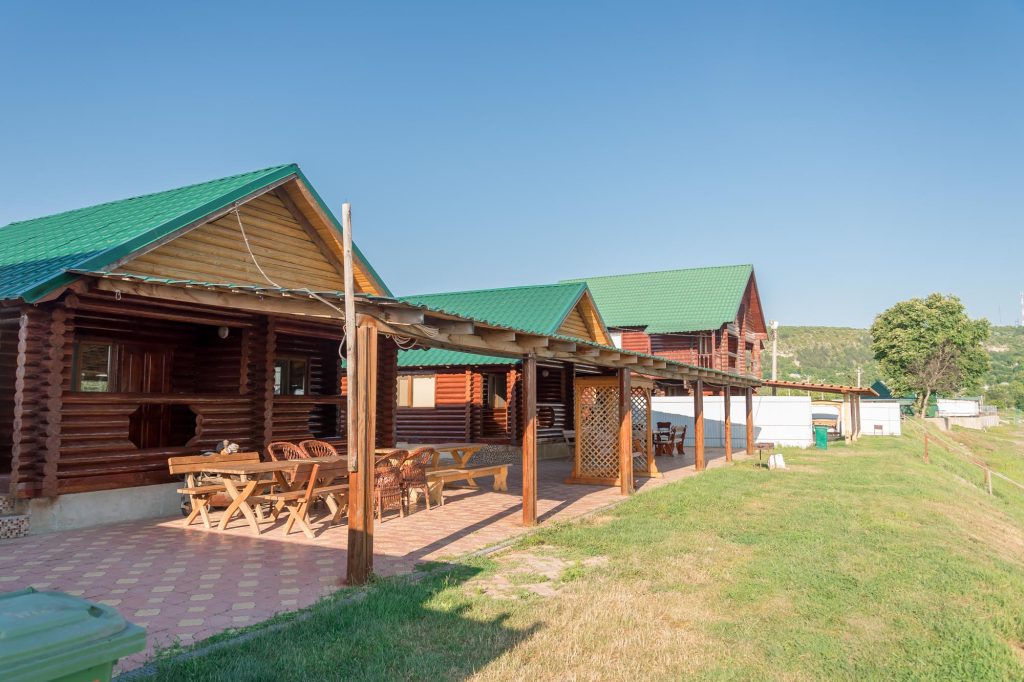
Emperia (Impiere) Recreation Center
The “Emperia” Recreation Center occupies a genuinely picturesque setting in Kamenka, situated directly on the banks of the Dniester River. Guests staying here can enjoy comfortable accommodation in charming wooden chalets, offering a cozy retreat amid this scenic riverside location.
The complex provides comprehensive recreational facilities, including a sports ground, billiard and sports halls, and a children’s playground, ensuring guests of all ages and interests can find suitable activities to enjoy during their stay. For those drawn to outdoor water-based activities, the center offers kayaking, catamarans, scooters and boats, providing ample opportunity to explore and enjoy the Dniester directly from this convenient base.
Throughout the recreation center, free Wi-Fi access is available, ensuring guests can stay connected even while enjoying this relaxing riverside getaway in the northern reaches of Pridnestrovie.
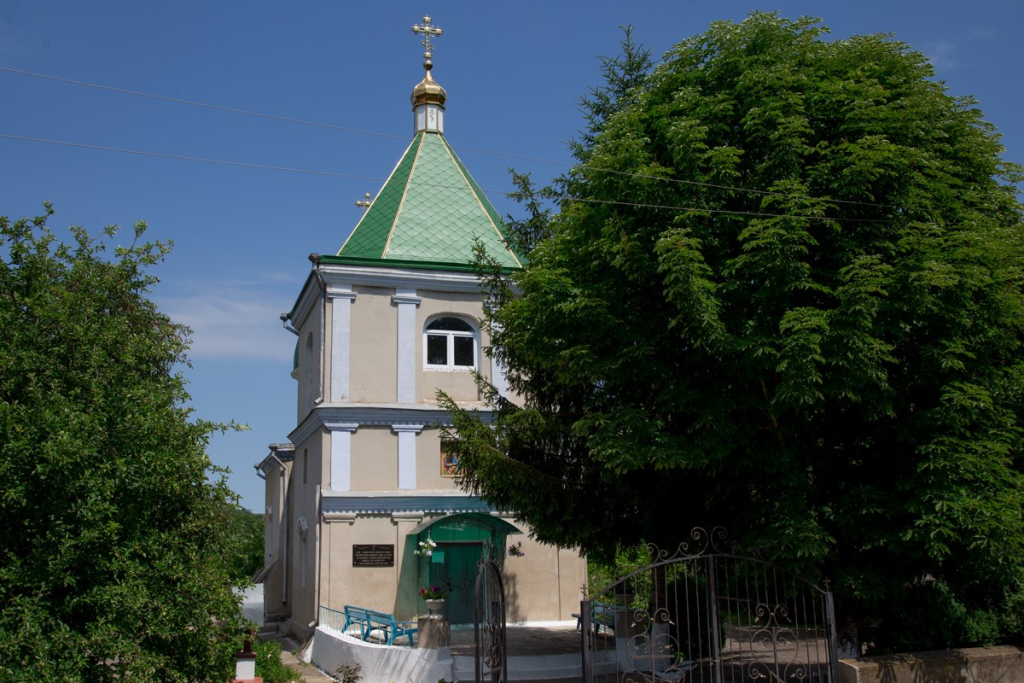
Church of the Holy Trinity, Rashkov Village
Nestled in one of the most authentic and picturesque villages in all of Pridnestrovie, the Church of the Holy Trinity captivates pilgrims and visitors alike with its unusual architectural design and the rich historical events surrounding its founding. Built in 1779, this small and intimate church has earned official recognition as an architectural monument of republican significance, and continues to actively serve the faithful of Rashkov to this day.
What truly sets this church apart is the presence of a remarkable 19th-century icon of the Spas Nerukotvornyi — the Image of Christ Not Made by Human Hands. Believers have long attributed miraculous power to this sacred icon, and it remains one of the most deeply venerated treasures in the entire region, drawing the faithful from far beyond the village itself.
For more information, visitors may contact Archpriest Dimitri Zamor.
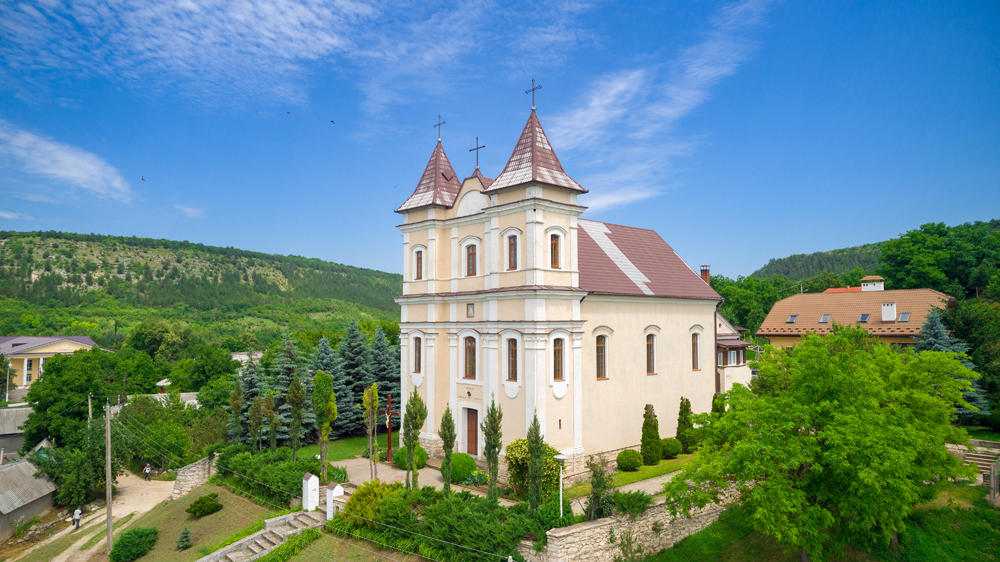
St. Cajetan Catholic Church
St. Cajetan Catholic Church holds a unique distinction as the oldest Catholic church in all of Pridnestrovie, remarkably preserved in nearly its original form to this day. The decision to build the church dates back to 1749, when Prince Jozef Lubomirski made the commitment to its construction — a decision documented in the historic manuscript known as the “Act of Foundation of the Church in Rashkovo.” Construction itself was completed in 1786, with the church consecrated five years later in honor of St. Cajetan.
Architecturally, the building stands as a classic example of 18th-century Polish Catholic church design, incorporating elegant Baroque elements that reflect the artistic sensibilities of its era. The church’s history took a difficult turn during the Soviet period, when it was closed by local authorities and repurposed first as a granary, then later as a joiner’s workshop — a fate shared by many religious buildings during that time.
It wasn’t until 1990 that the church was finally returned to the Catholic community. Since then, services have once again filled the building with the sounds of the pipe organ, restoring this remarkable piece of 18th-century heritage to its original sacred purpose.

Ruins of the Synagogue
Constructed around 1749 using funds collected through the so-called “basket tax” — a specialized form of taxation of the era — this synagogue once stood at the very heart of Rashkov’s spiritual and communal life. During this period, the village held particular significance as one of the centers of world Hasidism, a religious movement within Judaism that swept through the Jewish population of the Polish-Lithuanian Commonwealth and surrounding territories during the first half of the 18th century.
For generations, the synagogue served as the spiritual anchor for Rashkov’s substantial and vibrant Jewish community. Tragically, the building’s fate changed dramatically in the early 1930s, when the Soviet anti-religious campaign led to the destruction of its vaults. Today, only the stone walls and a handful of interior architectural elements remain standing from what was once a truly majestic structure — a haunting reminder of the rich Jewish heritage that once flourished in this corner of Pridnestrovie.

Panska Krynitsa
Tucked away near the ruins of the old Jewish synagogue, Panska Krynitsa — meaning “The Spring of the Mistress” — stands as a cultural heritage site dating back to the middle of the 17th century, its name carrying with it one of the most poignant love stories in the history of Rashkov.
The spring’s name is forever linked to Ruksanda, daughter of the Moldavian Principality’s Hospodar Vasily Lupu. In 1652, she married Timofey, son of the legendary Ukrainian Hetman Bogdan Khmelnytsky. Tragedy struck just a year later, when Timofey was fatally wounded during the siege of Suchava Fortress. In the aftermath of his son’s death, Bogdan Khmelnytsky gifted the village of Rashkov to the grieving Ruksanda, who would go on to live here for thirteen long years, carrying her sorrow with her.
According to local legend, the spring that came to bear her name — “Panska Krynitsa” — emerged from the very tears Ruksanda shed while mourning the untimely loss of her beloved husband, a story that has been passed down through generations and continues to give this natural spring its deeply romantic and melancholic significance.
Chervona (Red) Rock
Rising dramatically in the south-eastern part of Rashkov village, Chervona (Red) Rock stands as one of the most impressive natural monuments in the entire region — stretching an impressive 500 meters in length and towering 50 meters high. This striking limestone formation owes its evocative name to a remarkable natural phenomenon: as the sun sets each evening, the rock’s limestone slopes transform, glowing with a vivid red hue that gives the formation its unmistakable and unforgettable appearance.

Ruins of the Intercession Church
Built in 1740, the Intercession Church carries a fascinating religious history within its weathered walls — originally established as a Greek Catholic (Uniate) church before later transitioning to Orthodox worship, reflecting the shifting religious currents that shaped this region over the centuries.
Like so many other religious buildings across Pridnestrovie, the church suffered destruction during the Soviet years, falling victim to the era’s widespread anti-religious campaigns. Today, only the church’s walls and a portion of its original shingle roof have managed to survive, standing as a quiet and somewhat melancholic testament to a place of worship that once served the faithful of Rashkov for two centuries.

Museum of Hero of the Soviet Union F.I. Zharchinsky
Fyodor Ivanovich Zharchinsky joined the Red Army at the very outbreak of the Great Patriotic War, going on to participate in significant battles across Ukraine, the Caucasus and Eastern Europe throughout the course of the conflict. During the decisive Berlin operation on April 21, 1945, Senior Lieutenant Zharchinsky, alongside a group of reconnaissance scouts, discovered a concentration camp in the German town of Treuenbrietzen. Making the courageous decision to liberate the prisoners held there, the scouts engaged the camp’s guards in direct confrontation.
The operation proved extraordinarily successful, resulting in the liberation of 4,500 prisoners of war representing multiple nationalities — Russians, French, Poles, Danes, Belgians and Norwegians, including notably the commander of the Norwegian armed forces, Major General Otto Ruge. However, this victory came at tremendous personal cost: Zharchinsky, who had personally killed six guards along with the camp commandant during the engagement, was mortally wounded and died shortly afterward from his injuries. In recognition of this extraordinary act of heroism, he was posthumously awarded the title Hero of the Soviet Union.
On May 23, 1982, a museum dedicated to this outstanding son of Rashkov opened in the village, preserving his memory for future generations. In 2011, a bust honoring the hero was installed beside the school where he had once taught and which he led during the pre-war years — creating a permanent physical connection between Zharchinsky’s wartime heroism and the educational institution where he first served his community before the war that would ultimately claim his life.
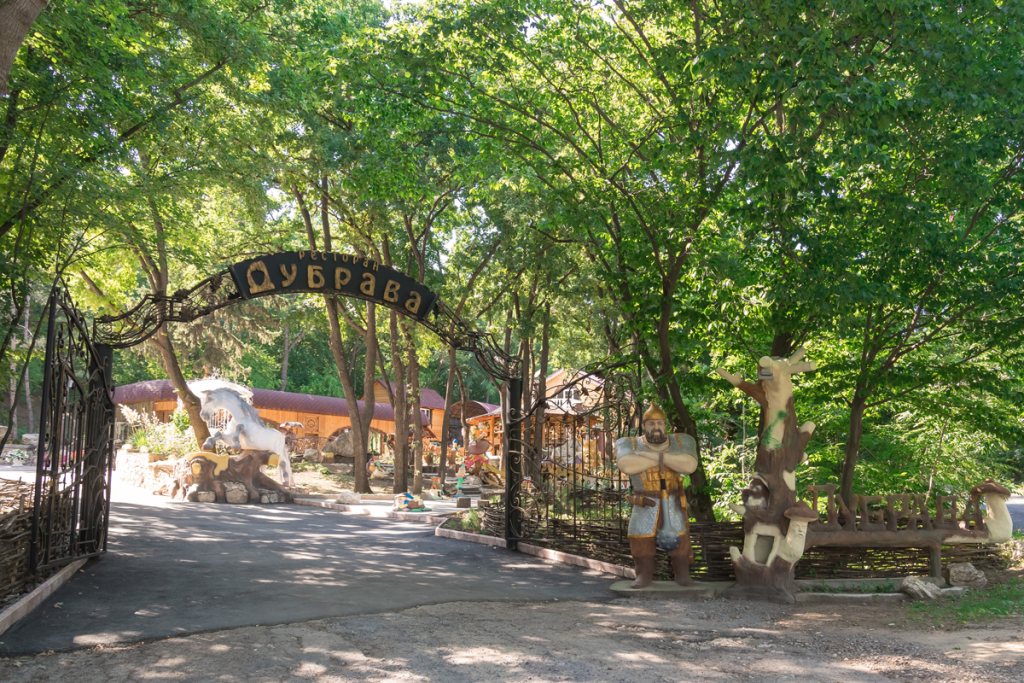
Restaurant "Dubrava"
“Dubrava” restaurant occupies a genuinely picturesque setting within a forest on the outskirts of Belochi village, offering diners a memorable culinary experience surrounded by natural beauty. The restaurant’s defining characteristic lies in its exceptional landscape design and thoughtfully decorated interior, complemented by inviting summer terraces and a charming courtyard that together create an atmosphere as appealing as the food itself.
Guests visiting “Dubrava” are invited to sample the finest examples of Ukrainian, Moldavian and Russian cuisine, with particular attention given to dishes cooked over an open fire, lending these traditional recipes an authentic smoky character and rustic charm that perfectly complements the restaurant’s forest setting. This combination of natural beauty, careful design and genuinely excellent regional cuisine has made “Dubrava” a beloved dining destination for both locals and visitors exploring the Rybnitsa district.

Grotto of Ustym Karmaliuk
This remarkable grotto, carved directly into a stone slab in 1830, is popularly known among locals as “Karmaliuk’s Hut.” Inside, visitors will discover a small stove tucked into one corner of the room, stone benches lining the walls, and a modest little window providing natural light to this atmospheric space.
According to local legend, the grotto served as a hiding place for Ustym Karmaliuk — often called the “Ukrainian Robin Hood” — who led an anti-serf revolt across the right bank of Ukraine during the first half of the 19th century. This was no minor uprising: more than 20,000 peasants participated in the rebel movement under Karmaliuk’s leadership, making it one of the more significant peasant resistance movements of the era. For many years, Karmaliuk’s units conducted raids on manor houses throughout the region, redistributing the money and valuables seized during these operations to impoverished peasants — earning Karmaliuk his enduring reputation as a champion of the rural poor against an oppressive feudal system.

Church of Saint Paraskeva of the Balkans, Valia-Adynka Village
Tucked away in the northern reaches of Pridnestrovie, within one of the region’s most authentically preserved villages, stands a truly special and distinctive church, framed beautifully by rolling hills and a picturesque forest backdrop. This church sets itself apart through its unique architectural approach and refreshing simplicity of execution — a design philosophy that prioritizes harmony with the natural surroundings over elaborate ornamentation.
The temple’s walls are lined with natural stone, lending the building a grounded, earthy character that connects it directly to the landscape from which its materials were drawn. Adding a striking visual touch, both the bell tower’s roof and the central dome have been painted a vivid blue, creating a beautiful sense of unity between the church and the sky above, as well as the natural surroundings that frame this remarkable place of worship. The overall effect is a church that feels less like an imposition upon the landscape and more like an organic extension of it — a fitting spiritual home within one of Pridnestrovie’s most picturesque rural settings.

Park Petra Wittgensteina
This park, spanning 25 acres (approximately 27 hectares), was founded at the estate of Prince P.Ch. Wittgenstein during the 1820s, originally intended to serve vacationers seeking therapeutic treatment through grape juice consumption — a popular health practice of the era. The park’s design incorporated valuable tree species brought from abroad, while ponds were dug throughout the grounds and stocked with fish for raising. Additional decorative elements included numerous flower beds, one of which was specifically designed to depict the Wittgenstein family coat of arms, adding a personal heraldic touch to the landscape.
The park’s purpose shifted significantly during the 1960s, when buildings belonging to an agricultural technical school occupied portions of the grounds. Subsequently, the park underwent reconstruction, transforming it into a popular recreation area, and in 2018, it received its current name: Park Petra Wittgensteina, formally honoring the prince whose vision originally created this green space.
The amphitheater-like ridge, upon which the famous grape terraces are situated, serves as a picturesque natural backdrop for the park’s landscape. Today, more than a hundred species of trees and shrubs flourish throughout the grounds, including Japanese chestnut, juniper, white poplar, sharp-leaved maple and ash, creating remarkable botanical diversity. The park also features a stage used for hosting various cultural events throughout the year.
In 2011, a bust of the prince was installed within the park, though it was subsequently relocated to the Glory Memorial — a monument dedicated to soldiers who died during the Great Patriotic War. At this new location, a comprehensive historical and cultural complex was created around the bust, with one of the granite slabs installed there providing detailed information about the life of P.Ch. Wittgenstein and his significant contributions to the development of Kamenka, ensuring his legacy remains connected to the town he helped shape, even as the physical location of his memorial has changed over time.
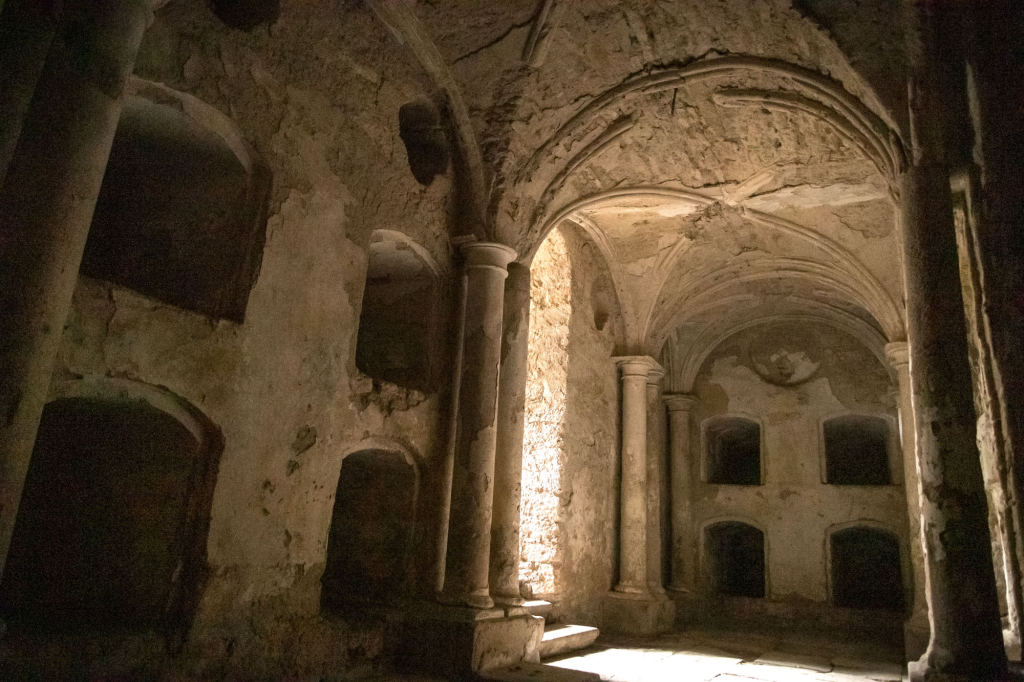
The Crypt of the Family of P.Kh. Wittgenstein
The family vault of the outstanding Russian commander and Hero of the Patriotic War of 1812, Prince P.Ch. Wittgenstein, was constructed in 1840 near the Lutheran Church. The vault’s interior featured niches designed specifically for burying the deceased, each elaborately decorated with columns and topped with a vaulted ceiling, creating a dignified resting place befitting the prince’s distinguished family.
Historical records confirm that Peter Christianovich himself, along with his wife Antonina Stanislavovna, daughter Emilia Petrovna Trubetskaya and other family members, were all buried within this vault. Additionally, the crypt held a silver vessel containing the heart of P.Ch. Wittgenstein’s son, Lev Petrovich, who had died in Germany — a poignant detail reflecting the period’s particular funerary customs for those who died far from their family’s ancestral resting place. The coffins containing the deceased were stored within niches that had been walled with marble slabs, each bearing inscriptions noting the surname, given name, patronymic, and dates of birth and death of the person interred there.
Unfortunately, the vault’s history took a tragic turn during the Soviet era: in 1934, the church was closed, and a few years later, the family vault itself was desecrated. Today, only a single plate marking the grave of A.S. Wittgenstein (Snarska) has survived this destruction. The current whereabouts and final resting place of the other Wittgenstein family members buried here remain unknown, representing a significant loss of historical and genealogical continuity for this once-prominent aristocratic family connected so closely to Kamenka’s development.

Historical and Cultural Complex "Stalin's Line" of Podoyma Village
The Historical and Cultural Complex “Stalin’s Line” opened in Podoyma village, Kamenka district, with its inauguration specifically dedicated to the 75th anniversary of Victory in World War II. The original bunker structure was constructed in the early 1930s, designed as a powerful defense center intended to protect the banks of the Dniester River, equipped with the most advanced technology available during that era.
The bunker’s underground portion was remarkably comprehensive, functioning almost like a self-contained underground city — encompassing 12 separate premises serving various purposes, including ventilation and utility rooms, storage facilities, its own independent water supply and sanitation systems, and even a dedicated power plant. This level of self-sufficiency reflects the serious strategic importance placed on this defensive structure during its original construction.
Restoration of this long-term firing point proceeded over several years with the dedicated help of volunteers, who successfully cleared 300 meters of underground corridors and repainted all the premises throughout the complex. Notably, three rooms were intentionally left in their original, unrestored condition, preserving an authentic glimpse of how the bunker appeared before restoration efforts began. One of these rooms now houses a dedicated museum, ensuring visitors can engage directly with the history of this remarkable defensive structure. The primary goal driving these extensive restoration efforts remains clear and consistent: preserving the memory of the war for future generations, ensuring that this significant piece of military heritage continues to educate and inform long after the events it commemorates have passed from living memory.
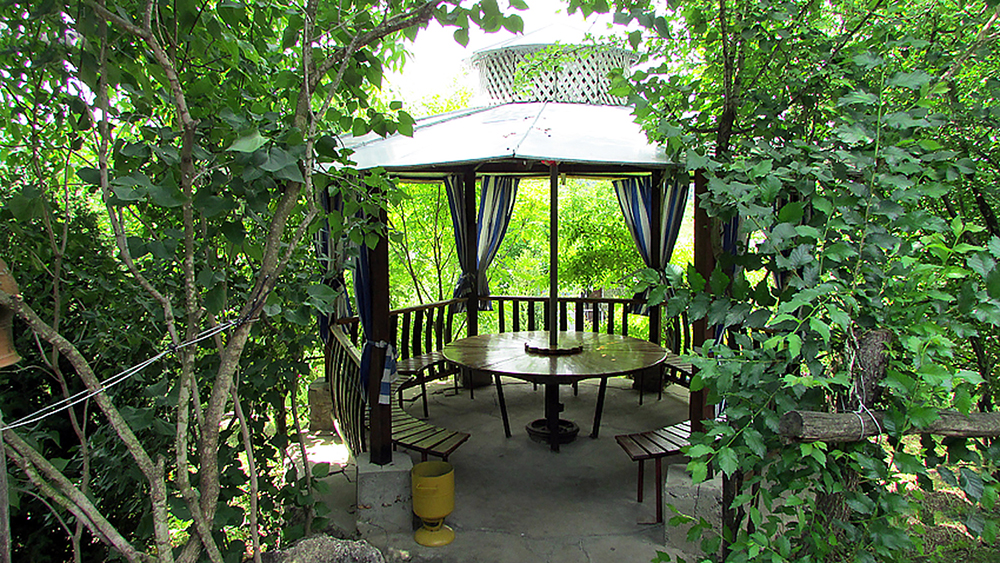
Homestead "U Dim Dimycha" (Dmitry's Place)
This private guest house in Podoyma village offers an idyllic setting for hosting events or family holidays right on the banks of the Dniester River. The estate’s subsistence farming operations, complete with a garden and vegetable plot, give guests genuine opportunity to connect with traditional rural lifestyle practices that have sustained communities along the Dniester for generations.
Spread across the property, ten gazebos provide ample space for gatherings, with total capacity reaching an impressive 220 guests — making this an excellent venue for larger celebrations and family events alike. Catering is available upon request, and the estate is equipped with everything necessary for a complete and comfortable vacation experience: guests can grill kebabs over an open flame, head out for fishing along the river, or arrange guided excursions to explore the surrounding area.
A particular highlight of staying at “U Dim Dimycha” is the culinary expertise of the estate’s owner, a professional chef who, upon request, will prepare his signature dish — a distinctive three-layer mamalyga — alongside other beloved national specialties such as zama and fish soup. This combination of authentic rural hospitality, scenic riverside setting and genuinely skilled home cooking makes the homestead a memorable destination for anyone seeking to experience traditional Pridnestrovian countryside living at its finest.