
Armenian city
Walking Route: Armenian Heritage of Grigoriopol
Step into a unique chapter of Transnistrian history on this intimate walking route through the heart of Grigoriopol — a compact yet extraordinarily rich 2 km journey through one of the most distinctive cities in Pridnestrovie. With 5 meaningful stops, allow 2.5–3.5 hours to fully immerse yourself in the Armenian heritage that shaped this remarkable town.
Founded in 1792 by decree of Empress Catherine II, Grigoriopol — once known as Grigoriopolis — was established as an Armenian colony following the end of the Russian-Turkish war. Armenian families resettled here from Akkerman, Izmail, Kaushan and Kiliya, bringing with them their language, faith, culture and traditions. Today, this quiet, calm and welcoming town carries that legacy in every street, building and story — a true home away from home for an entire people.
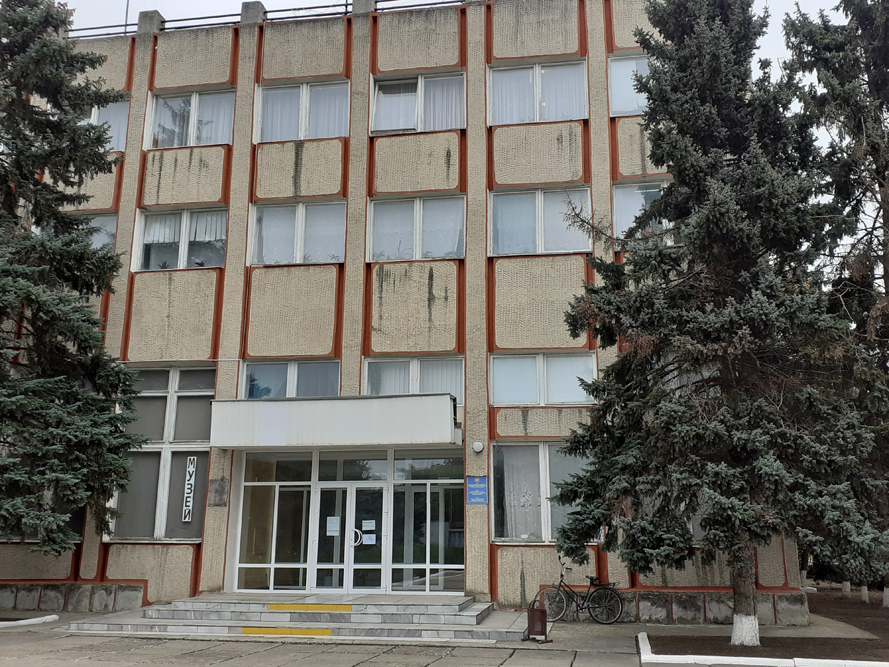
The route begins at the Historical Museum (144 Karl Marx Str., Grigoriopol) — the ideal starting point for understanding the city’s layered past. Through its collections of artifacts, documents and photographs, the museum paints a vivid portrait of Grigoriopol from its Armenian colonial origins to the present day.
Just 97 meters away stands the Central Regional Library named after Marietta Shaginyan (148 Karl Marx Str.) — a cultural institution honoring the celebrated Soviet-Armenian writer and journalist. A fitting tribute to the literary and intellectual spirit of the Armenian community that once flourished here.
A mere 63 meters further, the Building of Saints Peter and Paul Cathedral Church (185 Karl Marx Str.) rises as one of the most striking architectural landmarks on the route. This historic church, deeply tied to the spiritual life of Grigoriopol’s Armenian settlers, is a place of both beauty and profound historical significance.
Just 34 meters along, the Building of the First Armenian School (187a Karl Marx Str.) stands as a powerful symbol of a community’s determination to preserve its identity, language and culture far from its homeland. Few stops on this route carry as much emotional weight as this one.
The journey concludes 1.6 km away at the Armenian Cemetery — a deeply moving and sacred final destination. Walking among the headstones, inscribed with Armenian names and symbols, one feels the full weight of history and the enduring legacy of a people who made Grigoriopol their home centuries ago.
Historical Museum
The Historical Museum of Grigoriopol presents a comprehensive exposition dedicated to the city’s history, tracing its origins back to its founding by decree of Empress Catherine II in 1792. Among the museum’s most fascinating displays is a detailed diorama depicting Grigoriopol as it appeared at the end of the 19th century, offering visitors a vivid window into the city’s appearance during that historical period.
The museum also features a beautifully recreated exposition showcasing the interior of a traditional peasant hut, complete with authentic household items from that bygone era — bringing the daily rhythms of rural life to vivid, tangible life. Among the museum’s notable holdings is a copy of the original coat of arms of the city, which remarkably continues to serve as the official coat of arms of Grigoriopol to this very day, providing a direct visual link between the city’s founding and its modern identity.
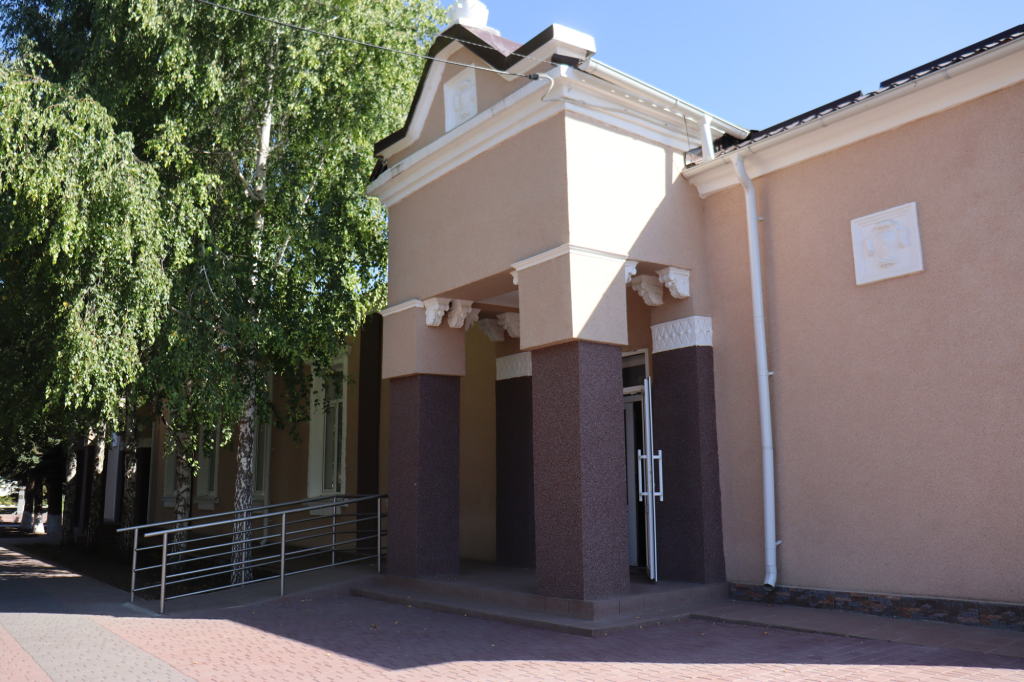
Central Regional Library named after Marietta Shaginyan
The Central Regional Library of Grigoriopol carries deep personal significance connected to one of the most celebrated Soviet-Armenian writers of the 20th century — Marietta Shaginyan. Her great-grandfather, Makariy Shaginyan, once lived in Grigoriopol, serving as a healer and leading a group of immigrants from Armenia who, in the 18th century, founded an Armenian colony along the banks of the Dniester. Marietta’s father, Sergey, was himself born in Grigoriopol before going on to graduate from the Medical Faculty of Moscow University, where he later became a lecturer.
Marietta Shaginyan herself visited Grigoriopol with her father to see her grandfather, and remarkably, in the summer of 1970 — already in her ninth decade of life — she undertook a meaningful road trip she described as a journey “to the land of the ancestors,” traveling the route from Grigoriopol to Izmail and on to Odessa. During her visit to the library that would later bear her name, she offered a memorable reflection: “It is very remarkable and significant that there is a library in the writer’s house.”
Today, the library preserves a recorded message containing Marietta Shaginyan’s personal appeal to the citizens of Grigoriopol. The library also houses a dedicated literary-memorial complex honoring her legacy, featuring books, brochures, articles and photographs — some of which were personally donated by the celebrated author herself, creating a deeply authentic and moving tribute to her connection with this corner of Pridnestrovie.

Building of Saints Peter and Paul Cathedral Church
This historic church once stood proudly in the center of Grigoriopol, along Karl Marx Street, serving as an important spiritual landmark for the city’s residents. Today, the site is undergoing transformation, with a store being constructed on the location, while plans call for an observation deck to be built where the church’s bell tower once stood — a modern repurposing of this historically significant ground.
A surviving photograph of the old church offers a poignant personal connection to one of Pridnestrovie’s most celebrated literary figures. The image captures two men in the foreground, one dressed in a cassock — this is David, grandfather of writer Marietta Shaginyan and archpriest of this very church, photographed alongside his son, who was Marietta’s uncle. This small but meaningful detail links the building directly to the rich family history of one of Grigoriopol’s most famous descendants, adding a deeply personal dimension to this site’s broader historical significance.
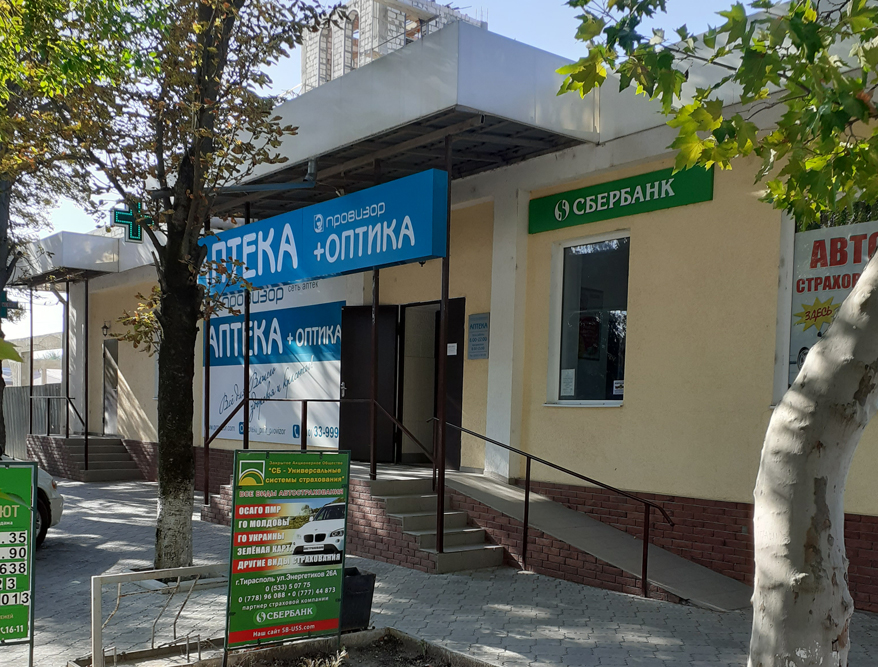
Building of the First Armenian School
At the end of the 19th century, Grigoriopol became home to one of the very first women’s parish schools established anywhere in Russia — a remarkable achievement for its time. Many Armenian schools, particularly those founded outside Armenia itself, owed their existence to the initiative of progressive leaders and the tireless efforts of those fighting for broader public education.
The founding of this female parish school in Grigoriopol in 1868 is closely tied to the name of David Shaginyants, archpriest of the Saints Peter and Paul Cathedral Church in Grigoriopol — and grandfather of the celebrated writer Marietta Shaginyan. In his own writings, Father David passionately addressed the issue of women’s education and the broader cause of public schooling. By all accounts, David Shaginyants stood as one of the most gifted, educated and progressive social and spiritual leaders of his era.
Marietta Shaginyan herself offered a moving recollection of her grandfather: “Father David was a bright representative of his spiritual title. He highly appreciated public education, and in particular, education for Armenian women. Armenian girls did not learn to read and write at that time. At that distant time, such a performance by a clergyman was extremely rare, especially in the wilderness, such as Grigoriopol was then. So, grandfather’s performance can be called not only progressive, but even bold.”
Today, the building that once housed this pioneering institution serves a far more modest purpose, now operating as a pharmacy — though its historical significance as a milestone in women’s education endures.

Armenian Cemetery
Grigoriopol once had two Armenian cemeteries within its territory, though only the central one has survived to the present day — originally situated outside the city limits atop a high hill. This surviving cemetery now holds official status as a historical architectural monument dating to the late 18th century.
A walk among the preserved monuments and tombstones reveals a fascinating cross-section of society, with burials representing people of varying social classes. Some tombstones are crafted from ordinary stone, while others showcase valuable materials like marble and granite, reflecting the diverse fortunes of those laid to rest here. Among the cemetery’s treasures are several unusual and deeply symbolic monuments. One striking example takes the form of an open book carved from white marble, while another depicts a tree with branches deliberately chopped off and clearly visible roots rendered in gray marble — this particular monument marks the grave of a merchant and family patriarch whose family line ended with no male descendants to carry it forward. The tree’s substantial roots and sturdy trunk symbolize what was once a large and thriving family lineage.
The cemetery also features a memorial cross that holds particular significance for the Armenian community: every year on April 24, the Remembrance Day of the Victims of the Armenian Genocide, Armenians traveling from other cities visit Grigoriopol specifically to lay flowers at this site, honoring those lost in one of history’s great tragedies.
Over the generations, the assimilation of Armenian immigrant families into Grigoriopol’s broader community led to many surnames being rewritten in Russian style, and visitors will notice this linguistic blending reflected in the cemetery itself — tombstones bearing Russian-style surnames alongside names and patronymics that remain distinctly Armenian. The gravestones themselves often carry inscriptions in Grabar, the ancient Armenian language, with some featuring text in both Armenian and Russian side by side.
For visitors to Grigoriopol, the Armenian cemetery has become an essential stop — a place where guests can directly touch the history of the city’s origins as an Armenian colony established in southern Russia. They come specifically to see these unusual and evocative stones — tombstones and monuments that have stood on this land since the 19th century, silently preserving the memory of the community that built Grigoriopol from its very foundations.