

Bulgarian settlement
Walking Route: Parcani — Transnistria’s Bulgarian Village
Journey into the heart of Transnistria’s only Bulgarian settlement on this intimate and deeply cultural walking route through Parcani village — a compact 2.5 km loop with 7 remarkable stops that tells the extraordinary story of a community that has preserved its identity, traditions and way of life across more than two centuries. Allow 3–4 hours to fully absorb everything this unique village has to offer.
Parcani — also known historically as Barkan — first appeared on the maps of Russian General Friedrich Wilhelm Bauer during the military campaigns of 1769–1770. Bulgarian colonists arrived here in 1807, brought by the Governor-General of Novorossiya, Duke Richelieu. With them came a remarkable tradition: the cultivation of silkworms and the establishment of a weaving industry whose textiles — extraordinary in quality and density — were sold throughout the entire district. Today, with 80% of its population still proudly Bulgarian, Parcani remains a living testament to cultural resilience and community spirit.
The route begins at the Arch of Parcani village (Slobodzeya district) — a symbolic gateway that welcomes visitors into this one-of-a-kind settlement, setting the tone for everything that follows.
Just 320 meters away stands the Stele on the Place of the Destroyed Church — a solemn and thought-provoking monument marking the site of a place of worship lost to history. It stands as a quiet but powerful reminder of the trials this community has endured and overcome.
A mere 1.6 km further, the magnificent Church of the Archangel Michael (10 Blagoeva Str., Parcani village) rises as the spiritual heart of the village. This beautiful church continues to serve as the center of religious and community life for Parcani’s Bulgarian faithful, its presence anchoring the village to its deepest roots.
Just 10 meters away, a Wooden Cross stands in silent devotion — a humble yet deeply meaningful landmark that reflects the enduring faith of the Parcani community through generations of change and challenge.
Continuing 8 meters along, the route arrives at the Monument to Vasily Levski (Gogol Str., Parcani village) — a proud tribute to Bulgaria’s most celebrated national hero and symbol of freedom. The presence of this monument in Parcani speaks volumes about the strength of Bulgarian identity maintained so far from the homeland.
After a 470-meter stroll, the House of Culture of Parcani Village (5 Gogol Str.) invites visitors into the fascinating exposition “Gulyama Kashta” — meaning “The Big House” in Bulgarian. This immersive display of Bulgarian folk culture and traditional village life brings the community’s heritage vividly to life through costumes, crafts, household items and stories passed down through generations.
The journey concludes just 2.2 km away at the Parcani Village History Museum (1 Gogol Str.) — a comprehensive and lovingly curated collection that ties together every thread of the village’s remarkable story, from Bulgarian colonists and silkworm cultivation to the vibrant community that thrives here today.

Arch (Parcany Village)
Built in 1947, this distinctive arch has long served as a symbolic and physical connection between the northern and southern parts of Parcany village, marking a meaningful piece of the community’s post-war architectural heritage. Standing as one of the village’s recognizable landmarks, the arch continues to greet residents and visitors alike as they move between the two halves of this historic Bulgarian settlement.

Stele on the Place of the Destroyed Church
The church once played a central role in the spiritual life of Parcany’s Bulgarian settlers, with many priests faithfully following their parishioners into this distant and unfamiliar land. Often, it was through these priests that the Bulgarian colonists first learned about the territories where they would eventually settle. With the arrival of the first colonists in Parcany in 1806, the need for regular church services quickly became apparent. Initially, the community relied on the nearest church — St. Paraskeva in Ternovka — but the journey there proved too lengthy for practical use, prompting the construction of a wattle-and-daub wooden prayer house in the colony in 1811. Following its consecration, this modest structure was named St. Michael’s.
By 1816, the growing community decided to build a proper church “with the diligence of the parishioners.” Following the unwritten traditions of the time, the heaviest financial burden typically fell to the most prosperous member of the community — in this case, Samoilo Chumachenko, who took on the responsibility of funding the church’s construction largely at his own expense, given the limited means of most Parcany residents. Construction began in earnest in 1818, with Chumachenko hiring a dedicated construction crew to lay the foundation. The Parcany St. Michael’s Church was finally consecrated and began holding services in 1826, though additional construction work continued until 1829.
The need for an entirely new building became evident by 1912, following a major renovation effort. In 1915, the entire village came together to begin building once more — but the outbreak of revolution interrupted the project, and the church was never completed. Over time, stones from its partially raised walls gradually found their way into neighboring yards, repurposed by villagers for other uses. In the years leading up to the war, the unfinished structure was converted into a community club, and in 1960, it met its final fate — demolished by explosion. Remarkably, it took three separate attempts: the first two explosions failed to bring the structure down, managing only to tilt the dome slightly, but the third and most powerful explosion finally brought the walls crashing to the ground, bringing an end to this long and complicated chapter in the village’s religious history.

Church of the Archangel Michael
The very first stone church in Parcany — dedicated to St. Archangel Michael — was constructed in 1829, funded entirely through donations raised by the villagers themselves. By the early 20th century, a grander new church was built on this same site, becoming the largest religious building in the entire district, with its design patterned after the renowned Transfiguration Cathedral in Bendery.
Like so many religious buildings throughout the region, this magnificent church met a tragic fate: in 1960, amid a renewed wave of persecution against the Church, the building was destroyed by explosion. The path to revival began decades later, in 1998, and after ten years of dedicated reconstruction work, the church was finally completed, rising once again in the village center by 2000.
The rebuilt church follows traditional Russian church architecture, while its sculptural elements and ornamental details draw from Byzantine artistic traditions — a stylistic combination that remains genuinely rare among modern churches. Adding further beauty to the site, a stone statue of Archangel Michael himself was later erected within the church fence, completing the visual and spiritual ensemble.
Today, the Church of the Archangel Michael is widely recognized as one of the most beautiful and harmoniously designed rural churches anywhere in Pridnestrovie — a testament to the village community’s enduring faith and determination to rebuild what was lost, preserving both historical continuity and artistic distinction in equal measure.
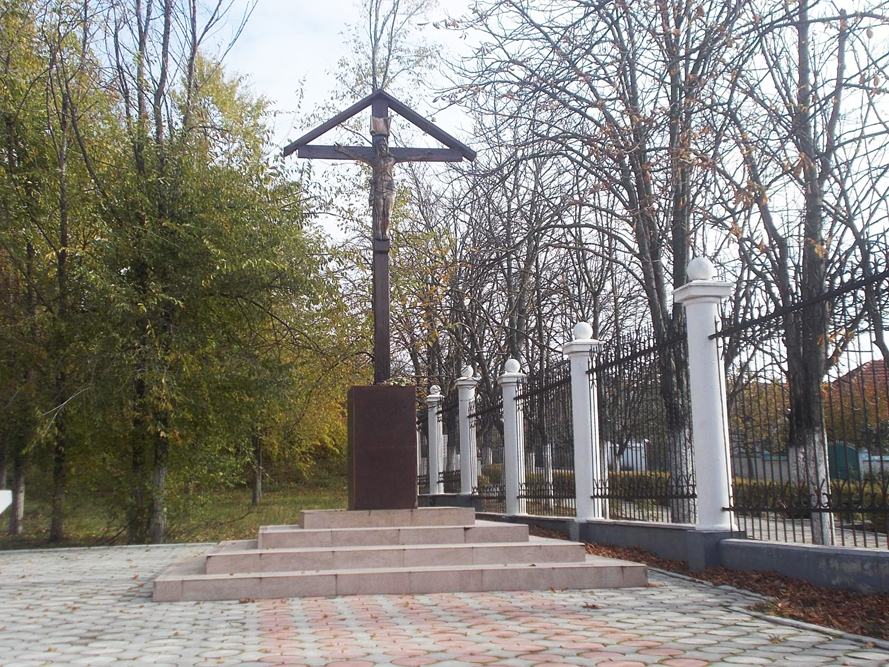
Wooden Cross
Standing not far from the Glory Memorial, this wooden cross was erected in honor of the first settlers of Parcany village, a meaningful tribute brought to life through the initiative of the local church and its devoted parishioners. The cross serves as a humble yet poignant memorial, connecting the village’s deep spiritual roots to the memory of the founding generation whose arrival shaped the entire community that exists here today.

Monument to Vasily Levski
This striking monument honors Vasily Levski, the celebrated national hero of Bulgaria widely known as the “Apostle of Freedom” — a fitting tribute within Parcany, the only Bulgarian settlement in all of Pridnestrovie. The bronze bust itself was cast in Sofia, while the granite used for the pedestal was sourced directly from the mountains near the historic Rila Monastery, ensuring an authentic connection to Levski’s Bulgarian homeland.
The timing of the monument’s unveiling carries particular significance: it was officially opened on September 22, 2008, deliberately coinciding with the 100th anniversary of Bulgaria’s independence — a powerful symbolic gesture linking the Bulgarian community of Parcany to the broader national story of freedom and self-determination that Levski himself fought so passionately to achieve.
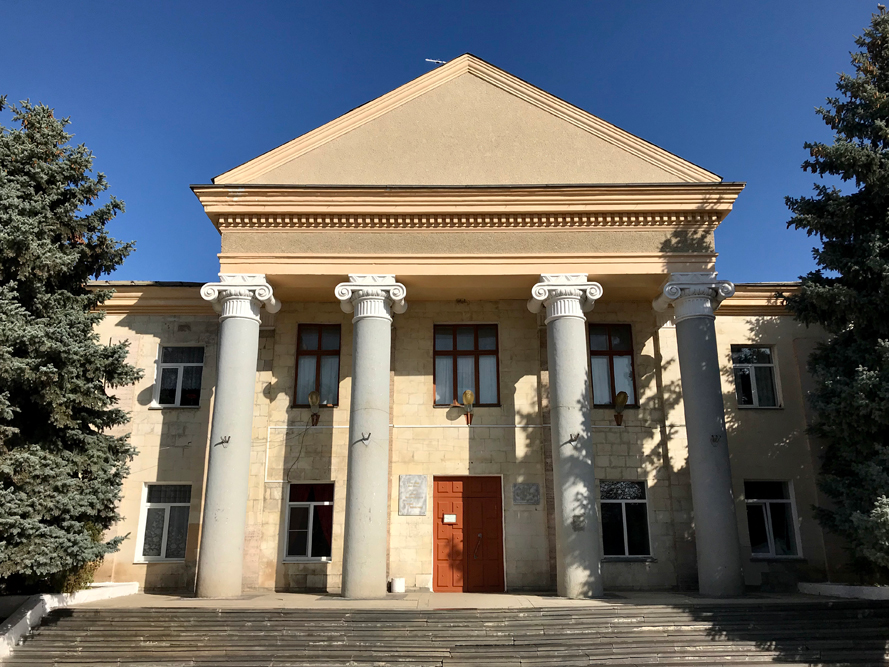
House of Culture of Parcany Village — Exposition of Bulgarian Folk Culture "Gulyama Kashta"
Within the walls of the House of Culture in Parcany village lies a living repository of Bulgarian heritage — the exposition known as “Gulyama Kashta,” meaning “The Big House” in Bulgarian. Here, antique items, traditional paraphernalia and clothing carry within them a special spirit that helps preserve and interpret the customs and rituals passed down through generations of this unique Bulgarian community. The collection continues to grow and expand over time, cementing its status as a beloved destination for tourists eager to explore authentic Bulgarian culture in the heart of Pridnestrovie.
The House of Culture regularly hosts gatherings of village “old-timers,” who, immersed in this evocative atmosphere, share memories and stories of Bulgarian folk holidays and customs that have shaped life in Parcany for generations. Visitors to the exposition can do more than simply observe — they’re invited to dress in traditional Bulgarian clothing for memorable photographs, watch authentic folk rituals performed before their eyes and sample banitsa, the beloved national pastry that remains a cornerstone of Bulgarian cuisine. For those wishing to go even deeper, master classes in traditional Bulgarian dance and many other engaging cultural events can be specially organized, offering visitors a genuinely immersive encounter with the living traditions of this remarkable community.

Parcany Village History Museum
The Historical Museum of Parcany village stands as a living biography of the community, presenting a remarkable collection of unique exhibits dedicated to Bulgarian culture and life. Visitors here can encounter genuine artifacts more than a century old, each carrying its own piece of the village’s story. Notably, Parcany itself appears on the historical map drawn by General Panin during the storming of the Bendery fortress in 1770, offering a direct visual connection to the village’s place within the broader military history of the region.
The museum vividly captures the legacy of the Bulgarian colonists who migrated here between 1806 and 1811, bringing with them far more than just their language, culture, traditions and customs. They also carried a distinctive psychology and an almost fanatical work ethic that would come to define the community for generations. Traditional Bulgarian cuisine, with its rich aromas and delicious flavors, exemplifies this living heritage — recipes passed down faithfully from generation to generation, preserving culinary traditions that remain vibrant in Parcany to this day.
The museum’s guest book offers its own fascinating testament to the village’s international appeal, containing entries from visitors traveling from as far as Japan and Germany, alongside guests from numerous other countries both near and far — a clear sign of the genuine curiosity and admiration that Parcany’s unique Bulgarian heritage continues to inspire among travelers from around the world.