

Cycling tourist route “Tiraspol-Chitcani”
Saddle up for a scenic and historically rich cycling tourist route from Tiraspol to Chitcani — a 9.2 km ride through some of the most meaningful landmarks in Transnistria. With 3 compelling stops, this route is ideal for a leisurely half-day adventure, allowing around 1–1.5 hours to fully enjoy each destination along the way.
One important note for all cyclists: crossing the bridge is permitted only on foot — please dismount before reaching it.
The journey begins at Suvorov Square in the heart of Tiraspol, along Pokrovskaya Street — a central landmark named after the legendary Russian military commander Alexander Suvorov, whose legacy is deeply woven into the fabric of this city. It’s the perfect starting point to absorb the spirit of Tiraspol before hitting the road.
After a pleasant 6.9 km ride, you arrive at the magnificent Holy Ascension Novo-Nyametsky Monastery in Kitskany village — one of the most revered religious sites in Transnistria. This stunning monastery, with its gleaming domes and peaceful grounds, offers a truly spiritual pause in the journey. Take your time here — the tranquility is worth every moment.
Just 2.3 km further, the route concludes at the Kitskany Bridgehead — a powerful and deeply moving war memorial dedicated to the fierce battles fought here during World War II. This site stands as a lasting tribute to the courage and sacrifice of those who defended these lands.
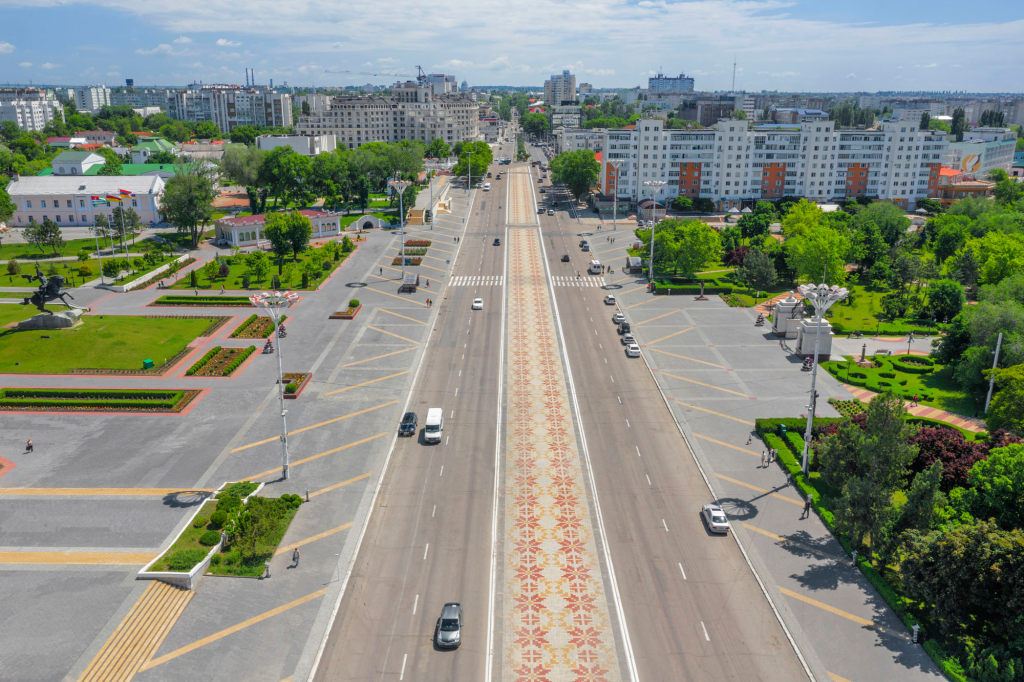
Suvorov Square
Suvorov Square rightfully claims its place as the heart of both Tiraspol and the entire Pridnestrovian republic. The square is surrounded by an impressive cluster of significant landmarks — the monument to A.V. Suvorov himself, De Wollant Square, the riverside embankment, the Memorial of Glory, the Palace of Children and Youth Creativity, a cinema and the building of the Supreme Council of the PMR, all converging to make this one of the most important civic spaces in the entire country.
During the Soviet era, the square bore a different name — Stalin’s Constitution Square — and it wasn’t until the 1970s, following large-scale restructuring of the town center, that the square took on the appearance familiar to visitors today. Suvorov Square continues to play a central ceremonial role in national life, hosting military parades on the country’s most important holidays, including Victory Day commemorating the Great Patriotic War and Republic Day itself.
Looking ahead, the entire area surrounding the square is set for further transformation, with plans to develop the surrounding space into Catherine Park — a project whose construction was slated for completion in 2020, promising to add even more green space and grandeur to this already iconic central gathering place.
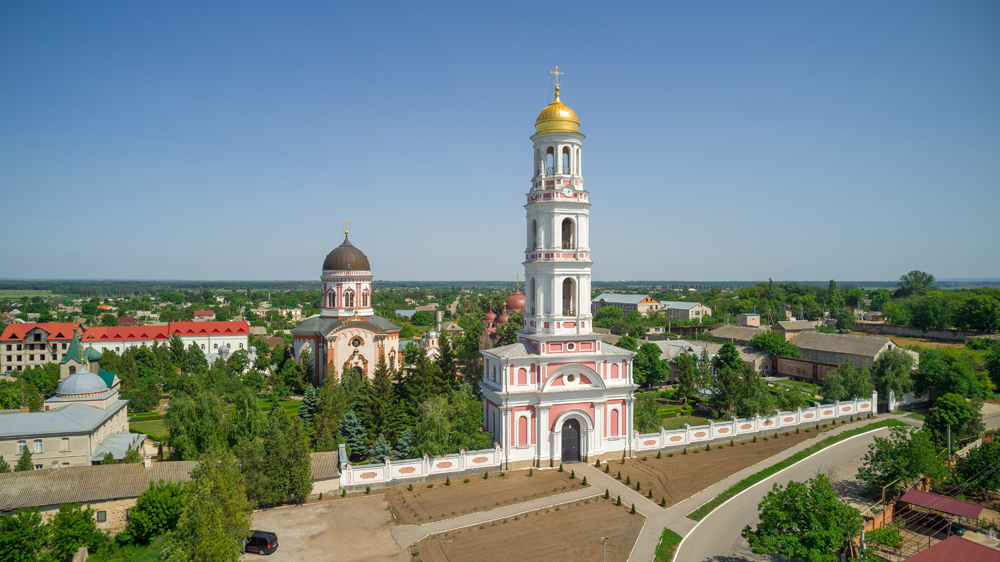
Holy Ascension Novo-Nyametsky Monastery
Situated in the heart of Kitskany village, the Holy Ascension Novo-Nyametsky Monastery stands as an outstanding masterpiece of Orthodox Church architecture. The monastery ensemble comprises four distinct churches: the Holy Ascension Cathedral, used in summer; the Assumption Church, designed for winter worship; St. Nicholas Church, serving the monastery’s seminary; and the Church of the Exaltation of the Cross, which functions as the refectory. Beyond its sacred buildings, the complex offers accommodations for visiting pilgrims, houses a dedicated church museum, operates a working printing house and maintains an icon-painting workshop, alongside an extraordinary library preserving documents, miniatures and rare books spanning the 15th through 19th centuries.
The true crown jewel of the monastery is its magnificent five-tiered bell tower, soaring 69 meters into the sky and offering breathtaking panoramic views across the surrounding countryside. The tower’s largest bell is a true giant, weighing an impressive 8.5 tons.
The monastery’s origins trace directly back to the renowned Neamt Monastery, one of the great medieval centers of Moldavian culture and learning. Following the unification of the Moldavian Principality with Wallachia and the formation of Romania, the new authorities pursued a policy of secularizing Church lands, altering monastic statutes and even banning worship conducted in Church Slavonic. Fleeing this persecution, the monks sought refuge in the Russian Empire, and in 1864 received the highest official permission to establish the Novo-Nyametsky Monastery on this site. Construction of the full monastery complex would continue for nearly 50 years.
The Soviet period brought tremendous hardship to the monastery — its priors faced persecution, with some subjected to outright repression. In 1962, the monastery was forcibly and permanently closed, and its iconic bell tower, which had served as a military observation post during the war, was repurposed as a Museum of Military Glory dedicated to the Iasi-Chisinau Operation. It wasn’t until 1990 that the monastery finally resumed its religious activities.
Thanks to the dedicated efforts of Father Superior Dorimedont (Cecan), the churches, bell tower and monastic cells underwent careful renovation, a religious school was established, and a chapel was founded in honor of the miraculous icon of the Mother of God from the original Novo-Neamt Monastery, used specifically for the blessing of water. Today, the beautifully restored library building also serves as home to a museum dedicated to the monastery’s rich and resilient history.
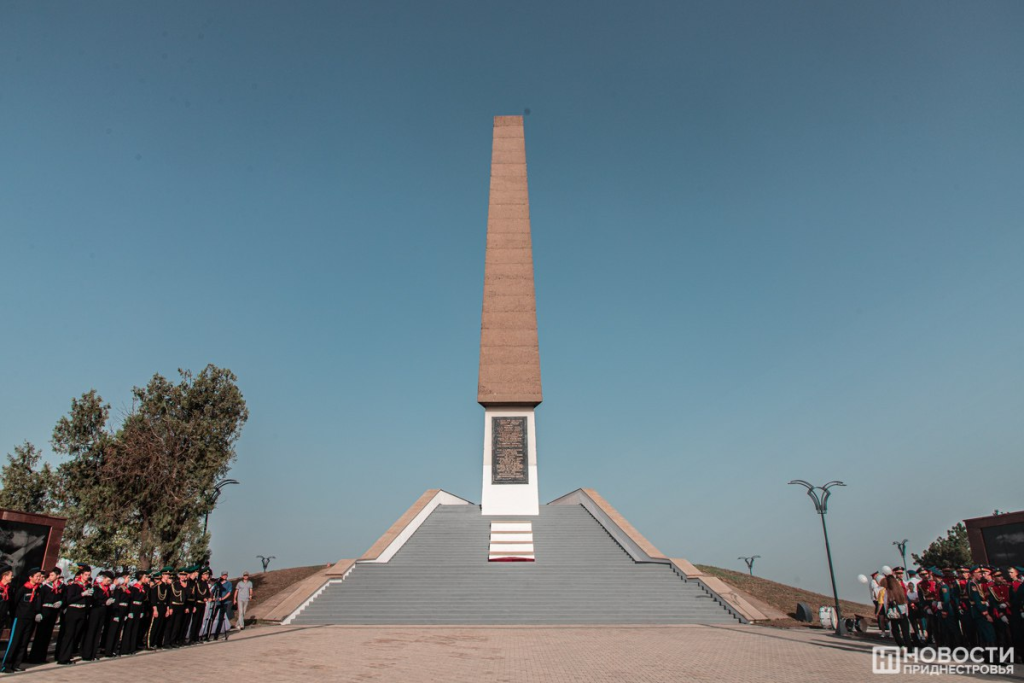
Kitskany Bridgehead
The Kitskany bridgehead occupies a place of profound strategic significance in the history of the Great Patriotic War, having served as a crucial Soviet army position that played a decisive role in the success of the Iasi-Chisinau Operation. Troops of the 3rd Ukrainian Front seized the bridgehead during the Odessa operation of 1944, establishing a foothold stretching up to 18 kilometers along the front line, with a depth ranging from 6 to 10 kilometers.
The battle for control of this critical position raged for more than four months, during which Soviet forces transformed the bridgehead into a formidable engineering achievement. By the start of the major offensive, this relatively confined space had been equipped to hold five infantry corps, a mechanized corps, 51 artillery regiments and as many as 30 specialized units — an extraordinary concentration of military force.
On August 20, 1944, the troops of the 3rd Ukrainian Front launched their main offensive strike from the Kitskany bridgehead, an assault that laid the groundwork for the complete defeat of German-Romanian forces across Soviet Moldavia. The resulting Iasi-Chisinau operation ultimately led to the full liberation of what is now the entire territory of Pridnestrovie.
To honor and preserve the memory of the soldiers’ heroism for future generations, a towering 35-meter memorial known as the “Obelisk of Glory” — designed in the striking form of a concrete bayonet by architect S.M. Shoichet — was unveiled at the highest point of the former bridgehead on May 9, 1972. The monument remains an enduringly popular destination today, with its observation deck offering visitors spectacular panoramic views across the surrounding landscape.