
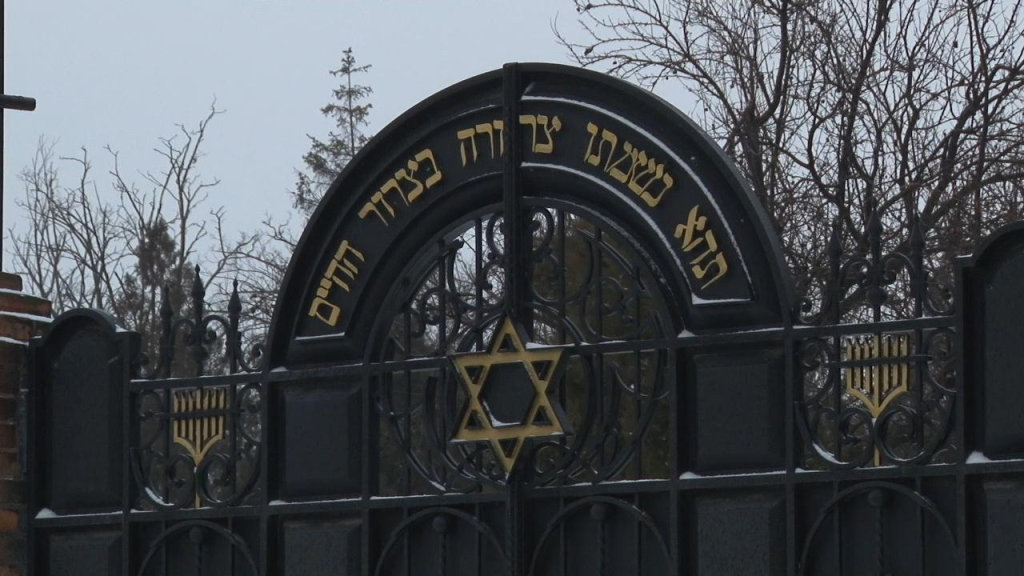
Places of Jewish Heritage
Places of Jewish Heritage: Three Days Tracing a Thousand Years of History
Embark on a profound and deeply moving three-day journey through the places of Jewish heritage in Pridnestrovie — a 270 km route connecting 28 significant sites that bear witness to the rich, complex and often tragic history of Jewish life in this region. From ancient cemeteries and historic synagogues to Holocaust memorials and living cultural centers, this route is an act of remembrance, discovery and respect.
Day 1 — Bender and Tiraspol: Urban Jewish Heritage
The first day explores the Jewish legacy woven into the fabric of Pridnestrovie’s two largest cities.
The day begins at the Bender Local History Museum (40-42 Sovetskaya Str., Bender) — an essential first stop that provides rich historical context for the Jewish community’s centuries-long presence in the city.
Just 480 meters away, the Former House of the Merchant Schmalts (45 Moskovskaya Str., Bender) stands as a tangible reminder of the prosperous Jewish merchant class that once shaped the commercial life of Bender.
A mere 720 meters further, the Children and Youth Creativity Palace (43 Moskovskaya Str., Bender) — formerly the Manus Bank — is a striking example of how Jewish entrepreneurial legacy endures in the city’s architecture long after its original purpose has changed.
Just 99 meters away, Berg’s House (47 Moskovskaya Str., Bender) adds another layer to the portrait of Bender’s historic Jewish merchant quarter — a beautifully preserved building that speaks of prosperity, culture and community.
After 760 meters, the State Art Museum of Pridnestrovie (77 Kommunisticheskaya Str., Bender) houses collections that include works connected to the region’s Jewish artistic heritage — a cultural dimension that enriches the day’s journey.
Continuing 1.6 km, the Jewish Cemetery in Bender offers a deeply contemplative pause — a sacred space where generations of the city’s Jewish community rest, their headstones inscribed with the stories of lives lived in this land.
Just 1.9 km further, the Monument to the Victims of the Holocaust in Bender (Tkachenko Str., riverfront) stands as one of the most powerful stops of the entire route — a solemn riverside memorial that bears witness to the darkest chapter in the history of Bender’s Jewish community.
After 690 meters, the Medical College in Bender (23 Gagarin Str.) — formerly the Jewish hospital — represents the community’s deep commitment to public health and civic responsibility, its walls still holding the memory of its original purpose.
Crossing into Tiraspol after 9.4 km, the Monument to the Holocaust Victims in Tiraspol (Pokrovskaya Str.) greets visitors with quiet gravity — a reminder that the tragedy of the Holocaust reached every corner of this region.
Just 1.9 km away, the Jewish Center “Hesed” (14 Kotovsky Str., Tiraspol) offers a living and vital counterpoint to the memorials — an active community center where Jewish culture, tradition and mutual support continue to thrive in the present day.
The day concludes 330 meters away at the Synagogue in Tiraspol (29-31 Gorky Str.) — a functioning place of worship that stands as a testament to the resilience and continuity of Jewish life in Pridnestrovie.
Day 2 — Dubossary: A City That Was Once Overwhelmingly Jewish
The second day travels 67 km north to Dubossary — a city where, in 1926, Jews made up an extraordinary 81% of the population, numbering 3,630 souls.
The day opens at the Old Ruined Jewish Cemetery (82 Kotovsky Str., Dubossary) — one of the most poignant sites on the entire route. The weathered stones of this ancient burial ground speak of a community that was once the heart and soul of this city.
After 2.5 km, the Former Synagogue Building in Dubossary (197 Kirov Str.) stands as a powerful architectural echo of the city’s Jewish majority past — a building that once rang with prayer and community life, now repurposed but still unmistakably present.
Just 2 km further, the Jewish Cemetery in Dubossary (25 Lomonosov Str.) offers another sacred space for reflection — a more recent burial ground that complements the older cemetery visited earlier, together forming a complete picture of Jewish life and death in this city across the centuries.
The day concludes 2 km away at the Memorial to the Victims of Fascism in Dubossary (22a Z. Kosmodemyanskoy Str.) — a deeply moving tribute to the Jewish and other victims of Nazi atrocities committed in and around the city. It is a place that demands silence, reflection and remembrance.
Day 3 — Rybnitsa, the Northern Villages and Rashkov: Memorials, Ghettos and Ancient Communities
The third and final day covers the widest geographical ground, tracing Jewish heritage through Rybnitsa, the villages of Kolbasna, Ploti and Belochi, and concluding in historic Rashkov — one of the oldest Jewish settlements in the region, dating back to the 17th century.
After a 59 km drive from Dubossary, the day begins in Rybnitsa at the Monument to Martyrs and Victims of the Rybnitsa Ghetto (Gorky Str.) — a harrowing reminder of the suffering endured by the Jewish community of Rybnitsa during the Nazi occupation.
Within meters, the Monument to the Victims of the Rybnitsa Ghetto (Krutaya Gorka Str., old Jewish cemetery) and the adjacent Memorial Sign to the Fascism Victims in Rybnitsa stand together as a cluster of remembrance on sacred ground — a place where the weight of history is felt with particular intensity.
Just steps away, the Memorial Sign to the Jews Tortured During the Holocaust and Who Died in Peacetime at the entrance to the old Jewish cemetery broadens the scope of remembrance to encompass all loss — both violent and natural — honoring every member of this community.
After 840 meters, the Bed of Honor of Fascism Victims (old city cemetery, Titova Str., Rybnitsa) adds a further dimension of civic commemoration to the morning’s reflective journey.
Continuing 650 meters, the Museum of Military Glory in Rybnitsa (91 Kirova Str.) provides important historical context for the wartime experiences of the region, including the fate of its Jewish population during the darkest years of the 20th century.
The route then travels 21 km to Kolbasna village (Rybnitsa district), where the Bed of Honor and Monument to the Victims of Fascism stands in quiet tribute to the Jewish community that once lived and perished here.
After 46 km, the Memorial Sign to Jews of Ploti village (Rybnitsa district) marks another small community whose story might otherwise be forgotten — a simple but vital act of historical preservation.
Just 31 km further, the Memorial Sign to Jewish Residents of Belochi village (24 Sovetskaya Str., Belochi village, Rybnitsa district) continues this thread of village-by-village remembrance across the northern reaches of Pridnestrovie.
The final chapter of the route unfolds 16 km away in Rashkov village (Kamenka district) — one of the most historically significant Jewish settlements in the entire region, with a Jewish presence documented since the 17th century. The Jewish Cemetery in Rashkov opens this closing sequence with a sense of deep historical continuity.
After 750 meters, the haunting Ruins of the Synagogue (Bazarnaya Str., Rashkov village) stand as one of the most visually striking and emotionally resonant stops of the entire three-day journey — the skeletal remains of a once-thriving place of worship.
Continuing 3.1 km, the Place of Drowning of Jews in Rashkov marks one of the darkest sites on the route — a location bearing witness to one of the most tragic episodes of the Holocaust in this village, where lives were extinguished at the water’s edge.
The route concludes 4.9 km away at the Jewish Cemetery in Rashkov — a second, distinct section of the village’s Jewish burial grounds, bringing this profound three-day journey of memory and heritage to a close in a place of quiet, enduring dignity.

Bendery Local History Museum
The Bendery Local History Museum opened its doors on December 11, 1914, earning the distinction of being the oldest museum in all of Pridnestrovie. The museum building itself stands as one of the most striking and architecturally expressive structures in Bendery, its design alone making it a notable landmark worth visiting.
Within its walls, visitors will discover an extraordinary collection of genuine rarities spanning centuries of history. The museum houses original medieval manuscripts, ancient tools and household items, and a remarkable dugout boat dating to the first half of the 15th century, discovered along the banks of the Dniester River near Bendery. Among the museum’s most prized archaeological treasures are antique amphorae dating back to the 4th century BC, alongside a fragment of marble slab bearing a Turkish inscription, originally taken from the main gate of the 16th-century Bendery Fortress. The collection further includes medieval copperware and weapons from the Russian-Turkish wars, together offering visitors a comprehensive material record of the diverse civilizations and conflicts that have shaped this remarkable city across more than a millennium.
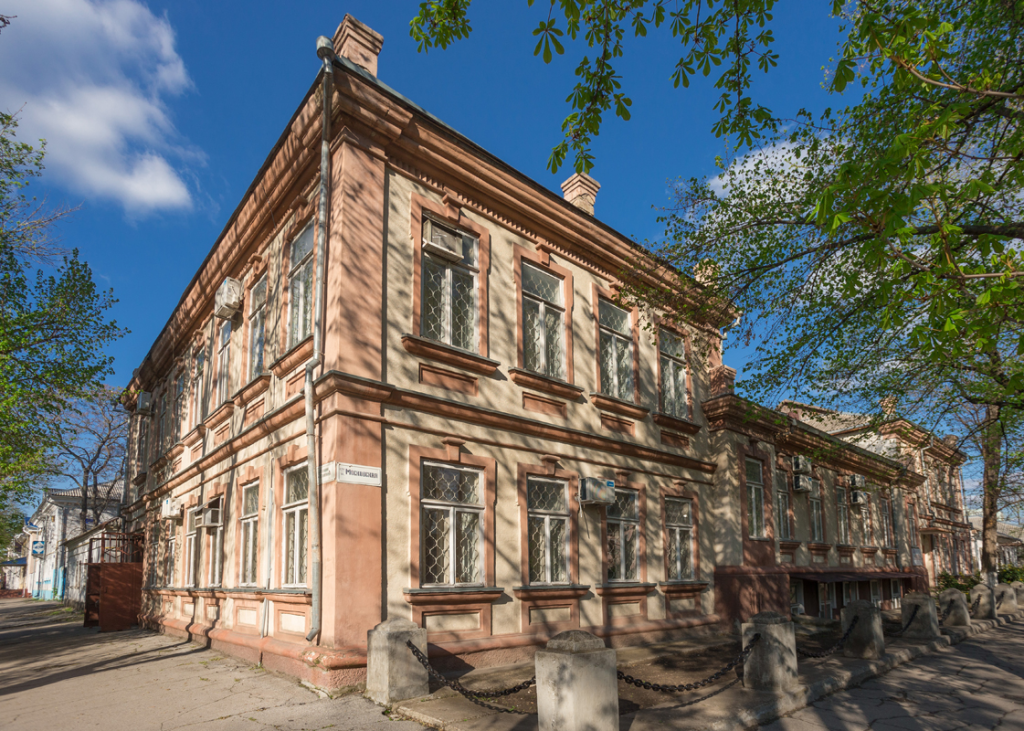
The Former House of the Merchant Schmalts
Located in the central part of the city along Moskovskaya Street, this historic building stands in an area that has largely preserved its original historical character. Constructed in the last quarter of the 19th century, the building is distinguished by its simple, austere architectural forms — a design philosophy that gives it a quiet but distinctive presence on the street.
The building’s history began with a notable civic purpose, housing a Jewish women’s school within its walls. However, during the Romanian occupation, the school was forced to close, and the building subsequently passed into the hands of Grigory Schmalts, one of the city’s wealthy townspeople. Schmalts operated a substantial locksmith and turning workshop here, alongside a foundry dedicated to casting various bronze items — these industrial operations were housed in a semi-basement level, while the second floor served as comfortable living space for the merchant and his family.
Following the war, the building took on yet another role, housing the Office of the Moldovan River Shipping Company. Today, the historic structure continues to serve practical civic functions, currently accommodating the state administration’s “Model Center for Employment of the Population of Bendery” alongside the Bendery City Department of Environmental Control — a testament to how this adaptable building has continued meeting the evolving needs of the community across more than a century of changing purposes.
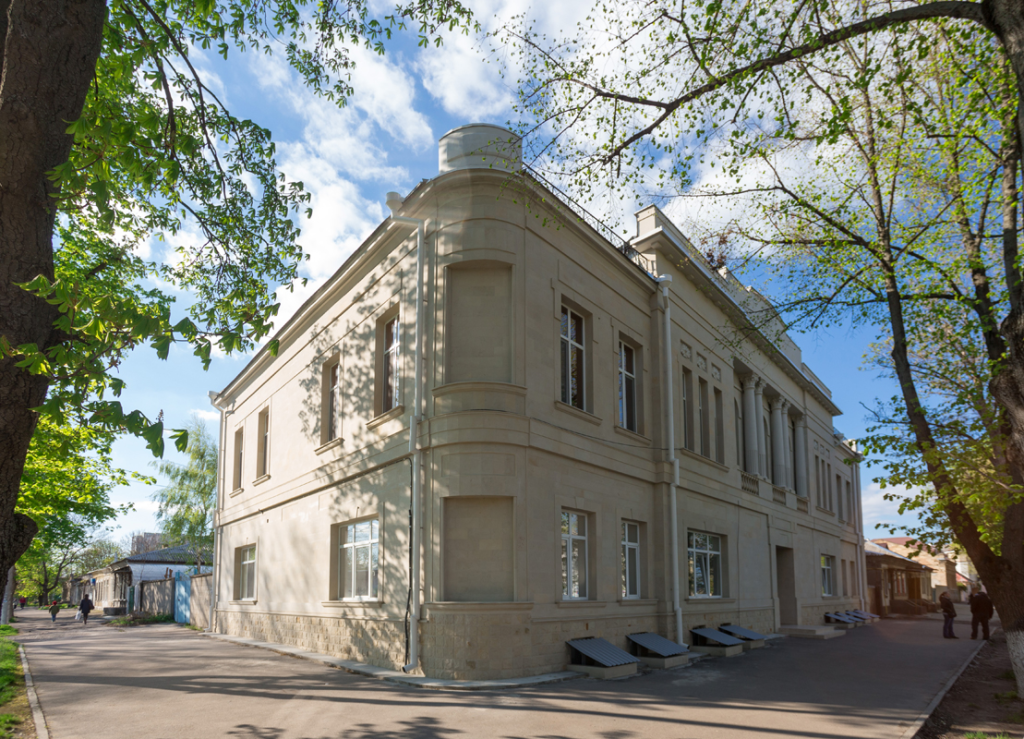
Children and Youth Creativity Palace (Previously Manus Bank)
This elegant two-story building, designed in modern style with notable elements of eclecticism, was constructed by order of the banker Ignaz Iosifovich Manus. For many years, it served as the home of a landowner’s mutual loan society — a financial institution catering to the agricultural elite of the region. Over the decades that followed, the building’s purpose shifted repeatedly to meet the changing needs of the community, at various times housing a synagogue, a tribunal, a commercial gymnasium and even a men’s lyceum, each transformation adding another layer to the building’s rich and varied history.
On December 15, 1944, the building took on the role it would maintain for the remainder of the 20th century and beyond, becoming a Pioneers and Schoolchildren Palace — a center dedicated to nurturing the talents and creativity of the city’s youngest residents. Today, continuing this educational legacy, the building operates as the Children and Youth Creativity Palace, carrying forward more than a century of adaptive use that has seen this remarkable structure serve banking, religious, judicial, educational and ultimately creative purposes for the people of Bendery.

Berg's House
Within this modest one-story building, in 1876, a child was born who would go on to become one of the most distinguished scientific minds of his generation — Lev Semyonovich Berg. Born into the family of a local notary, Berg dedicated his entire life to scientific pursuit, ultimately earning recognition as an outstanding geographer, biologist and academician whose work left an indelible mark on multiple scientific disciplines.
Through numerous expeditions across vast and varied terrain, Berg gathered invaluable research material that would form the foundation for more than 600 fundamental scholarly works spanning ichthyology, climatology, the study of lakes and broader geography. His extraordinary breadth of knowledge and contribution across so many fields has rightfully earned him recognition as a true scientist-encyclopedist — a rare distinction reflecting the remarkable scope and depth of his life’s work, all of which traces back to this humble birthplace in Bendery.
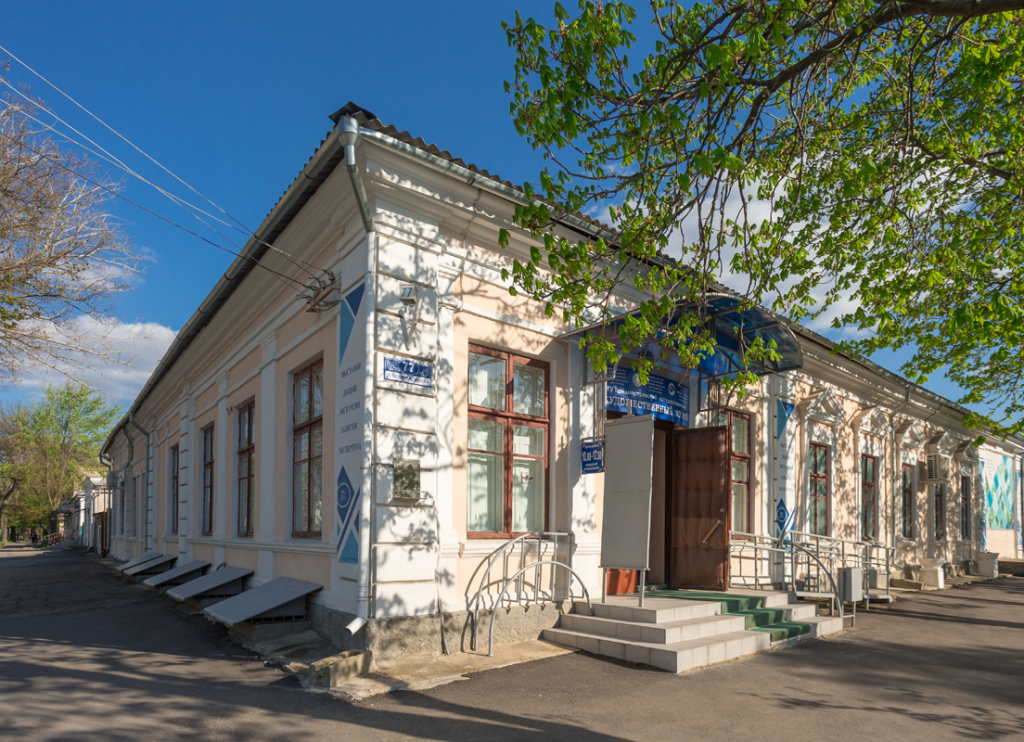
State Art Museum of Pridnestrovie
This austere yet striking building, constructed at the beginning of the previous century, continues to draw the attention of both citizens and visiting guests alike. The house originally belonged to Khaim-Zelik Sokolov — a Jewish resident bearing a Russian surname — who at one point partially rented out portions of the property. The building’s transformation into a cultural institution began in 1971, when it became home to the Bendery Art Gallery, marking the start of a journey that would eventually elevate it to far greater prominence.
In 2013, the gallery achieved a significant milestone, officially becoming the State Art Museum of Pridnestrovie. Today, the museum’s holdings comprise an impressive seven-thousand-piece collection encompassing paintings, drawings, sculptures, decorative and applied arts, photography and philately — together forming the very heart of the museum’s identity and standing as an essential pillar of the cultural heritage of the Pridnestrovian Moldavian Republic. Visitors exploring this collection gain a comprehensive window into the artistic traditions and creative achievements that have flourished throughout the region across generations.
Jewish Cemetery in Bender
The Jewish cemetery in Bender was established over a century ago, with its first burials dating back to the beginning of the 20th century. Since then, the cemetery has grown considerably, now containing more than 6,000 graves that collectively tell the story of generations who called this city home.
Among those laid to rest here are veterans of both World War I and the Great Patriotic War, international soldiers who served far from their homelands, participants in the military events that unfolded in Pridnestrovie in 1992, alongside many of Bendery’s most respected doctors, teachers and builders — professionals whose contributions shaped the city’s development across decades. In 2015, a dedicated monument was unveiled honoring the Jews who died on the battlefields of the Second World War, adding a meaningful commemorative landmark to this historic burial ground and ensuring that the sacrifices of these soldiers remain permanently remembered within the community they once served.

Monument to the Victims of the Holocaust in Bendery
On June 23, 2002, a monument to the Holocaust Victims was erected along the Dniester riverfront, creating a permanent and deeply moving tribute to one of history’s darkest chapters. This terrible tragedy that befell the Jewish people during the Second World War touched the citizens of Bendery profoundly — more than 2,000 Jews were executed here, a loss whose weight continues to resonate through the city’s collective memory.
Created with the dedicated support of Bendery’s Jewish community, the monument takes the form of a fragment from the Wall of Tears, crafted from black stone marked with red blotches that evoke the appearance of blood drops — a powerful visual metaphor for the violence and suffering being memorialized. Carved into the stone is the Star of David, with the numbers “1941” inscribed above it, anchoring the monument to the specific historical moment when this tragedy unfolded. The monument was brought to life through the collaborative efforts of architect A. Narolsky and artist M. Solovey, whose combined vision created a memorial of both artistic power and profound historical significance.
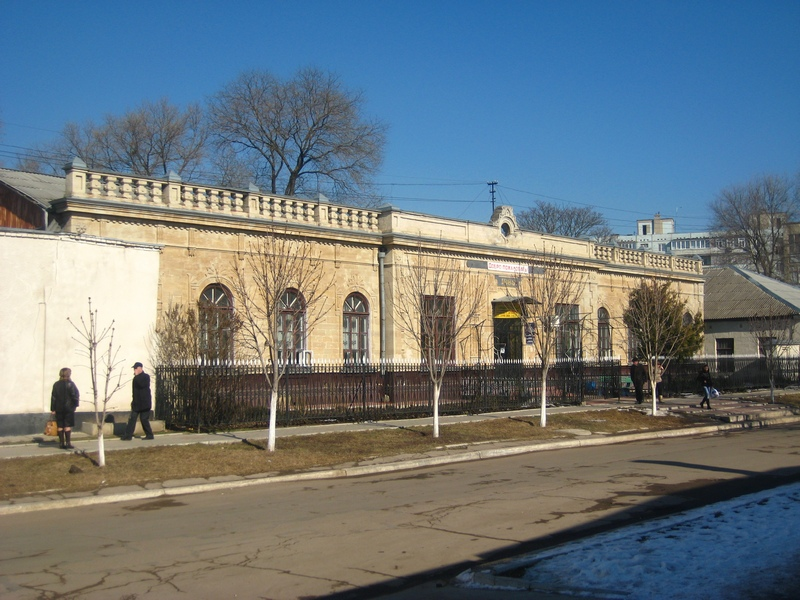
Medical College in Bender (Jewish Hospital in the Past)
This historic building owes its origins to entrepreneur Itskhok Nisenboim, who constructed a Jewish hospital here in 1889 — a comprehensive medical facility that served the city’s Jewish community with remarkable thoroughness. Within its walls operated a polyclinic, a pharmacy, a nursing home accommodating 40 to 50 beds, a shelter dedicated to the Jewish community and even a synagogue specifically for doctors and paramedics, reflecting the institution’s holistic approach to caring for both the physical and spiritual needs of those it served.
Architecturally, the building distinguishes itself through strict classical proportions and a careful attention to symmetry and decorative detail. The central entrance is elegantly framed with pilasters, while window openings feature decorative geometric patterns alongside graceful arched designs. Surrounding the entire structure, an openwork forged lattice adds a final touch of craftsmanship, harmonizing beautifully with the building’s overall facade and completing this fine example of late 19th-century architectural design dedicated to philanthropic medical care.
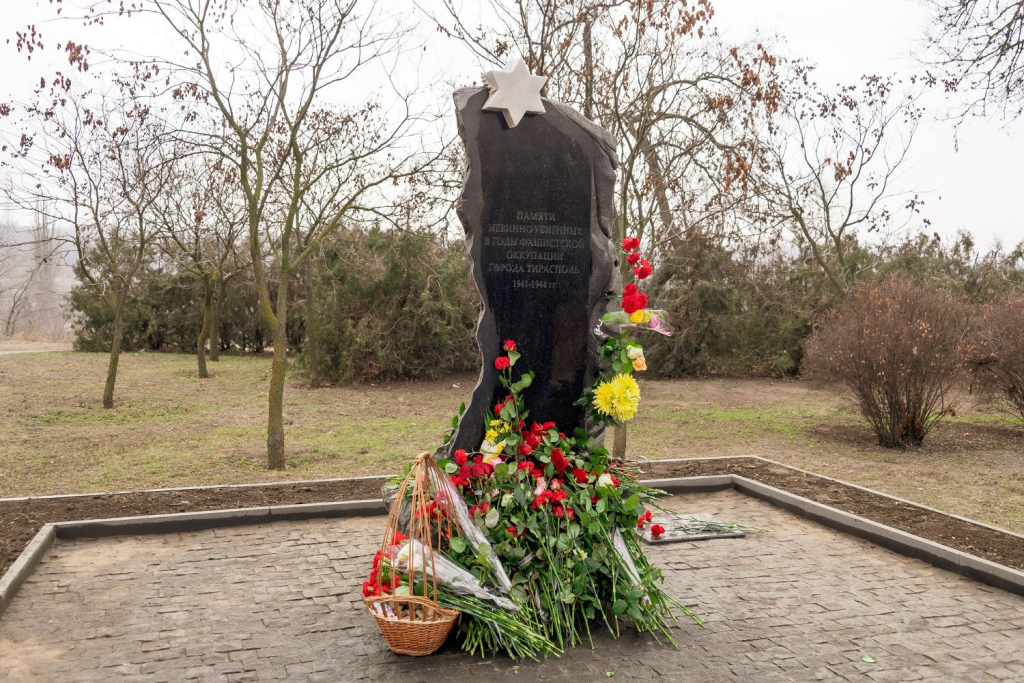
Monument to the Holocaust Victims in Tiraspol
This solemn monument was erected in memory of all 6 million victims of the Holocaust — honoring not only those who perished in Nazi death camps and other sites of mass extermination across Europe, but also those whose lives were taken closer to home, here in Pridnestrovie. The monument specifically remembers those who were shot along the slopes of the Dniester and those who were tortured to death within the ghettos established in Rybnitsa and Dubossary, ensuring that the local dimension of this global tragedy is never forgotten alongside the broader historical narrative of the Holocaust.
Standing in Tiraspol, this monument serves as a powerful reminder that the suffering of the Holocaust touched every corner of the region, including communities much closer to home than the distant death camps that often dominate historical memory of this period.

Jewish Center "Hesed"
The Hesed Jewish Center serves as the vibrant heart of Jewish community life in Tiraspol, hosting a wide range of social and charitable projects specifically designed to support vulnerable members of the community. For the older generation, the center maintains a dedicated club where regular meetings provide opportunities for warm communication and meaningful social connection among peers who share common cultural roots and life experiences.
Equally important is the center’s modern youth club, which welcomes children with Jewish heritage — and indeed others beyond the Jewish community — to actively participate in community life, celebrate holidays together and simply enjoy each other’s company in a welcoming, inclusive environment. Beyond its social programming, Hesed places tremendous importance on memory preservation, carefully passing down knowledge of Holocaust history, Jewish identity and cultural traditions to successive generations, ensuring this vital heritage continues to live on. Throughout all of its activities, the center operates firmly in the spirit of internationalism and freedom of opinion, creating a genuinely open and welcoming space for all who wish to engage with its mission.
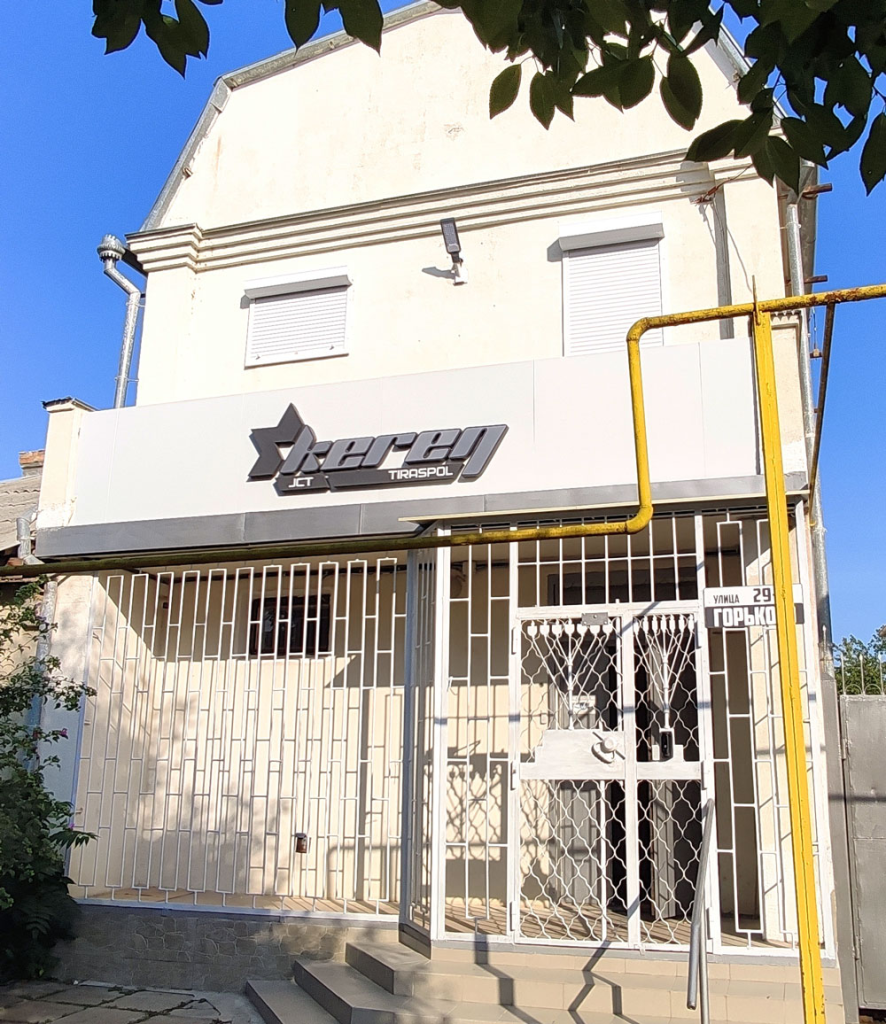
Synagogue in Tiraspol
This synagogue stands as the only one currently operating in all of Pridnestrovie, having successfully confirmed its official status as a Jewish house of shared prayer that fully complies with all Jewish religious canons. Within its walls, members of the Jewish community gather to participate in prayers and celebrate the rich calendar of Jewish holidays throughout the year, maintaining a living connection to faith and tradition.
The synagogue also serves as a guardian of community heritage, preserving some of the Jewish community’s treasured relics within its sacred space. Fittingly, the synagogue bears the name “Keren,” meaning “Ray” in Hebrew — a name that evokes light and illumination, symbolically reflecting the synagogue’s role as a beacon of faith and continuity for Tiraspol’s Jewish community.
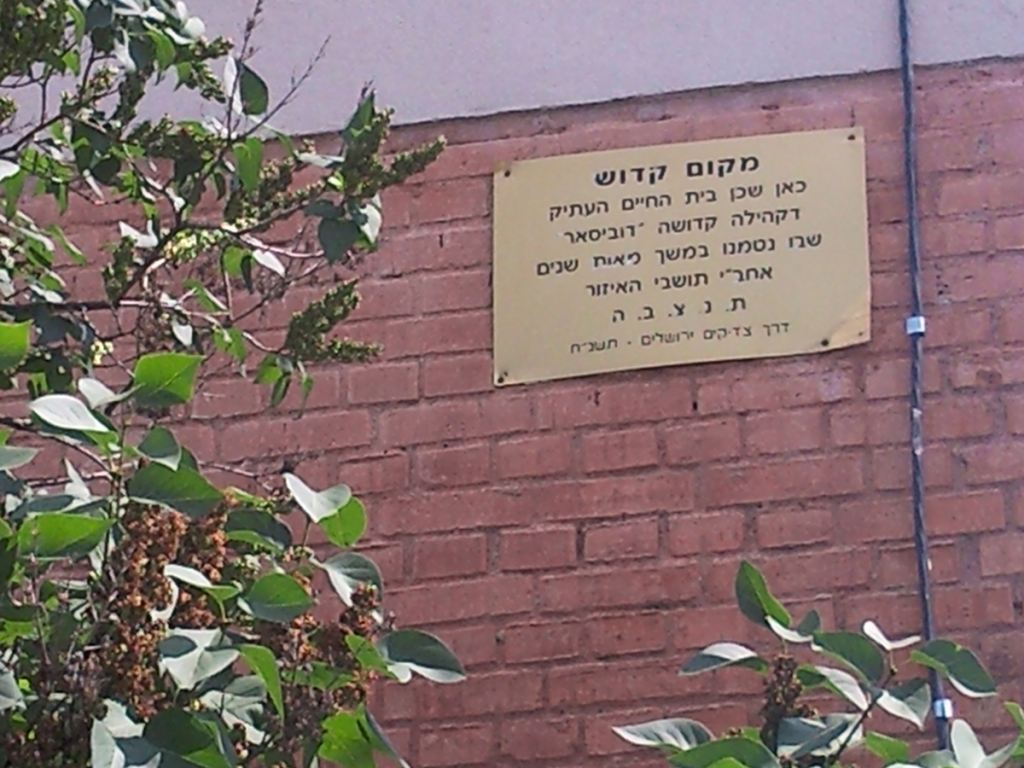
Old Ruined Jewish Cemetery, Dubossary
This old, second Jewish cemetery in Dubossary met its destruction between 1950 and 1955, swept away during the construction of the hydroelectric power station on the Dniester River — a stark example of how large-scale Soviet infrastructure projects sometimes came at the cost of historical and sacred sites. According to stories passed down by local old-timers, one of the oldest burials within this cemetery dated back as far as 1616, underscoring the remarkable depth of Jewish presence in Dubossary stretching back centuries.
A poignant local legend has long been associated with this lost burial ground: the story tells of a bride and groom who tragically died on their very wedding day, said to have been buried together within the same grave — a haunting tale that captured the imagination of the city for generations. Today, the site where this historic cemetery once stood has been entirely repurposed, now occupied by the building of DOSAAF, an automobile club, leaving little physical trace of the sacred ground that existed here for over three centuries.

Former Synagogue Building in Dubossary
This two-story building was constructed during the first half of the 19th century, funded through private donations contributed by the local Jewish community who recognized the need for a proper place of worship. Within the building’s courtyard, a small structure has survived to this day — a mikvah, traditionally used for ritual ablution, offering a tangible reminder of the religious practices that once centered around this site.
The synagogue continued serving its intended religious purpose until 1933, after which the building underwent nationalization. Since that transition, and continuing to the present day, the building has housed various state services, marking a significant shift from its original sacred function toward administrative use — though the building itself, along with its preserved mikvah, continues to stand as a physical reminder of Dubossary’s once-vibrant Jewish religious life.
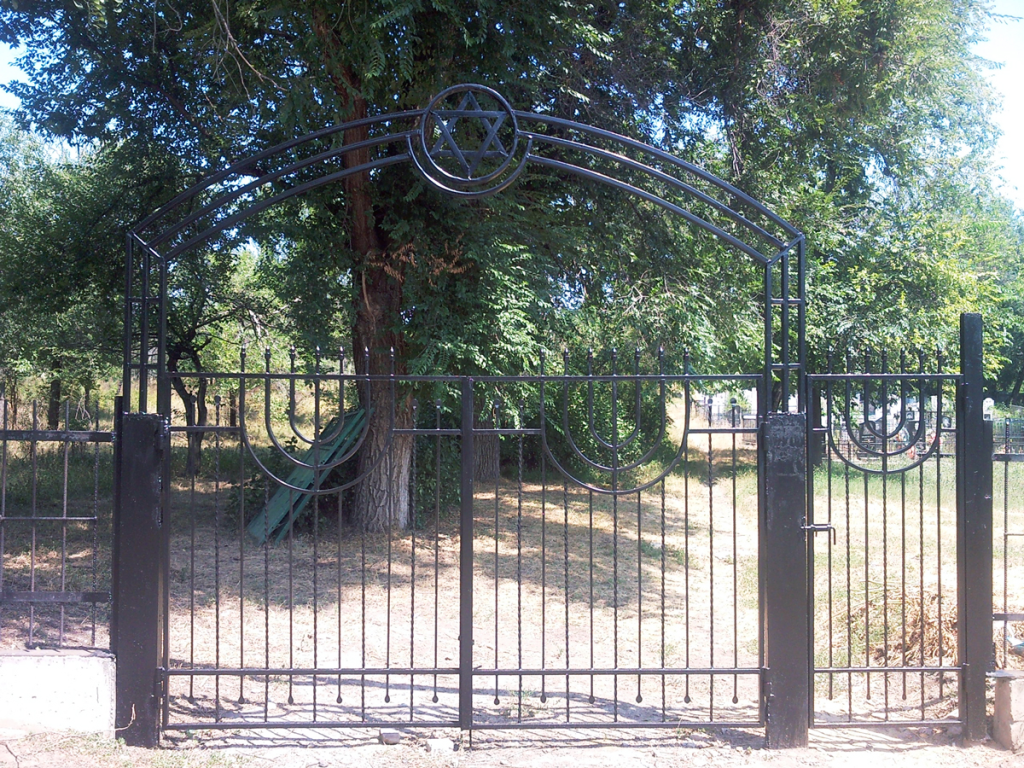
Jewish Cemetery in Dubossary
This site holds the distinction of being one of the oldest cemeteries in Dubossary, containing approximately 2,000 historic graves alongside 250 more recent burials made after 1945 — together spanning nearly two centuries of continuous use by the local Jewish community. The oldest documented burial dates back to 8 Adar 5587 according to the Hebrew calendar, corresponding to March 7, 1827 in the Gregorian calendar, establishing this cemetery’s remarkable historical depth.
Among the cemetery’s most significant features is the preserved burial place of a renowned tzaddik — a devout and pious spiritual leader of the Hasidic community. This particular grave has become a genuine place of pilgrimage, drawing Hasidic visitors from far and wide who travel specifically to Dubossary to pay their respects at this revered site, making the cemetery not merely a historical burial ground but an active and meaningful place of worship that continues to draw devoted visitors to this day.

Memorial to the Victims of Fascism, Dubossary
This memorial stands on the site of a mass burial within the territory of the former Moldavian SSR, marking one of the most devastating tragedies to befall this region during the Second World War. Between September 12 and 28, 1941, a German punitive detachment carried out the systematic execution of up to 18,500 civilians, drawn from the cities of Kishinev, Tiraspol, Rybnitsa, Grigoriopol, Dubossary, Balta, Krasnye Okna and numerous nearby villages — an atrocity of staggering scale that claimed the lives of an entire cross-section of the regional population.
The full details of this heinous crime only came to light following the declassification of SMERSH counterintelligence documents, specifically those addressing the case titled “About Atrocities of Fascists During the Temporary German-Romanian Occupation of 1941-1944 in the Dubossary District of the MSSR.” In the 1950s, a memorial was established at the execution site to honor the victims, building upon an earlier typical Soviet monument that had been installed there in 1949.
In 2017, the memorial complex was further enriched with the addition of the Requiem monument — a deeply moving sculpture depicting the silhouette of a praying Jew, covered with a tallit, the traditional prayer shawl used in Jewish ritual ceremony. This powerful addition gives visual and spiritual expression to the specifically Jewish dimension of this tragedy, ensuring that visitors to the memorial understand the full human weight of what occurred on this ground more than eight decades ago.

Monument to Martyrs and Victims of the Rybnitsa Ghetto
More than 5,000 Jews lost their lives in the Rybnitsa region and the city itself during one of the darkest chapters of the Second World War. The Jewish ghetto established here existed from September 1941 until March 30, 1944, confining and ultimately claiming the lives of countless members of the local Jewish community during this devastating period of occupation.
The monument honoring these victims was officially opened on March 30, 2004, deliberately timed to coincide with the 60th anniversary of Rybnitsa’s liberation from Nazi invaders. Constructed from red brick with slabs crafted from gabbro marble, the monument is crowned with a menorah — the traditional seven-branched candlestick of Jewish tradition — fashioned from stainless steel by workers of the JSC “Moldavian Metallurgical Plant,” connecting the region’s industrial capacity to this solemn act of remembrance. The monument bears the simple but profound caption: “We remember.” The monument’s design is credited to architect S.M. Shoihet, whose work here joins his other significant contributions to the region’s memorial landscape.

Monument to the Victims of the Rybnitsa Ghetto
This solemn monument, erected over a mass grave on November 5, 2006, takes the form of a substantial concrete sarcophagus measuring 3.5 by 12 meters and standing 1.5 meters in height, topped with a dignified memorial granite slab. The monument’s design is the work of architect S.M. Shoikhet, whose careful approach gives appropriate weight and gravity to this place of profound loss.
The inscription carved upon the monument reads with simple, heartfelt sorrow: “There are more than 500 Jews — prisoners of the Rybnitsa ghetto, who were killed in 1941-1944. Rest their bright souls, Almighty! We grieve, remember.” Located within the grounds of the old Jewish cemetery on Krutaya Gorka Street, this monument stands as a permanent and deeply moving tribute to the more than 500 individuals whose lives were taken during the ghetto’s existence, ensuring their memory endures within the community they once called home.
Memorial Sign to the Fascism Victims in Rybnitsa
Within the grounds of the old Jewish cemetery on Krutaya Gorka Street stands a memorial sign dedicated to the victims of fascism — a simple yet meaningful wall bearing an inscription written in Hebrew. This modest but significant memorial adds to the cluster of remembrance sites within this historic cemetery, together forming a comprehensive tribute to the Jewish community of Rybnitsa whose lives were tragically claimed during the Nazi occupation, ensuring their memory remains preserved in their own ancestral language at this sacred resting place.

Memorial Sign to the Jews Tortured During the Holocaust and Who Died in Peacetime, Rybnitsa
Positioned at the entrance to the old Jewish cemetery in Rybnitsa, this memorial sign takes the form of a concrete pedestal topped with a marble memorial slab, bearing a deeply moving inscription that reads: “Dear man! Bow your head before the blessed memory of the Jews tortured during the Holocaust and who died in peacetime, whose names remained unknown. Peace and rest to the ashes of the tortured and dead!”
This poignant tribute specifically honors those victims whose individual names and stories have been lost to history — anonymous souls whose suffering during the Holocaust, as well as those who passed in the difficult years that followed, deserve remembrance even without the ability to name them individually. As the first memorial encountered upon entering this historic cemetery, it sets a respectful and solemn tone for all who visit this sacred ground.

Bed of Honor of Fascism Victims, Rybnitsa
This memorial site traces its origins to a sobering discovery: the remains of executed ghetto prisoners were uncovered during the construction of a dry-cleaning factory, bringing to light yet another chapter of the wartime tragedy that befell Rybnitsa’s Jewish community. Following this discovery, a proper reburial took place at the old city cemetery on March 15, 1968, finally giving these victims a dignified final resting place decades after their deaths.
The memorial site underwent further reconstruction on October 23, 2009, carried out by the public organization “Rybnitsa Jewish Community,” who ensured the monument — crafted from black granite — would properly honor those whose remains had been disturbed and finally laid to rest here. Located on Titova Street within the old city cemetery, this site stands as a testament to the community’s ongoing commitment to honoring victims even decades after the initial tragedy, ensuring that even belatedly discovered remains receive the respect and remembrance they deserve.
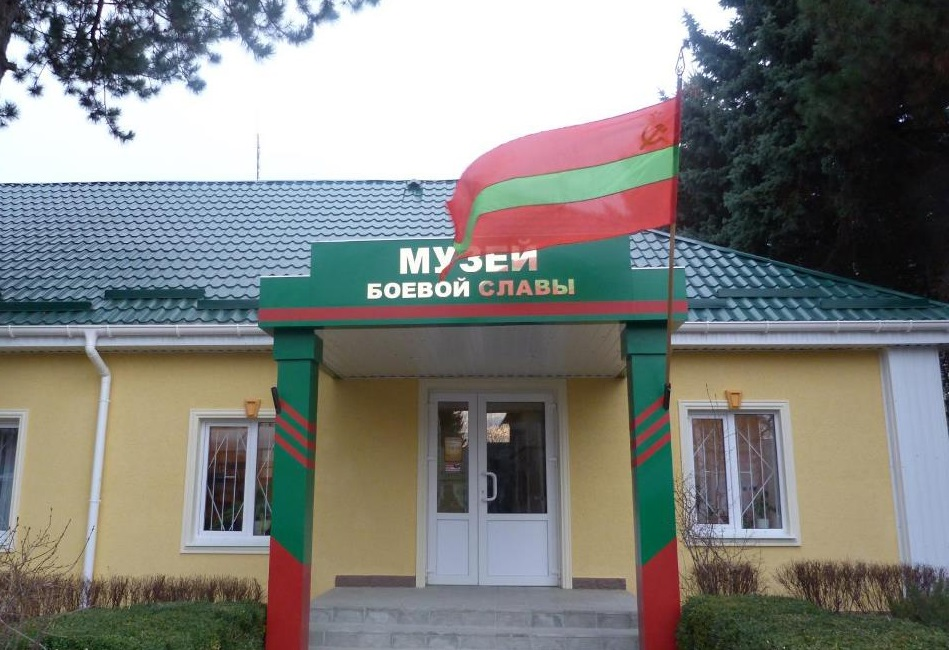
Museum of Military Glory in Rybnitsa
In September 1941, occupation authorities established a prison and concentration camp in Rybnitsa, a facility where arrested party members, Soviet activists and the Jewish population were held captive under brutal conditions. The darkest moment in this site’s history occurred on the night of March 19-20, 1944, when Romanian and German executioners burned 270 Soviet citizens and prisoners of war, among them — according to incomplete records — at least 50 people of Jewish nationality, a horrific act that stands as one of the most devastating crimes committed in the region during the occupation.
The Museum of Military Glory in Rybnitsa opened its doors on May 9, 2010, deliberately timed to coincide with the 65th anniversary of Victory in the Second World War. Significantly, the museum occupies this very historical site where the Nazis once held political prisoners — including partisans and underground resistance workers — transforming a place once associated with imprisonment and atrocity into a space dedicated to remembrance, education and the honoring of those who suffered and resisted during this devastating period of occupation.

Bed of Honor and Monument to the Victims of Fascism, Kolbasna Village
This memorial was erected on October 31, 2003, marking the final resting place of eleven victims — members of two Jewish families who were tragically shot in 1942 during the darkest period of Nazi occupation. The tombstone bears a deeply personal inscription that gives names and faces to this tragedy: “Here are those Jews, who were shot in 1941-1942 by Nazi executioners: Gnip Yakov and Genya, their children: Etl, Manya, Liza, Goikhman Motl; refugees from Bessarabia — four unknown women and a child. Rest their bright souls, Almighty!”
This deeply moving inscription serves as a powerful reminder that behind every statistic of wartime atrocity lies real families, real children and real human beings whose lives were violently cut short. The memorial preserves the names of those who could be identified — the Gnip family with their children Etl, Manya and Liza, alongside Goikhman Motl — while also acknowledging the unnamed refugees from Bessarabia whose identities remain lost to history, ensuring that even anonymous victims receive recognition and remembrance at this small but profoundly significant village memorial.
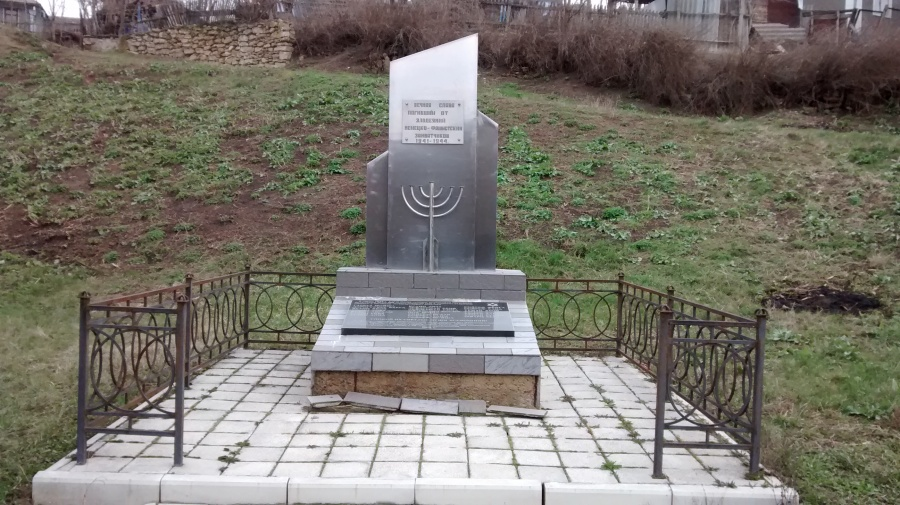
Memorial Sign to Jews — Ploti Village
This memorial sign was installed on October 23, 2009, in memory of more than 250 victims — encompassing both village residents and individuals who had been forcibly displaced from various regions of Ukraine and Bessarabia. Crafted in the form of an obelisk, the monument features a tombstone bearing a detailed list of victims’ names, ensuring that those who perished are remembered individually rather than as an anonymous statistic.
The memorial’s inscription reads simply: “Eternal glory to the victims of fascism who died in 1941-1944.” Unlike some other memorial sites in the region, there is no dedicated bed of honor at this particular location — the obelisk itself stands as the primary and sole memorial marker, a modest but meaningful tribute to the substantial number of lives lost in this small village during the darkest years of Nazi occupation.
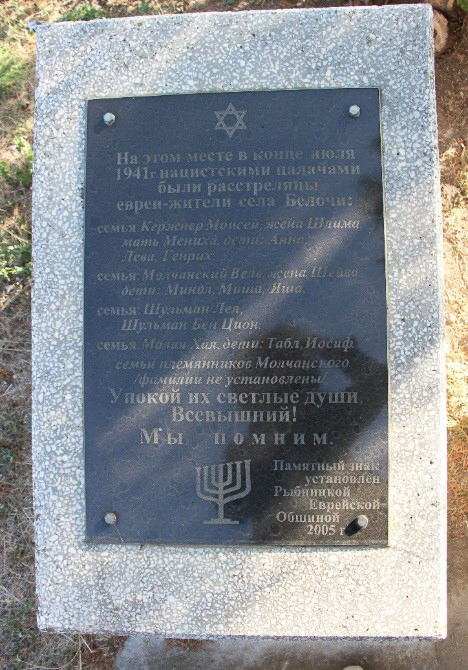
Memorial Sign to Jews — Belochi Village Residents
This memorial sign was erected on August 7, 2005, in remembrance of Jewish families who were shot by Nazi forces at this very location at the end of July 1941. The inscription on the memorial plate preserves their names with remarkable specificity: “At this place at the end of July 1941, Nazi executioners shot Jews — residents of the Belochi village: the Molchansk family: husband — Volko, wife — Sheiva, daughter — Shlima, daughter — Mindlya, son — Mechik, son — Yasha; Kerzhner family: husband — Moisha, wife — Shlima, daughter — Anna, son — Ehlik; Minka family; family: Molchansky’s nephews (names not established). Rest their bright souls, Almighty! We remember!”
This deeply personal inscription gives voice to entire families whose lives were extinguished together in a single act of brutality — parents and children, named one by one wherever possible, alongside an acknowledgment of additional relatives whose identities could not be definitively established. The memorial stands as a powerful testament to the human cost of the Holocaust at the most intimate, family level, ensuring that the Molchansk and Kerzhner families of Belochi village are remembered not as abstract victims but as real people with names, relationships and lives that were unjustly cut short.
Jewish Cemetery, Rashkov Village
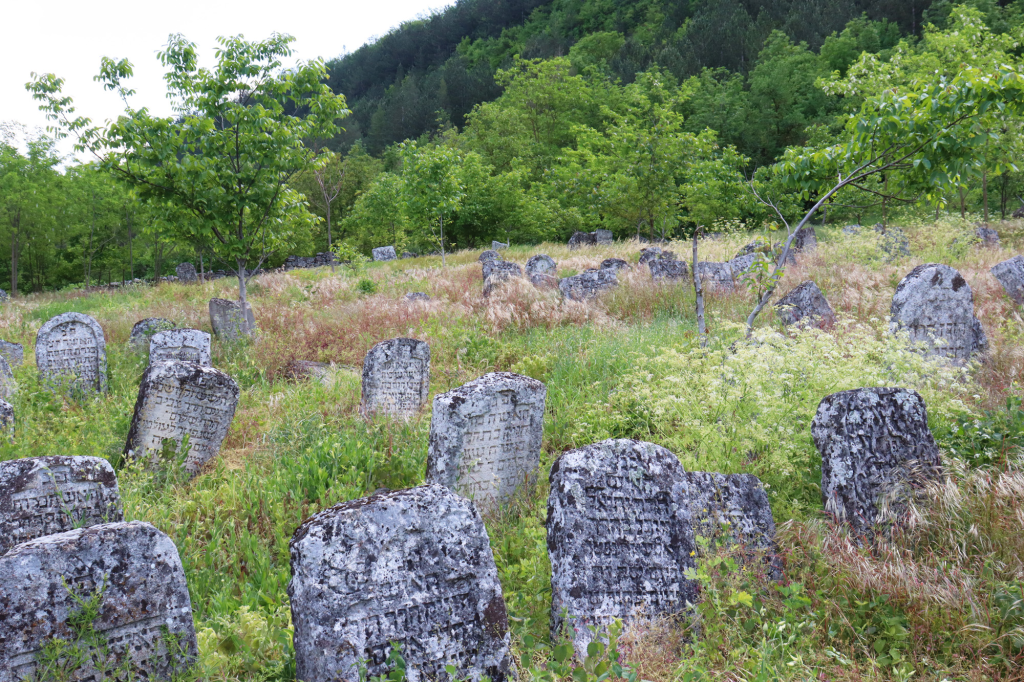
Jewish cemeteries in the Podolsk townships of this era typically followed a consistent pattern, located outside city limits along the lines where fortification ramparts had once stood during the 17th and 18th centuries. This particular cemetery in Rashkov village serves as a clear historical marker, precisely delineating the western border of the city as it existed at the beginning of the 18th century — with its oldest surviving gravestone dating back to 1709, providing a remarkably early window into the long history of Jewish settlement in this ancient village.
This cemetery thus offers more than simply a place of burial; it functions as a kind of historical document in stone, helping researchers and visitors alike understand not only the depth of Jewish presence in Rashkov but also the very physical boundaries and development of the village itself during this formative period of its history.

Ruins of the Synagogue
Constructed around 1749 using funds collected through the so-called “basket tax” — a specialized form of taxation of the era — this synagogue once stood at the very heart of Rashkov’s spiritual and communal life. During this period, the village held particular significance as one of the centers of world Hasidism, a religious movement within Judaism that swept through the Jewish population of the Polish-Lithuanian Commonwealth and surrounding territories during the first half of the 18th century.
For generations, the synagogue served as the spiritual anchor for Rashkov’s substantial and vibrant Jewish community. Tragically, the building’s fate changed dramatically in the early 1930s, when the Soviet anti-religious campaign led to the destruction of its vaults. Today, only the stone walls and a handful of interior architectural elements remain standing from what was once a truly majestic structure — a haunting reminder of the rich Jewish heritage that once flourished in this corner of Pridnestrovie.

Place of Drowning of Jews, Rashkov Village
This site stands as one of the most harrowing locations connected to the Holocaust in Rashkov village, its history documented through archival materials held by the State Archives of the Russian Federation. According to the “Act on the Atrocities of the Fascist Terror Against the Rashkov Residents,” drawn up on November 18, 1944, this stretch of the Dniester River witnessed unimaginable suffering during the summer of 1941.
The document records that on August 4, 1941, a German-Romanian punitive squad, assisted by gendarmes, drove 65 men and women — residents of Rashkov — into the Dniester River, where they were shot. The chilling official record notes simply that “the troupes of all the people who were shot have sailed away,” indicating that the river itself carried away the bodies of the victims, leaving no remains for proper burial.
The violence continued in the weeks that followed: on August 17, 1941, Romanian gendarmes shot 38 men from Rashkov village along the banks of the Dniester, with the same devastating outcome — “there were no bodies left, they sailed away.” Then, on September 5, 1941, three men and three women were killed, though in this instance relatives were able to recover and bury the dead at the village cemetery, providing at least some measure of dignity that had been denied to the earlier victims. This site along the Dniester thus bears witness to multiple waves of brutal violence inflicted upon the Jewish community of Rashkov within the span of just a few weeks during the summer of 1941.
Jewish cemetery, Rashkov village
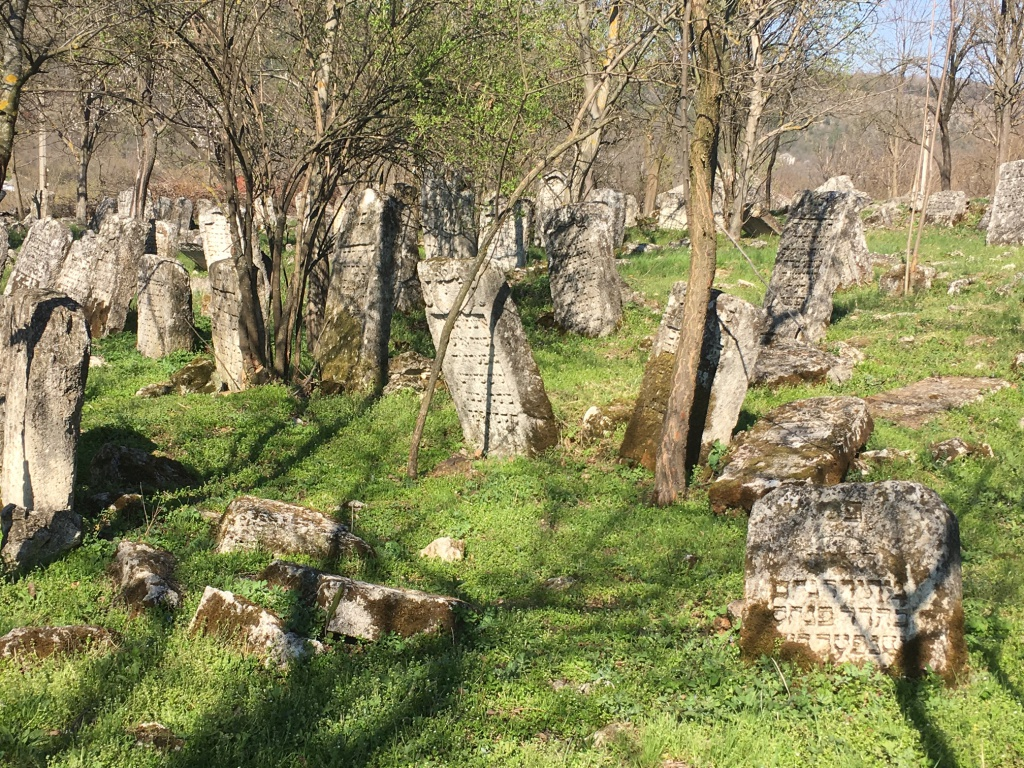
Jewish cemeteries in Podolsk townships, as a rule, were located outside the city limits, along which ramparts of fortifications still passed in the 17th-18th centuries. This cemetery clearly delineates the western border of the city at the beginning of the 18th century (the oldest gravestone dates back to 1709).