 Skip to content

Places of military glory
Places of Military Glory: A Five-Day Route
Embark on a profound and deeply moving journey through the Places of Military Glory of Pridnestrovie — a five-day, 310 km route connecting 39 museums, memorials, monuments and sacred sites dedicated to the heroes, victims and defining battles of the Great Patriotic War of 1941–1945.
On June 22, 1941, war came to these lands. For the next three years, the people of Pridnestrovie endured fascist occupation — suffering, resisting and ultimately triumphing. This route is an act of remembrance: a journey that ensures the courage of those who lived, fought and died here is never forgotten.
Day 1 — Bender, Chitcani and Parcani: The Front Line of Liberation
The journey begins in Bender at the Museum of Military Glory (8 Academician Fedorov Str.) — a comprehensive institution dedicated to the military history of the city and its role in the Great Patriotic War. Its collections of weapons, documents, photographs and personal effects bring the human stories of the conflict vividly to life.
After 2.9 km, the Memorial of Military Glory — Mass Graves on Heroes’ Square (Suvorov Str., Bender) offers one of the most solemn and powerful stops of the entire route — a place where the fallen rest and the living come to remember.
Just 2.1 km further, the Memorial Sign “Glory to the Hero-Liberators” on Victory Square continues the day’s thread of tribute and gratitude — a proud declaration of the city’s liberation and the sacrifice that made it possible.
After 15 km, the route arrives in Kitskany village at the Museum of the Iasi-Chisinau Operation (31 Kotovskogo Str.) — one of the most historically significant museums on the entire route, dedicated to the decisive 1944 military operation that liberated Moldova and laid the groundwork for the liberation of Eastern Europe.
Just 2.7 km away, the legendary Kitskany Bridgehead (Kitskany village, Slobodzeya district) stands as one of the most hallowed military sites in Pridnestrovie — the site of fierce and costly battles that are remembered with the deepest reverence.
After 2 km, the Memorial of Glory to Soviet Soldiers in Kitskany village (Lenin Str.) rounds off the Kitskany stops with a dignified tribute to the men and women who fought and fell here.
Continuing 15 km to Parcani village, the Long-Term Firing Point near Parcani (Tiraspol-Chisinau road) offers a rare and tangible encounter with the physical infrastructure of wartime defense — a surviving fortification that brings the reality of the front line into sharp focus.
The day concludes 2.3 km further at the Memorial Complex of Military Glory in Parcani village (Gogolya Str.) — a fitting end to a day of deep historical immersion, honoring the community’s wartime sacrifice with quiet dignity.
Day 2 — Tiraspol: The Capital Remembers
After a 5.2 km drive, the second day opens at the Monument to Soviet Soldiers who Died During the Great Patriotic War in Novotiraspolsky village — a humble yet deeply moving tribute at the gateway to the capital.
Just 4.6 km further, the Obelisk to the Liberator Soldiers of the 37th Army on Borodinskaya Square, Tiraspol, honors the specific military formation whose operations were decisive in the liberation of this region — a monument as historically precise as it is emotionally resonant.
After 2 km, the Monument to the Victims of Fascism of the Great Patriotic War (Kommunarov Str., Tiraspol) broadens the day’s tribute to encompass the civilian victims of the occupation — a reminder that war’s toll falls on all.
Continuing 4.3 km, the magnificent Memorial Complex of Glory (Pokrovskaya Str., center, Tiraspol) stands as the most iconic war memorial in the entire capital — an ensemble of monuments, eternal flame and sculptural tributes that forms the emotional and civic heart of Tiraspol’s remembrance culture.
Just 1.9 km away, the Memorial Stele in Memory of Teachers and Students of the Pedagogical Institute (107 Pokrovskaya Str.) pays tribute to the academic community’s wartime sacrifice — professors and students alike who exchanged classrooms for battlefields and never returned.
After 940 meters, the beloved Pobeda (Victory) Park (Mira Str., Tiraspol) provides a moment of reflective tranquility — a green memorial space where the city honors its liberation with living nature as well as stone and bronze.
The day concludes 4.5 km further at the Monument to Aviators (Yunosti Str., Tiraspol) — a soaring tribute to the military pilots whose bravery in the skies above Pridnestrovie helped turn the tide of war.
Day 3 — Tashlyk, India, Grigoriopol and Dubossary: Villages, Museums and the Banks of the Dniester
After a 39 km drive into Grigoriopol district, the third day begins at the Memorial Sign at the Dniester River Crossing Site in Butor village — marking the exact location where troops of the 57th Guards Rifle Division crossed the Dniester during the Iasi-Kishinev operation of 1944. Standing at the water’s edge, the scale of that wartime achievement feels both humbling and extraordinary.
Just 2.8 km away, the Local History Museum of Tashlyk village (72 Mira Str.) offers an intimate village-level perspective on wartime history — a small but meaningful collection that personalizes the broader narrative of the conflict.
After 1.6 km, the Memorial to Fallen Soldiers of the Great Patriotic War in Tashlyk village (Mira Str.) honors the men of this small community who did not return — a local monument carrying universal grief.
Continuing 12 km to Grigoriopol, the Historical Museum (144 Karl Marx Str.) provides essential historical context for the district’s wartime experience through its comprehensive collections.
Just 230 meters away, the deeply moving Memorial of Military Glory “Grieving Mother” (148 Karl Marx Str., Grigoriopol) is one of the most emotionally powerful monuments on the entire route — the eternal image of a mother mourning her fallen son, a universal symbol of war’s human cost rendered in bronze and stone.
After 13 km, the striking Barrow of Glory on the Tiraspol-Dubossary road marks the approach to Dubossary with a dramatic earthwork memorial visible from a distance — a reminder that this entire landscape was once a battleground.
Just 17 km further, the Historical and Local Lore Museum of Dubossary (9 Sovetskaya Str.) continues the day’s museum journey with a rich survey of the city’s wartime history and its place in the broader story of the Great Patriotic War.
After 2 km, the Memorial to the Victims of Fascism in Dubossary (22a Z. Kosmodemyanskoy Str.) honors both the Jewish and other civilian victims of the Nazi occupation — a site of particular historical weight given Dubossary’s once-overwhelmingly Jewish population.
The day concludes 1.7 km further at the Memorial Complex of Military Glory (Dzerzhinsky Str., Dubossary) — a comprehensive and dignified complex that brings the third day’s journey of remembrance to a fitting and solemn close.
Day 4 — Vykhvatintsy, Gidirim, Rybnitsa and Rashkov: Fortifications, Heroes and Stalin’s Line
After a 50 km drive, the fourth day opens at the Long-Term Firing Point of the Stalin Line in Vykhvatintsy village (Rybnitsa district) — one of the most remarkable military heritage sites in Pridnestrovie. This surviving fortification of the legendary Stalin Line defensive system offers a rare and tangible connection to the strategic infrastructure that shaped the opening battles of the war on this frontier.
Just 12 km further, the Monument of the Great Patriotic War in Gidirim village (Kirov Str., Rybnitsa district) honors the fallen of this riverside community — a quiet but deeply felt tribute beside the Dniester.
After 9.6 km, the route arrives in Rybnitsa at the Museum of Military Glory (91 Kirova Str.) — a well-stocked and thoughtfully curated institution dedicated to the wartime history of the northern districts of Pridnestrovie.
Just 520 meters away, the Memorial of Military Glory (Titova Str., Rybnitsa) provides an open-air complement to the museum — monuments and memorials that bring the city’s wartime narrative into the public space.
After 2 km, the Monument to Martyrs and Victims of the Rybnitsa Ghetto (Gorky Str., Rybnitsa) adds a vital dimension of Holocaust remembrance to the day — honoring the Jewish victims of the Nazi occupation of this northern city.
Continuing 33 km to Rashkov village, the Obelisk to Soldiers-Villagers who Died During the Great Patriotic War (Kamenka district) stands in the heart of this ancient settlement as a proud and sorrowful tribute to the men of Rashkov who never came home.
Just 2.4 km away, the Building of the School where Hero of the Soviet Union F.I. Zharchinsky Studied (Rashkov village, Kamenka district) connects the abstract concept of heroism to a tangible, local place — the very classrooms where a future Soviet hero once sat as a child.
The day concludes 640 meters further at the Museum of Hero of the Soviet Union F.I. Zharchinsky (35 Fiodora Zharchinskogo Str., Rashkov village) — a personal and deeply human museum dedicated to one of Rashkov’s most celebrated sons, whose story of courage and sacrifice embodies the spirit of an entire generation.
Day 5 — Podoyma, Kamenka and Severinovka: Stalin’s Line, Heroes’ Homes and a Village Finale
After a 9 km drive, the fifth and final day opens at the extraordinary Historical and Cultural Complex “Stalin’s Line” in Podoyma village (Kamenka district) — one of the most impressive and immersive military heritage sites in all of Pridnestrovie. This carefully preserved complex of fortifications, weapons and historical exhibits offers an unparalleled encounter with the defensive infrastructure that shaped the earliest and most desperate phase of the war on this frontier.
Just 8.3 km further, the Monument to the Kamenians who Died During the German-Romanian Occupation (Kirova Str., Kamenka) brings the journey into the heart of the district’s main town with a tribute that speaks directly to the local community’s wartime suffering and loss.
After 1.3 km, the House Museum of Hero of the Soviet Union I.N. Koval (8 3rd Lane of Kirov, Kamenka) opens the doors of a hero’s home — an intimate and personal museum that transforms the grand narrative of war into the story of one extraordinary individual from this community.
Just 1.9 km away, the Mass Grave of Soviet Soldiers and Monument to Fellow Villagers who Died During the Great Patriotic War (Lenina Str., Kamenka) provides one of the most sobering stops of the entire five-day journey — a sacred burial site where the ultimate cost of victory is felt with full and undeniable weight.
After 6.9 km, the Museum of Hero of the Soviet Union P.P. Vershigora in Severinovka village (26 Vershigora Lane, Kamenka district) honors one of the most remarkable figures of the partisan resistance movement — a man whose story of courage, leadership and survival deserves to be known far beyond the borders of this region.
Continuing 5.4 km, the House Museum of Ya.A. Kucherov (1 Kantemira Str., Khrustovaya village, Kamenka district) adds another intimate portrait of wartime heroism — a personal collection that keeps the memory of a remarkable individual alive for future generations.
The five-day journey concludes 18 km further at the House Museum of Hero of the Soviet Union I.S. Soltys (2 Soltys Lane, Kuzmin village, Kamenka district) — a final and deeply fitting tribute to the human face of heroism. Leaving this modest village home, having traversed 310 km and 39 sites of memory across five profound days, one carries away something impossible to quantify: a deep and lasting connection to the people of Pridnestrovie and the extraordinary price they paid for the world’s freedom.
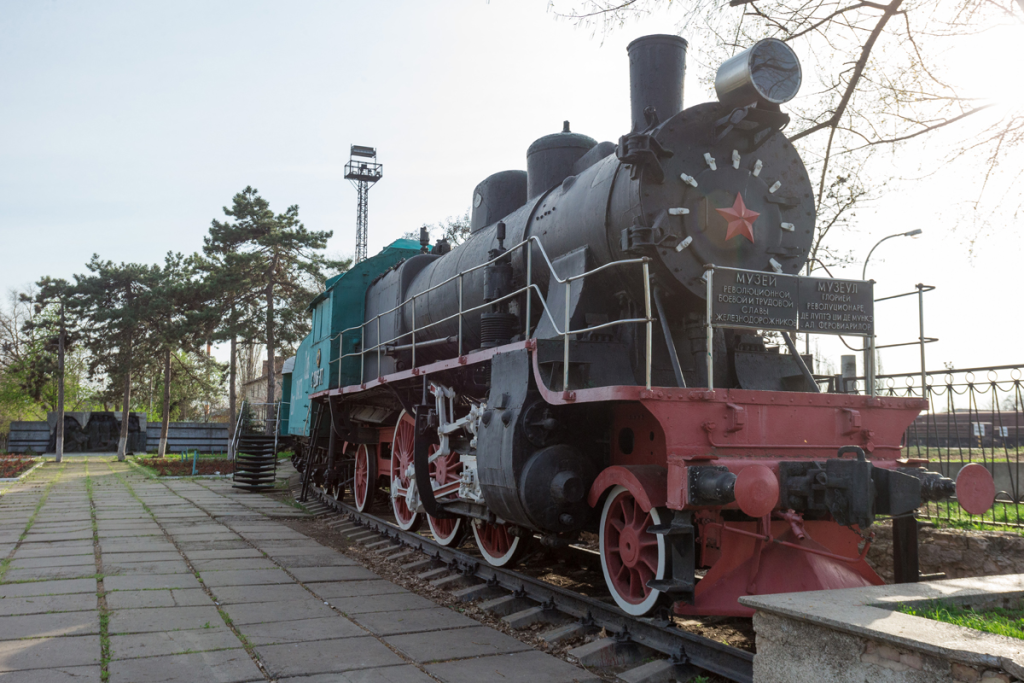
Museum of Military Glory, City of Bender
The Museum of Military Glory in Bender opened its doors in 1970, with dedicated sections focusing on the events of the Great Patriotic War that shaped this city’s wartime experience. The exhibits tell the story of the heroic defense of Bendery during June and July 1941, detail the activities of the anti-fascist underground resistance that operated under German-Romanian occupation, and honor the townspeople who fell victim to Nazi camps. The museum also covers the eventual liberation of the city by Soviet troops during the spring and summer of 1944, while presenting materials about Bendery residents who participated both in frontline battles and on the labor front supporting the war effort.
Among the museum’s most significant holdings are materials dedicated to specific heroes connected to the city: S.A. Shestakov, an Honored Pilot of the USSR who commanded the 146th Fighter Air Division and died at the Oryol-Kursk Bulge; S.I. Poletskiy, a Hero of the Soviet Union who was mortally wounded during the capture of the Pilau fortress in the Baltic region; and P.P. Bolbote, a city resident who held the distinction of being a full bearer of three Orders of Glory. The history of the Great Patriotic War unfolds throughout the museum through photographs, documents, military awards, personal belongings and fragments of weapons and equipment — many of these exhibits genuinely unique pieces of historical record.
The museum’s exhibition includes particularly notable items: a document folder and shoulder straps belonging to Colonel-General M.N. Sharokhin, commander of the 37th Army of the 3rd Ukrainian Front; the cap of I.P. Rosly, a Hero of the Soviet Union who commanded the 9th Rifle Corps of the 57th Army; and the ceremonial uniform, alongside a strategic scheme for the capture and expansion of the Varnitsky bridgehead, belonging to P.M. Chirkov, commander of the 15th Guards Rifle Division of the 57th Army.
The museum’s own history took a dramatic turn during the spring and summer of 1992, when it underwent another re-exhibition just as the region found itself in the epicenter of active hostilities during June and July 1992. The museum building sustained significant damage during this conflict. Despite this setback, the Museum of Military Glory in Bendery resumed operations on May 6, 1994, finding a new home in the third carriage of the railway workers’ museum — a fitting testament to the resilience of this institution dedicated to preserving the memory of military sacrifice and heroism.

Memorial of Military Glory (Mass Graves)
This site stands among the most sacred locations in all of Bendery — a city whose liberation cost the lives of more than 3,000 Soviet soldiers. The Memorial of Military Glory was created specifically to honor these fallen heroes: privates and officers of the Red Army who defended Bendery during the Great Patriotic War and remained forever on this land they fought to liberate.
In the very first days following the city’s liberation in August 1944, the bodies of fallen soldiers were buried in the southern part of Bendery, at the fork of two roads — precisely the site that now hosts the Mass Graves memorial. By the late 1940s, city party and Soviet authorities made the decision to transfer remains of soldiers previously buried throughout various parts of the city to this single, unified location, consolidating their memory in one dedicated place of honor.
By the twentieth anniversary of Bendery’s liberation from Nazi invaders in 1964, the mass graves underwent comprehensive reconstruction according to a design by V.P. Mednek, an honored art worker of the Moldavian SSR. The architect’s solution took the form of a majestic memorial designed as an open pantheon. Visitors who come to honor the soldiers’ memory climb a staircase toward the memorial, flanked on both sides by artillery pieces from the Great Patriotic War, frozen in eternal vigilant guard. An inscription carved into the parapet, written in both Russian and Moldavian, reads: “Bow your heads, here those who gave their lives for your happiness rest in eternal sleep.” At the center of a five-pointed star burns an eternal flame — a powerful symbol of unquenchable national memory.
Rows of black marble tombstones, bearing the names of the fallen and stretching into the distance, rest amid carefully tended greenery and flowers. The memorial’s primary architectural element is a striking 14-meter-high labradorite obelisk, shaped to resemble the three-sided bayonet of a Russian rifle. This vertical centerpiece is further emphasized by two symmetrically positioned granite blocks, designed in the form of lowered banners — a poignant visual tribute to fallen standards and fallen soldiers alike.
In 2011, the memorial received a significant addition when the remains of Hero of the Soviet Union, pilot Akim Pavlovich Karpenko, were transferred to the Mass Graves, accompanied by the installation of a bronze bust honoring this hero at the center of the memorial complex — ensuring his individual story of sacrifice remains forever connected to this hallowed ground.
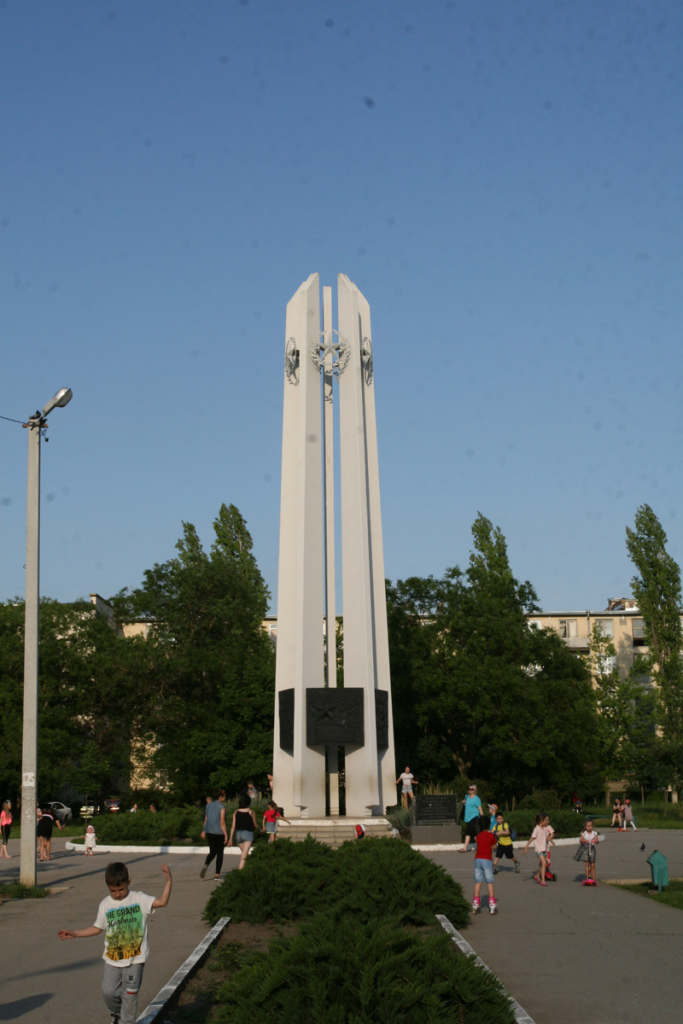
Memorial Sign "Glory to the Heroes-Liberators"
The memorial sign “Glory to Heroes-Liberators” was erected in a park within the Leninsky neighborhood on August 22, 1984, specifically timed to commemorate the 40th anniversary of Bendery’s liberation from fascist invaders. The monument’s design incorporates five narrow bars arranged to form a striking five-pointed star, rendered in vivid red mosaic above the monument’s base.
The memorial sign features five distinct bas-reliefs, each depicting significant stages in the broader narrative of the Great Patriotic War alongside the subsequent post-war restoration of the city. Together, these sculptural panels create a visual chronicle that traces Bendery’s journey from the devastation of wartime occupation through to its eventual recovery and rebuilding, offering visitors a comprehensive artistic narrative of this pivotal period in the city’s history.

Museum of the Iasi-Chisinau Operation, Kitskany Village
This museum first opened its doors on May 7, 1975, with its original exposition housed within the bell tower of the Holy Ascension Novo-Nyametsky Monastery. During the Iasi-Chisinau operation in August 1944, this very bell tower had served as a critical observation post for Soviet command, where figures of immense historical significance climbed to assess the unfolding military situation — including Marshal of the Soviet Union F.I. Tolbukhin and commander of the 37th Army M.N. Sharokhin, among other military leaders directing this pivotal campaign.
Today, with the Novo-Nyametsky Monastery having resumed its active religious functions, the museum has relocated to the village’s Palace of Culture. The exposition continues to chronicle the comprehensive story of the Iasi-Kishinev operation — covering its preparation, the course of the campaign itself, the various divisions involved, and the individual soldiers who fought in these bloody battles, including those veterans who survived to share their experiences with future generations.
The museum’s collection includes genuinely moving artifacts: photographs, documents and front-line relics belonging to participants of the Great Patriotic War. Among these treasured items are the wristwatch of N.N. Shkodunovich, commander of the 68th Rifle Corps, and a snuffbox belonging to N.A. Hagen, commander of the 57th Army, alongside numerous other personal effects that bring the human dimension of this decisive military operation vividly to life for visitors.
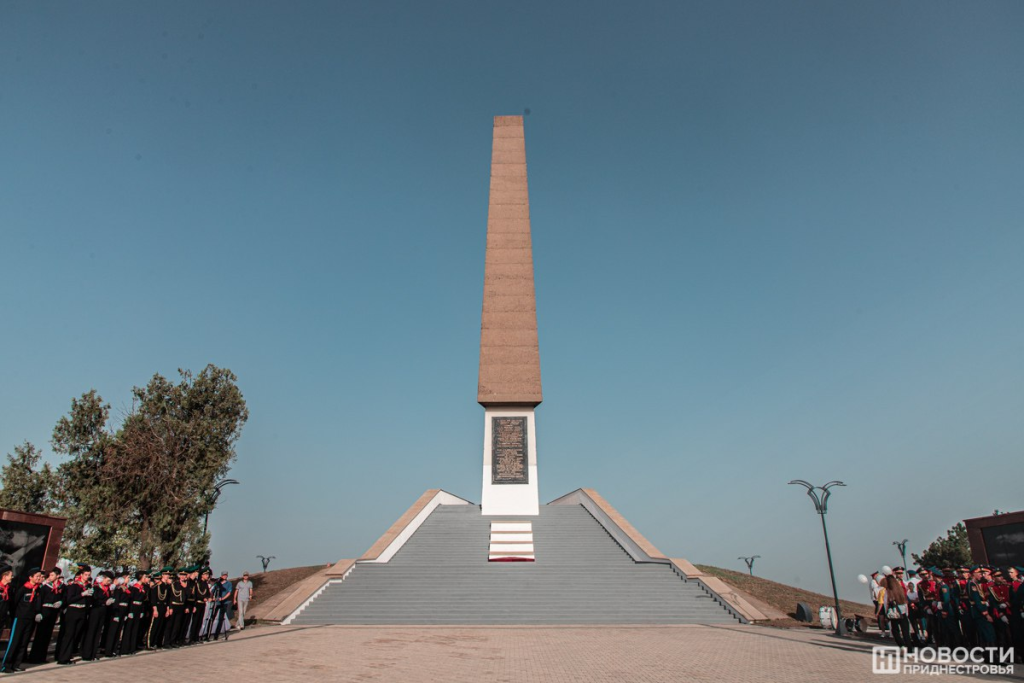
Kitskany Bridgehead
The Kitskany bridgehead occupies a place of profound strategic significance in the history of the Great Patriotic War, having served as a crucial Soviet army position that played a decisive role in the success of the Iasi-Chisinau Operation. Troops of the 3rd Ukrainian Front seized the bridgehead during the Odessa operation of 1944, establishing a foothold stretching up to 18 kilometers along the front line, with a depth ranging from 6 to 10 kilometers.
The battle for control of this critical position raged for more than four months, during which Soviet forces transformed the bridgehead into a formidable engineering achievement. By the start of the major offensive, this relatively confined space had been equipped to hold five infantry corps, a mechanized corps, 51 artillery regiments and as many as 30 specialized units — an extraordinary concentration of military force.
On August 20, 1944, the troops of the 3rd Ukrainian Front launched their main offensive strike from the Kitskany bridgehead, an assault that laid the groundwork for the complete defeat of German-Romanian forces across Soviet Moldavia. The resulting Iasi-Chisinau operation ultimately led to the full liberation of what is now the entire territory of Pridnestrovie.
To honor and preserve the memory of the soldiers’ heroism for future generations, a towering 35-meter memorial known as the “Obelisk of Glory” — designed in the striking form of a concrete bayonet by architect S.M. Shoichet — was unveiled at the highest point of the former bridgehead on May 9, 1972. The monument remains an enduringly popular destination today, with its observation deck offering visitors spectacular panoramic views across the surrounding landscape.

Memorial of Glory to Soviet Soldiers, Kitskany Village
This Memorial of Glory honors Soviet soldiers who lost their lives during the Second World War, spanning the years 1941 to 1945. Created in 1965 by an unknown author, the memorial occupies a prominent position in the center of Kitskany village, ensuring that the sacrifice of these fallen soldiers remains a visible and central part of daily village life.
While details about the memorial’s specific designer have been lost to history, its enduring presence at the heart of the community speaks to the lasting importance placed on honoring those who gave their lives in defense of the homeland during this devastating global conflict.
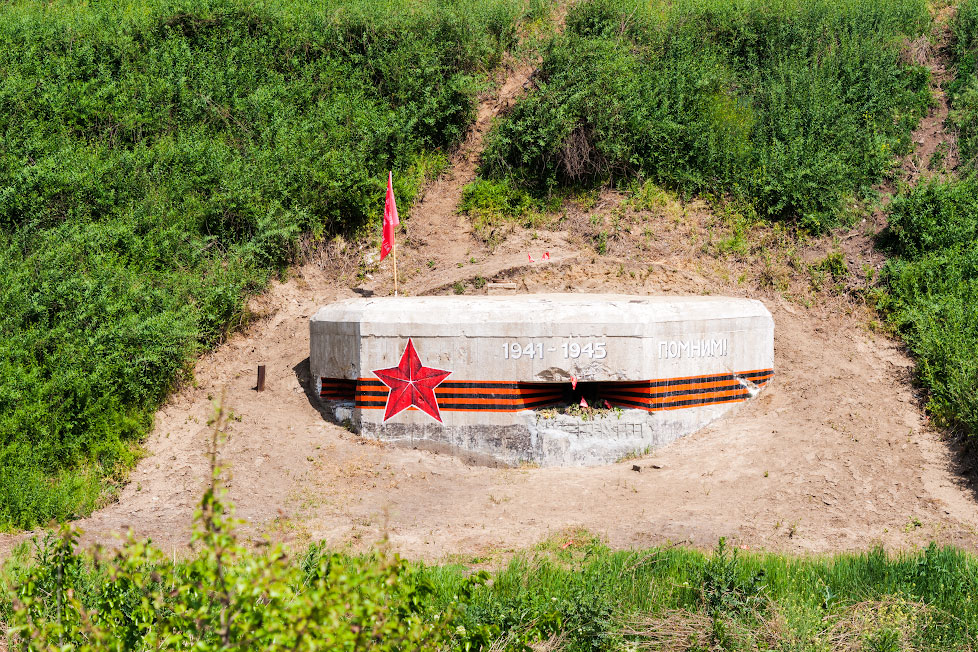
Long-Term Firing Point Near the Village of Parcany
This pre-war defensive structure traces its construction back to the late 1920s, with building work beginning around 1928-1929 and ultimately completed in 1937. The firing point forms part of the broader Tiraspol fortified area, known as the “Dnestrovskaya Line” — a network of defensive structures designed to protect against potential attack from external enemies, collectively recognized as part of the famous “Stalin Line” defensive system that stretched across the Soviet Union’s western border regions.
Today, this surviving fortification offers visitors a tangible glimpse into the military engineering and strategic defensive planning of the pre-war Soviet era, standing as a physical reminder of the tensions and preparations that characterized this critical period before the outbreak of the Great Patriotic War.

Memorial Complex of Military Glory, Parcany Village
This comprehensive memorial complex brings together multiple distinct tributes honoring different aspects of military sacrifice and historical memory connected to Parcany village. At its core stands a monument marking the mass grave of soldiers who fell during the Great Patriotic War of 1941-1945, alongside a separate monument dedicated to soldiers-sappers who lost their lives during the 1992 conflict, connecting the village’s wartime history to more recent struggles for Pridnestrovian independence.
The complex also features a bust honoring A. Romanenko, Hero of the Soviet Union, who died during the liberation of this region in 1944 — his individual sacrifice commemorated alongside the collective memory preserved throughout the memorial grounds. A memorial sign dedicated to victims of 20th-century political repressions adds another important historical dimension, acknowledging the broader human cost of various political upheavals beyond purely military conflict.
Reflecting Parcany’s unique Bulgarian heritage, the complex includes a bust of Vasily Levski, the celebrated leader and national hero of Bulgaria who fought tirelessly for the freedom of the Bulgarian people — a fitting tribute given the village’s status as Pridnestrovie’s only Bulgarian settlement. Finally, a memorial plaque marks the site where a detention center for prisoners of war once operated during the Great Patriotic War period of 1941-1944, ensuring that this painful chapter of wartime history remains remembered alongside the complex’s other commemorative elements.
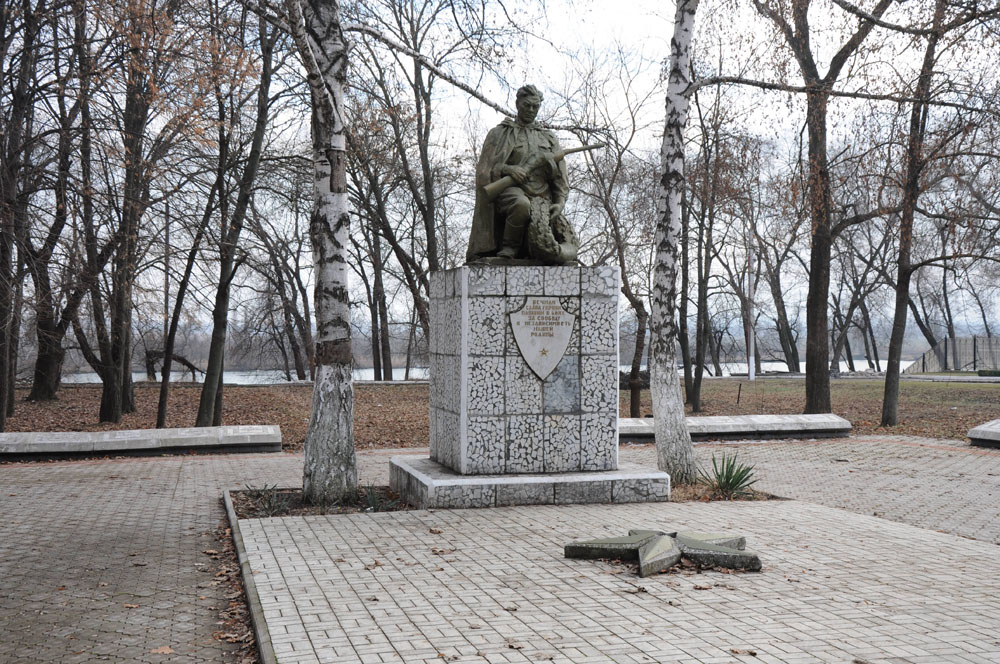
Monument to Soviet Soldiers Who Died During the Great Patriotic War 1941-1945
This monument stands in the village of Novotiraspolsky, dedicated to the memory of Soviet soldiers who lost their lives during the Great Patriotic War spanning 1941 to 1945. Serving as a solemn tribute at the gateway to Tiraspol, the monument ensures that those who made the ultimate sacrifice in defense of their homeland continue to be honored by the community that owes its freedom to their courage and devotion.

Obelisk to Liberator Soldiers of the 37th Army
On the night of April 12, 1944, troops of the 37th Army of the 3rd Ukrainian Front, commanded by Lieutenant General M.N. Sharokhin, successfully took Tiraspol, driving out the fascist invaders who had occupied the city. To mark the 25th anniversary of this liberation, grateful residents of Tiraspol chose to immortalize the heroic deeds of these Soviet soldiers by installing an obelisk dedicated to the valiant liberator soldiers of the 37th Army on what was then Soviet Constitution Square.
The monument’s design came from architects Ya.G. Druzhinin and I.D. Voronin, whose work created a fitting tribute to this decisive military achievement. Five years after its initial installation, the monument was relocated to Borodinskaya Square, where it continues to stand today, serving as a permanent reminder of the soldiers who liberated Tiraspol from occupation and restored freedom to the city’s residents.
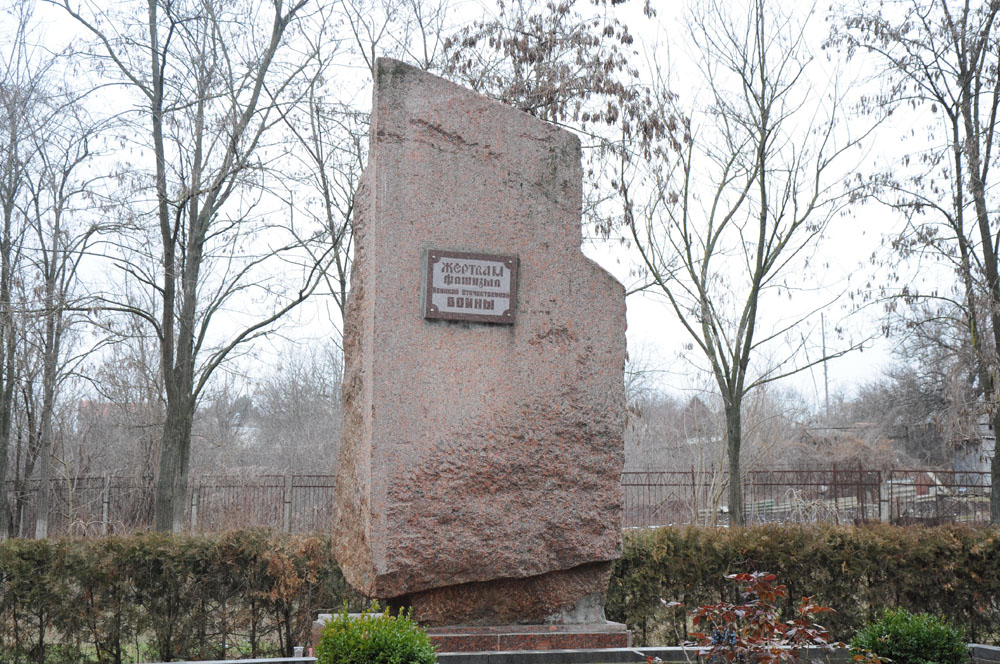
Monument to the Victims of Fascism of the Great Patriotic War 1941-45
This monument was created in 1989, designed by architect A.V. Narolsky, and stands as a tribute to honor the victims of fascism who suffered during the Great Patriotic War of 1941-1945. Located on Kommunarov Street in Tiraspol, the monument broadens the scope of wartime remembrance beyond purely military sacrifice, acknowledging the civilian population who also bore the heavy toll of fascist occupation and violence during this devastating period of history.

Memorial Complex of Glory
The Memorial Complex of Glory opened on February 23, 1972, deliberately timed to coincide with the Day of the Soviet Army and Navy. On that significant date, a ceremonial reburial took place, honoring the remains of Soviet soldiers and officers who were natives of Pridnestrovie and had fallen during the Great Patriotic War, alongside soldiers who lost their lives specifically during the liberation of the Pridnestrovian region itself.
Over the years that followed, the memorial expanded its role, becoming the final resting place for those who died during the war in Afghanistan, as well as for soldiers and civilians killed during Moldova’s armed aggression against Pridnestrovie in 1990-1992. Today, marble slabs throughout the memorial immortalize the names of 1,252 reburied soldiers, including four Heroes of the Soviet Union — a remarkable concentration of military distinction commemorated at this single site.
A T-34-85 tank stands prominently within the memorial, serving as a powerful monument to fallen soldiers of the Great Patriotic War. This particular tank has a genuinely remarkable history: serving as part of the 7th Guards Mechanized Corps, it participated in the liberation of Ukraine, Moldavia, Bulgaria and Hungary. During the Budapest Offensive, the tank sustained damage at Lake Balaton, and in April 1945, this battle-worn war machine was transported to Tiraspol, where it now rests as a tribute to those who fought in it. Beneath the tank lies a buried capsule containing earth brought specifically from Mamayev Kurgan in the Hero City of Volgograd — formerly Stalingrad — creating a symbolic connection between this memorial and one of the most significant battlefields of the entire war.
In October 2011, the St. George Chapel was added to the memorial complex, further enriching its spiritual dimension. Another important element is the monument to soldier-internationalists killed in Afghanistan, opened in 1995 by Lieutenant General Alexander Lebed, commander of the 14th Guards Combined Arms Army of Russia — a figure whose own historical significance in the region adds further weight to this dedication.
By the end of the 2000s, the complex underwent substantial reconstruction, during which a Wall of Memory was constructed, bearing the names of all defenders of Pridnestrovie and civilians killed during the 1990-1992 armed aggression by the Republic of Moldova. This reconstruction also saw the installation of a poignant sculpture, “Grieving Mother,” created by artist V. Tkachenko — a moving addition that gives universal human expression to the grief and loss commemorated throughout this comprehensive and continually evolving memorial complex.

Memorial Stele in Memory of Teachers and Students of the Pedagogical Institute Who Died in the Great Patriotic War
This memorial stele was inaugurated at the present Building “A” to commemorate teachers and students of the pedagogical institute who lost their lives during the Great Patriotic War, with its unveiling timed to coincide with the anniversary of Victory in 1978. The monument’s creation involved Robert Derbentsev, one of the leading sculptors of the Moldavian SSR and a respected member of the Union of Artists of the Soviet Union, whose artistic skill helped bring appropriate dignity and gravity to this tribute.
The memorial holds particular poignancy as it honors members of the academic community specifically — educators and students who exchanged the classroom for the battlefield, many never to return. Their sacrifice is permanently woven into the identity of the institution they once called home, ensuring that successive generations of students and faculty remain connected to this profound chapter of the university’s history.

Pobeda (Victory) Park
The original concept for this park is credited to renowned Soviet architect A.V. Shchusev, who visited Tiraspol during the post-war years and envisioned a meaningful green space for the city’s residents. Spanning 15 hectares, the park was established in 1947 on the site of a former fruit and berry garden, which at the time was situated beyond the eastern outskirts of the city. The park received its name to commemorate Victory (“Pobeda”) in the Great Patriotic War, honoring the immense sacrifice and ultimate triumph that defined this period of history.
Over the years, the park gradually expanded to include a fountain, a summer stage, various rides and playgrounds, transforming it into a comprehensive recreational destination. Today, Pobeda Park ranks among the most beloved resting places for residents of the capital, regularly hosting diverse cultural events throughout the year. Visitors can enjoy several cafes scattered throughout the grounds, along with a large observation wheel that offers a genuinely impressive panoramic view of the city from its highest point.
In 1960, a monument honoring G.I. Kotovsky was installed at the center of the park — commemorating this notable Soviet military and political figure who played an active role in the revolutionary movement during the Civil War era. Kotovsky demonstrated remarkable courage on the battlefields of the First World War, later continuing his military service by fighting against Romanian invaders in Bessarabia. In 1920, a cavalry brigade under his command successfully won Tiraspol from the Armed Forces of South Russia, with Kotovsky’s unit earning recognition as one of the finest in the entire Red Army during this period.
Sculptor L.I. Dubinovsky created the monument depicting Kotovsky in military uniform, leaning thoughtfully on his cavalry saber. Interestingly, this monument was not originally created for Tiraspol — it was first installed in Moscow at VDNKh, positioned at the entrance to the Moldavian SSR’s exhibition pavilion, before later being relocated to Tiraspol, where it now stands as a central feature of Pobeda Park, connecting the capital to this significant chapter of revolutionary and military history.
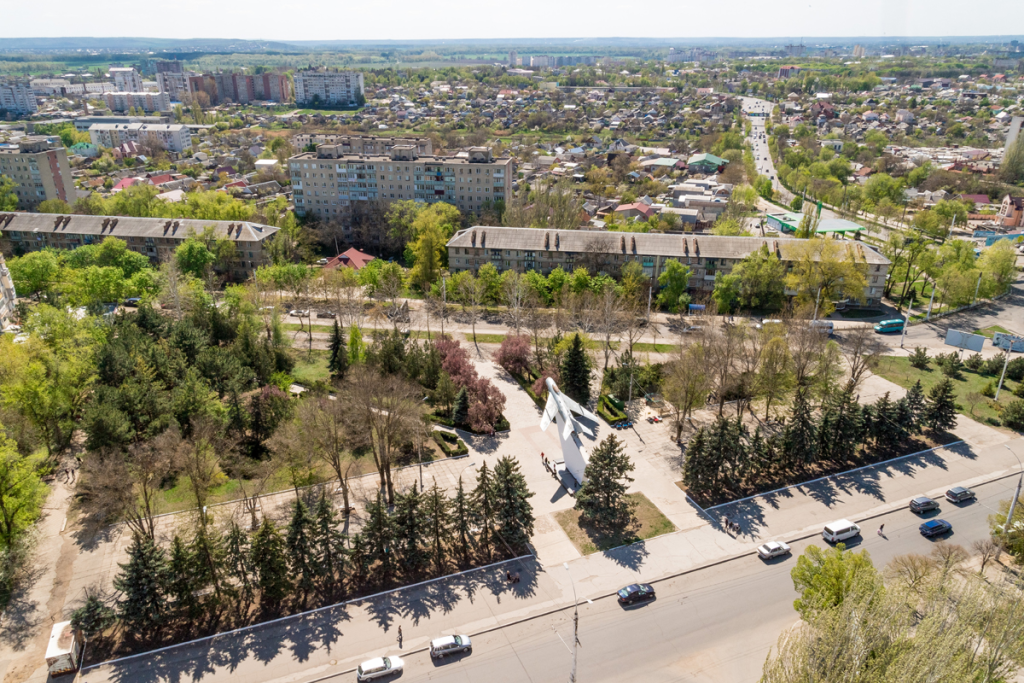
Monument to Aviators
Tucked within a small garden between Kakhovskaya and Yunosti streets stands an unusual and striking construction — a silver MIG-19 fighter jet, mounted on a pedestal and positioned as if soaring upward into the sky. This dramatic monument to aviators was unveiled on May 8, 1975, deliberately timed to coincide with the eve of the 30th anniversary of Victory in the Great Patriotic War.
The monument specifically honors the pilots of the 17th Air Army, who, operating as part of the 3rd Ukrainian Front, played a crucial role in liberating Tiraspol from German-fascist invaders in 1944. At the time of this liberation campaign, the army was commanded by Lieutenant General V.A. Sudets, who would later go on to be honored as a Hero of the Soviet Union and ultimately achieve the rank of Air Marshal. In recognition of his contributions to the city’s liberation, the Executive Committee of the Tiraspol City Council of Deputies awarded Sudets the title of “Honorary Citizen of Tiraspol” in 1964, cementing his connection to the city he helped free decades earlier.
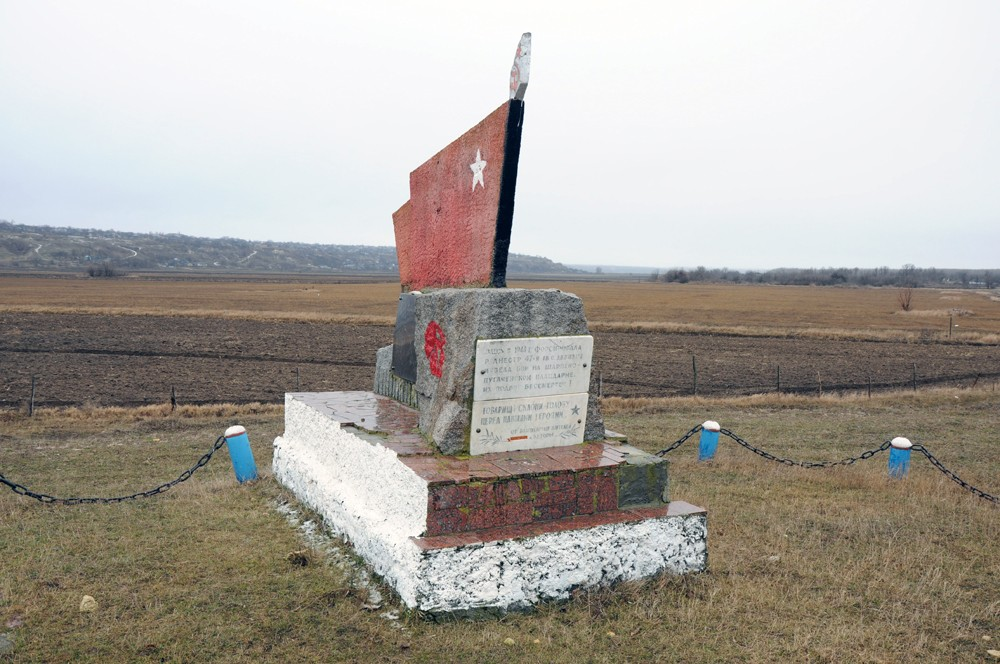
Memorial Sign at the Site of the Crossing by the Troops of the 57th Guards Rifle Division of the Dniester River During the Iasi-Kishinev Operation
This memorial sign stands on the banks of the Dniester River, precisely marking the border between the villages of Butor and Tashlyk, at the very location where troops of the 57th Guards Rifle Division crossed the Dniester during the decisive Iasi-Kishinev operation. The memorial was constructed on April 12, 1954, deliberately timed to commemorate the 10th anniversary of the village’s liberation.
The significance of this site extends beyond the crossing itself: more than 700 soldiers are buried in a mass grave within the village of Butor, representing the considerable human cost of this military campaign. Standing at this riverside location, visitors can appreciate both the strategic importance of this Dniester crossing in the broader liberation of the region and the profound sacrifice made by the soldiers who achieved it, many of whom found their final resting place in the very ground they fought to liberate.
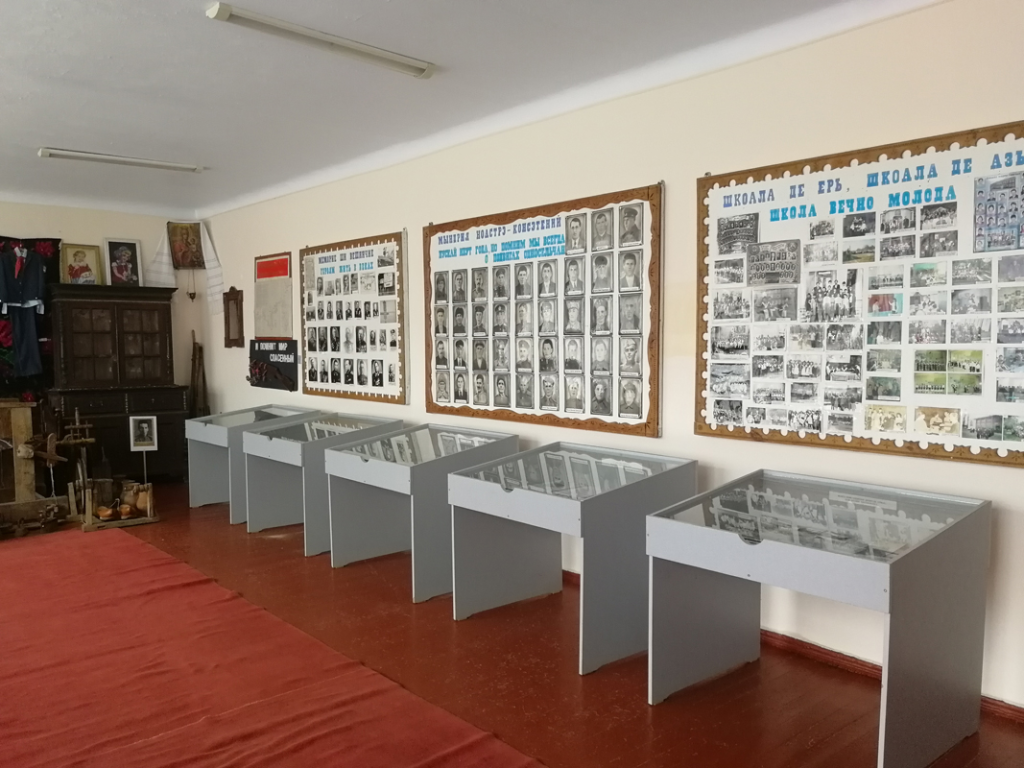
Local History Museum of Tashlyk Village
The Local History Museum of Tashlyk village presents a comprehensive exposition tracing the history and development of this community through the years. A significant portion of the museum’s displays focuses on everyday life and ethnographic heritage, offering visitors insight into the traditional customs and domestic practices that shaped village life across generations. The museum also dedicates considerable attention to the theme of the Great Patriotic War, ensuring that this pivotal chapter in the village’s history remains preserved and accessible to future generations.
The museum’s collection comprises more than 400 units within its main fund, representing a substantial repository of artifacts, documents and materials that together tell the complete story of Tashlyk village from its historical origins through to the present day.
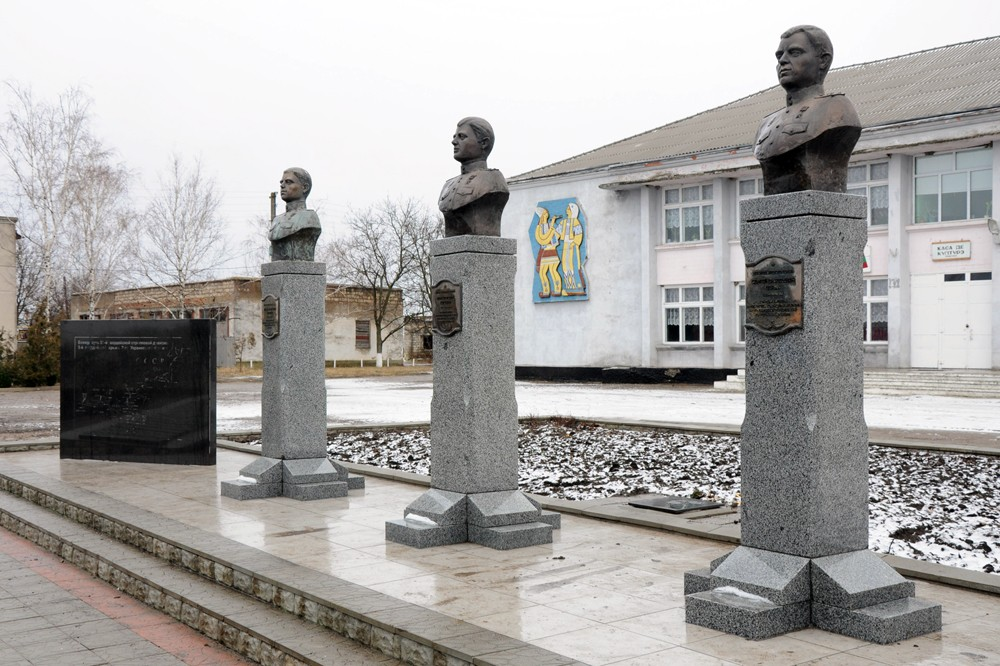
Memorial to Fallen Soldiers of the Great Patriotic War, Tashlyk Village
The mass grave in Tashlyk village holds the remains of 560 soldiers, including four Heroes of the Soviet Union, all of whom perished during the Great Patriotic War. In 2010, this significant burial site underwent comprehensive reconstruction, emerging with its current name: “Memorial to the Fallen Soldiers of the Great Patriotic War of Tashlyk Village of Grigoriopol District.”
Today, the memorial exists as a complex ensemble of sites constructed at different periods, together forming a comprehensive tribute to those who fell here. The memorial features busts honoring three specific Heroes of the Soviet Union: A.A. Antonov, S.V. Tselykh and I.P. Korobkin, individuals whose extraordinary courage earned them this highest Soviet military distinction. The site also contains 50 memorial plates bearing the names of all soldiers buried in the mass grave, alongside a five-pointed star housing an “Eternal Flame” and a dedicated granite slab honoring Hero of the Soviet Union K. Dzharkimbayev.
The original monument dates to 1944, erected specifically for the 20th anniversary of the village’s liberation from German-fascist invaders. An integral component of the broader memorial complex is a granite slab featuring a map depicting the fighting that took place in this area, providing visitors with strategic context for understanding the military significance of the battles commemorated throughout this comprehensive memorial site.

Historical Museum
The Historical Museum of Grigoriopol presents a comprehensive exposition dedicated to the city’s history, tracing its origins back to its founding by decree of Empress Catherine II in 1792. Among the museum’s most fascinating displays is a detailed diorama depicting Grigoriopol as it appeared at the end of the 19th century, offering visitors a vivid window into the city’s appearance during that historical period.
The museum also features a beautifully recreated exposition showcasing the interior of a traditional peasant hut, complete with authentic household items from that bygone era — bringing the daily rhythms of rural life to vivid, tangible life. Among the museum’s notable holdings is a copy of the original coat of arms of the city, which remarkably continues to serve as the official coat of arms of Grigoriopol to this very day, providing a direct visual link between the city’s founding and its modern identity.

Memorial of Military Glory "Grieving Mother," Dedicated to the Soldiers Who Died in the Great Patriotic War of 1941-1945
In 1967, dedicated activists in Grigoriopol took the initiative to commemorate the memory of Soviet Army soldiers who died during the battles for the village’s liberation in April 1944. The resulting “Grieving Mother” monument was crafted from black labradorite sourced from the Zhytomyr region, with the project’s design credited to A. Charlin. The monument’s grand opening took place on April 12, 1969, deliberately timed to honor the 25th anniversary of Grigoriopol’s liberation from Nazi invaders.
This comprehensive memorial complex encompasses numerous distinct elements, each contributing to the site’s overall significance. At its heart lies a common grave containing 337 Soviet soldiers who died during the Great Patriotic War, originally buried in 1944, with the monument itself erected in 1969 — the names of these fallen soldiers are carefully carved across 13 granite slabs. A granite stele, standing 4 meters high, features a carved star, bay leaf and the years 1941-1945, while a separate granite stone bears the carved image of the grieving mother for whom the memorial is named. A brass star houses the “Eternal Flame,” its perpetual burning symbolizing unending remembrance.
The memorial complex has continued to grow over the decades, reflecting the community’s ongoing commitment to honoring its fallen. A memorial sign installed in 2014 specifically honors 594 citizens of Grigoriopol who died during the Great Patriotic War. Three notable busts were added in 2010: one honoring Hero of the Soviet Union A. Tanaseichuk, another for Hero of the Soviet Union S. Kolesnichenko, and a third for G. Dariev, who held the distinguished Order of Glory in all three degrees.
The complex also bears witness to more recent history, with memorial signs and tombstones installed in 1992 marking the burial places of P. Gashok and S. Ursu, both defenders of Pridnestrovie who lost their lives during the 1992 conflict. Finally, a memorial sign installed in 2005 lists the names of all defenders of Pridnestrovie who died during that same pivotal year, ensuring that this memorial complex connects the sacrifices of the Great Patriotic War directly to the more recent struggle for Pridnestrovian independence and sovereignty.
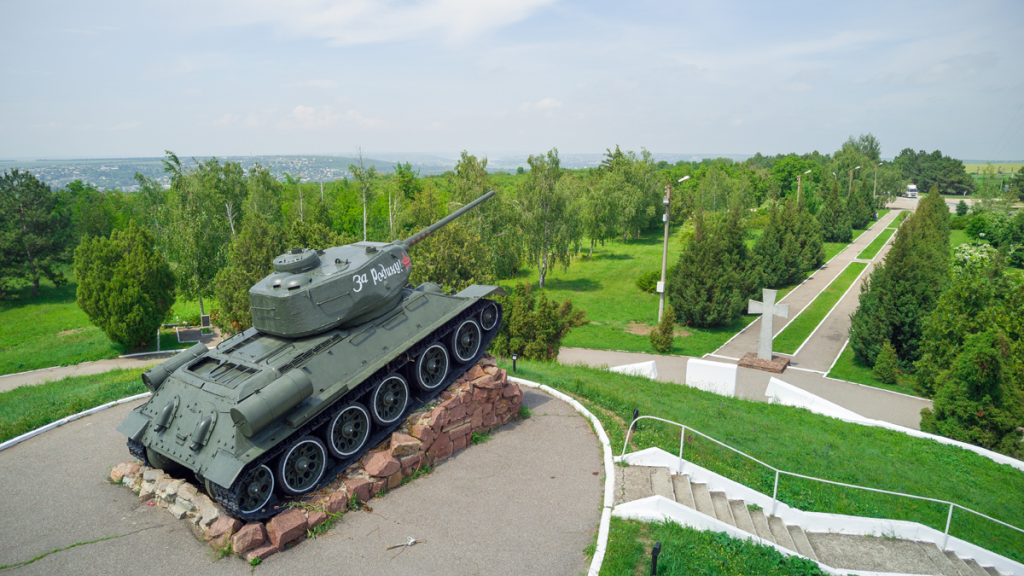
Barrow of Glory
The Barrow of Glory in Dubossary opened on August 24, 1968, crowned by a T-34 tank that had been raised from the depths of the Dniester River shortly before the memorial’s creation. This particular combat vehicle had sunk during fierce fighting to liberate the Dubossary district from German-Romanian invaders in May 1944, taking with it the lives of its entire four-man crew — among whom were two Heroes of the Soviet Union, whose extraordinary courage earned them this highest military distinction.
The remains of these tankers were laid to rest at the foot of the Barrow, creating a powerful connection between the towering monument above and the actual resting place of the men it commemorates. This site stands as a particularly evocative tribute, transforming the literal vehicle of battle — recovered from the very waters where it met its end — into a permanent and visually striking memorial to the courage and sacrifice of its crew.
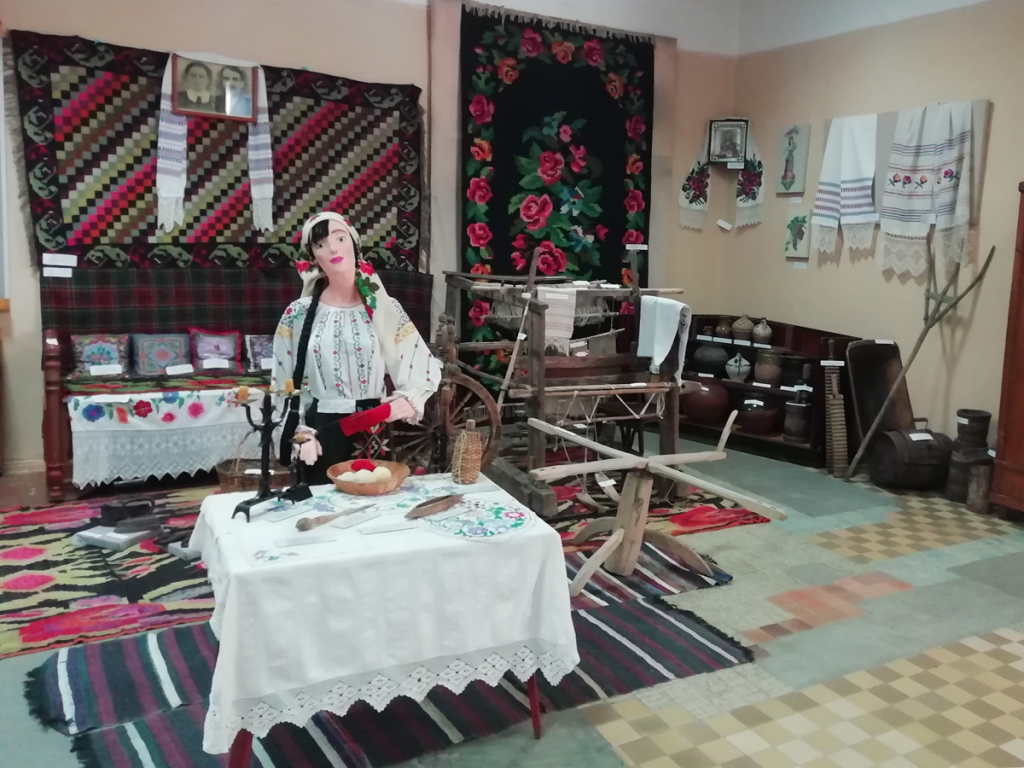
Historical and Local Lore Museum of Dubossary
The Historical and Local Lore Museum of Dubossary was founded in 1970 through a decision of the regional executive committee, initially established as a museum of revolutionary, military and labor glory operating on a voluntary basis. The impetus for creating the museum came from the rich material that regional pathfinders had collected through their dedicated search and research efforts, with the museum’s opening deliberately timed to coincide with the 25th anniversary of Victory in the Great Patriotic War.
On August 2, 1974, the institution received formal recognition, being granted the status of State Museum of History and Local Lore. Throughout the Soviet period, the museum earned a strong reputation, consistently ranked among the best regional museums in the entire Moldavian SSR — an achievement reflected in the numerous certificates and diplomas it received over the years. The Dubossary museum also holds the distinction of being among the first in Pridnestrovie to incorporate coverage of the 1990-1992 period of Moldova’s aggression against the Pridnestrovian Moldavian Republic into its exhibition work, ensuring this pivotal chapter of recent history found its place alongside older historical narratives.
On the eve of its 30th anniversary, in 2000, the museum relocated to its current two-story building at 9 Sovetskaya Street, where it continues to operate today. The museum’s exhibition space now spans approximately 325 square meters, while its broader collections contain more than 24,000 storage units in total — of which approximately 3,000 items are currently presented across the museum’s various exhibitions, offering visitors a rich and continually evolving window into the history of Dubossary and its surrounding region.
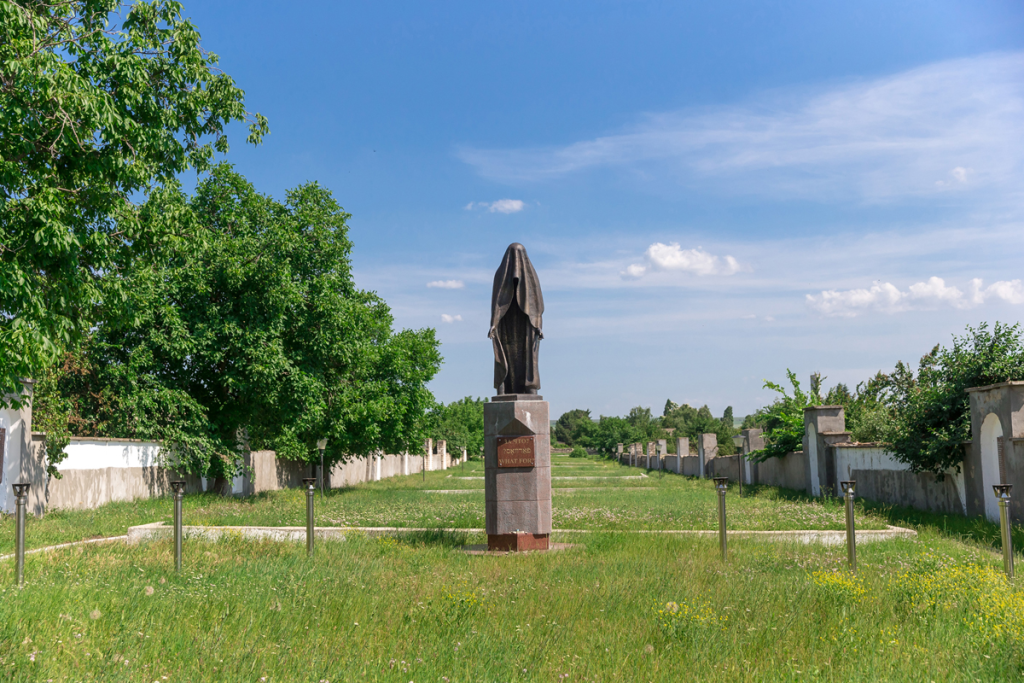
Memorial to the Victims of Fascism, Dubossary
This memorial stands on the site of a mass burial within the territory of the former Moldavian SSR, marking one of the most devastating tragedies to befall this region during the Second World War. Between September 12 and 28, 1941, a German punitive detachment carried out the systematic execution of up to 18,500 civilians, drawn from the cities of Kishinev, Tiraspol, Rybnitsa, Grigoriopol, Dubossary, Balta, Krasnye Okna and numerous nearby villages — an atrocity of staggering scale that claimed the lives of an entire cross-section of the regional population.
The full details of this heinous crime only came to light following the declassification of SMERSH counterintelligence documents, specifically those addressing the case titled “About Atrocities of Fascists During the Temporary German-Romanian Occupation of 1941-1944 in the Dubossary District of the MSSR.” In the 1950s, a memorial was established at the execution site to honor the victims, building upon an earlier typical Soviet monument that had been installed there in 1949.
In 2017, the memorial complex was further enriched with the addition of the Requiem monument — a deeply moving sculpture depicting the silhouette of a praying Jew, covered with a tallit, the traditional prayer shawl used in Jewish ritual ceremony. This powerful addition gives visual and spiritual expression to the specifically Jewish dimension of this tragedy, ensuring that visitors to the memorial understand the full human weight of what occurred on this ground more than eight decades ago.

Memorial Complex of Military Glory
The Memorial Complex of Military Glory serves as the burial place for 81 soldiers of the Soviet Army who died during the liberation of Dubossary from German-Romanian invaders in 1944. Among those interred here is Hero of the Soviet Union I. Krasikov, who commanded a mortar crew with distinction during this critical campaign. On May 5, 2010, granite busts honoring Krasikov were unveiled at the memorial, alongside busts commemorating four additional Heroes of the Soviet Union buried within the broader Dubossary region: G. Korneev, I. Shikunov, N. Alferyev and I. Fedosov, together creating a powerful tribute to the exceptional courage demonstrated by these soldiers during the liberation campaign.
The memorial’s significance expanded further in subsequent years, when 33 defenders of Pridnestrovie — who lost their lives during the period of Moldovan aggression in the early 1990s — were also laid to rest at this site. This addition meaningfully connects the sacrifices of the Great Patriotic War generation to those who fought decades later for the independence and sovereignty of Pridnestrovie, creating a memorial complex that spans nearly five decades of military history within a single sacred space.
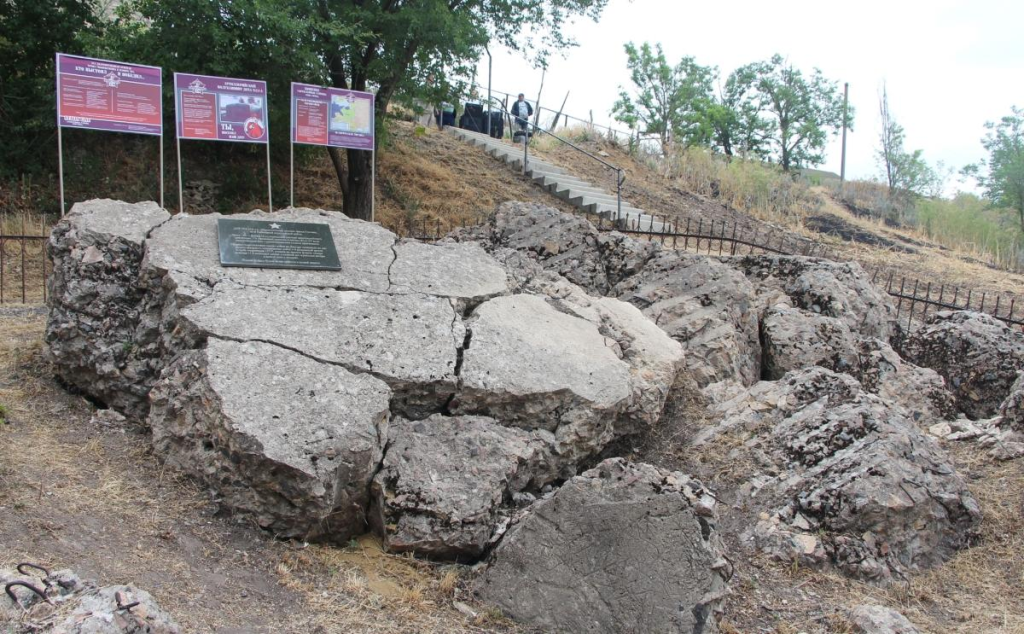
Long-Term Firing Point of the Stalin Line, Vykhvatintsy Village
During the summer of 1941, soldiers of the 18th separate anti-aircraft artillery battalion, part of the 176th Rifle Division operating within the 80th fortification area, engaged in fierce battles against vastly superior enemy forces at this very location. The stubborn and determined resistance mounted by these Soviet troops along the Dniester proved strategically significant, successfully delaying the advance of the 4th Romanian Army’s forces deep into Soviet territory by two crucial weeks. This defensive action also pinned down four divisions of the 11th German Army on their right flank, inflicting serious losses on both manpower and equipment that would prove costly to the invading forces.
Throughout the war years that followed, the original bunker structure suffered destruction, leaving behind only granite slabs as quiet reminders of those distant and difficult days of 1941. The formal monument commemorating this site of fierce resistance was only opened on June 22, 2022, following considerable effort and challenges to bring this important historical recognition to fruition — ensuring that the sacrifice and determination of these soldiers finally received the lasting tribute their courage deserved.

Monument of the Great Patriotic War (Gidirim Village)
Standing as the largest monument anywhere in the Rybnitsa region, this powerful memorial in Gidirim village brings together a remarkable ensemble of sculptural figures, each representing a different facet of wartime sacrifice and resilience. The composition includes a warrior-liberator, a mother cradling her child, a militia fighter and a grieving mother — together forming a deeply moving tableau that captures the full human cost of the Great Patriotic War.
The monument in its current form was officially unveiled on May 9, 1991 — Victory Day — a fitting date for the dedication of such a comprehensive and emotionally resonant tribute to those who lived through and were lost to the war.
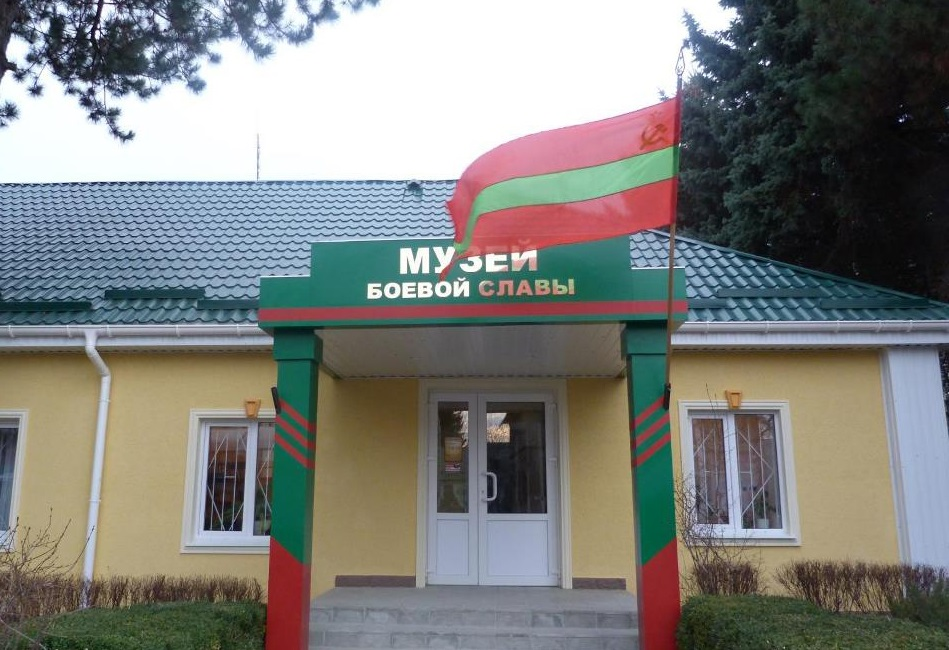
Museum of Military Glory in Rybnitsa
In September 1941, occupation authorities established a prison and concentration camp in Rybnitsa, a facility where arrested party members, Soviet activists and the Jewish population were held captive under brutal conditions. The darkest moment in this site’s history occurred on the night of March 19-20, 1944, when Romanian and German executioners burned 270 Soviet citizens and prisoners of war, among them — according to incomplete records — at least 50 people of Jewish nationality, a horrific act that stands as one of the most devastating crimes committed in the region during the occupation.
The Museum of Military Glory in Rybnitsa opened its doors on May 9, 2010, deliberately timed to coincide with the 65th anniversary of Victory in the Second World War. Significantly, the museum occupies this very historical site where the Nazis once held political prisoners — including partisans and underground resistance workers — transforming a place once associated with imprisonment and atrocity into a space dedicated to remembrance, education and the honoring of those who suffered and resisted during this devastating period of occupation.

Memorial of Military Glory
The Memorial of Military Glory in Rybnitsa was unveiled in 1975, timed to coincide with the momentous 30th anniversary of Victory in the Great Patriotic War. The ceremonial opening carried particular weight: Hero of the Soviet Union V.V. Vakharlovsky had the honor of lighting the eternal flame, while I.A. Yablonsky — himself a participant in the liberation of Rybnitsa from German fascist forces — cut the ribbon to officially open the complex.
Designed by architect V.P. Mednek, the memorial complex was constructed entirely with funds earned by local district workers during voluntary Saturday work days — a powerful testament to the community’s collective commitment to honoring its wartime heroes. The memorial follows an axial design, with its central composition formed by two paired reinforced concrete pylons rising 24 meters into the sky, symbolically representing hands joined together in prayer.
In total, the Memorial of Military Glory features 17 stones, each dedicated to the memory of those who fell during the Great Patriotic War — a solemn and enduring tribute to the sacrifice made by so many in defense of this land.

Monument to Martyrs and Victims of the Rybnitsa Ghetto
More than 5,000 Jews lost their lives in the Rybnitsa region and the city itself during one of the darkest chapters of the Second World War. The Jewish ghetto established here existed from September 1941 until March 30, 1944, confining and ultimately claiming the lives of countless members of the local Jewish community during this devastating period of occupation.
The monument honoring these victims was officially opened on March 30, 2004, deliberately timed to coincide with the 60th anniversary of Rybnitsa’s liberation from Nazi invaders. Constructed from red brick with slabs crafted from gabbro marble, the monument is crowned with a menorah — the traditional seven-branched candlestick of Jewish tradition — fashioned from stainless steel by workers of the JSC “Moldavian Metallurgical Plant,” connecting the region’s industrial capacity to this solemn act of remembrance. The monument bears the simple but profound caption: “We remember.” The monument’s design is credited to architect S.M. Shoihet, whose work here joins his other significant contributions to the region’s memorial landscape.

Obelisk to the Soldiers-Villagers Who Died During the Great Patriotic War, the Village of Rashkov
This obelisk was installed in 1975, dedicated to honoring the soldiers and villagers of Rashkov who lost their lives during the Great Patriotic War. Recognized today as a monument of both historical and monumental artistic significance, the obelisk stands as a proud and solemn tribute to the men of this ancient riverside village who answered the call to defend their homeland and did not return.
Set within Rashkov — already renowned for its remarkable multicultural heritage spanning Orthodox, Catholic and Jewish traditions — this obelisk adds an important layer of 20th-century military remembrance to the village’s already rich historical tapestry, ensuring that the sacrifice of Rashkov’s wartime generation remains permanently honored alongside the village’s many other historical and cultural landmarks.

The Building of the School Where Hero of the Soviet Union F.I. Zharchinsky Studied
On April 21, 1945, while conducting reconnaissance in the area of the city of Treuenbrietzen, Germany, F.I. Zharchinsky became the first to discover a concentration camp during this critical phase of the war. Leading a group of just eight scouts, Zharchinsky boldly engaged in battle against the camp’s numerous guards, personally shooting and killing the camp’s head along with six additional guards in the process. Under the relentless onslaught of these brave scouts, the remaining camp guards began to scatter in disarray.
However, at the very last moment of this intense engagement, Senior Lieutenant Zharchinsky was mortally wounded and ultimately died from his injuries. Despite this tragic loss, the bold and decisive actions taken by his small team of scouts resulted in the liberation of four and a half thousand people held captive within the camp — an extraordinary humanitarian achievement born from extraordinary courage. In recognition of this heroism, Zharchinsky was posthumously awarded the title Hero of the Soviet Union on June 27, 1945.
Today, near the school where he once studied and later worked, a bust honoring this hero has been installed, and the school itself now proudly bears his name — ensuring that generations of students who pass through these halls remain connected to the remarkable courage and sacrifice of their school’s namesake.

Museum of Hero of the Soviet Union F.I. Zharchinsky
Fyodor Ivanovich Zharchinsky joined the Red Army at the very outbreak of the Great Patriotic War, going on to participate in significant battles across Ukraine, the Caucasus and Eastern Europe throughout the course of the conflict. During the decisive Berlin operation on April 21, 1945, Senior Lieutenant Zharchinsky, alongside a group of reconnaissance scouts, discovered a concentration camp in the German town of Treuenbrietzen. Making the courageous decision to liberate the prisoners held there, the scouts engaged the camp’s guards in direct confrontation.
The operation proved extraordinarily successful, resulting in the liberation of 4,500 prisoners of war representing multiple nationalities — Russians, French, Poles, Danes, Belgians and Norwegians, including notably the commander of the Norwegian armed forces, Major General Otto Ruge. However, this victory came at tremendous personal cost: Zharchinsky, who had personally killed six guards along with the camp commandant during the engagement, was mortally wounded and died shortly afterward from his injuries. In recognition of this extraordinary act of heroism, he was posthumously awarded the title Hero of the Soviet Union.
On May 23, 1982, a museum dedicated to this outstanding son of Rashkov opened in the village, preserving his memory for future generations. In 2011, a bust honoring the hero was installed beside the school where he had once taught and which he led during the pre-war years — creating a permanent physical connection between Zharchinsky’s wartime heroism and the educational institution where he first served his community before the war that would ultimately claim his life.

Historical and Cultural Complex "Stalin's Line" of Podoyma Village
The Historical and Cultural Complex “Stalin’s Line” opened in Podoyma village, Kamenka district, with its inauguration specifically dedicated to the 75th anniversary of Victory in World War II. The original bunker structure was constructed in the early 1930s, designed as a powerful defense center intended to protect the banks of the Dniester River, equipped with the most advanced technology available during that era.
The bunker’s underground portion was remarkably comprehensive, functioning almost like a self-contained underground city — encompassing 12 separate premises serving various purposes, including ventilation and utility rooms, storage facilities, its own independent water supply and sanitation systems, and even a dedicated power plant. This level of self-sufficiency reflects the serious strategic importance placed on this defensive structure during its original construction.
Restoration of this long-term firing point proceeded over several years with the dedicated help of volunteers, who successfully cleared 300 meters of underground corridors and repainted all the premises throughout the complex. Notably, three rooms were intentionally left in their original, unrestored condition, preserving an authentic glimpse of how the bunker appeared before restoration efforts began. One of these rooms now houses a dedicated museum, ensuring visitors can engage directly with the history of this remarkable defensive structure. The primary goal driving these extensive restoration efforts remains clear and consistent: preserving the memory of the war for future generations, ensuring that this significant piece of military heritage continues to educate and inform long after the events it commemorates have passed from living memory.
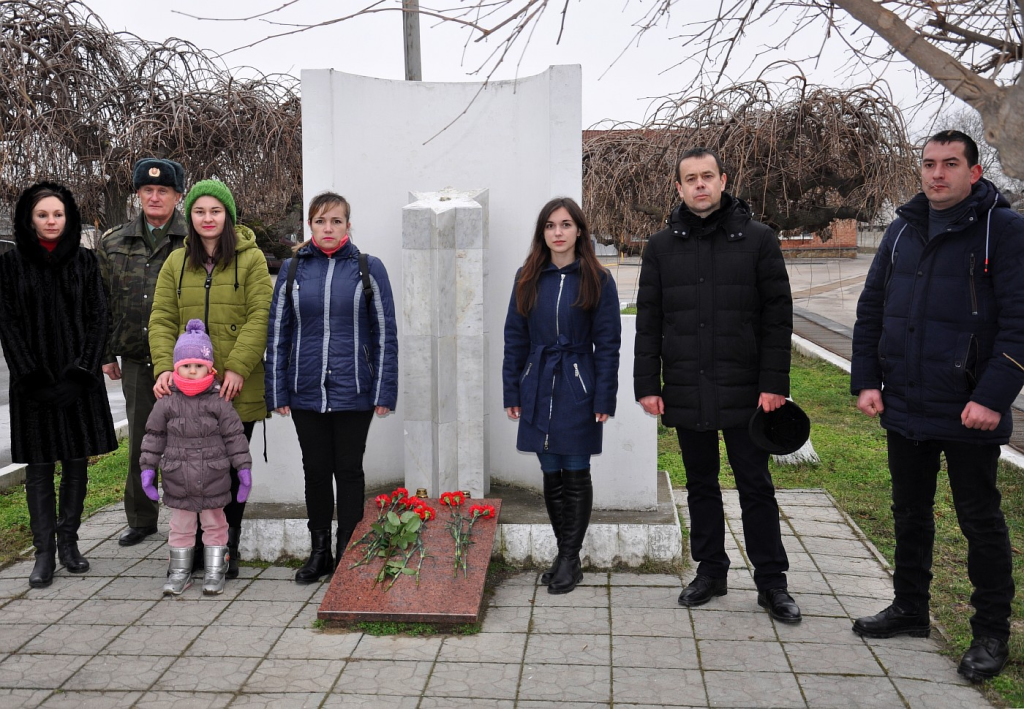
Monument to the Kamenians Who Died During the German-Romanian Occupation
This monument was erected in 1994, dedicated to honoring the memory of Kamenka residents killed during the German-Romanian occupation. The project’s design came from Semyon Mikhailovich Slobodyansky, whose work created a meaningful tribute positioned along the central alley of the bus station on Kirova Street in Kamenka.
In its original 1994 form, the monument took the shape of a concrete obelisk mounted on a rectangular pedestal, accompanied by a granite slab bearing the inscription: “Here in 1941, inhabitants of the town of Kamenka were brutally tortured” — a stark and direct acknowledgment of the atrocities committed during this period of occupation.
Since 2010, the monument has taken on its current form, now presented as an obelisk paired with a tombstone. Within a niche carved into the semicircular obelisk stands a stele shaped like a six-pointed star, topped with a representation of a candle — symbolic elements that connect this monument to the broader memory of Jewish victims who suffered during the Nazi occupation. The tombstone itself bears an additional inscription, completing this evolved memorial that continues to honor and remember the suffering endured by Kamenka’s residents during one of the darkest periods in the town’s history.
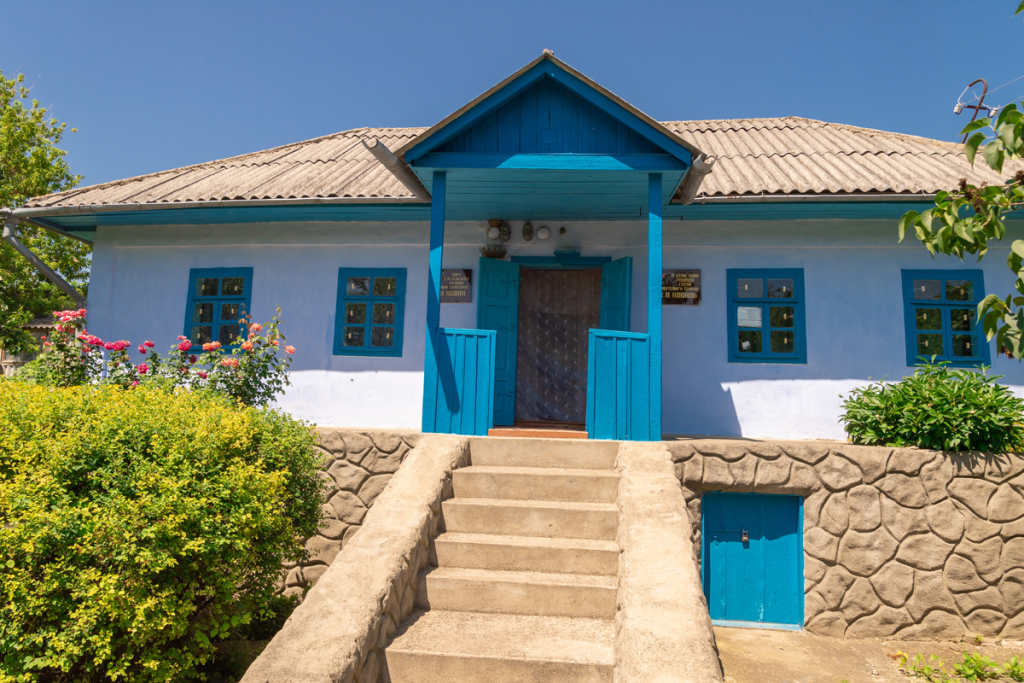
House Museum of the Hero of the Soviet Union I.N. Koval
Ivan Nesterovich Koval was drafted into the Red Army in 1941, and beginning in July of the following year, fought continuously on the fronts of the Great Patriotic War. By September 1943, he had risen to command an artillery gun within the 7th Guards Army of the Steppe Front, a position from which he would soon distinguish himself through extraordinary courage during the crossing of the Dnieper River.
Koval’s gun crew was tasked with diverting fascist forces, creating an opportunity for the main body of Soviet troops to successfully cross the river. During this protracted and intense battle, his gunners managed to destroy an enemy tank along with a substantial number of enemy soldiers and officers. As the battle wore on, Ivan Koval found himself entirely alone at his gun — yet he persevered remarkably, single-handedly loading, aiming and firing shots without any assistance. For this exceptional display of courage and heroism, he was awarded the title Hero of the Soviet Union in October 1943.
To mark the 40th anniversary of the liberation of the Moldavian SSR’s territory, a house-museum dedicated to I.N. Koval opened in 1984. The museum’s collection includes photographs of the hero’s family, his personal documents and belongings, household items reflecting both pre-war and post-war daily life, books drawn from Ivan Nesterovich’s own personal library, and numerous other exhibits that together paint an intimate portrait of this remarkable soldier’s life beyond his moment of battlefield heroism.
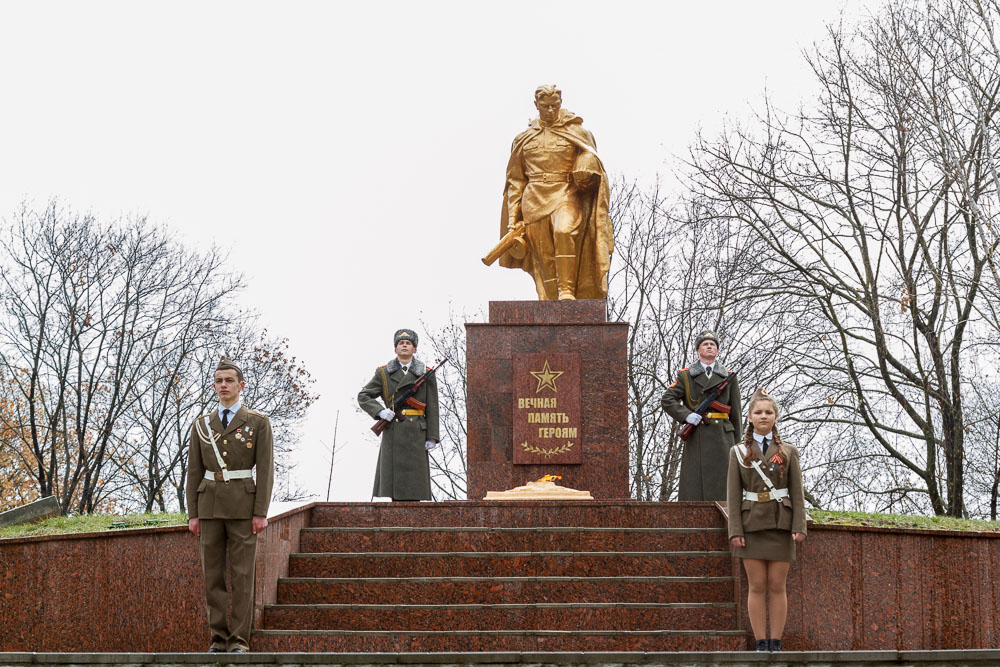
Mass Grave of Soviet Soldiers and Monument to Fellow Villagers Who Died During the Great Patriotic War
This monument was erected to honor the soldiers who defended their homeland and ultimately died during the Great Patriotic War. Originally, in the mid-1950s, the monument occupied a position in the center of the village at the intersection of Lenin and Kirov streets, with funding for its construction collected through the combined efforts of various Kamenka organizations and collective farms working together toward this shared commemorative goal.
In its original configuration, the monument stood atop a rectangular pedestal, flanked on either side by seven graves containing fallen soldiers. In August 1969, the Kamenka District Council made the decision to relocate the monument to the city park, where its grand reopening took place on May 9, 1970 — a date chosen to coincide with Victory Day celebrations.
The monument underwent further reconstruction in 1995, during which the memorial plates were replaced with new ones, carefully carving the names of 317 fallen Kamenka residents into the updated memorial — ensuring that each individual soldier who gave his life in defense of the homeland continues to be remembered by name within this evolving but continuously meaningful tribute to the community’s wartime sacrifice.
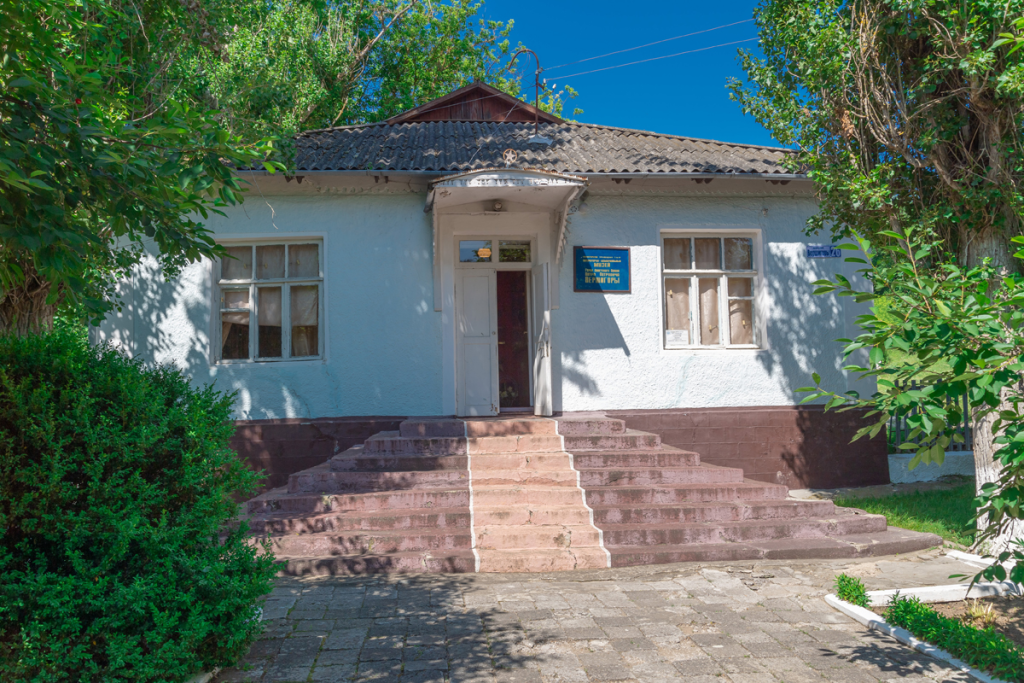
Museum of Hero of the Soviet Union P.P. Vershigora, Severinovka Village
Pyotr Petrovich Vershigora, a native of Severinovka village in Kamenka district, achieved recognition extending far beyond Pridnestrovie and indeed beyond the borders of the former Soviet Union itself. A multifaceted figure who worked as a writer, teacher, and theater and film director, Vershigora’s life took a dramatic turn during the Great Patriotic War, where he served successively as company and battalion commander before eventually heading the brigade of front-line correspondents.
In 1943, Vershigora assumed command of the 1st Ukrainian Partisan Division, named after the legendary S.A. Kovpak. His successful leadership of guerrilla raids and his special merits in developing the broader partisan movement throughout Ukraine earned him the prestigious title Hero of the Soviet Union. Following the war’s end, Pyotr Petrovich transitioned into academic life, teaching at the Academy of the General Staff of the Armed Forces of the USSR while simultaneously pursuing his literary career. His book “People with a Clear Conscience” (originally titled “Люди с чистой совестью” in Russian) earned him the prestigious USSR State Prize, cementing his reputation as both a war hero and accomplished author.
In 1965, at the initiative of history teacher P.P. Korzhov, a corner dedicated to Pyotr Vershigora’s Military Glory was established within the Severinovka eight-grade school, eventually evolving into a full museum that received its own dedicated building in 1977. The museum’s exposition comprehensively covers Vershigora’s pre-war life and military journey, while also honoring the broader heroic deeds accomplished by the Kovpak partisans throughout their campaigns during the Great Patriotic War — connecting this remarkable individual’s story to the larger partisan movement he helped lead.
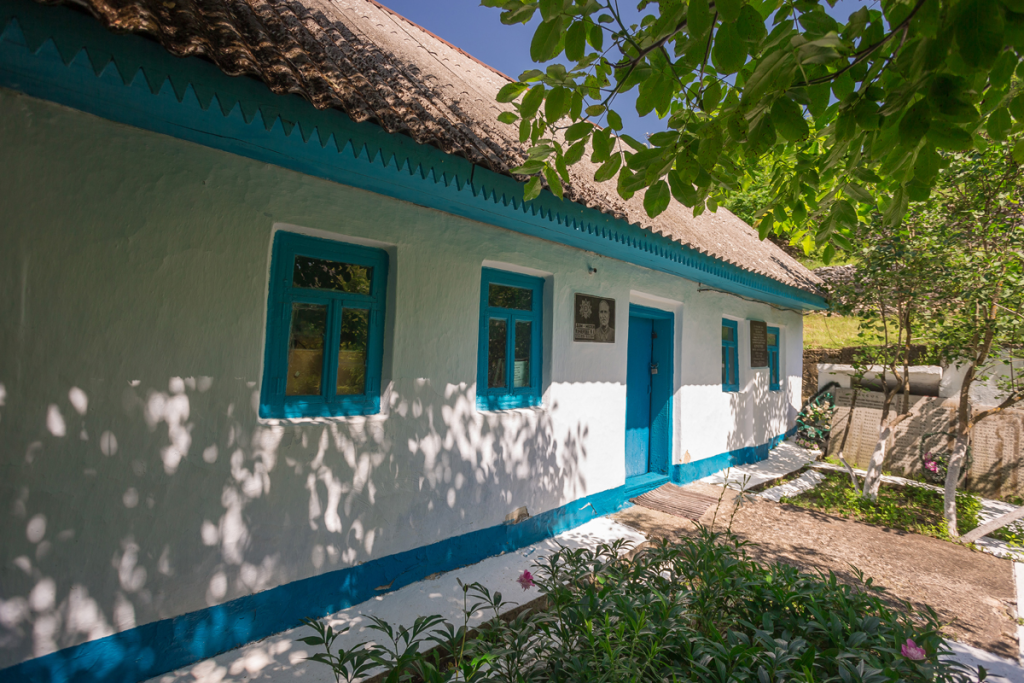
House Museum of Ya.A. Kucherov, Khrustovaya Village
Yakov Alekseevich Kucherov, who would later be awarded the Order of the Patriotic War of the 1st Class, served before the war as chairman of the village council of Khrustovaya. Following the invasion of German fascist troops, Kucherov made the courageous decision to remain behind enemy lines specifically to organize underground resistance against the occupiers. In May 1942, he took the initiative to create the Kamenka Underground Party Committee, leading this resistance organization until autumn 1943, when he was ultimately arrested and imprisoned in Rybnitsa prison.
Tragically, shortly before the Red Army’s liberation of the city, Kucherov, along with other prisoners, was shot and burned within the prison walls — a devastating end that came so close to the liberation he had fought so hard to bring about. In 1985, to mark the 40th anniversary of Victory, a museum opened in the very house where Kucherov had lived and worked throughout the German-Romanian occupation.
The museum’s memorial room contains pre-war photographs of Ya.A. Kucherov, alongside documents detailing the activities of his underground organization, household items and kitchen accessories that together recreate the domestic environment in which this courageous resistance leader lived and ultimately sacrificed his life in pursuit of his village’s liberation.
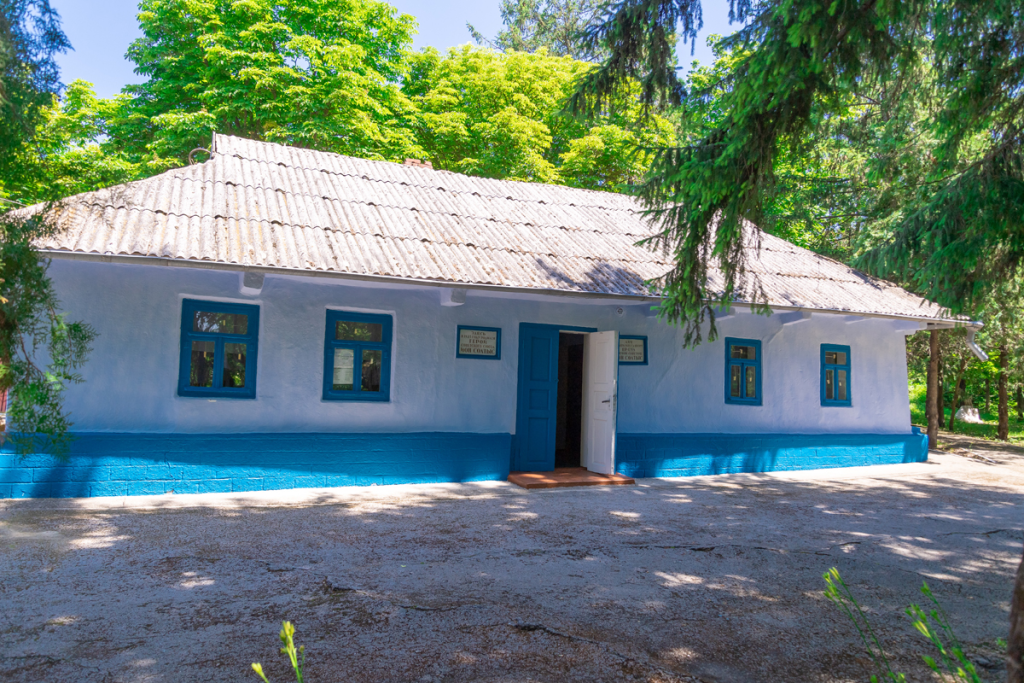
House Museum of Hero of the Soviet Union I.S. Soltys, Kuzmin Village
Ivan Sidorovich Soltys was born on January 5, 1923, in the village of Kuzmin into a peasant family, beginning a life that would ultimately culminate in extraordinary wartime heroism. In 1944, he joined the Red Army and went on to participate actively in the liberation of both Moldavia and Poland during the final, decisive campaigns of the Great Patriotic War.
The defining moment of Soltys’s brief but heroic life came during a battle near the Polish village of Luisenthal on February 11, 1945. In an act of supreme self-sacrifice, Ivan Soltys threw himself onto an enemy pillbox, using his own body to close it and neutralize the threat it posed to his fellow soldiers. For this extraordinary feat of heroism, he was posthumously awarded the title Hero of the Soviet Union, joining the ranks of those whose ultimate sacrifice secured victory for their comrades.
While his parents were still alive, a museum was established in the very house where Ivan Sidorovich was born and grew up. Within this modest one-story, three-room peasant home, visitors can explore a faithfully reproduced living room containing personal belongings of the family alongside period household items, complemented by a thematic exhibition that brings the full story of this young hero’s life and ultimate sacrifice vividly to life for all who visit.