
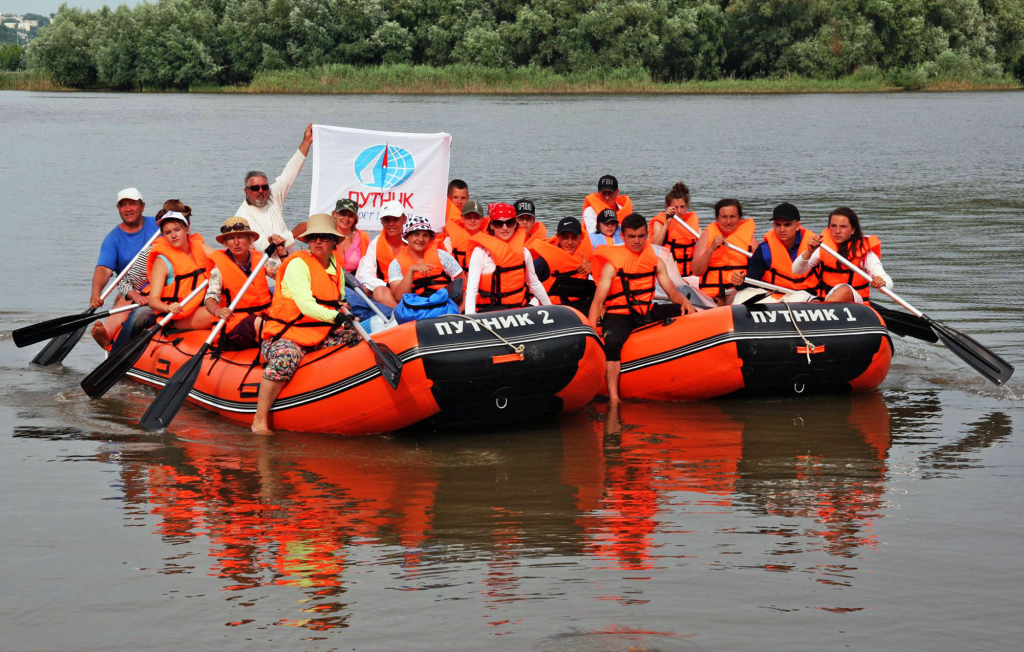
Rafting on the Dniester
Six-Day Rafting Adventure: Rashkov to Belochi
Cast off from the ancient village of Rashkov and let the Dniester carry you through one of the most spectacular and least-touched stretches of river in all of Pridnestrovie — a six-day rafting adventure covering 52 km of living river, with walking tours in Rashkov, Stroentsy and Belochi, a rock-climbing master class on the Svinerest hill, natural springs, rock monasteries, ancient water mills and evenings gathered around a campfire on the riverbank under an open sky.
Suitable for children over 10 years old accompanied by adults, this trip is organized with full safety equipment, tents for 2–3 people and three hot meals per day cooked in the field.
Accommodation: Tourist sleeping bags in tents on the banks of the Dniester
Meals: 3 meals per day, cooked on an open fire or tourist gas burner
Days 1–2 — Rashkov: The Oldest Village on the Dniester
The adventure begins on the banks of Rashkov — one of the oldest rural settlements in Pridnestrovie, with a documented history stretching back to 1402 and a multicultural heritage that makes it one of the most historically fascinating villages on the entire river.
The first walking tour opens at the Church of the Holy Trinity (Rashkov village, Kamenka district) — one of the oldest churches in Pridnestrovie, home to the venerated icon of the Spas Nerukotvornyi to which believers have long attributed miraculous powers. A deeply moving starting point for a journey that will be as spiritual as it is physical.
Just 250 meters away, the St. Cajetan Catholic Church (Rashkov village, Kamenka district) stands as a rare and beautifully preserved testament to the multicultural history of Rashkov — a Catholic church in an Orthodox village, a reminder that different faiths once coexisted peacefully in these riverside communities.
After 420 meters, the haunting Ruins of the Synagogue (Bazarnaya Str., Rashkov village) add a third layer to Rashkov’s extraordinary religious landscape — a poignant reminder of the once-thriving Jewish community that shaped this village’s identity for centuries before the tragedies of the 20th century.
Just 31 meters away, Panska Krynitsa (Rashkov village) is a legendary natural spring steeped in local folklore — the kind of place where the water tastes different because of everything that has happened around it across the centuries. Drink deeply and continue.
The second day in Rashkov is dedicated to the Museum of Hero of the Soviet Union F.I. Zharchinsky (35 Fiodora Zharchinskogo Str., Rashkov village) — an intimate and deeply personal museum honoring one of the village’s most celebrated sons. His story of courage during the Great Patriotic War connects this ancient riverside village to the defining struggles of the 20th century in the most human way possible.
In the evening, the rafts are loaded, the tents are pitched on the riverbank and the first night on the Dniester begins — the sound of the river, the crackle of the campfire and the stars overhead providing everything that any accommodation could not.
Days 3–5 — Stroentsy: Water Mills, Grape Terraces, Rock Climbing and Natural Springs
After two days in Rashkov, the rafts push off and the river takes over — carrying the group 15 km downstream to the village of Stroentsy, a place of extraordinary natural and historical beauty whose landscape was famously shaped by Russian Field Marshal Peter Wittgenstein in the 19th century.
The first stop on arrival is the charming Water Mill (21a 1 Maya Str., Stroentsy village, Rybnitsa district) — a beautifully preserved piece of rural heritage that speaks of the self-sufficient agricultural economy once sustained by the Wittgenstein estate and the village communities along this stretch of the Dniester.
Just 1.4 km away, the sweeping Grape Terraces (Stroentsy village, Rybnitsa district) cascade down the hillsides above the river in one of the most visually dramatic landscapes on the entire six-day journey — row upon row of vines carved into the slope, a living legacy of the viticultural ambitions that shaped this corner of Pridnestrovie.
After 8.4 km, the adventure reaches its most physically exhilarating moment — Svinerest (Stroentsy village, Rybnitsa district) — a dramatic rocky outcrop rising above the river that serves as the venue for the trip’s practical rock-climbing master class. Under the guidance of experienced instructors with full safety equipment provided, participants get a genuine taste of vertical adventure with the Dniester valley spread out magnificently below. After the rock training, a well-earned tourist bath on the shore provides the perfect recovery before the evening camp.
Just 9.2 km further, the elegant Countess’s Gazebo (Rybnitsa district, Stroentsy village) offers a moment of aristocratic tranquility — a delicate remnant of the Wittgenstein estate’s social life, where the family once gathered to enjoy the extraordinary views that visitors still come to see today.
After 2.8 km, the “Teplitsa” Springs System (Rybnitsa district, Stroentsy village) delivers on the promise made at the start of the journey — the chance to drink water from a living spring. These natural springs, among the purest in the region, have drawn visitors to Stroentsy for generations and remain one of the village’s most treasured natural features.
Just 570 meters away, the Church of St. Michael the Archangel (Polevaya Str., Stroentsy village, Rybnitsa district) brings the Stroentsy section to a spiritual close — a parish church whose construction began in 1829 under the influence of the Wittgenstein estate and which has served the village’s faithful continuously ever since.
Day 6 — Belochi: The Final Mill and the Journey’s End
The final day on the river carries the group 6.9 km downstream to the closing destination — the Water Mill in Belochi village (Rybnitsa district). This beautifully preserved mill brings the six-day journey to a fittingly rustic and peaceful conclusion — a last encounter with the rural heritage of the Dniester valley before the rafts are pulled ashore and the adventure on the river comes to an end.
From Belochi, the route continues overland to the village of Popenki — and from there, back to the world that was left behind six days and 52 river kilometers ago, carrying memories of cliffs and campfires, springs and synagogue ruins, grape terraces and starlit riverbanks that no other route in Pridnestrovie can quite replicate.
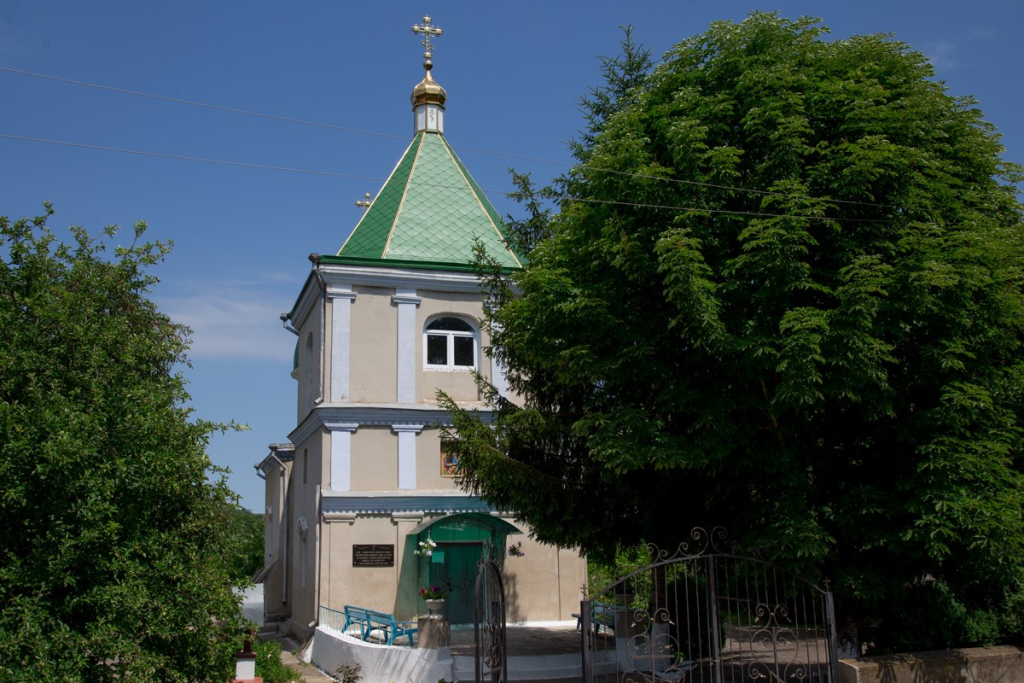
Church of the Holy Trinity, Rashkov Village
Nestled in one of the most authentic and picturesque villages in all of Pridnestrovie, the Church of the Holy Trinity captivates pilgrims and visitors alike with its unusual architectural design and the rich historical events surrounding its founding. Built in 1779, this small and intimate church has earned official recognition as an architectural monument of republican significance, and continues to actively serve the faithful of Rashkov to this day.
What truly sets this church apart is the presence of a remarkable 19th-century icon of the Spas Nerukotvornyi — the Image of Christ Not Made by Human Hands. Believers have long attributed miraculous power to this sacred icon, and it remains one of the most deeply venerated treasures in the entire region, drawing the faithful from far beyond the village itself.
For more information, visitors may contact Archpriest Dimitri Zamor.
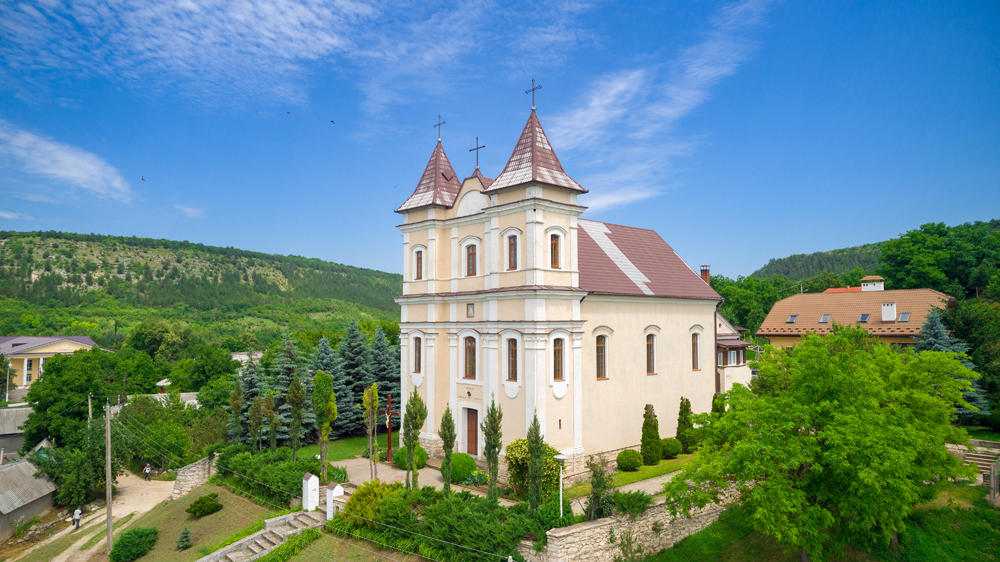
St. Cajetan Catholic Church
St. Cajetan Catholic Church holds a unique distinction as the oldest Catholic church in all of Pridnestrovie, remarkably preserved in nearly its original form to this day. The decision to build the church dates back to 1749, when Prince Jozef Lubomirski made the commitment to its construction — a decision documented in the historic manuscript known as the “Act of Foundation of the Church in Rashkovo.” Construction itself was completed in 1786, with the church consecrated five years later in honor of St. Cajetan.
Architecturally, the building stands as a classic example of 18th-century Polish Catholic church design, incorporating elegant Baroque elements that reflect the artistic sensibilities of its era. The church’s history took a difficult turn during the Soviet period, when it was closed by local authorities and repurposed first as a granary, then later as a joiner’s workshop — a fate shared by many religious buildings during that time.
It wasn’t until 1990 that the church was finally returned to the Catholic community. Since then, services have once again filled the building with the sounds of the pipe organ, restoring this remarkable piece of 18th-century heritage to its original sacred purpose.

Ruins of the Synagogue
Constructed around 1749 using funds collected through the so-called “basket tax” — a specialized form of taxation of the era — this synagogue once stood at the very heart of Rashkov’s spiritual and communal life. During this period, the village held particular significance as one of the centers of world Hasidism, a religious movement within Judaism that swept through the Jewish population of the Polish-Lithuanian Commonwealth and surrounding territories during the first half of the 18th century.
For generations, the synagogue served as the spiritual anchor for Rashkov’s substantial and vibrant Jewish community. Tragically, the building’s fate changed dramatically in the early 1930s, when the Soviet anti-religious campaign led to the destruction of its vaults. Today, only the stone walls and a handful of interior architectural elements remain standing from what was once a truly majestic structure — a haunting reminder of the rich Jewish heritage that once flourished in this corner of Pridnestrovie.

Panska Krynitsa
Tucked away near the ruins of the old Jewish synagogue, Panska Krynitsa — meaning “The Spring of the Mistress” — stands as a cultural heritage site dating back to the middle of the 17th century, its name carrying with it one of the most poignant love stories in the history of Rashkov.
The spring’s name is forever linked to Ruksanda, daughter of the Moldavian Principality’s Hospodar Vasily Lupu. In 1652, she married Timofey, son of the legendary Ukrainian Hetman Bogdan Khmelnytsky. Tragedy struck just a year later, when Timofey was fatally wounded during the siege of Suchava Fortress. In the aftermath of his son’s death, Bogdan Khmelnytsky gifted the village of Rashkov to the grieving Ruksanda, who would go on to live here for thirteen long years, carrying her sorrow with her.
According to local legend, the spring that came to bear her name — “Panska Krynitsa” — emerged from the very tears Ruksanda shed while mourning the untimely loss of her beloved husband, a story that has been passed down through generations and continues to give this natural spring its deeply romantic and melancholic significance.

Museum of Hero of the Soviet Union F.I. Zharchinsky
Fyodor Ivanovich Zharchinsky joined the Red Army at the very outbreak of the Great Patriotic War, going on to participate in significant battles across Ukraine, the Caucasus and Eastern Europe throughout the course of the conflict. During the decisive Berlin operation on April 21, 1945, Senior Lieutenant Zharchinsky, alongside a group of reconnaissance scouts, discovered a concentration camp in the German town of Treuenbrietzen. Making the courageous decision to liberate the prisoners held there, the scouts engaged the camp’s guards in direct confrontation.
The operation proved extraordinarily successful, resulting in the liberation of 4,500 prisoners of war representing multiple nationalities — Russians, French, Poles, Danes, Belgians and Norwegians, including notably the commander of the Norwegian armed forces, Major General Otto Ruge. However, this victory came at tremendous personal cost: Zharchinsky, who had personally killed six guards along with the camp commandant during the engagement, was mortally wounded and died shortly afterward from his injuries. In recognition of this extraordinary act of heroism, he was posthumously awarded the title Hero of the Soviet Union.
On May 23, 1982, a museum dedicated to this outstanding son of Rashkov opened in the village, preserving his memory for future generations. In 2011, a bust honoring the hero was installed beside the school where he had once taught and which he led during the pre-war years — creating a permanent physical connection between Zharchinsky’s wartime heroism and the educational institution where he first served his community before the war that would ultimately claim his life.
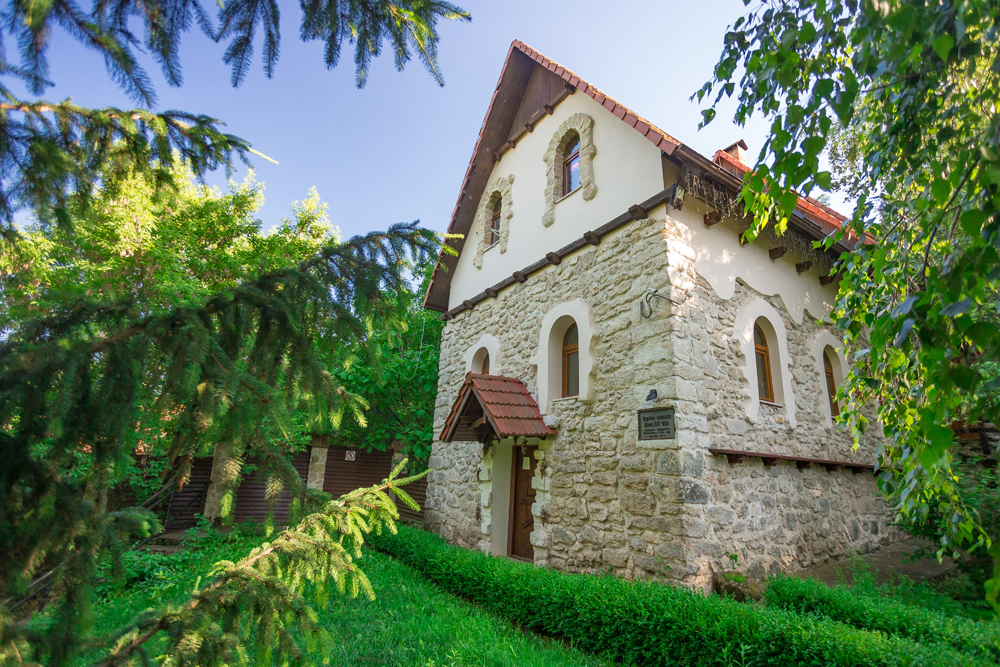
Water Mill
The story of this remarkable water mill begins in 1881, when the Slobodka-Rybnitsa railway line officially came into operation, dramatically expanding opportunities for importing machinery directly from European manufacturers. Capitalizing on this newfound connectivity, Transylvanian architect and innovator Georgy Panteleevich Mazgan designed and constructed a water mill in Stroentsy village, sourcing every mechanism for the mill all the way from Zurich, Switzerland — an impressive logistical achievement for its era.
The mill underwent restoration in 1982, with the building subsequently repurposed to serve as a museum dedicated to bread. More recently, this 19th-century structure has been further restored, this time funded by M.V. Orlov, ensuring the continued preservation of this historically significant building for future generations to appreciate.
Today, the water mill stands as one of the principal attractions not only within Stroentsy village but throughout the entire northern region of Pridnestrovie. The naturally picturesque surroundings are thoughtfully complemented by careful landscape design across the property, creating a harmonious blend of historic architecture and cultivated natural beauty. Within the mill’s premises, visitors will now find both a dedicated museum and the restaurant and hotel complex “Old Mill” — allowing guests to dine, stay overnight and explore this remarkable piece of living industrial heritage all within the same historic setting.
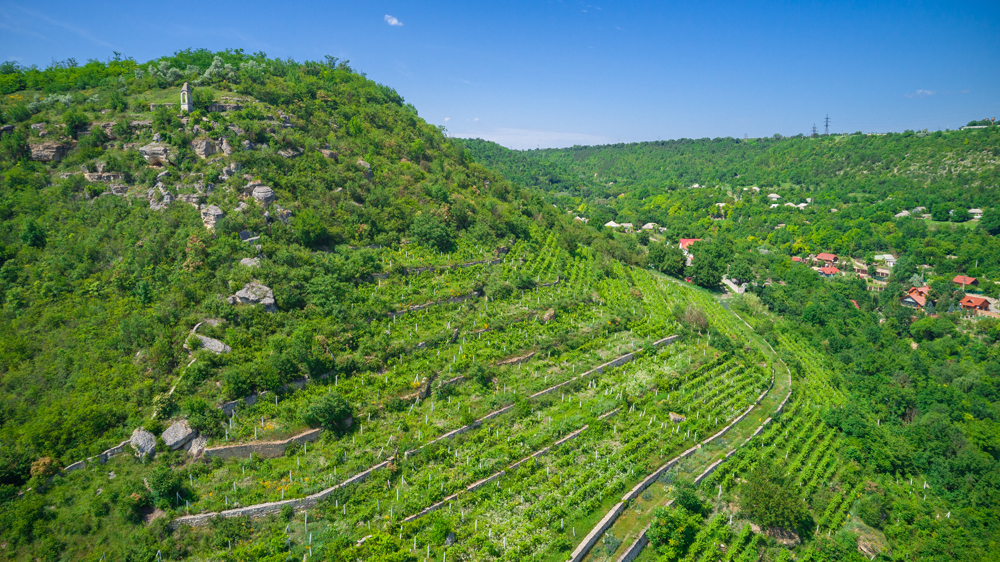
Grape Terraces
The grape terraces of Stroentsy form one of the most significant chapters in the village’s rich history, dating back to the early 19th century when Stroentsy belonged to the estate of Prince Peter Christianovich Wittgenstein. A passionate advocate of viticulture, Wittgenstein cleverly worked with the natural terrain, constructing stone terraces along the eastern slope to create the ideal conditions for cultivating his vines.
On these carefully engineered terraces, he grew both table and technical European grape varieties, even bringing in specialists from Germany to oversee their cultivation and ensure the highest quality. The terraces’ eastern-facing position proved to be a stroke of genius — receiving uninterrupted sunlight from dawn until dusk, this orientation allowed the grapes to ripen beautifully, producing fruit of exceptional quality.
The wines that emerged from these slopes earned a remarkable reputation, regarded as among the finest for preventing and treating gastric ailments — a testament to both the quality of the grapes and the skill of those who tended them. Today, the grape terraces of Stroentsy stand as one of the village’s most treasured historical monuments, a living legacy of Wittgenstein’s vision and the enduring connection between this land and the art of winemaking.
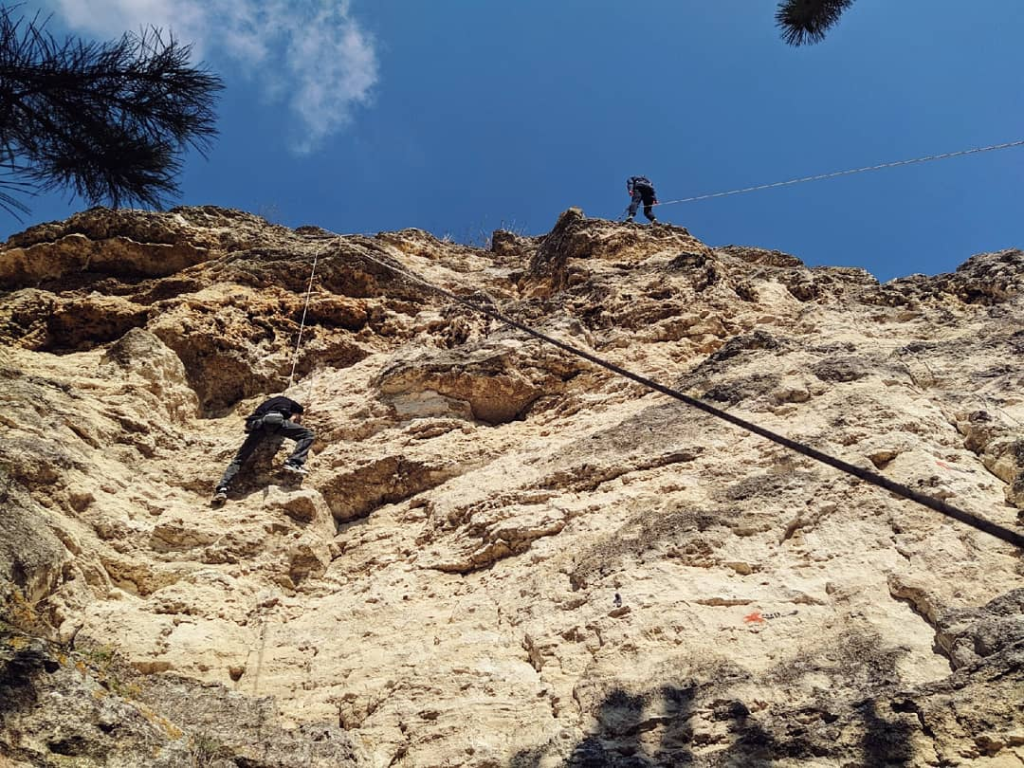
Svinerest
“Svinerest” carries a humorously distinctive name for the rocky summit found in Stroentsy village, though the climbing experience it offers is anything but a joke. The mountain’s structure consists of shell rock formations, making this location one of the finest rock-climbing destinations in all of Pridnestrovie. The steep slope averages approximately 16 meters in height, providing climbers with a substantial vertical challenge.
Dedicated climbing routes have been carefully established on one section of the rock face, with these routes properly cleared to prevent loose rocks and debris from creating hazards for climbers, while safety points have been installed throughout to ensure responsible and secure climbing practice. This combination of natural geological features and thoughtful safety preparation has made Svinerest a popular destination for both experienced climbers and those seeking their first introduction to the sport within the dramatic landscape of the Stroentsy hillside.
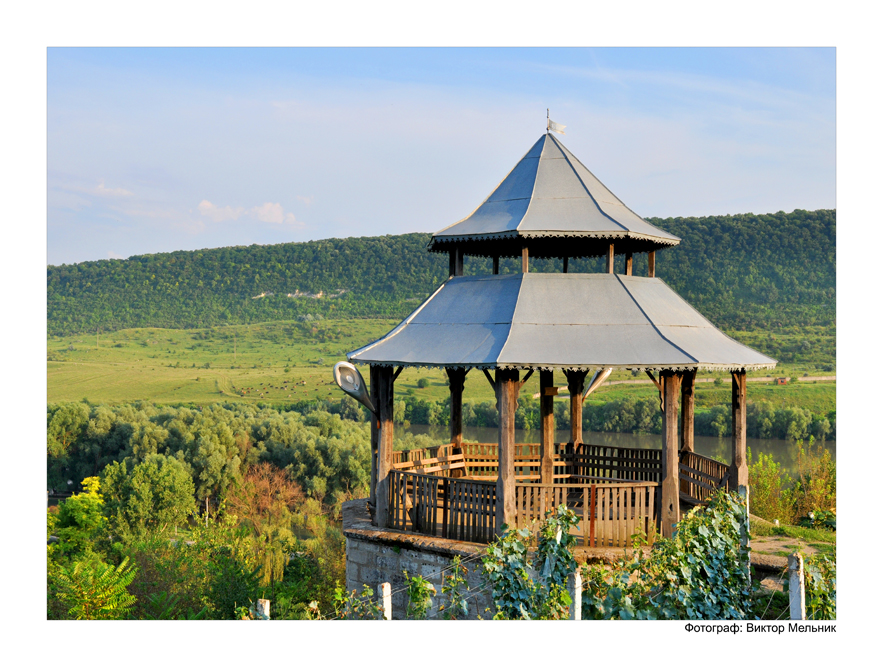
The Countess's Gazebo
Perched on the edge of the slope crowned by the Tower of the Winds, right alongside the famous grape terraces, the Countess’s Gazebo offers one of the most romantic vantage points in all of Stroentsy. This elegant structure was built in 1908 at the order of Maria Petrovna Zinovieva, granddaughter of the legendary Field Marshal Peter Christianovich Wittgenstein — a continuation of her family’s deep connection to this picturesque corner of the Dniester valley.
From the gazebo, visitors are treated to sweeping, scenic views stretching across the Dniester River, the village of Stroentsy below and the rolling countryside beyond. It remains one of the most beloved spots in the village for quiet reflection — a place where the beauty of the landscape and the echoes of aristocratic history come together in perfect harmony.
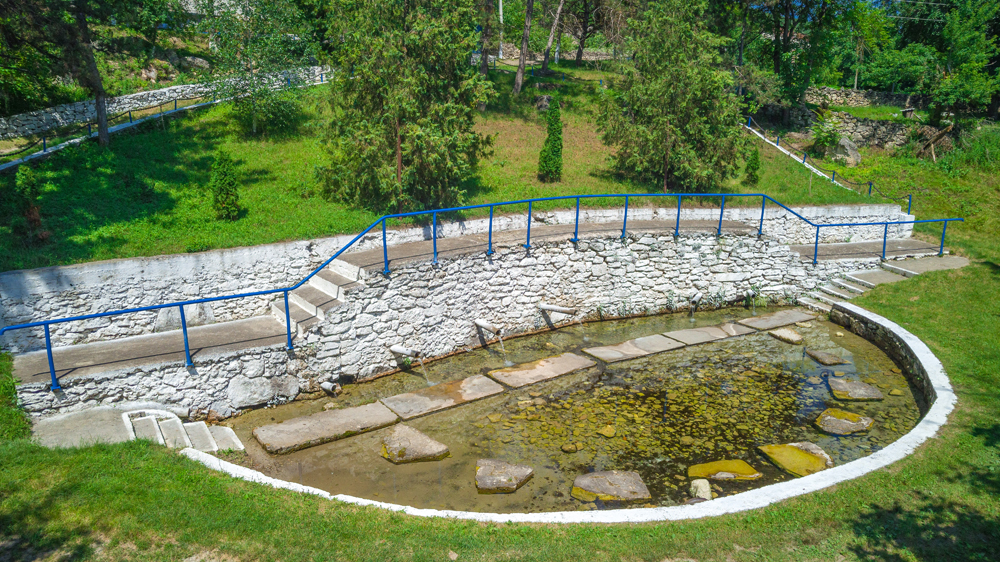
"Teplitsa" Springs System
The “Teplitsa” springs system ranks among the most renowned natural water sources in the entire district, prized for the purity and freshness of its flow. A cherished local tradition has taken root around these springs over the years: every January 19th, on the Orthodox feast of Epiphany, the waters here are ceremonially consecrated — drawing locals and visitors alike to witness and take part in this meaningful religious observance.
Beyond its spiritual significance, the springs continue to serve as a beloved natural landmark in Stroentsy, offering refreshing, crystal-clear water that has drawn villagers and travelers to this spot for generations.

Church of St. Michael the Archangel, Stroentsy Village
The story of the Church of St. Michael the Archangel in Stroentsy begins with the original wooden church, first established in 1702. This early structure was destroyed in the 1820s, and the land was subsequently used to build a palace for Prince Trubetskoy, which itself eventually collapsed in 1918, marking another chapter in this site’s layered architectural history.
Construction of the present church began in 1829, funded by Peter Christianovich Wittgenstein, whose patronage shaped so much of Stroentsy’s development during this period. A particularly distinctive feature of this temple lies in its architecture, which thoughtfully blends Orthodox and Lutheran traditions — the stone bell tower, topped with a distinctive spoke-shaped peak, bears a clear resemblance to German church design, creating a fascinating cross-cultural architectural statement that reflects the diverse influences present in this corner of the Dniester valley.
The church’s role in the community extended beyond purely religious functions: a school was established on its grounds in 1861, embedding the temple within the educational life of the village as well as its spiritual life. In the 20th century, to mark the 40th anniversary of Victory over Nazi Germany in the Great Patriotic War, a military history museum was opened here, named after P.A. Rumyantsev-Zadunaisky, adding yet another dimension to this multifaceted site. Finally, in the 1990s, the church underwent restoration and resumed functioning according to its original sacred purpose, completing a journey that saw this remarkable building serve religious, residential, educational and museum functions across more than three centuries.

Water Mill in the Village of Belochi
This old water mill stands on the Belochi River, sharing its name with both the village and the waterway that has powered it for generations. Built at the end of the 19th century, the mill has remarkably retained its original appearance throughout the decades, offering visitors an authentic glimpse into traditional milling architecture and engineering.
The mill’s construction showcases genuinely impressive craftsmanship: the entire building was assembled without using a single nail, with all the stones perfectly matched to fit together seamlessly. The wooden floors have successfully held the entire structure together for more than 125 years, a remarkable testament to the skill of the original builders. The mill’s equipment and mechanisms were imported directly from Zurich, reflecting the same pattern seen in other water mills throughout the region during this period, when European engineering expertise was sought to ensure the highest quality milling operations.