

Soviet tour
Four-Day Soviet Tour: 32 Sites of Soviet Heritage
Step back into the Soviet era on one of the most unique and atmospheric routes in Pridnestrovie — a four-day Soviet tour spanning 290 km and 32 remarkable sites that together create an immersive journey into the world of Lenin and Gagarin, collective farms and communards, monumental mosaics and Soviet-style canteens. This is not a museum piece — in Pridnestrovie, the Soviet past is alive, preserved and proudly on display at every turn.
From the steam locomotives of Bender to the pioneer traditions of Ternovka, from Tiraspol’s towering Lenin monument to the dugout of the first communards in Rybnitsa district — this tour is a fascinating and genuinely educational encounter with a world that shaped this region and continues to define its identity.
Day 1 — Bender and Ternovka: Railway Glory, Soviet Art and a Pioneer Welcome
The Soviet journey begins at the Museum of Military Glory of the City of Bender (8 Academician Fedorov Str., Bendery) — a treasure house of the revolutionary, combat and labor glory of the railway workers of Pridnestrovie. Orders and medals, certificates and letters from the front, photographs and uniforms of railway workers from the military and post-war years are carefully preserved here — a deeply human record of the Soviet era’s defining struggles.
Just 660 meters away, the magnificent Monumental Mosaic Panel on the Fat-Frumos Restaurant (52 Kirova Str., Bendery) delivers one of the tour’s first great visual moments — a sweeping Soviet-era mosaic that captures the heroic aesthetic of the age in vivid, unfading color.
After 230 meters, the Gorky Cinema (10 Lenina Str., Bendery) is a beautifully preserved example of Soviet cultural architecture — a reminder that the USSR invested heavily in bringing art and cinema to every corner of the republic, and that Bender’s cinematic heritage is inseparable from its Soviet identity.
Just 1.6 km further, the House of Culture named after P. Tkachenko (32 Lenin Str., Bendery) continues the day’s exploration of Soviet monumental art — its decorated facade a showcase of the era’s bold conviction that beauty belonged in public spaces for all to enjoy.
After 370 meters, the Monument to the Fighters for Soviet Power in Oktyabrsky Park stands as a proud sculptural tribute to those who established Soviet authority in this region — a monument whose ideological directness feels entirely at home in the context of this tour.
Just 1.8 km away, the State Art Museum of Pridnestrovie (77 Kommunisticheskaya Str., Bendery) houses collections that include significant works of Soviet-era art — paintings, sculptures and graphic works that reflect the aesthetic and ideological ambitions of a culture that took art seriously as a tool of inspiration and education.
After 2.1 km, the unmissable Café “Stolovaya SSSR” — USSR Dining Room (29 Sovetskaya Str., Bendery) serves up a feast prepared according to authentic Soviet recipes in a setting of pure classic “Soviet style.” Borscht, kotlety, kompot — the flavors of the USSR are alive and well in Bender, and lunch here is one of the tour’s most genuinely enjoyable experiences.
Just 2.2 km further, the Former Bus Station (1 Sovetskaya Str., Bendery — now Piazza Italia shop) offers a fascinating example of Soviet decorative heritage surviving within a completely repurposed commercial space — the mosaics and architectural details of the original station still visible beneath the layers of time.
The first day concludes with a drive of 10 km to the extraordinary Guest House “Casa Baboi” (111 Vinogradnaya Str., Ternovka village) — a Soviet-style guesthouse where visitors are ceremonially welcomed as pioneers in a tradition-rich initiation that is as charming as it is memorable. Spending the night here, surrounded by authentic Soviet-era furnishings and atmosphere, is an experience unlike anything else on this tour.
Day 2 — Tiraspol: The Soviet Capital in All Its Glory
After an 8.4 km drive into Tiraspol, the second day opens at the Monument to the First Power Plant (Pokrovskaya Str., Tiraspol) — a distinctive sculptural symbol in the form of a light bulb honoring the establishment of the first power station in the city. In a Soviet world where electrification was synonymous with progress and modernity, this monument carries a weight far beyond its modest dimensions.
Just 1.2 km away stands one of the most iconic Soviet monuments in all of Pridnestrovie — the towering Monument to V.I. Lenin (45 Pokrovskaya Str., Tiraspol). One of the twenty tallest Lenin monuments in the world, this imposing figure presides over the capital with the authority and permanence that only the Soviet Union could have conceived. Standing before it, the scale of the ideological project that built this region becomes impossible to ignore.
After 280 meters, the Historical and Local History Museum (46 Pokrovskaya Str., Tiraspol) provides rich context for the Soviet chapters of the city’s history — its collections spanning the full arc from the revolutionary period through the decades of Soviet construction.
Just 120 meters further, the magnificent Memorial Complex of Glory (Pokrovskaya Str., center, Tiraspol) honors the Soviet soldiers who gave their lives in the Great Patriotic War — the eternal flame burning here as a perpetual tribute to the generation that saved the USSR from fascism.
After 3.5 km, the Museum of the Ministry of Internal Affairs of the PMR (95/9 Shevchenko Str., Tiraspol) opens an extraordinary window into Soviet law enforcement — pictures, documents, awards and items of militia officers from the Soviet era displayed alongside service equipment that brings the authentic atmosphere of the USSR’s police culture vividly to life.
Just 3.1 km away, the Former Headquarters of Cavalry Brigade Commander G.I. Kotovsky (34 Manoilova Str., Tiraspol) connects the early Soviet period to one of its most colorful and celebrated military figures — the legendary cavalryman whose exploits in the Civil War made him a Soviet folk hero.
After 400 meters, the USSR Canteen (66 Rozy Lyuksemburg Str., Tiraspol) offers a second Soviet dining experience — a classic stolovaya where the menu, the décor and the atmosphere transport visitors directly back to the everyday culinary culture of the Soviet Union.
Just 410 meters further, the Restaurant “Again in the USSR” (54a Sverdlova Str., Tiraspol) rounds out the day’s Soviet gastronomic offerings with a more festive take on the theme — Soviet culinary masterpieces presented with the warmth and nostalgia that this restaurant has made its calling card.
After 890 meters, the imposing House of Soviets (101 Pokrovskaya Str., Tiraspol) stands as one of the finest examples of Stalinist Empire architectural style in the region — a monumental civic building whose grandeur, symmetry and ideological confidence embody the aesthetic ambitions of the Soviet state at the height of its power.
Just 330 meters away, the Bust of the First Cosmonaut Yuri Gagarin (Gagarin Boulevard, Tiraspol) celebrates one of the Soviet Union’s greatest achievements and most universally beloved heroes — the first human in space, whose smile became one of the defining images of the 20th century. In Pridnestrovie, Gagarin is not a historical footnote but a living symbol of Soviet pride.
After 970 meters, the elegant Historical and Architectural Ensemble of Teatralnaya Square (Teatralnaya Square, Tiraspol) showcases the Soviet Union’s investment in theatrical and cultural life — a beautifully preserved urban ensemble that speaks of a civilization that took the arts as seriously as industry and defense.
Just 1.8 km further, the beloved Pobeda (Victory) Park (Mira Str., Tiraspol) provides a moment of green Soviet serenity — a park dedicated to the Great Patriotic War victory where the Soviet tradition of commemorating sacrifice through living nature continues to this day.
The second day concludes in the same park at the Monument to G.I. Kotovsky — a proud equestrian tribute to the legendary Soviet cavalryman that brings the day’s Soviet journey to a fittingly heroic close.
Day 3 — Kitskany, Chobruchi and the Turunchuk: Concrete Bayonets, Prize-Winning Parks and Soviet Villages
After an 11 km drive, the third day opens at the legendary Kitskany Bridgehead (Kitskany village, Slobodzeya district) — a hallowed military site that leads directly to one of the most visually dramatic Soviet monuments in Pridnestrovie: the 35-meter Glory Obelisk of Kitskany, rising in the form of a concrete bayonet in memory of the feat of Soviet soldiers during the Great Patriotic War. Few monuments in the region communicate the Soviet aesthetic of heroic sacrifice with such raw, uncompromising power.
Just 3 km further, the House of Culture of Kitskany village (31 Kotovskogo Str., Kitskany village, Slobodzeya district) was for many years one of the finest rural cultural centers in the entire Moldavian Soviet Socialist Republic — a champion in competitions for rural houses of culture whose Soviet-era heritage of art, performance and community life remains palpable within its walls.
After 27 km, the route arrives in Chobruchi village at the magnificent Park named after D.K. Rodin (32G Lenin Str., Chobruchi village, Slobodzeya district) — once ranked among the five best parks in the entire USSR, this extraordinary landscape monument continues to astonish visitors with its artfully designed spaces, rare plantings and the serene beauty that earned it its Soviet-era fame.
Just steps away, the House of Culture of Chobruchi village (32g Lenin Str., Chobruchi village) adds another example of the Soviet commitment to bringing cultural life to every village — its architecture and programming a legacy of the era’s belief that culture was not a privilege but a right.
After 3.7 km, the Monument to V.I. Lenin in Chobruchi stands in the village center — one of dozens of Lenin monuments that punctuate this tour, each a local expression of the republic-wide reverence for the founder of the Soviet state.
The third day concludes with a visit to the Sleeve Turunchuk (Chobruchi village, Slobodzeya district) — a scenic branch of the Dniester River whose peaceful water rifts and lush riverside landscape provide a serene natural counterpoint to the day’s parade of Soviet monuments and architecture. Here, the beauty of the Pridnestrovian countryside does what it always does best: quietly outshining everything else.
Day 4 — Lenin Village, Rybnitsa: Communards, Tractor Drivers and Battle Glory
After a drive of approximately 170 km north, the fourth and final day opens at one of the most historically evocative stops on the entire tour — The Dugout of the First Communards of the Commune named after V.I. Lenin (First Communars Str., Lenino village, Rybnitsa district). This is the actual dugout where the founding members of one of the region’s first Soviet collective communes lived in the earliest years of the Soviet experiment — sleeping, planning and beginning the great collective project from this humble earthen shelter. Few stops on this tour bring the human reality of the Soviet founding moment closer than this one.
After 29 km, the route arrives in Rybnitsa at the Monument to V.I. Lenin (Victory Square, Rybnitsa) — another proud expression of the city’s Soviet heritage, standing at the central square that bears the name of the ultimate Soviet victory.
Just 580 meters away, the Monument to the First Tractor Drivers (18 Komsomolskaya Str., Rybnitsa) is one of the most distinctively Soviet monuments on the entire tour — a tribute to the men and women who brought mechanized agriculture to the collective farms of this region, transforming the land with the iron and steel of Soviet industrial progress.
The four-day Soviet tour concludes 550 meters further at the Museum of Military Glory in Rybnitsa (91 Kirova Str., Rybnitsa) — a museum opened in a place of deeply significant history: the very site where, during the Great Patriotic War, the Nazi occupiers established a prison for political prisoners. That such a place has been transformed into a museum of glory and resistance is itself a profoundly Soviet statement — one that brings this extraordinary tour to a close on a note of memory, defiance and enduring pride.
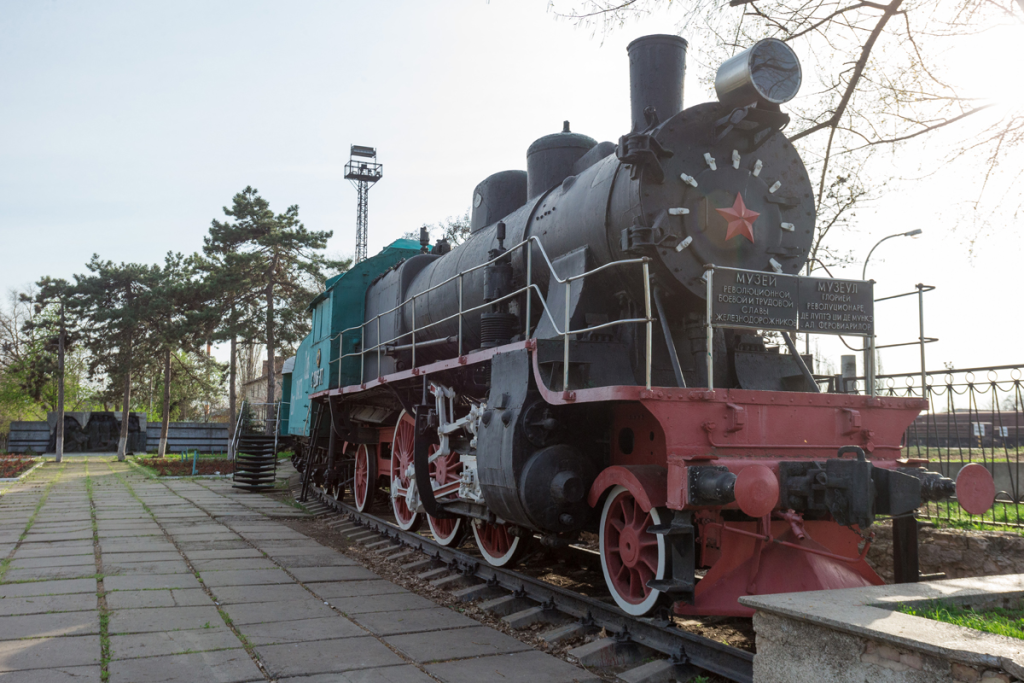
Museum of Military Glory city of Bender
The Museum of Military Glory in Bender opened its doors in 1970, with dedicated sections focusing on the events of the Great Patriotic War that shaped this city’s wartime experience. The exhibits tell the story of the heroic defense of Bendery during June and July 1941, detail the activities of the anti-fascist underground resistance that operated under German-Romanian occupation, and honor the townspeople who fell victim to Nazi camps. The museum also covers the eventual liberation of the city by Soviet troops during the spring and summer of 1944, while presenting materials about Bendery residents who participated both in frontline battles and on the labor front supporting the war effort.
Among the museum’s most significant holdings are materials dedicated to specific heroes connected to the city: S.A. Shestakov, an Honored Pilot of the USSR who commanded the 146th Fighter Air Division and died at the Oryol-Kursk Bulge; S.I. Poletskiy, a Hero of the Soviet Union who was mortally wounded during the capture of the Pilau fortress in the Baltic region; and P.P. Bolbote, a city resident who held the distinction of being a full bearer of three Orders of Glory. The history of the Great Patriotic War unfolds throughout the museum through photographs, documents, military awards, personal belongings and fragments of weapons and equipment — many of these exhibits genuinely unique pieces of historical record.
The museum’s exhibition includes particularly notable items: a document folder and shoulder straps belonging to Colonel-General M.N. Sharokhin, commander of the 37th Army of the 3rd Ukrainian Front; the cap of I.P. Rosly, a Hero of the Soviet Union who commanded the 9th Rifle Corps of the 57th Army; and the ceremonial uniform, alongside a strategic scheme for the capture and expansion of the Varnitsky bridgehead, belonging to P.M. Chirkov, commander of the 15th Guards Rifle Division of the 57th Army.
The museum’s own history took a dramatic turn during the spring and summer of 1992, when it underwent another re-exhibition just as the region found itself in the epicenter of active hostilities during June and July 1992. The museum building sustained significant damage during this conflict. Despite this setback, the Museum of Military Glory in Bendery resumed operations on May 6, 1994, finding a new home in the third carriage of the railway workers’ museum — a fitting testament to the resilience of this institution dedicated to preserving the memory of military sacrifice and heroism.
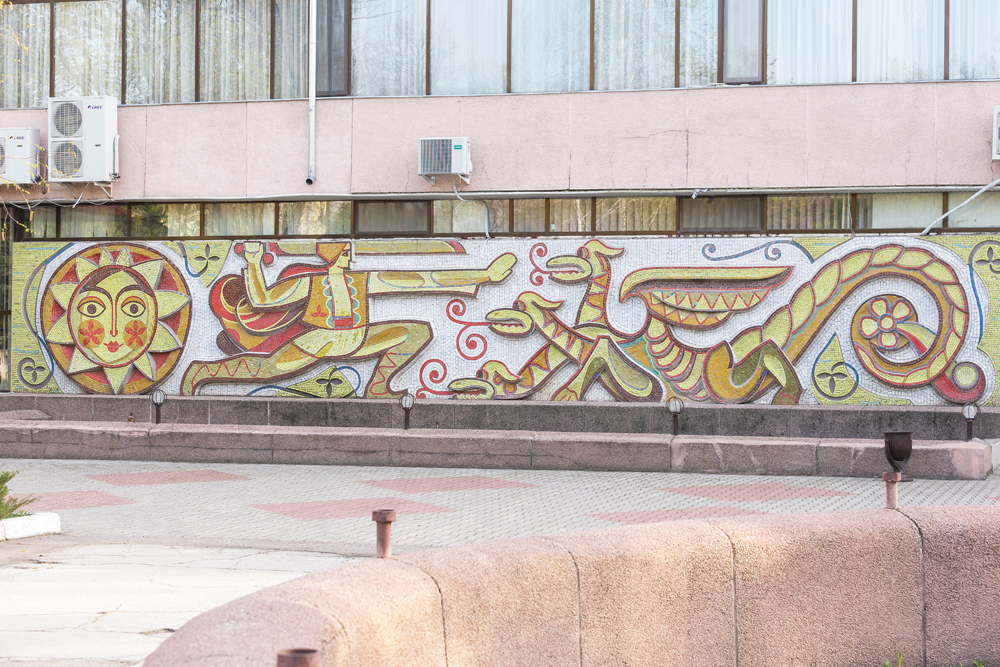
Monumental mosaic panel on Fat-Frumos Restaurant
This striking monumental mosaic panel brings a beloved piece of Moldovan folklore vividly to life on the facade of the Fat-Frumos Restaurant in Bendery. The artwork depicts the legendary hero Fat-Frumos locked in fierce battle with an evil dragon, in a dramatic moment that captures the climax of this cherished folk tale — Fat-Frumos liberating the sun itself from the dragon’s dark dungeon, releasing it back into the firmament where it belongs.
The mosaic stands as a vibrant example of Soviet-era monumental art drawing directly from local cultural mythology, transforming a simple restaurant facade into a colorful visual narrative that connects passersby to the rich storytelling traditions of Moldovan folklore.
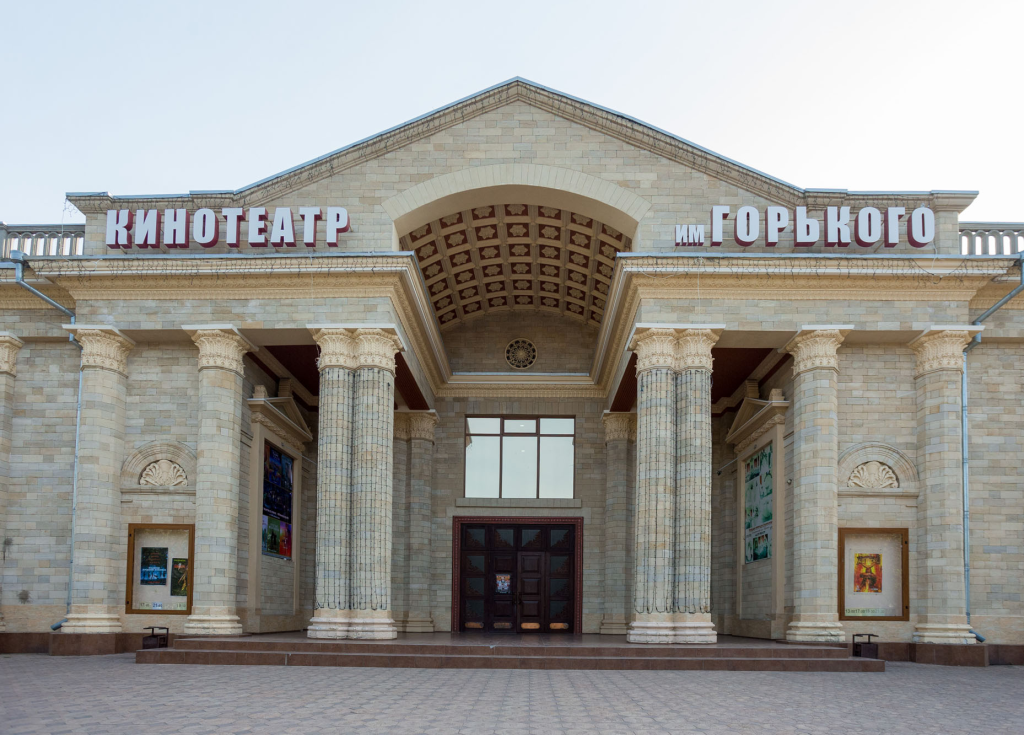
Gorky cinema
This building plays an important role in forming the historical appearance of central Bendery, holding recognized status as an architectural and urban planning monument. The cinema was constructed according to a design by V.P. Mednek, an Honored Art Worker of the Moldavian SSR and Honorary Citizen of Bendery — the very same architect responsible for several other significant memorial and civic structures throughout the region.
This particular venue holds genuine historical distinction: it was here that a wide screen was installed for the very first time anywhere in Moldova, marking an important technological milestone in the region’s cinematic history. The Gorky Cinema continues to function as a vital center of the city’s cultural life, ranking among the largest cinema venues throughout the entire republic. The facility comprises 2 separate halls, together offering 180 seats for film screenings and other cultural events that continue to draw audiences from throughout Bendery and beyond.

House of Culture. P. Tkachenko
The House of Culture named after P. Tkachenko holds a special place in architectural history, having become one of the first buildings in Moldova where a comprehensive architectural and artistic design approach was fully realized. Flanking the central entrance, the building features striking statues on either side: to the left, a young man in coveralls holds a coil of wire alongside a girl in national costume holding a piece of fabric — together representing the products of Bender’s leading enterprises. To the right, another young man plays the fluer, a traditional Moldovan folk instrument, while a girl beside him holds a grapevine, symbolizing the region’s agricultural heritage.
The story behind these mosaics is genuinely fascinating. Construction of the House of Culture took place during the height of the Soviet campaign against architectural “excesses,” initiated by Nikita Khrushchev. In an effort to reduce construction costs, planners decided to eliminate the decorative columns originally intended to adorn the building, opting instead to cover the now-bare wall surfaces with mosaic artwork. Ironically, the final cost of creating these elaborate mosaics ended up exceeding what the columns themselves would have cost — a curious twist in the building’s economic history.
The crowning artistic achievement, however, awaits visitors in the lobby of the House of Culture: a magnificent mosaic-style panel titled “Workers of the City of Bender.” At the center of this composition, set against the backdrop of the State Flag of the Moldavian SSR adorned with the Order of Lenin, a young woman is depicted holding the gifts of Moldovan land, symbolizing the prosperity of the republic. Citizens of the city flank her on either side, united in a shared labor impulse dedicated to the prosperity of their homeland. On the opposite wall, four additional mosaic scenes complement the main panel, depicting pivotal moments from the city’s and republic’s history: peasant uprisings against Turkish rule, Russian military campaigns against Ottoman fortresses in Moldova, the revolutionary events of 1917, and the liberation of Moldova from German-Romanian invaders in 1944 — together forming a sweeping visual narrative of struggle, resilience and ultimate triumph.
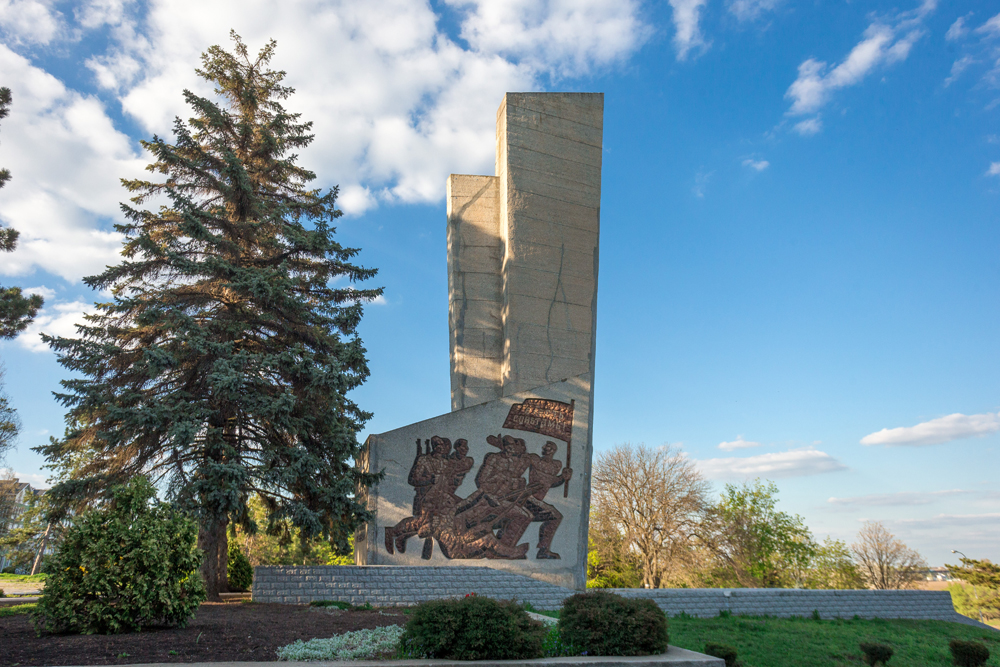
Monument to the Fighters for Soviet Power
Among the works attributed to artist M.A. Bury are two remarkable mosaics adorning the Monument to the Fighters for Soviet Power, erected in 1969 in Bendery’s Oktyabrsky Park to commemorate the 50th anniversary of the Bendery armed insurrection. Together, these mosaics tell a complete narrative arc: one panel symbolizes the beginning of the uprising against Romanian occupiers, while the second captures its sorrowful conclusion, creating a powerful visual story of struggle and sacrifice.
What makes these particular mosaics unique within Bendery’s broader collection of monumental art is the material used — Zhytomyr granite in striking red shades, employed exclusively in this composition. This distinctive stone ennobles the overall color scheme of the monument, creating a cohesive painterly whole that remains strikingly legible even when viewed from considerable distances, allowing the monument’s emotional impact to reach visitors throughout the surrounding park.
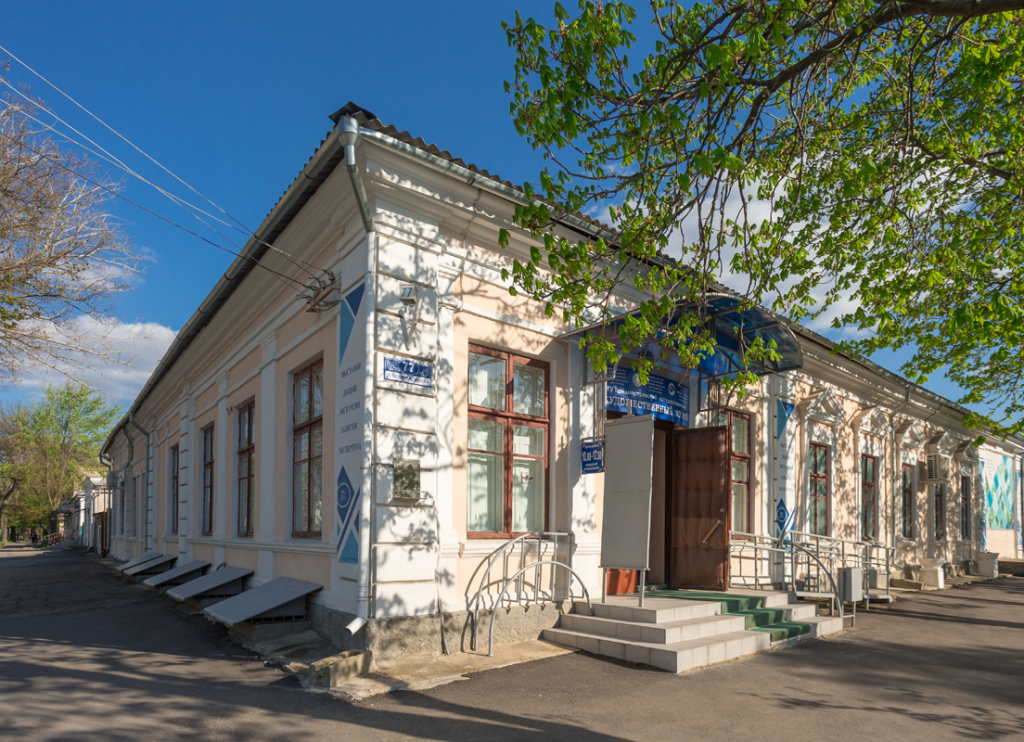
State art museum of Pridnestrovie
This austere yet striking building, constructed at the beginning of the previous century, continues to draw the attention of both citizens and visiting guests alike. The house originally belonged to Khaim-Zelik Sokolov — a Jewish resident bearing a Russian surname — who at one point partially rented out portions of the property. The building’s transformation into a cultural institution began in 1971, when it became home to the Bendery Art Gallery, marking the start of a journey that would eventually elevate it to far greater prominence.
In 2013, the gallery achieved a significant milestone, officially becoming the State Art Museum of Pridnestrovie. Today, the museum’s holdings comprise an impressive seven-thousand-piece collection encompassing paintings, drawings, sculptures, decorative and applied arts, photography and philately — together forming the very heart of the museum’s identity and standing as an essential pillar of the cultural heritage of the Pridnestrovian Moldavian Republic. Visitors exploring this collection gain a comprehensive window into the artistic traditions and creative achievements that have flourished throughout the region across generations.

Cafе «Stolovsya SSSR» (USSR Dining Room)
This café distinguishes itself from others through its authentic Soviet-style interior, carefully designed to transport visitors back through the decades. The walls display flags representing the former Soviet republics, alongside pennants and lettering characteristic of that bygone era. Throughout the space, period objects add to the atmospheric experience: a gramophone, trombone, a Cantata turntable, kerosene lamps and old telephones create a genuinely immersive journey into Soviet-era domestic and cultural life.
The menu features simple but genuinely satisfying dishes, faithfully recreating the culinary offerings typical of the Soviet era: borscht or various soups (featuring rice, meatballs or peas), pickle soup, porridge made from buckwheat, rice or wheat served with gravy, mashed potatoes, homemade-style cutlets, meatballs, fried fish, and an assortment of salads — with only the crab stick salad betraying any hint of more modern culinary influence. The dining experience continues with compote served in classic faceted glasses, while tea arrives served in a glass held within a traditional glass holder, completing this authentic nostalgic presentation.
This café functions essentially as a genuine mini-museum, allowing visitors the unique opportunity to enjoy a tasty and affordably priced lunch while fully immersed in carefully recreated Soviet-era atmosphere — a delightful combination of culinary nostalgia and genuine historical ambiance.
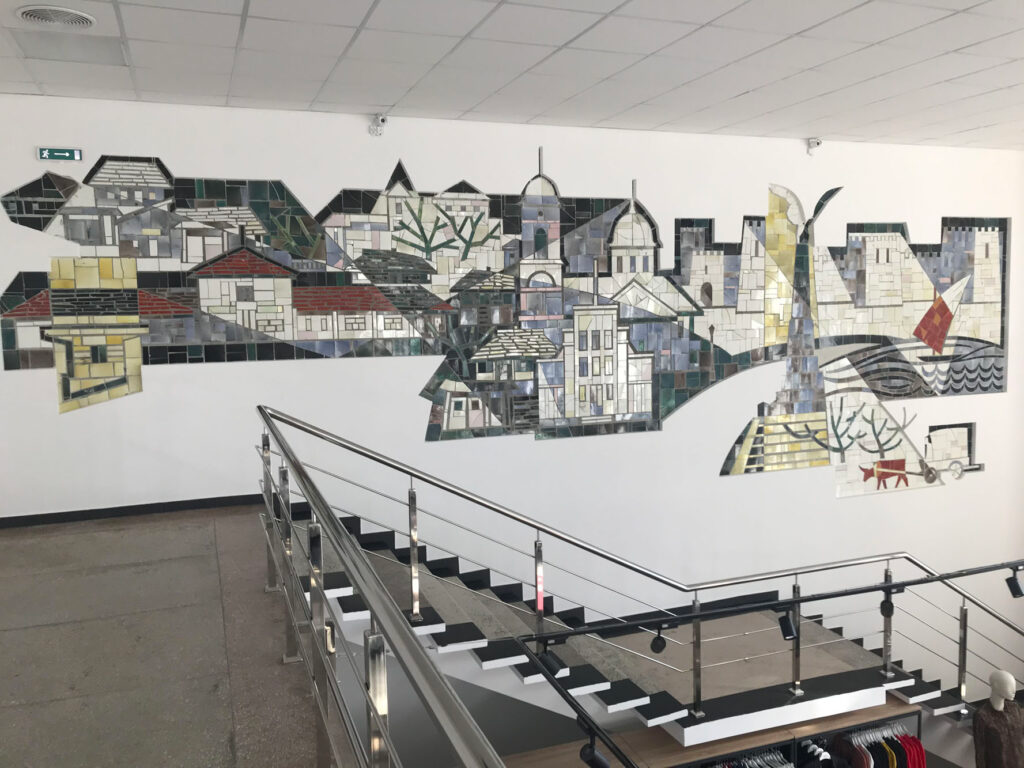
Former Bus Station
The mosaics decorating the former waiting room of the Bendery bus station rank among the most vivid and artistically valuable examples of Soviet monumental art in the entire city. Created in 1966 by renowned Moldavian Soviet artists V.A. Obukh and M.A. Bureya, these works demonstrate the remarkable creative ambition of their era.
The end walls showcase two complementary compositions — “Old Bendery” on the right and “New Bendery” on the left — while the mezzanine floor features “Red Square,” positioned along the central axis of the main entrance, creating a thoughtfully orchestrated visual journey for anyone passing through the space.
Within these mosaics, historical monuments and architectural landmarks of the city emerge in clearly recognizable detail. The “Old Bendery” composition features the memorial of glory to the 55th Podolsk Infantry Regiment, the Bendery Fortress, the Transfiguration Cathedral and a traditional challah loaf, while “New Bendery” depicts the monument to Pavel Tkachenko alongside the House of Culture named in his honor, the M. Gorky cinema, the railway station and other notable city landmarks — together creating a visual dialogue between the city’s past and its Soviet-era present.
The creation of these mosaics represented a significant contribution to the broader development of Moldovan monumental art. The artists successfully tackled a genuinely challenging artistic problem: unifying three independent compositions into a single cohesive pictorial ensemble. The mosaics’ color palette is distinguished by a harmonious interplay of red, ocher-yellow and grayish-blue tones, lending the entire work a distinctive and immediately recognizable visual identity.

Guest house in the Soviet style Casa Baboi
This guest house presents its interior in authentic Soviet style, featuring active exhibits of household items dating from the USSR era that surround guests throughout their stay. The establishment offers a genuinely unique experience for visitors: a solemn ceremony welcoming guests as honorary pioneers, complete with a traditional pioneer bonfire and a pioneer-style afternoon snack, recreating one of the most distinctive cultural rituals of Soviet childhood for guests of all ages to experience firsthand.
This immersive approach to hospitality transforms an overnight stay into something far more memorable than typical accommodation, offering genuine cultural immersion into Soviet-era traditions and customs through carefully curated décor and engaging interactive experiences that bring this particular chapter of history vividly to life.

Monument to the First Power Plant
In 1922, Tiraspol witnessed the launch of the very first power plant on Pridnestrovian territory, an installation that received the name of Soviet Union founder Vladimir Lenin. According to a telegram sent to Moscow announcing the launch, the plant was specifically intended to “service the enterprises and water supply system of the city, as well as nearby villages.” By contemporary standards, the plant’s capacity appears remarkably modest — just 300 kW (for meaningful comparison, the Moldavskaya GRES near Tiraspol now boasts a capacity exceeding 2.5 million kilowatts) — yet this early facility provided a significant impetus for the city’s broader industrial development during this formative period.
In 1984, a monument crafted at the Moscow sculpture plant was installed not far from where the original power station had operated, commemorating this important milestone in the city’s industrial history.
Interestingly, the location where this monument to the first power plant now stands once hosted Semenovsky Boulevard, a popular vacation spot for the city’s residents. This boulevard featured shady trees, comfortable benches, a pavilion, and both a buffet and a restaurant, creating a pleasant gathering space for townspeople. Directly opposite this boulevard, on the territory now occupied by the Tkachenko plant, a kindergarten with carefully planned tree-lined alleys had operated since 1900, adding yet another layer to the rich historical tapestry of this particular corner of Tiraspol that has witnessed so many different functions across the decades.

Monument to V.I. Lenin
This monument was erected in 1987, timed to mark the 70th anniversary of the October Revolution. Interestingly, this statue functions as something of a “younger brother” to another monument — a 19-meter pink granite statue that once stood in Berlin on Leninplatz, now known as United Nations Square. This Berlin original was created in 1970 by the celebrated Soviet sculptor Nikolai Tomsky, establishing the artistic template that would later inspire the Tiraspol version.
Seventeen years after the original Berlin monument’s creation, working within Tomsky’s own studio, his student V.S. Klimachev crafted this new statue, which continues to stand proudly in front of the Supreme Council of Pridnestrovie to this day. In a notable historical twist, just four years after the Tiraspol monument’s creation, the original Berlin “big brother” monument was dismantled, leaving the Tiraspol Lenin as something of a surviving legacy connected to a monument that no longer exists in its original location.
Tourists visiting Pridnestrovie widely consider this monument an essential attribute of the region’s Soviet past, and visitors almost invariably make a point of photographing the Lenin monument during their time in Tiraspol, recognizing it as one of the most iconic symbols of the city’s distinctive historical character.

Historical and local history museum
This museum’s exhibits comprehensively reflect different periods throughout the life of both the region and the city of Tiraspol, offering visitors a broad historical perspective spanning numerous eras and developments. Beyond its static, permanent exhibitions, the museum maintains a dynamic exhibition schedule, opening up to ten temporary exhibitions annually within its lobby space, ensuring that even repeat visitors will always find something new to discover.
By the beginning of 2019, the museum’s collection had grown to substantial proportions, comprising approximately 90,000 items within its main fund, supplemented by more than 30,000 additional items held in its auxiliary scientific collection. This extensive holding makes the museum a genuinely significant repository of historical material, supporting both public exhibition and ongoing scholarly research into the region’s rich and varied past.
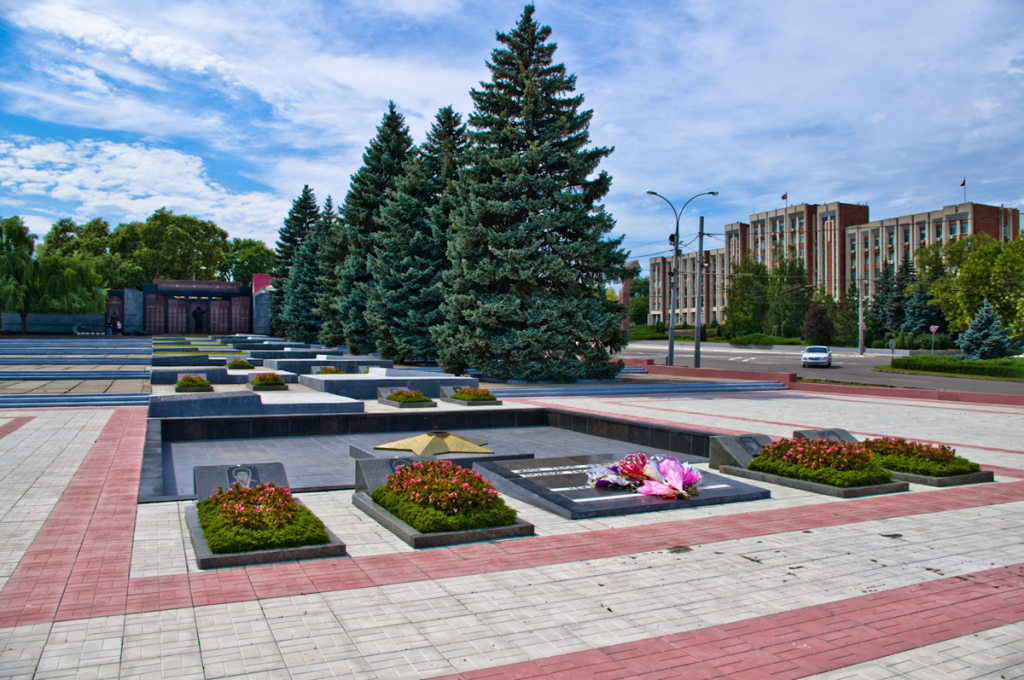
Memorial complex of Glory
The Memorial Complex of Glory opened on February 23, 1972, deliberately timed to coincide with the Day of the Soviet Army and Navy. On that significant date, a ceremonial reburial took place, honoring the remains of Soviet soldiers and officers who were natives of Pridnestrovie and had fallen during the Great Patriotic War, alongside soldiers who lost their lives specifically during the liberation of the Pridnestrovian region itself.
Over the years that followed, the memorial expanded its role, becoming the final resting place for those who died during the war in Afghanistan, as well as for soldiers and civilians killed during Moldova’s armed aggression against Pridnestrovie in 1990-1992. Today, marble slabs throughout the memorial immortalize the names of 1,252 reburied soldiers, including four Heroes of the Soviet Union — a remarkable concentration of military distinction commemorated at this single site.
A T-34-85 tank stands prominently within the memorial, serving as a powerful monument to fallen soldiers of the Great Patriotic War. This particular tank has a genuinely remarkable history: serving as part of the 7th Guards Mechanized Corps, it participated in the liberation of Ukraine, Moldavia, Bulgaria and Hungary. During the Budapest Offensive, the tank sustained damage at Lake Balaton, and in April 1945, this battle-worn war machine was transported to Tiraspol, where it now rests as a tribute to those who fought in it. Beneath the tank lies a buried capsule containing earth brought specifically from Mamayev Kurgan in the Hero City of Volgograd — formerly Stalingrad — creating a symbolic connection between this memorial and one of the most significant battlefields of the entire war.
In October 2011, the St. George Chapel was added to the memorial complex, further enriching its spiritual dimension. Another important element is the monument to soldier-internationalists killed in Afghanistan, opened in 1995 by Lieutenant General Alexander Lebed, commander of the 14th Guards Combined Arms Army of Russia — a figure whose own historical significance in the region adds further weight to this dedication.
By the end of the 2000s, the complex underwent substantial reconstruction, during which a Wall of Memory was constructed, bearing the names of all defenders of Pridnestrovie and civilians killed during the 1990-1992 armed aggression by the Republic of Moldova. This reconstruction also saw the installation of a poignant sculpture, “Grieving Mother,” created by artist V. Tkachenko — a moving addition that gives universal human expression to the grief and loss commemorated throughout this comprehensive and continually evolving memorial complex.

Museum of the Ministry of Internal Affairs of the PMR
More than 4,000 different exhibits fill five exhibition halls located within the Tiraspol Law Institute educational building, presenting photographs, documents, awards and everyday items used by militia officers throughout various historical periods, including the Soviet era. Mannequins throughout the museum display the uniforms worn by law enforcement officers across different eras, offering visitors a vivid visual timeline of how police attire has evolved over the decades.
A separate dedicated pavilion houses the museum’s impressive weapons collection, numbering approximately five hundred units spanning cold weapons, edged weapons and firearms. Many of these exhibits were confiscated during operational-search activities conducted by law enforcement, while others became trophies captured during the defense of Pridnestrovie in 1992 — connecting the collection directly to the republic’s founding struggle.
Particular attention should be paid to the firearms collection, which was generously donated to the museum by PMR President Igor Smirnov, including rare specimens of pistols from renowned manufacturers such as Lefaucheux, Browning, Beretta, Walther, Colt, Mauser, and Smith & Wesson, among others. For the museum’s opening ceremony, Igor Nikolayevich personally presented a Shpagin submachine gun to the Ministry of Internal Affairs’ exhibition weapons fund, and this notable firearm has since taken its rightful place within the broader collection.
The exhibition fund concludes with Memorial Rooms dedicated to employees who died in the line of duty. In honor of each of the 44 fallen militiamen, memorial candles are lit and a Requiem is played, ensuring their sacrifice receives appropriate solemn recognition.
The Museum of Automotive Specialized Equipment contains 15 exhibits, including cars and motorcycles from the State Traffic Inspectorate, fire trucks, and a particularly rare specimen — a horse-drawn fire cart (ruler), representing one of the very first vehicles used by fire brigades in tsarist Russia at the end of the 18th century. Visitors can also view one of the first cars used by the President of the PMR — a GAZ 3111 — which Igor Nikolaevich Smirnov personally handed over to the museum in September 2007.
In 2009, the museum welcomed a notable visitor: Her Imperial Highness Grand Duchess Maria Vladimirovna Romanova, who was visiting Pridnestrovie at the invitation of the Republic’s leadership. Visits to the museum must be arranged in advance by telephone.
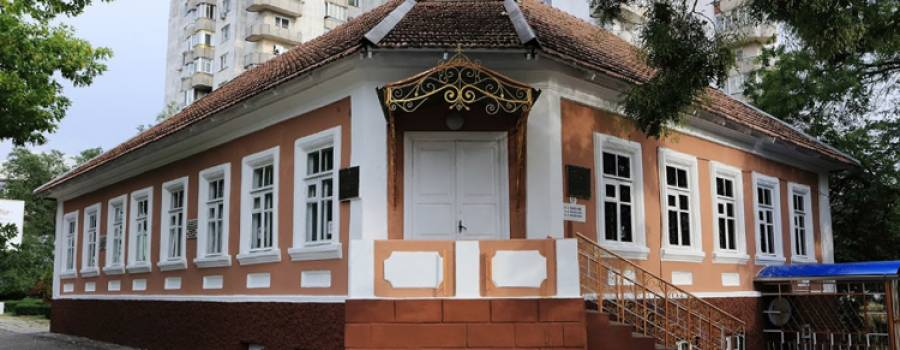
The building of the former headquarters of the cavalry brigade G.I. Kotovsky
This historic building, located not far from the central post office, was originally constructed as the Hotel “Paris,” serving travelers and visitors to Tiraspol during an earlier era. The building’s role shifted dramatically in 1920, when it became the headquarters for the cavalry brigade commanded by Grigory Kotovsky, one of the most celebrated and colorful commanders of the Red Army.
During this period, Kotovsky’s forces played a significant role in the broader military campaigns of the Russian Civil War, taking part specifically in the overthrow of the Armed Forces of South Russia under the command of General A.I. Denikin. This connection to one of the pivotal military figures of the early Soviet era gives the former hotel building a significance that extends well beyond its original commercial purpose, marking it as an important site in the broader narrative of Tiraspol’s revolutionary and military history.

USSR Canteen
This diner, located in the central part of Tiraspol, is decorated in authentic classical “Soviet style,” offering visitors a genuinely nostalgic dining atmosphere that transports them back to an earlier era. The menu features dishes prepared according to traditional Soviet recipes: borscht or various soups (incorporating rice, meatballs or peas), pickle soup, porridge made from buckwheat, rice or wheat served with gravy, mashed potatoes, homemade-style cutlets, meatballs, fried fish and an assortment of classic salads.
The dining experience continues with compote, traditionally poured into faceted glasses just as it would have been served decades ago, while tea can also be served in a glass held within a classic glass holder — completing this carefully curated journey into Soviet-era culinary culture. The canteen offers visitors a genuine taste of the past, combining authentic flavors with the distinctive presentation style that characterized everyday dining experiences throughout the Soviet era.
Restaurant "Again in the USSR"
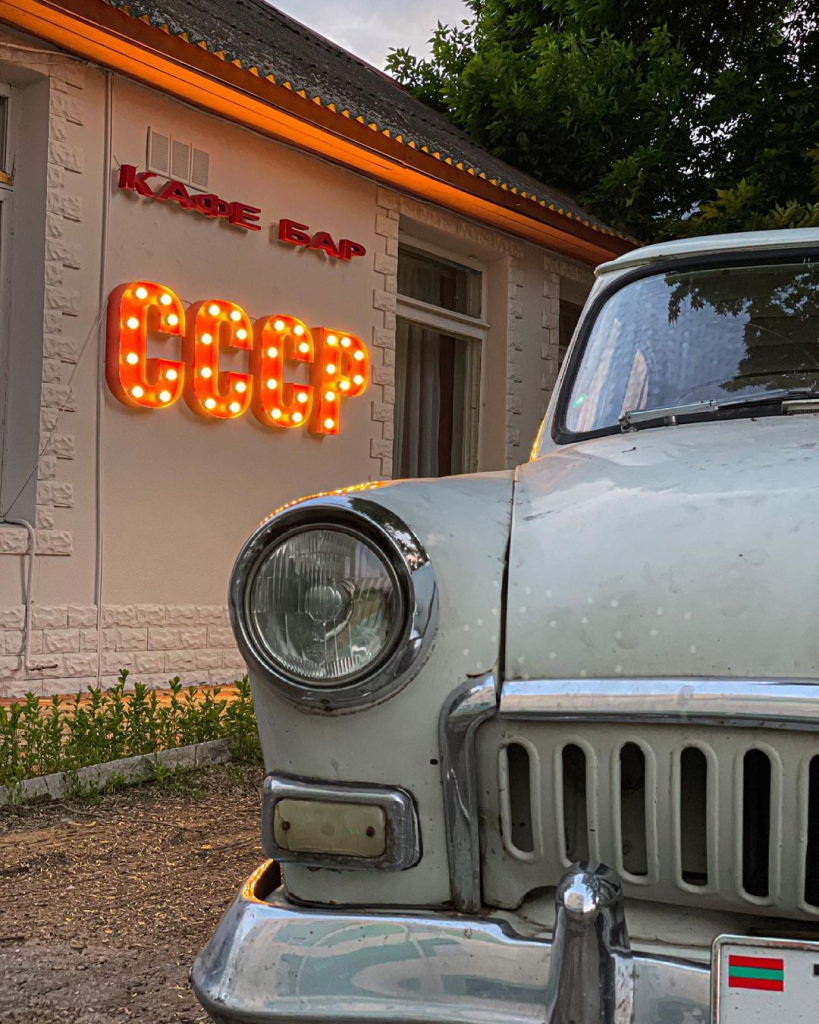
The restaurant “Again in the USSR” ranks among the most established culinary establishments in Tiraspol, with a history tracing back through multiple incarnations — once functioning as a simple dining room, the venue has evolved into a full restaurant featuring an open terrace, conveniently positioned in the very heart of Tiraspol. The establishment’s interior design fully immerses guests in the distinctive atmosphere characteristic of the USSR era, creating a genuinely transportive dining experience.
True to its name, the restaurant maintains a traditionally high level of service while preserving the authentic atmosphere of Soviet times. The menu features well-known dishes alongside undeservedly forgotten culinary creations from the USSR era, all prepared according to recipes drawn directly from a 1951 culinary reference book. Despite this commitment to historical authenticity, the kitchen employs modern equipment and contemporary cooking technologies, ensuring these classic recipes are executed using the highest quality products available on the local market — successfully combining nostalgic Soviet culinary tradition with the practical benefits of modern food preparation standards.

House of Soviets
The House of Soviets stands as one of the most recognizable and majestic buildings in all of Tiraspol, its scale genuinely impressive — the structure contains more than 200 rooms, with the main hall alone spanning nearly 300 square meters. This four-story building was constructed during the 1950s according to a design by architect V. Alexandrov, intended to house local government bodies. Construction employed the most advanced technologies available in the Soviet Union at the time, and the resulting building became a classic example of the Stalinist Empire architectural style.
The project’s designers drew inspiration from the classical order system associated with Napoleonic France, while also looking to Moscow’s famous high-rise buildings for additional inspiration. This blend of influences manifests clearly in the building’s facade, where a powerful ten-column portico commands attention, crowned by a sharp spire topped with a star. Notably, unlike many examples of Stalinist Empire architecture found throughout the former Soviet republics, the House of Soviets has preserved its complete decorative scheme and Soviet symbolism intact, offering visitors a remarkably well-preserved window into this distinctive architectural era.
Today, the building continues serving its original intended function, housing the city’s governmental bodies — the Council of People’s Deputies and the State Administration. The clock installed on the building dates to October 1974, added specifically to commemorate the 70th anniversary of the Moldavian ASSR. Master clockmakers Vladimir Fedorovich Zibarov and Valentin Akimovich Potapov crafted this timepiece, whose chiming mechanism originally relied on a bell sourced from the Kitskany Monastery — though in 1989, this bell was returned to the monastery. In its place, the Kirov Plant manufactured a new bell weighing 120 kg with a more melodious tone, while the “Elektromash” plant produced the electric motor needed to power the mechanism.
The building has even made its mark in popular culture: in one memorable episode of the Soviet film comedy “Не имей 100 рублей…” (“Don’t Have 100 Rubles…”), the House of Soviets played the role of the Ministry of Finance, where the film’s characters bring a discovered treasure — adding a touch of cinematic fame to this already architecturally significant landmark.

Bust of the first cosmonaut Yuri Gagarin
This bust monument honoring the first cosmonaut, Yuri Gagarin, was erected on Gagarin Boulevard near the university in 1977, creating a permanent tribute to one of the Soviet Union’s most celebrated and beloved heroes. During this distant Soviet era, Yuri Gagarin embodied far more than simply being the first person to venture into space — he came to represent a generalized portrait of genuine heroism itself, embodying the qualities of courage, dedication and pioneering spirit that the Soviet system held up as ideals for citizens throughout the entire union.
This monument continues to honor Gagarin’s extraordinary achievement and legacy, reminding visitors of the profound impact his historic spaceflight had not only on scientific progress but on the collective imagination and national pride of an entire generation across the Soviet Union and beyond.

Historical and Architectural Ensemble "Teatralnaya Square"
Teatralnaya Square stands as one of only four squares in the entire capital of Pridnestrovie, with its origins dating back to 1934, when it emerged following the opening of a drama theater in Tiraspol, which at the time served as capital of the Moldavian ASSR. Architect G.M. Gotgelf designed the original theater building that would shape this square’s identity for decades to come.
During the Great Patriotic War, both the theater building and the square itself suffered significant damage, requiring substantial reconstruction in the aftermath of the conflict. The square acquired its modern appearance during the 1960s, following comprehensive reconstruction work on what was then known as the Tiraspol Russian Drama and Comedy Theater named after Gorky — an institution now recognized as the Republican Theater of Drama and Comedy named after N.S. Aronetskaya. This reconstruction effort was completed in 1963, guided by architects I.L. Shmurun and D.I. Palatnik, whose collaborative work gave the square its current distinctive character.
The Theater Square is bordered on its eastern side by the building of the Republican Theater of Drama and Comedy named after N.S. Aronetskaya, while the southwestern and western sides feature buildings belonging to Pridnestrovian State University. Completing this architectural ensemble, Teatralnaya Square effectively closes the perspective of October 25th Street along its eastern boundary, creating a cohesive urban space that successfully integrates educational, cultural and civic functions within a single historically significant location at the heart of the capital.

Pobeda (Victory) Park
The original concept for this park is credited to renowned Soviet architect A.V. Shchusev, who visited Tiraspol during the post-war years and envisioned a meaningful green space for the city’s residents. Spanning 15 hectares, the park was established in 1947 on the site of a former fruit and berry garden, which at the time was situated beyond the eastern outskirts of the city. The park received its name to commemorate Victory (“Pobeda”) in the Great Patriotic War, honoring the immense sacrifice and ultimate triumph that defined this period of history.
Over the years, the park gradually expanded to include a fountain, a summer stage, various rides and playgrounds, transforming it into a comprehensive recreational destination. Today, Pobeda Park ranks among the most beloved resting places for residents of the capital, regularly hosting diverse cultural events throughout the year. Visitors can enjoy several cafes scattered throughout the grounds, along with a large observation wheel that offers a genuinely impressive panoramic view of the city from its highest point.
In 1960, a monument honoring G.I. Kotovsky was installed at the center of the park — commemorating this notable Soviet military and political figure who played an active role in the revolutionary movement during the Civil War era. Kotovsky demonstrated remarkable courage on the battlefields of the First World War, later continuing his military service by fighting against Romanian invaders in Bessarabia. In 1920, a cavalry brigade under his command successfully won Tiraspol from the Armed Forces of South Russia, with Kotovsky’s unit earning recognition as one of the finest in the entire Red Army during this period.
Sculptor L.I. Dubinovsky created the monument depicting Kotovsky in military uniform, leaning thoughtfully on his cavalry saber. Interestingly, this monument was not originally created for Tiraspol — it was first installed in Moscow at VDNKh, positioned at the entrance to the Moldavian SSR’s exhibition pavilion, before later being relocated to Tiraspol, where it now stands as a central feature of Pobeda Park, connecting the capital to this significant chapter of revolutionary and military history.
Monument to G.I. Kotovsky
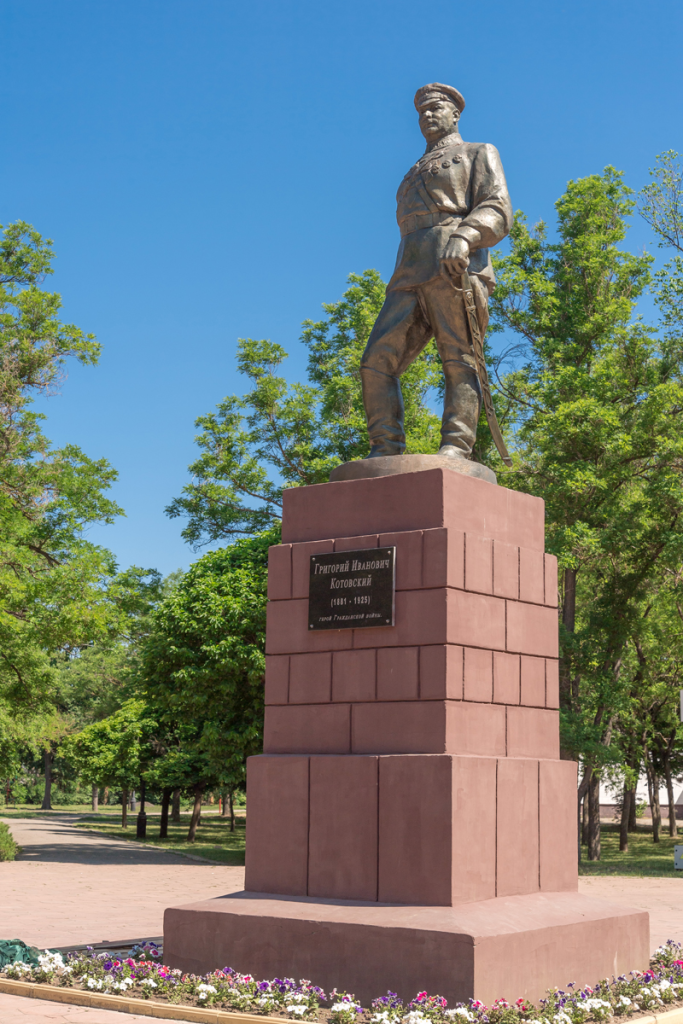
This monument occupies a prominent position at the very center of Pobeda Park, having been installed here in 1960 to honor G.I. Kotovsky, a significant Soviet military and political figure who played an active role in the revolutionary movement during the Civil War period. Kotovsky’s military career began with displays of remarkable courage on the battlefields of the First World War, before he went on to fight against Romanian invaders in Bessarabia, building a reputation as a formidable and effective military commander.
The pinnacle of Kotovsky’s military achievements in this region came in 1920, when a cavalry brigade operating under his direct command successfully liberated Tiraspol from the Armed Forces of South Russia. During this period, Kotovsky’s unit earned recognition as one of the finest in the entire Red Army, a testament to both his leadership abilities and the dedication of the soldiers who served under him.
Sculptor L.I. Dubinovsky created this monument depicting Kotovsky in full military uniform, captured in a contemplative pose as he leans upon his cavalry saber. The monument’s history includes an interesting geographic journey: it was originally installed in Moscow at VDNKh, positioned at the entrance to the Moldavian SSR’s exhibition pavilion, before eventually being relocated to Tiraspol, where it now serves as a central feature within Pobeda Park, connecting the capital directly to this significant chapter of revolutionary and military history.
Kitskany bridgehead
The Kitskany bridgehead occupies a place of profound strategic significance in the history of the Great Patriotic War, having served as a crucial Soviet army position that played a decisive role in the success of the Iasi-Chisinau Operation. Troops of the 3rd Ukrainian Front seized the bridgehead during the Odessa operation of 1944, establishing a foothold stretching up to 18 kilometers along the front line, with a depth ranging from 6 to 10 kilometers.
The battle for control of this critical position raged for more than four months, during which Soviet forces transformed the bridgehead into a formidable engineering achievement. By the start of the major offensive, this relatively confined space had been equipped to hold five infantry corps, a mechanized corps, 51 artillery regiments and as many as 30 specialized units — an extraordinary concentration of military force.
On August 20, 1944, the troops of the 3rd Ukrainian Front launched their main offensive strike from the Kitskany bridgehead, an assault that laid the groundwork for the complete defeat of German-Romanian forces across Soviet Moldavia. The resulting Iasi-Chisinau operation ultimately led to the full liberation of what is now the entire territory of Pridnestrovie.
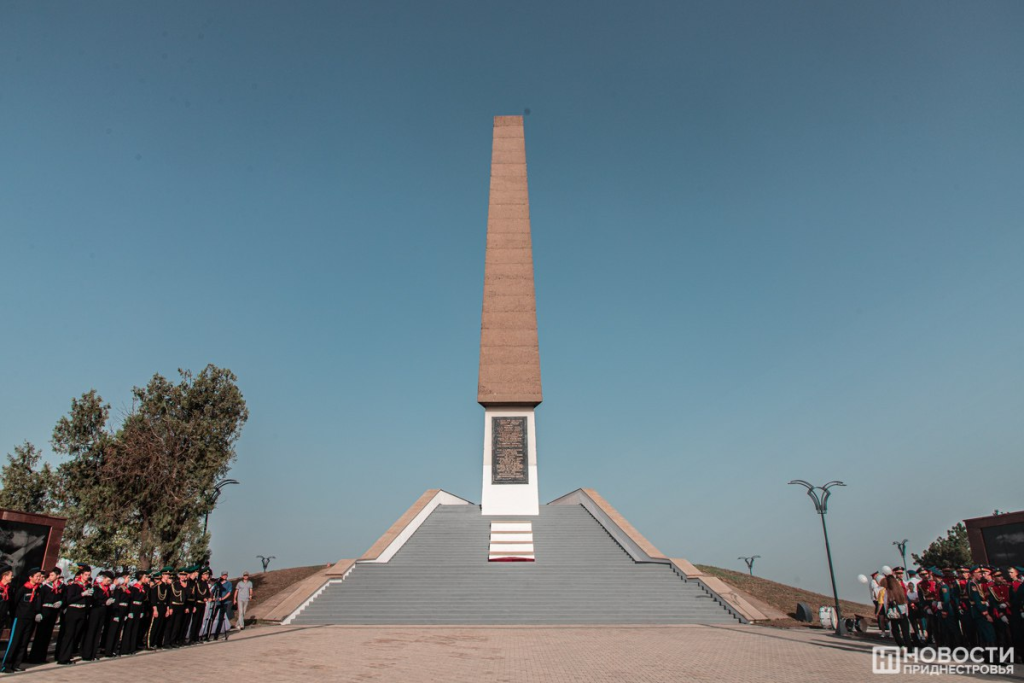
To honor and preserve the memory of the soldiers’ heroism for future generations, a towering 35-meter memorial known as the “Obelisk of Glory” — designed in the striking form of a concrete bayonet by architect S.M. Shoichet — was unveiled at the highest point of the former bridgehead on May 9, 1972. The monument remains an enduringly popular destination today, with its observation deck offering visitors spectacular panoramic views across the surrounding landscape.
House of Culture of Chitcani village
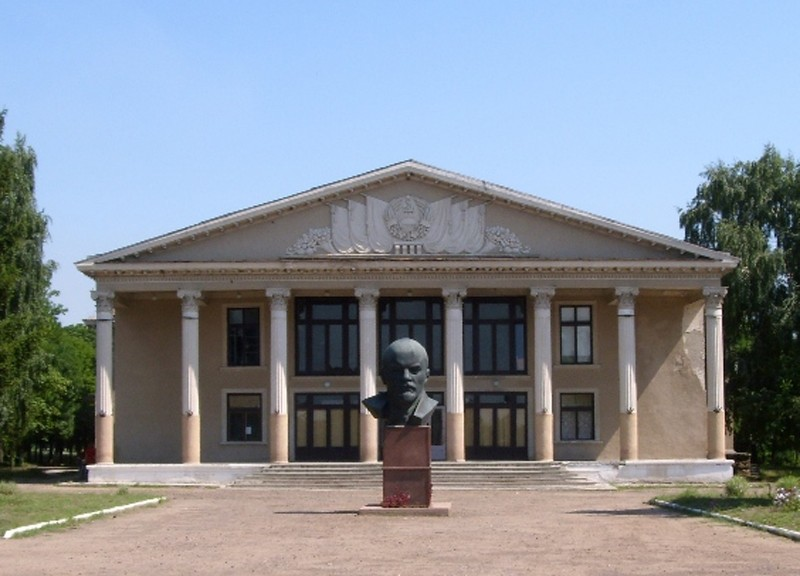
In the central part of Chitcani village stands a beautiful and spacious building — the rural House of Culture. Constructed in 1965, this venue was designed to accommodate 500 seats, making it a substantial gathering space for the local community. The House of Culture has long served as the central hub for communication, spiritual development and recreation among the village’s residents.
A particular point of pride for this institution is its monumental painting “Hospitable Moldova,” created in 1968 by the renowned Moldovan folk artist I.T. Bogdesku, who held the distinguished title of USSR Folk Artist and full member of the Russian Academy of Arts, working alongside artist L.B. Belyaev. This significant artistic achievement contributed to the House of Culture receiving the prestigious first category designation.
Today, the House of Culture continues fulfilling its essential mission of implementing cultural work across multiple dimensions: supporting traditional folk art, fostering amateur artistic expression, organizing cultural and leisure activities, and meeting the broader interests and needs of the population in the realm of cultural recreation — ensuring this venue remains a vital and active center of community life in Chitcani village.

Park — Monument of Landscape Art named after D.K. Rodin
Spanning 4 hectares, this remarkable park was first laid out in 1958 according to the vision of Dmitry Kirillovich Rodin — a Great Patriotic War veteran and talented sculptor whose creative imagination would go on to shape this space for decades to come. Rather than considering his work complete, Rodin continued enriching the park with new features over the years: a cascading waterfall, fountains, artificial ponds, atmospheric grottoes and delicate openwork bridges, each addition adding new layers of beauty and discovery. Alongside these landscape features, he created numerous sculptural compositions that became defining elements of the park, including “Contemplation Rock,” “Rainbow Grotto” and a rock formation featuring the evocative “Forgotten Jug,” among others.
By the early 1980s, after nearly a decade of dedicated work, the park had achieved the sophisticated form that visitors recognize today. Recognizing the significance of his achievement, Rodin submitted documentation of the park to the All-Union Competition of Landscape Art, held in Moscow at the Exhibition of National Economy Achievements of the Soviet Union in 1982. The competition attracted an extraordinary 1,600 submissions from across the entire USSR — and remarkably, the park in Chobruchi village emerged as one of only five projects awarded a Diploma of First Class along with the large gold medal of VDNKh USSR, a testament to the extraordinary quality and originality of Rodin’s creation.
In 2000, less than a year after Rodin’s passing, the park in Chobruchi was officially named in his honor — a fitting and lasting tribute to the sculptor whose decades of devoted work transformed this space into one of the most celebrated landscape achievements in the entire Soviet Union.

House of culture of the village of Chobruchi
The decision to construct a modern House of Culture, designed to accommodate 600 spectators, was made in 1953. This significant building project held particular importance as the very first facility constructed following the unification of six small farms in Chobruchi village into a single large collective farm, marking an important milestone in the village’s agricultural and social reorganization.
The architectural design came from a collaborative team including architects V.P. Alexandrov and I.S. Eltman, alongside D.K. Rodin, who specifically handled the design of the pediment and interior — the same talented artist who would later create the celebrated park bearing his name in Chobruchi. The facade’s architecture reflects design sensibilities typical of the post-war decade, featuring a distinctive four-column portico that emphasizes the main entrance while harmonizing beautifully with the building’s side facades.
Thanks to its considerable beauty and exquisite architectural execution, this House of Culture earned first place for many years in competitions held throughout the Moldavian SSR for rural cultural centers — a remarkable achievement that speaks to the quality of design these architects and artists brought to this rural project. Immediately following its opening on November 4, 1956, the building began hosting various art groups, a library and cinema installation, quickly establishing itself as the village’s cultural hub.
Today, following renovation completed in 2015, the House of Culture continues serving as the center of village cultural life. Numerous creative groups call this building home, including the folk vocal and instrumental ensemble “Parusnik,” the Moldovan music orchestra “Taraf,” the vocal group “Chobruchanka,” and several others — ensuring that this historic building continues nurturing artistic talent and cultural expression within the Chobruchi community more than six decades after its original construction.

Monument to V.I. Lenin, Chobruchi
This monument was created in 1979, the work of artist N.M. Epelbaum in collaboration with architect S.M. Shoikhet, whose combined efforts produced this tribute to the Soviet state’s founding leader. The monument is positioned near the building housing the board of the collective farm named after V.I. Lenin in Chobruchi village, creating a direct symbolic connection between this Lenin monument and the agricultural collective that bore his name throughout the Soviet era.
This placement reflects the broader pattern seen throughout the former Soviet Union, where Lenin monuments frequently stood near collective farms, factories and other institutions named in his honor, reinforcing the ideological connection between the revolutionary leader and the agricultural and industrial enterprises that operated under his name across the vast territory of the USSR.
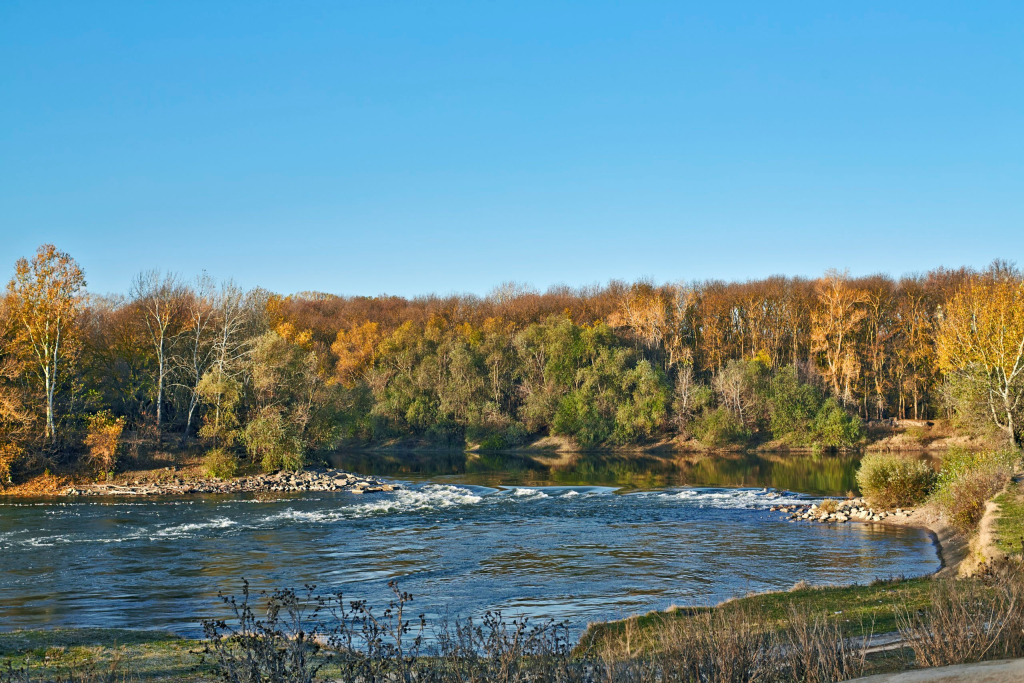
Sleeve Turunchuk
In the 1780s, the Dniester River near Chobruchi village formed a distinctive sleeve, or branch, extending an impressive 60 kilometers in length. This channel varies considerably in width, ranging from 34 to 270 meters, while its depth reaches as much as 9 meters in certain sections — creating a genuinely substantial waterway in its own right.
By the beginning of the 20th century, the Dniester had begun experiencing problems with silting. To prevent the river from deviating from its established course, a dam was constructed in 1927, with substantial stones transported by cart from the Bychok quarry, railway stations and various other sources to build this protective structure. Unfortunately, the dam was later destroyed by ice drift and subsequently demolished further downstream, leaving only the foundation and a cascading series of pitfalls that remain clearly visible today, telling the story of this ambitious but ultimately unsuccessful engineering project.
A stone ridge now forms a natural threshold at the entrance to the sleeve, where the sound of rushing water can be heard from as far as half a kilometer away. This dramatic acoustic feature has earned the location its popular local nickname — the “waterfall” — and the spot has become a favorite destination for both recreation and fishing among locals who appreciate the natural beauty and soothing sounds created by this unique geological formation.

The Dugout of the First Communards of the Commune Named After V.I. Lenin
In the village of Lenino, in October 1987, to mark the 70th anniversary of the October Revolution, the Dugout of the First Communards opened alongside a museum dedicated to both the first communards and the broader history of Lenino village. This museum occupies a building constructed directly above the original dugout where, in 1924, during the very beginning of the Lenin commune’s formation, its first members actually lived — making this site a remarkably authentic connection to the earliest days of this Soviet collective experiment.
The museum’s exposition is organized across three distinct halls, comprehensively presenting both the human story of these pioneering communards and the broader historical narrative of how this early Soviet agricultural commune developed. Visitors gain genuine insight into the challenging conditions and idealistic vision that characterized this formative period of Soviet collective farming, experienced directly through the preserved physical space where these foundational community members first established their shared living arrangements.

Monument to V.I. Lenin, Rybnitsa
This monument honors the political and state figure who founded the Communist Party and the Soviet state itself, while also serving as one of the most significant leaders of the International Communist Movement. The monument was erected on Victory Square — the central square of Rybnitsa — in 1977, with its installation specifically timed to commemorate the 60th anniversary of the Great October Socialist Revolution.
Standing prominently in the city’s most central public space, this Lenin monument has become an integral part of Rybnitsa’s urban landscape, connecting the city’s identity to the broader Soviet historical narrative that shaped this region throughout the 20th century. Its location on Victory Square places this tribute to Soviet ideology alongside the city’s other significant civic and commemorative landmarks.
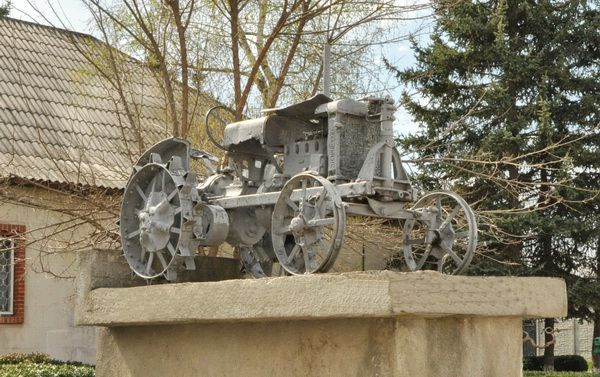
Monument to the First Tractor Drivers
In 1978, a monument honoring the first tractor drivers was erected at 18 Komsomolskaya Street, positioned near the building housing the Museum of History and Local Lore. Mounted upon a two-meter concrete pedestal stands an authentic KhTZ-type tractor, serving as a monument of labor glory dedicated specifically to the machine operators of the Voronkovsk MTS (Machine and Tractor Station), an institution originally established in 1929.
This monument carries particular historical significance because the Voronkovsk MTS earned genuine national recognition for its agricultural achievements. By decree of the Presidium of the Supreme Soviet of the USSR, issued on February 20, 1940, the Voronkovsk MTS received the Motherland’s highest award — the Order of Lenin — in recognition of its outstanding services advancing agricultural development throughout the region. This monument thus celebrates not merely the mechanization of farming through tractor technology, but specifically honors an institution and its workers whose exceptional contributions to Soviet agriculture earned them the most prestigious civilian distinction available within the entire Soviet system.
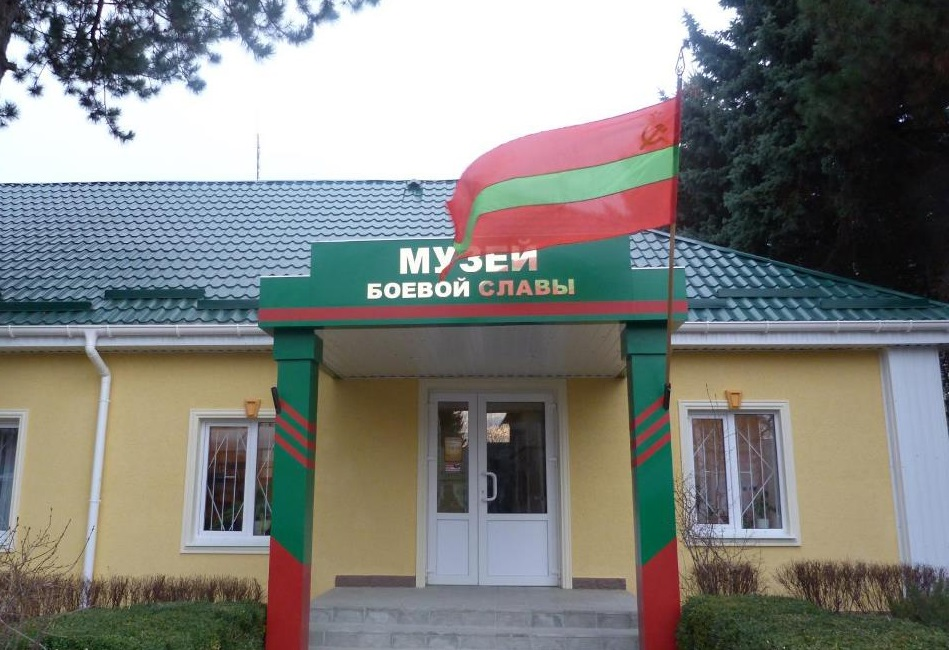
Museum of Military Glory in Rybnitsa
In September 1941, occupation authorities established a prison and concentration camp in Rybnitsa, a facility where arrested party members, Soviet activists and the Jewish population were held captive under brutal conditions. The darkest moment in this site’s history occurred on the night of March 19-20, 1944, when Romanian and German executioners burned 270 Soviet citizens and prisoners of war, among them — according to incomplete records — at least 50 people of Jewish nationality, a horrific act that stands as one of the most devastating crimes committed in the region during the occupation.
The Museum of Military Glory in Rybnitsa opened its doors on May 9, 2010, deliberately timed to coincide with the 65th anniversary of Victory in the Second World War. Significantly, the museum occupies this very historical site where the Nazis once held political prisoners — including partisans and underground resistance workers — transforming a place once associated with imprisonment and atrocity into a space dedicated to remembrance, education and the honoring of those who suffered and resisted during this devastating period of occupation.