
Weekend tour “Stroentsy – Rybnitsa – Vykhvatintsy”
Northern Weekend Tour: Stroentsy, Rybnitsa and Vykhvatintsy
Discover the most picturesque and culturally diverse corner of northern Pridnestrovie on this perfectly organized three-day self-drive weekend tour — a 96 km journey through the estate village of Stroentsy, the northern capital of Rybnitsa and the birthplace of one of the 19th century’s greatest pianists in Vykhvatintsy. With two comfortable accommodation options, guided walking tours and a detailed daily programme, this route offers everything needed for a truly memorable northern weekend.
Day 1 — Arrival: Tiraspol to the Dniester North
17:00 — Depart Tiraspol and head north through the Pridnestrovian countryside.
19:30 — Arrive in the Rybnitsa district and check into your choice of accommodation:
🏡 Tourist Complex “Old Mill” (21a 1 Maya Str., Stroentsy village) — two-storey cottage sleeping 4 — a charming riverside base named after the historic water mill that defines Stroentsy’s character.
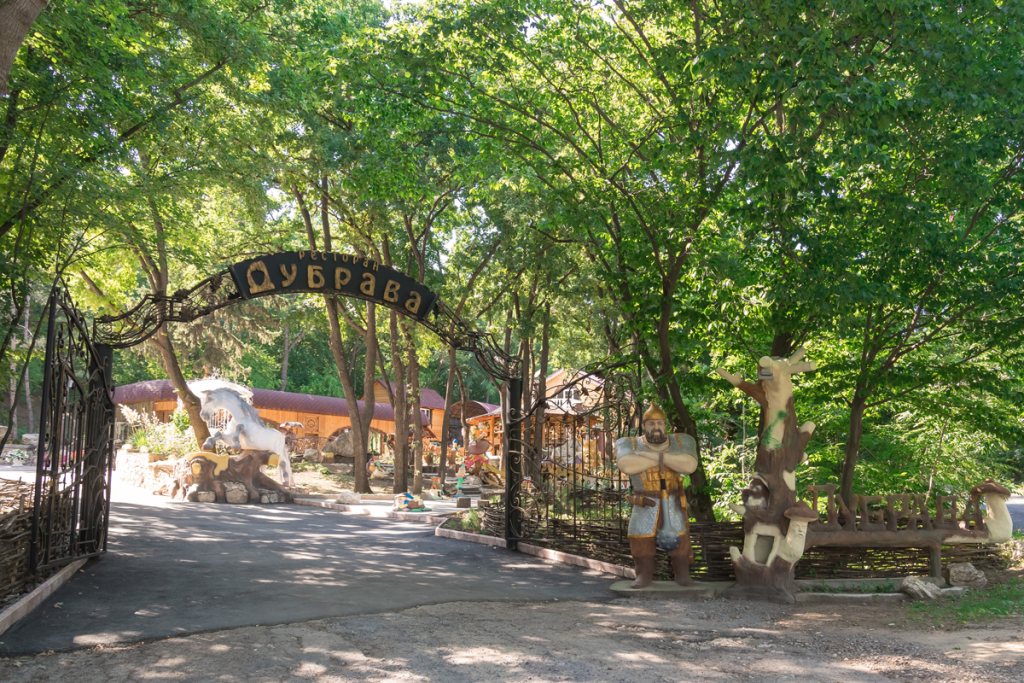
🏨 Tourist Complex “Dubrava” (Forest) (2 Sovetskaya Str., Belochi village, Rybnitsa district) — double room — a comfortable forest-edge complex in the neighboring village of Belochi.
20:00 — Dinner at your chosen base:
Restaurant “Staraya Melnitsa” (“Old Mill”), Stroentsy village
Restaurant “Dubrava”, Belochi village
Day 2 — Stroentsy, Belochi and Vadaturkovo: Aristocratic Heritage and Sacred Villages
09:00 — Breakfast at Restaurant “Staraya Melnitsa” or “Dubrava”
10:00 — Full walking tour of Stroentsy village — one of the most scenically and historically extraordinary villages in all of Pridnestrovie, shaped by the legacy of Russian Field Marshal Prince Peter Wittgenstein who fell in love with this landscape and invested deeply in its transformation.
The Stroentsy walking tour visits seven remarkable sites:
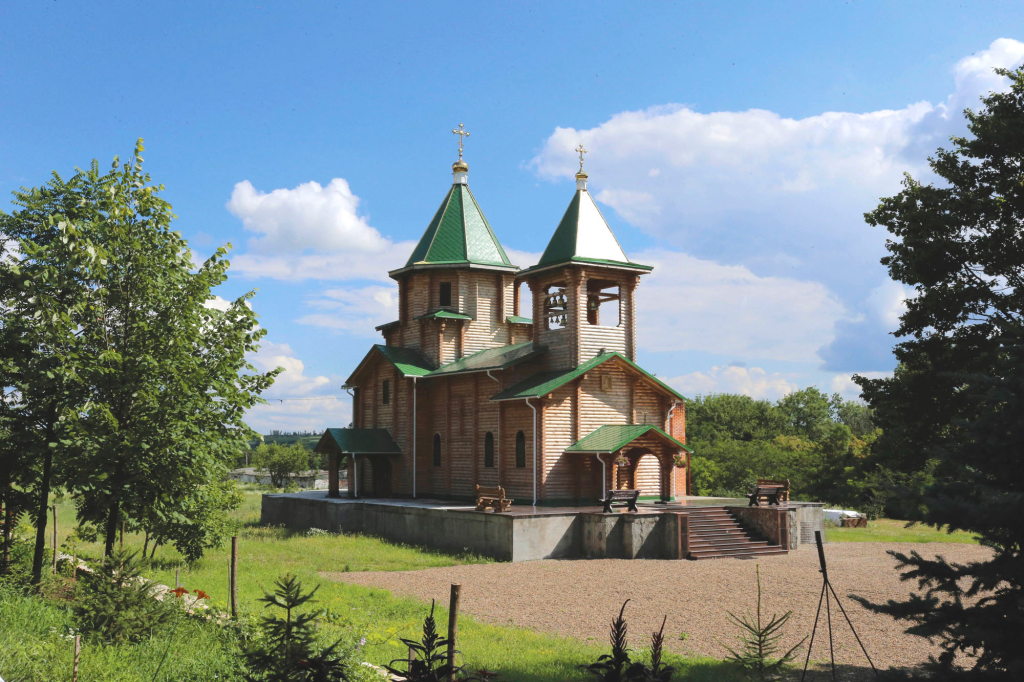
After 6.5 km from the accommodation, the Monastery of John the Precursor (Kalagur area, Rybnitsa district) opens the tour on a note of profound spiritual beauty — a monastic community set among cliffs and forest above the Dniester whose tranquility and sacred atmosphere make it one of the highlights of the entire three-day weekend.
Just 9.1 km further, the iconic Tower of the Winds (Stroentsy village) — one of the most architecturally distinctive imperial follies in northern Pridnestrovie — marks the beginning of the village exploration proper.
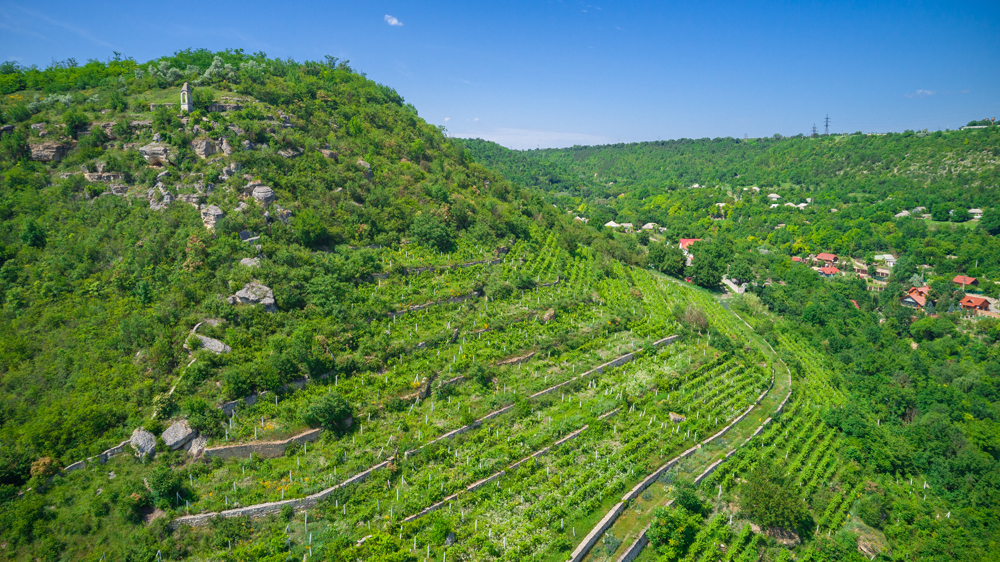
After 8.7 km, the sweeping Grape Terraces (Stroentsy village) cascade down the hillsides above the river in one of the most visually dramatic landscapes on the entire route — row upon row of Wittgenstein-era vines carved into the slope.
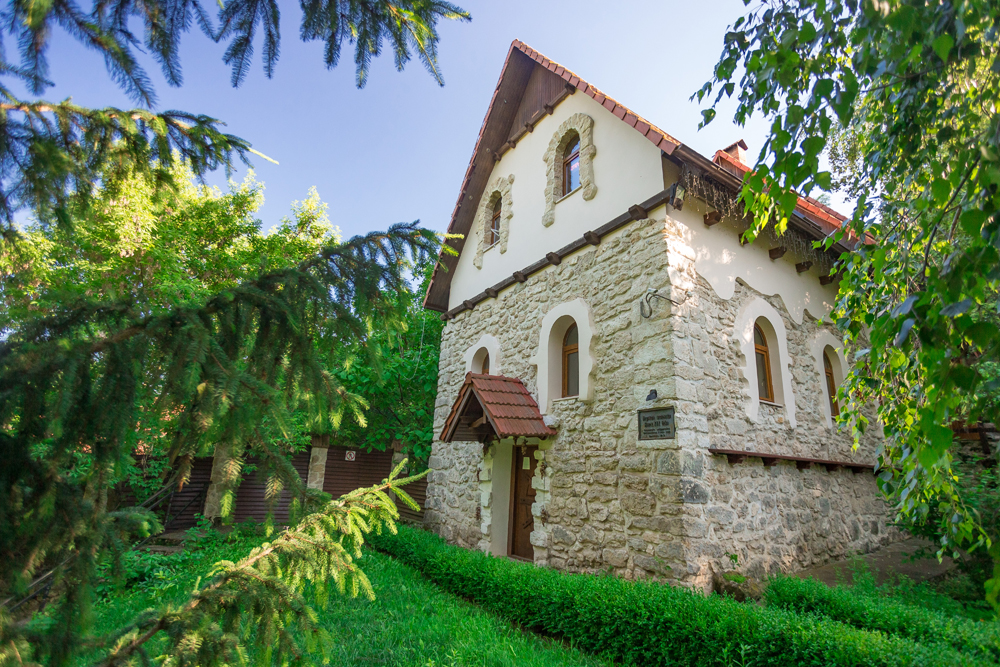
Just 1.1 km further, the charming Water Mill (21a 1 Maya Str., Stroentsy village) — the very building whose name graces the restaurant and tourist complex — is a beautifully preserved piece of 19th-century rural heritage beside the rushing millstream.
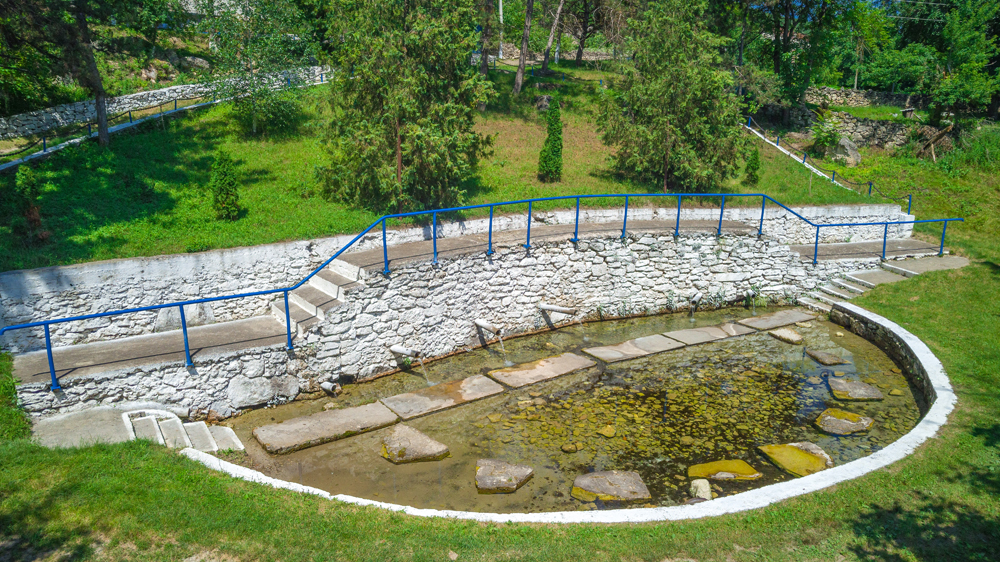
After 920 meters, the “Teplitsa” Springs System (Rybnitsa district, Stroentsy village) offers the purest natural spring water in the district — a beloved local landmark and a perfect refreshment stop mid-tour.
Just 3.4 km further, the romantic Countess’s Gazebo — a delicate aristocratic remnant of the Wittgenstein estate — offers extraordinary views across the Dniester valley from a structure that once served as the social heart of the imperial estate’s outdoor life.
The Stroentsy tour concludes at the Church of St. Michael the Archangel (Polevaya Str., Stroentsy village) — a parish church whose construction began in 1829 under the patronage of the Wittgenstein estate, its graceful architecture a fitting spiritual conclusion to a morning of imperial heritage.
13:00 — Lunch at “Staraya Melnitsa” or “Dubrava”
14:00 — Departure for the afternoon excursion, beginning at the Water Mill in Belochi village (Rybnitsa district) — a 19th-century mill beside a noisy rushing river that offers a wonderfully atmospheric encounter with the rural industrial heritage of this stretch of the Dniester valley.
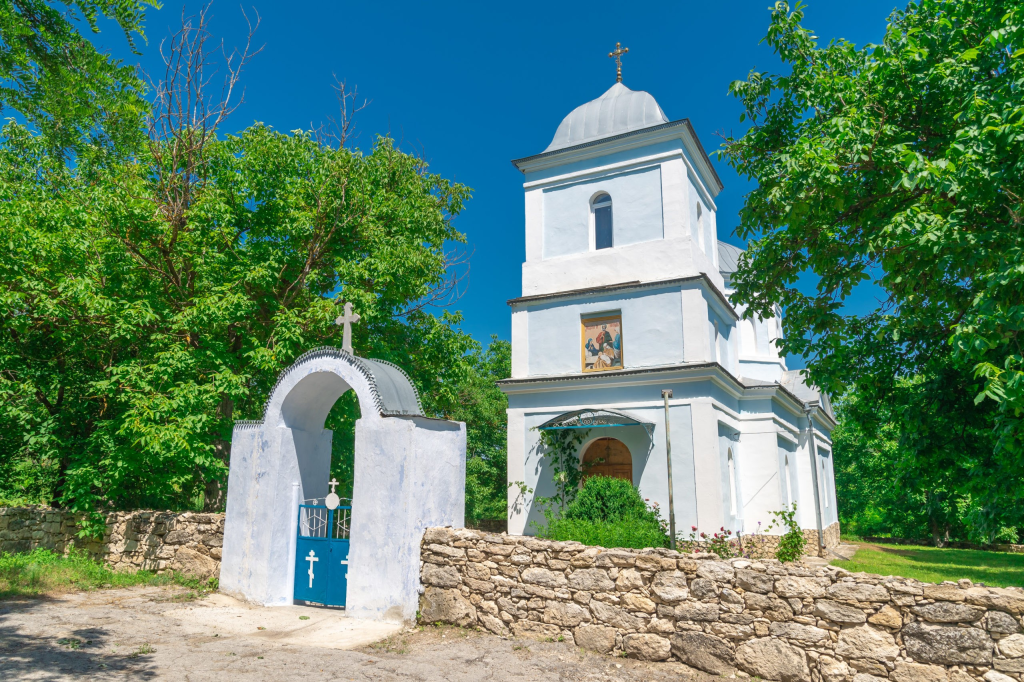
After 10 km, the route continues to Vadaturkovo village and the Church of the Nativity of the Mother of God (4 1st Lane Artyukhova, Vadaturkovo village, Rybnitsa district) — a beautifully maintained rural church dedicated to one of the most beloved feasts of the Orthodox calendar, its peaceful village setting offering a genuinely serene and unhurried encounter with grassroots Orthodox faith in the Pridnestrovian countryside.
18:00 — Dinner at “Staraya Melnitsa” or “Dubrava”
Overnight at Tourist Complex “Old Mill” or Tourist Complex “Dubrava”
Day 3 — Rybnitsa and Vykhvatintsy: Cathedrals, a Canteen and a Pianist’s Birthplace
09:00 — Breakfast at “Staraya Melnitsa” or “Dubrava”
10:00 — Sightseeing tour of Rybnitsa — the northern capital of Pridnestrovie, a city of industry, culture and military memory that rewards a morning of exploration.
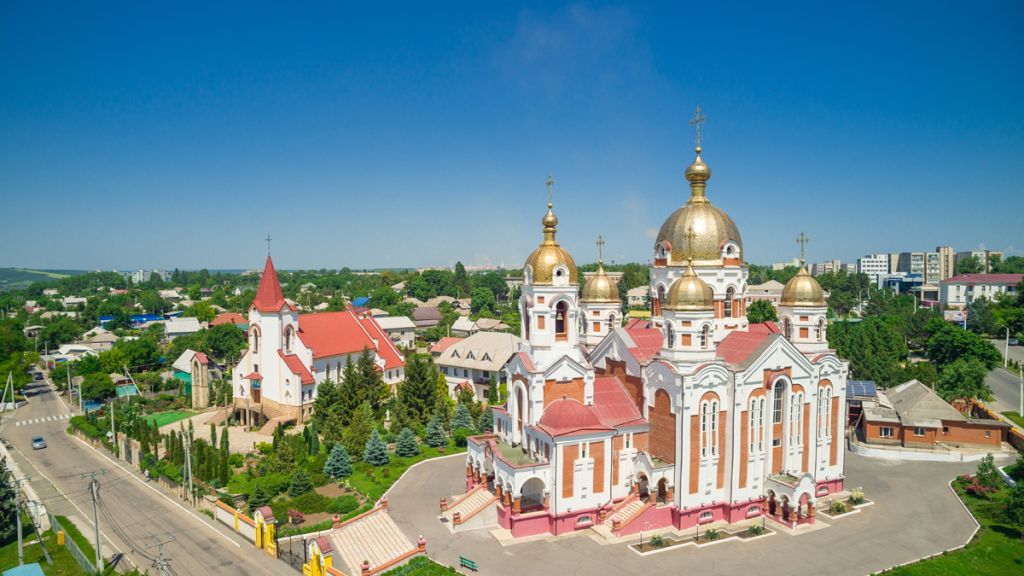
After 22 km from the previous stop, the tour opens at the magnificent Cathedral of the Archangel Michael (77 Kirova Str., Rybnitsa) — the finest and most celebrated Orthodox landmark in northern Pridnestrovie, its grand architecture a worthy introduction to the city’s spiritual heritage.
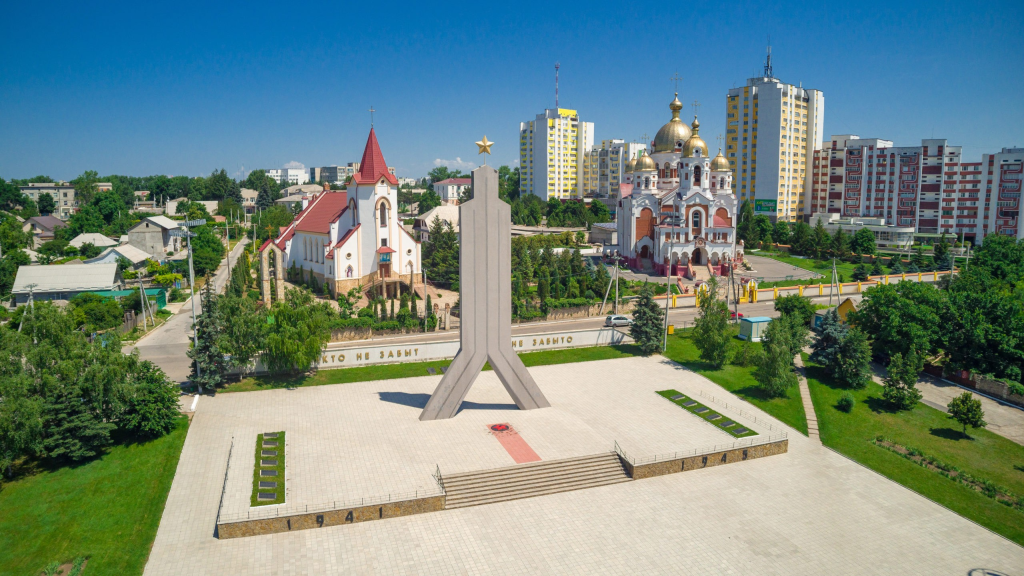
Just 200 meters away, the Roman Catholic Church of Saint Joseph (22a Pugacheva Str., Rybnitsa) adds a distinctive note of religious diversity — a Catholic church whose elegant presence in this northern city reflects the multicultural heritage that runs as a constant thread through the entire route.
After 670 meters, the Memorial of Military Glory (Titova Str., Rybnitsa) provides a solemn and dignified encounter with the city’s wartime memory — monuments and memorials that bring the sacrifices of the Great Patriotic War into the public space of the northern capital.
The morning concludes with a relaxing walk and rest in the Central Park of Rybnitsa — a green and welcoming urban space where the pace slows, the benches invite and the city reveals its quieter, more human side.
13:00 — Lunch at Canteen No. 1 (29 Gvardeyskaya Str., Rybnitsa) — an authentic Soviet-style canteen that adds an unexpected and thoroughly enjoyable gastronomic footnote to the day.
14:30 — Departure for Vykhvatintsy village — birthplace of one of the 19th century’s greatest musical figures — for the afternoon’s two outstanding stops.
After 1.8 km from the park, the Museum of Anton Rubinstein and the History of Vykhvatintsy Village (23 Dnestrovskaya Str., Vykhvatintsy village, Rybnitsa district) honors the legendary pianist, composer and founder of the St. Petersburg Conservatory who was born in this very village. The museum combines the story of Rubinstein’s extraordinary musical legacy with the broader history of Vykhvatintsy — a cultural pilgrimage that surprises almost everyone who makes it.
Just 1 km away, the Long-Term Firing Point of the Stalin Line (Vykhvatintsy village, Rybnitsa district) provides a dramatic and historically significant military heritage encounter — a surviving fortification of the legendary Soviet defensive system that shaped the opening battles of the Great Patriotic War on this frontier.
17:00 — Final dinner at Canteen No. 1
18:00 — Departure from Rybnitsa back to Tiraspol — three days of northern Pridnestrovie’s finest landscapes, heritage and hospitality now part of the journey.

Tourist Complex "Old Mill"
The Restaurant and Hotel Complex “Old Mill” occupies a genuinely beautiful position in the heart of picturesque Stroentsy village, surrounded by green hills and tranquil natural landscapes that create an immediately calming atmosphere upon arrival. The complex’s most distinctive feature lies in its unique location directly on the site of an authentic 19th-century water mill, rightfully considered one of the principal attractions not only within Stroentsy itself but throughout the entire northern region of Pridnestrovie.
This thoughtfully designed complex harmoniously combines genuine historical atmosphere with modern comfort. Guests staying here find accommodation in cozy two-story cottages, each equipped with everything necessary for a truly relaxing holiday — comfortable furniture, private bathroom, air conditioning and various other amenities that together create a genuinely homely atmosphere. Whether visitors seek a brief stopover during a longer journey or a complete countryside weekend retreat, the “Old Mill” accommodates both purposes equally well.
The complex’s restaurant serves Russian, Ukrainian and Moldavian cuisine, with every dish prepared from fresh local ingredients sourced from the surrounding region. Diners can enjoy both traditional recipes and modern interpretations of classic national dishes, all served within a warm and genuinely welcoming atmosphere that enhances the overall dining experience.
A particularly special feature distinguishing this complex is its comprehensive tourist-friendly environment. Guests can enjoy museum visits, historical tours exploring the surrounding area, and a variety of tour packages designed to provide deeper engagement with the region’s culture and natural heritage. This comprehensive approach transforms the “Old Mill” from a simple vacation spot into a genuinely full-fledged tourist center, where history comes vividly to life, vacations become truly unforgettable experiences, and every journey through northern Pridnestrovie begins with authentic immersion into this region’s rich cultural heritage.
Tourist Complex "Dubrava" (Forest)
This tourist complex sits directly within the forest, surrounded entirely by centuries-old trees that create an immediately immersive natural atmosphere for guests. Access proves remarkably convenient, as “Dubrava” is situated right along the road connecting Rybnitsa and Kamenka, making it an easily accessible stopover for travelers exploring this northern route.
The complex offers three comfortable rooms equipped with everything necessary for a relaxing stay, including showers, air conditioning and televisions, ensuring guests enjoy modern conveniences alongside their forest retreat. The on-site restaurant serves both national cuisine dishes and homemade specialties, providing satisfying meals that complement the overall countryside experience.
“Dubrava” represents a genuinely unique destination for a pleasant stay, where guests can fully appreciate magnificent forest landscapes surrounding the property. This is precisely the kind of place where visitors can escape the hustle and bustle of everyday life, instead enjoying birdsong and genuine peace and quiet — making it an ideal retreat for those seeking authentic natural tranquility within the Rybnitsa district.
Monastery of John the Precursor, Kalagur Area
On December 31, 2003, the Holy Synod of the Russian Orthodox Church gave its blessing for the opening of a monastery dedicated to St. John the Prophet, Precursor and Baptist, in the Kalagur area of Rybnitsa district. The monastery found its home in the former buildings of the pioneer camp “Era,” nestled near Stroentsy village in one of the most breathtakingly picturesque corners of Pridnestrovie — set deep in the forest, high on a mountain overlooking the Dniester River.
In the summer of 2010, construction began on a Cathedral Church dedicated to the Nativity of John the Baptist, though work on this ambitious project was later halted. The monastery’s architectural story took an unexpected turn in May 2016, when the decision was made to build a wooden church honoring Sophia, the Wisdom of God — a project that would become the only example of wooden church architecture anywhere in Pridnestrovie. Construction began on August 2, 2016, and the completed church now features a beautiful oak iconostasis along with bells in its belfry.
In 2012, with the blessing of Right Reverend Bishop Savva, a chapel was constructed on the monastery grounds specifically to house one of its most revered treasures — the miraculous icon of the Mother of God known as “The Seeking of the Lost,” which continues to draw pilgrims seeking its blessing to this day.
For more information, visitors may contact Archimandrite Zosima (Grzybowski).

Tower of the Winds
Perched dramatically atop a steep rock overlooking Stroentsy, the Tower of the Winds stands as a striking 19th-century architectural monument and one of the most recognizable landmarks in the village. Built in the late 1800s, the tower was raised in memory of Peter Christianovich Wittgenstein — the celebrated Russian military commander and hero of the Patriotic War of 1812, whose legacy shaped the very landscape of this corner of the Dniester valley.
Before the 1917 revolution, the tower’s interior housed a bronze bust of the commander himself, while four cast-iron plates adorned its sides, each inscribed with heartfelt epitaphs honoring Wittgenstein’s memory. One of these moving inscriptions reads:
“Dear father! You have given the foundation for everything here, accept the due recompense for all time.”
Though the bust and some original details have not survived to the present day, the tower itself continues to stand as a powerful symbol of gratitude and remembrance — a tribute carved in stone to a man whose vision and investment transformed Stroentsy into the picturesque village it remains today.
Grape Terraces
The grape terraces of Stroentsy form one of the most significant chapters in the village’s rich history, dating back to the early 19th century when Stroentsy belonged to the estate of Prince Peter Christianovich Wittgenstein. A passionate advocate of viticulture, Wittgenstein cleverly worked with the natural terrain, constructing stone terraces along the eastern slope to create the ideal conditions for cultivating his vines.
On these carefully engineered terraces, he grew both table and technical European grape varieties, even bringing in specialists from Germany to oversee their cultivation and ensure the highest quality. The terraces’ eastern-facing position proved to be a stroke of genius — receiving uninterrupted sunlight from dawn until dusk, this orientation allowed the grapes to ripen beautifully, producing fruit of exceptional quality.
The wines that emerged from these slopes earned a remarkable reputation, regarded as among the finest for preventing and treating gastric ailments — a testament to both the quality of the grapes and the skill of those who tended them. Today, the grape terraces of Stroentsy stand as one of the village’s most treasured historical monuments, a living legacy of Wittgenstein’s vision and the enduring connection between this land and the art of winemaking.
Water Mill
The story of Stroentsy’s iconic water mill begins in 1881, when the construction of the Slobodka–Rybnitsa railway dramatically expanded opportunities for importing machinery from Europe. Seizing on this new connectivity, Transylvanian architect and innovator Georgy Panteleevich Mazgan designed and built a water mill in the village, equipping it with mechanisms imported all the way from Zurich, Switzerland — a remarkable feat of engineering ambition for its time and place.
The mill underwent restoration in 1982, after which the building served for a time as a museum of bread. More recently, this 19th-century structure has been lovingly restored once again, this time at the expense of M.V. Orlov, ensuring its preservation for future generations.
Today, the water mill stands as one of the most beloved attractions not only in Stroentsy but across the entire northern region of Pridnestrovie. The picturesque natural surroundings blend seamlessly with thoughtful landscape design throughout the grounds, creating a setting of genuine charm. Within its historic walls, visitors will now find both a museum dedicated to the mill’s history and the restaurant and hotel complex “Old Mill” — allowing guests to dine, stay and explore all within this remarkable piece of living heritage.
"Teplitsa" Springs System
The “Teplitsa” springs system ranks among the most renowned natural water sources in the entire district, prized for the purity and freshness of its flow. A cherished local tradition has taken root around these springs over the years: every January 19th, on the Orthodox feast of Epiphany, the waters here are ceremonially consecrated — drawing locals and visitors alike to witness and take part in this meaningful religious observance.
Beyond its spiritual significance, the springs continue to serve as a beloved natural landmark in Stroentsy, offering refreshing, crystal-clear water that has drawn villagers and travelers to this spot for generations.

Church of St. Michael the Archangel, Stroentsy Village
The story of the Church of St. Michael the Archangel in Stroentsy begins with the original wooden church, first established in 1702. This early structure was destroyed in the 1820s, and the land was subsequently used to build a palace for Prince Trubetskoy, which itself eventually collapsed in 1918, marking another chapter in this site’s layered architectural history.
Construction of the present church began in 1829, funded by Peter Christianovich Wittgenstein, whose patronage shaped so much of Stroentsy’s development during this period. A particularly distinctive feature of this temple lies in its architecture, which thoughtfully blends Orthodox and Lutheran traditions — the stone bell tower, topped with a distinctive spoke-shaped peak, bears a clear resemblance to German church design, creating a fascinating cross-cultural architectural statement that reflects the diverse influences present in this corner of the Dniester valley.
The church’s role in the community extended beyond purely religious functions: a school was established on its grounds in 1861, embedding the temple within the educational life of the village as well as its spiritual life. In the 20th century, to mark the 40th anniversary of Victory over Nazi Germany in the Great Patriotic War, a military history museum was opened here, named after P.A. Rumyantsev-Zadunaisky, adding yet another dimension to this multifaceted site. Finally, in the 1990s, the church underwent restoration and resumed functioning according to its original sacred purpose, completing a journey that saw this remarkable building serve religious, residential, educational and museum functions across more than three centuries.
For more information, visitors may contact Hegumen Sergiy (Vakhtomin).
Church of the Nativity of the Mother of God, Vadaturkovo Village
The very first Church of the Nativity of the Mother of God in Vadaturkovo village was constructed in 1784, establishing an early place of worship for this rural community. By 1853, a new stone church had been built in the village, this time funded through the support of landowner Konstantin Kulikovsky, whose patronage ensured the village received a more permanent and substantial structure to replace the original wooden church.
This church, dedicated to one of the most beloved feasts of the Orthodox liturgical calendar, has continued serving the spiritual needs of Vadaturkovo’s faithful community across more than 170 years since this stone reconstruction, representing a meaningful connection between local landed aristocracy and the religious institutions that anchored rural village life throughout this period of Pridnestrovian history.
Cathedral of the Archangel Michael
The Cathedral of the Archangel Michael occupies a prominent position in the central part of Rybnitsa, its sheer size making an immediate and lasting impression on all who encounter it. The cathedral’s architecture clearly showcases a multi-tiered structure, embodying the finest traditions of Russian temple design throughout its impressive form. On the third tier of the bell tower hangs the large “Blagovest” bell, surrounded by ten additional bells, the smallest of which weighs 4 kg — together creating a magnificent peal that resonates throughout the city. Recognized today as both an architectural monument and one of Rybnitsa’s defining “visiting cards,” the cathedral stands as a source of considerable civic pride.
The site’s religious history stretches back to 1802, when donations from local parishioners funded the construction of a new stone church dedicated to the Archangel Michael, replacing an older, dilapidated 17th-century adobe church that had served the community previously. Eighty years later, a bell tower was added to the temple, and four years after that, the interior received its first painted decoration. By 1896, the church had been further enriched with a new iconostasis and altar, both beautifully painted — yet despite these improvements, services at the temple ceased entirely in the early 1930s amid the broader anti-religious campaigns of the Soviet era.
The path toward the cathedral’s modern revival began in November 1990, when the foundation stone for a new cathedral dedicated to Archangel Michael was laid in Rybnitsa, designed by architect P.G. Yablonsky. The first service took place on November 21, 1991, held in the lower church dedicated to the Monk Markellus, abbot of the monastery of the Unsleeping Ones — though full construction of the grand cathedral itself would not be completed until 2006, marking the culmination of a project spanning nearly two decades.
For more information, visitors may contact Archimandrite Victor.

Roman Catholic Church of Saint Joseph
The very first Catholic church in Rybnitsa was constructed by John Nepomuk-Kozhukhovsky between 1815 and 1817. According to recollections preserved by parishioners, this original church was built in cross formation and featured three separate altars. The interior remained without painted decoration, while a small trumpet organ served the choir, and the entrance was distinguished by a portico supported by two pairs of columns. The roof received a covering of sheet iron, and at the intersection where the transverse nave met the main nave, a tower housing a small bell rose above the structure. The main gate positioned in front of the church square took the form of a bell tower, upon which three bells were installed.
During the 1930s, this original church was forced to close, following the broader pattern of religious suppression that affected churches throughout the Soviet era. The path toward revival began in 1990, when believing Catholics petitioned Moscow requesting permission to open a parish in Rybnitsa. By 1994, construction had begun on the Church of St. Joseph, with architect P.G. Yablonski preparing the building’s design, while priest Tadeusz Magerowski, serving as the church’s rector, introduced modifications characteristic of authentic Catholic church architectural style.
The temple’s construction relied primarily on local building materials, while three church bells were specifically cast in Poland to ensure authentic liturgical sound for the new congregation. In 2003, the church received formal consecration, officially becoming a fully functioning place of worship — successfully restoring Catholic religious life to Rybnitsa after decades of absence.

Memorial of Military Glory
The Memorial of Military Glory in Rybnitsa was unveiled in 1975, timed to coincide with the momentous 30th anniversary of Victory in the Great Patriotic War. The ceremonial opening carried particular weight: Hero of the Soviet Union V.V. Vakharlovsky had the honor of lighting the eternal flame, while I.A. Yablonsky — himself a participant in the liberation of Rybnitsa from German fascist forces — cut the ribbon to officially open the complex.
Designed by architect V.P. Mednek, the memorial complex was constructed entirely with funds earned by local district workers during voluntary Saturday work days — a powerful testament to the community’s collective commitment to honoring its wartime heroes. The memorial follows an axial design, with its central composition formed by two paired reinforced concrete pylons rising 24 meters into the sky, symbolically representing hands joined together in prayer.
In total, the Memorial of Military Glory features 17 stones, each dedicated to the memory of those who fell during the Great Patriotic War — a solemn and enduring tribute to the sacrifice made by so many in defense of this land.
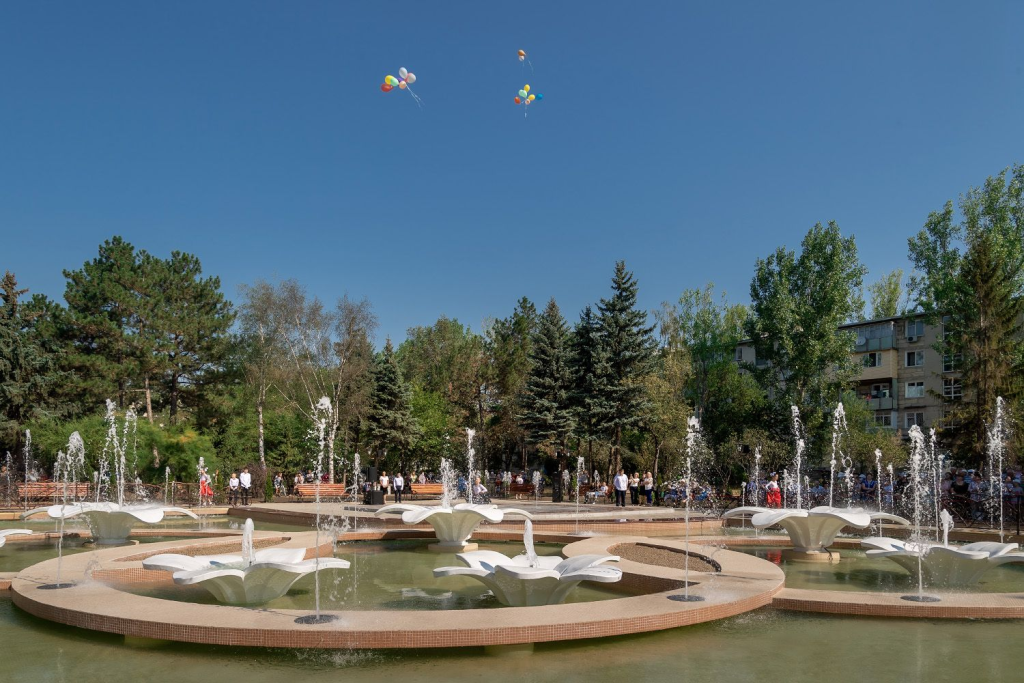
Central Park
The city park of Rybnitsa traces its founding back to 1967, and to this day, the park remains an important symbol of civic identity for the city’s residents. Its most recognizable feature, the central fountain, underwent a complete transformation following major reconstruction work in 2019, giving this beloved landmark an entirely new appearance for contemporary visitors.
A memorial sign titled “History, Frozen in Stone” was unveiled within the park on November 21, 1998, with its installation timed to mark the 370th anniversary of Rybnitsa. The monument’s creation involved artists A.M. Pokusinsky and I.P. Moseychuk, who worked together to bring this meaningful tribute to life. The stone that would eventually become this monument was transported from the Moldovan town of Rezina, situated directly opposite Rybnitsa on the other bank of the Dniester River. Originally, this stone weighed an impressive 15 tons, though approximately 5 tons were ground away during the carving process to achieve the monument’s final form.
The memorial sign takes the distinctive shape of an open book, symbolically representing history itself and the city’s documented past. Additional elements depicting a pen and inkwell represent knowledge and life respectively, conveying the meaningful message that the chronicle of the city’s history continues to be written, with new chapters constantly being added to Rybnitsa’s ongoing story.
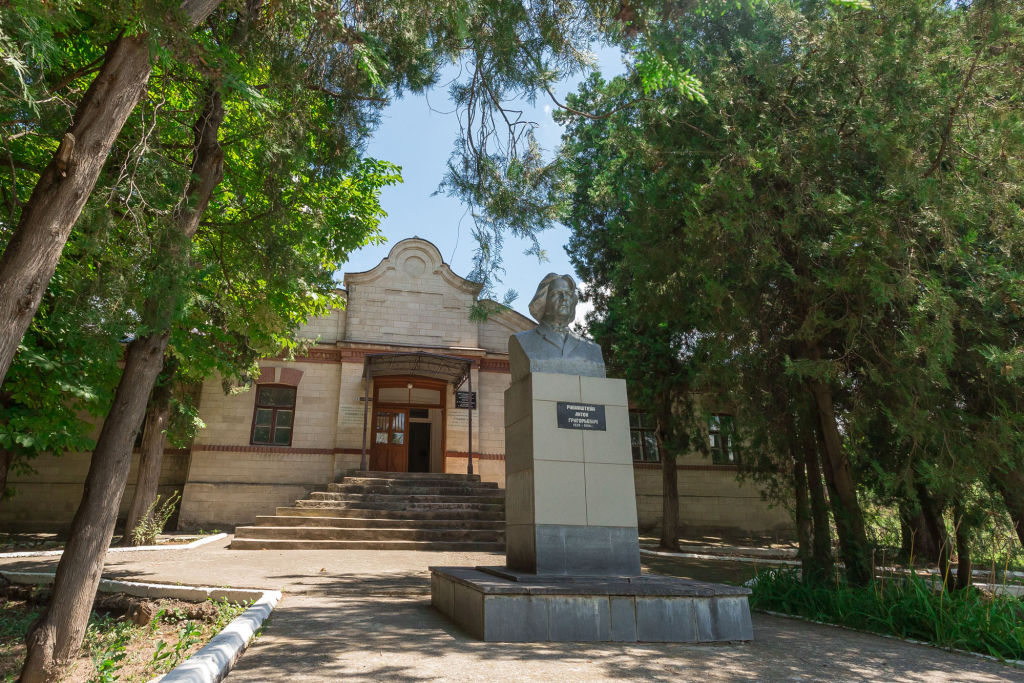
Museum of Anton Rubinstein and the History of Vykhvatintsy Village
The Museum of Anton Rubinstein opened on November 26, 1994, housed in a building constructed in 1901, dedicated to A.G. Rubinstein — the famous Russian pianist, conductor and composer who was born in Vykhvatintsy village. This museum brings together both the celebrated musician’s personal legacy and the broader history of the village that produced him.
The first exhibition hall presents an original portrait of A.G. Rubinstein, alongside Anton Grigorievich’s personal belongings, books containing opera scores and additional exhibits generously donated to the museum from the collections of the Leningrad Conservatory Museum, creating a comprehensive picture of Rubinstein’s musical career and personal life.
The second hall shifts focus to present materials documenting the broader history of Vykhvatintsy village itself. Remarkably, archaeologists working in this area discovered one of the first known sites of primitive human habitation in all of Eastern Europe, with evidence suggesting people lived here approximately 300,000 years ago. The site also includes a burial monument from the late Tripillya culture, dating back to the 3rd millennium BC — making Vykhvatintsy a location of genuine archaeological significance extending far beyond its connection to Rubinstein.
The third hall turns to more recent history, telling the stories of village inhabitants, participants in the Great Patriotic War, and defenders of the Pridnestrovian Moldavian Republic, connecting this ancient settlement’s deep past to its more contemporary historical experiences.
In front of the museum building stands a monument to Anton Grigorievich Rubinstein, erected in the late 1970s and created by sculptor R.E. Derbentsov. The bronze bust rests upon a tall rectangular pedestal standing 2.7 meters high, with the overall monument composition incorporating a wide staircase that leads visitors toward the main entrance of the museum building.
In the neighboring building stands the district children’s art school named after A.G. Rubinstein, which opened on September 1, 1973, making it one of the oldest educational institutions in the entire Rybnitsa district. The initiative to establish this school came from Moldovan composer Z.L. Carpenter, working alongside S.V. Segal, who served as head of the department of culture — together ensuring that Rubinstein’s musical legacy would continue inspiring future generations of young musicians from his native village.
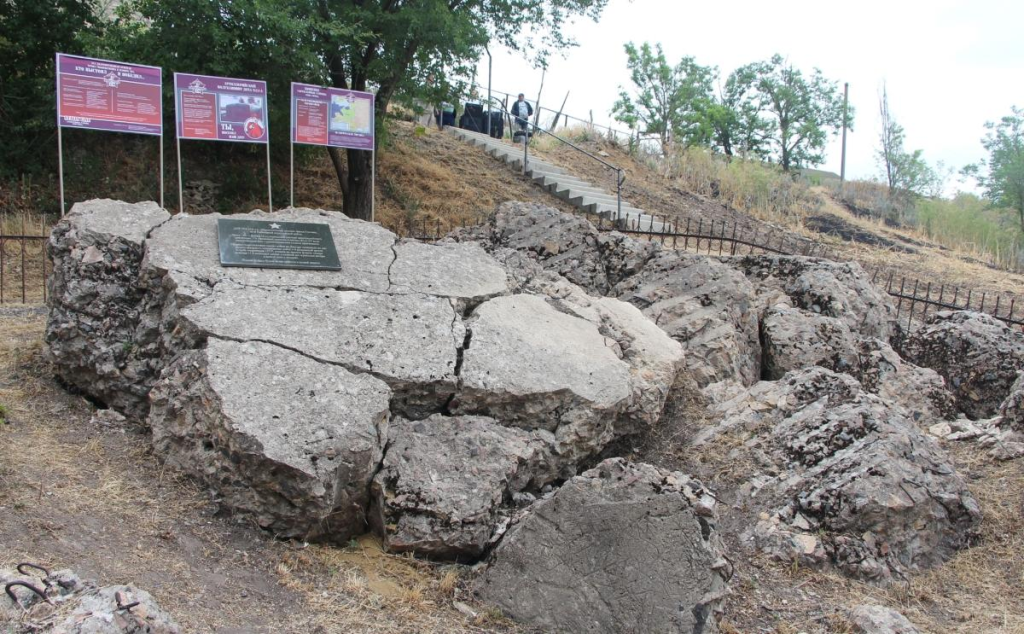
Long-Term Firing Point of the Stalin Line, Vykhvatintsy Village
During the summer of 1941, soldiers of the 18th separate anti-aircraft artillery battalion, part of the 176th Rifle Division operating within the 80th fortification area, engaged in fierce battles against vastly superior enemy forces at this very location. The stubborn and determined resistance mounted by these Soviet troops along the Dniester proved strategically significant, successfully delaying the advance of the 4th Romanian Army’s forces deep into Soviet territory by two crucial weeks. This defensive action also pinned down four divisions of the 11th German Army on their right flank, inflicting serious losses on both manpower and equipment that would prove costly to the invading forces.
Throughout the war years that followed, the original bunker structure suffered destruction, leaving behind only granite slabs as quiet reminders of those distant and difficult days of 1941. The formal monument commemorating this site of fierce resistance was only opened on June 22, 2022, following considerable effort and challenges to bring this important historical recognition to fruition — ensuring that the sacrifice and determination of these soldiers finally received the lasting tribute their courage deserved.
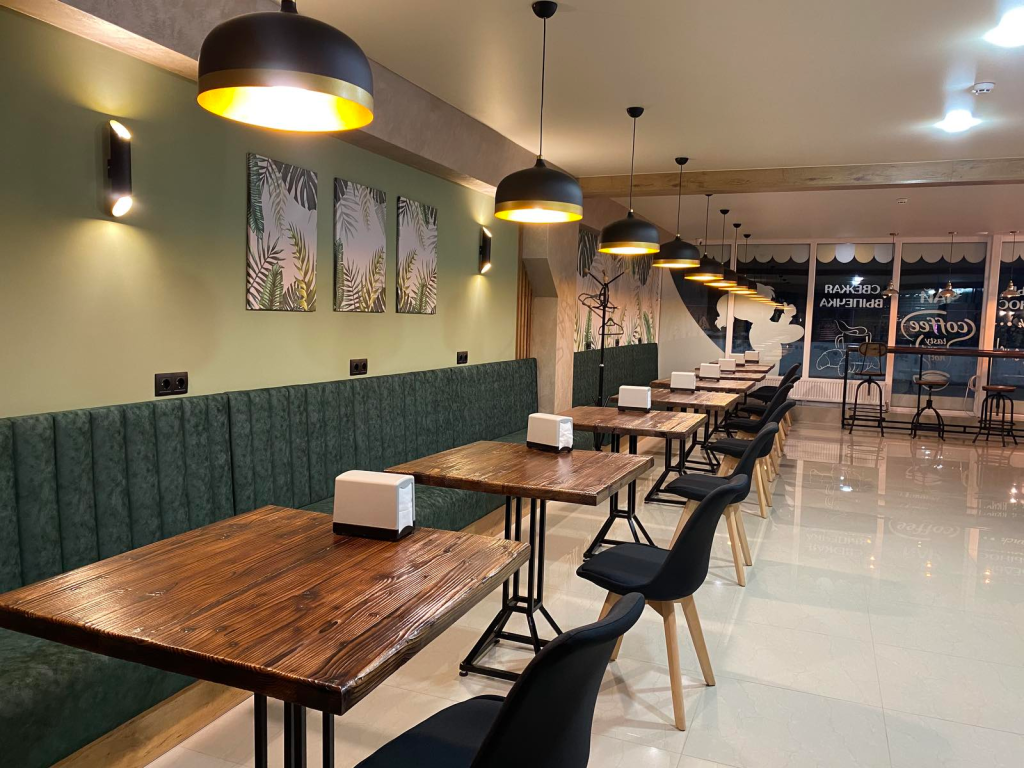
Canteen No. 1
Canteen No. 1 operates on a self-service principle, offering a straightforward and efficient dining experience for visitors and locals alike. During the midday hours, specifically from 11:30 to 16:00, guests can enjoy a satisfying lunch from the canteen’s offerings.
After 16:00, the establishment transitions to a different rhythm, with visitors invited to enjoy delicious coffee and desserts during the afternoon and evening hours. This dual approach allows Canteen No. 1 to serve different needs throughout the day, functioning as a practical lunch destination during working hours before shifting into a more relaxed café atmosphere as the day progresses, making it a versatile dining option for those exploring Rybnitsa at various times.