 Skip to content

Transnistria is one of the few places in the world where a territory not officially recognized by any UN member state has its own currency. The Transnistrian ruble (PRB) is required for payment almost everywhere, and it’s worth understanding its quirks before the trip, not at the register.
A currency with its own rules. The Transnistrian ruble isn’t pegged to the Moldovan leu and can’t be exchanged outside the region — you can’t take it home and cash it in there. The exchange rate to the euro and dollar is set by the local Transnistrian Republican Bank and differs noticeably from rates in neighboring Moldova or Ukraine. So always recalculate the amounts local sellers quote at the current rate, not from memory of a past trip — the rate moves constantly.
Where to exchange money. Official exchange points exist in Tiraspol and Bendery — branches of the Transnistrian Republican Bank, Eximbank and Gazprombank Pridnestrovie, plus some hotels and shopping centers. You can exchange euros, dollars and Moldovan lei; rates vary slightly between points, so for a larger sum it’s worth comparing a couple. Don’t exchange money on the street with individuals — the risk of a scam or outdated banknotes outweighs any savings on the rate.
Do bank cards work? Because of international sanctions, foreign-bank Visa and Mastercard cards mostly don’t work in Transnistria — not at terminals, not at ATMs. Card payment is possible at a handful of large supermarkets and some Tiraspol hotels, but don’t rely on it. Plan the trip as if cards won’t work at all, and bring cash euros to exchange locally.

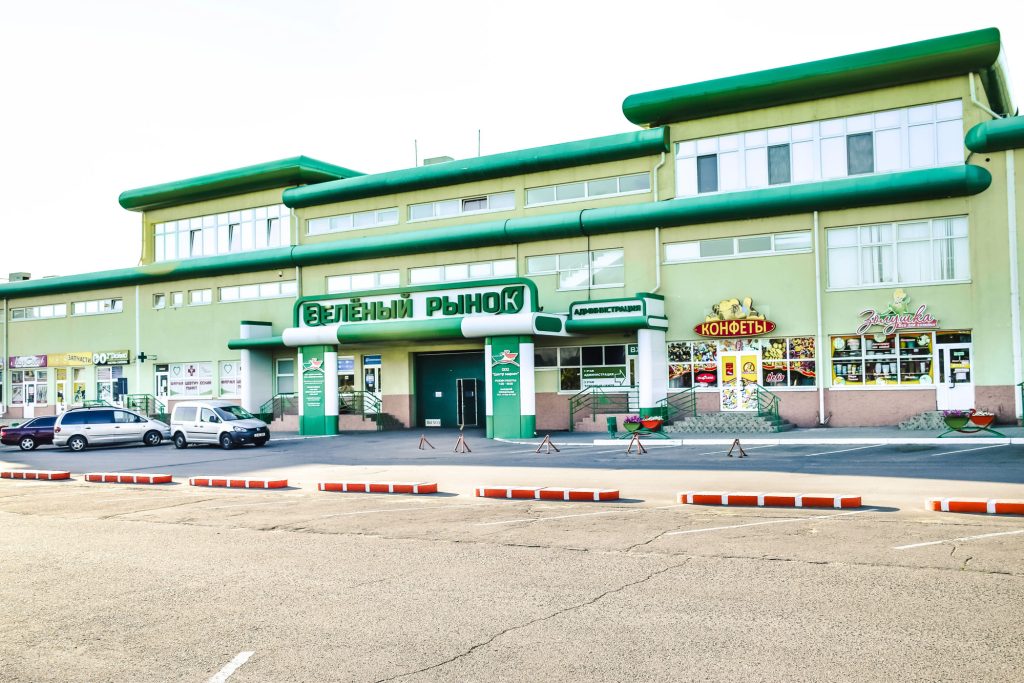
How much cash to bring. For one day with lunch, souvenirs and small purchases, 30-50 euros exchanged into Transnistrian rubles is usually enough. If you’re planning purchases at KVINT or the Green Market, bring more — it’s smarter to plan for larger purchases than to discover a shortfall at the till. Small bills and coins come in handy at the market and on minibuses, where change for a large note isn’t always available.
Moldovan lei and euros on the ground. Some tourist-oriented venues in Tiraspol accept euros and Moldovan lei in cash, especially cafes near the main sights. Don’t rely on it, though — the “on the spot” exchange rate a vendor offers is almost always worse than a bank’s, and change may come back in Transnistrian rubles, which you’ll then need to spend anyway.
What the money looks like. Transnistrian rubles come both as paper notes and as unusually shaped plastic coin-tokens — for many tourists the currency itself becomes a small discovery and a photo opportunity. Notes are often decorated with portraits of local historical figures and views of Tiraspol, making them a recognizable souvenir beyond their function as payment. Keeping a couple of notes is a nice addition to a souvenir collection.
A price benchmark. A cup of coffee in a Tiraspol cafe runs 15-25 Transnistrian rubles, a decent lunch 100-200 rubles per person, a minibus ride across town a few rubles. Even accounting for the exchange-rate difference, prices in Transnistria are noticeably lower on average than in neighboring Moldova — a welcome bonus for many visitors.
Practical tip. Exchange currency right after crossing the border, at the first official point you find in Bendery or Tiraspol — don’t put it off. Spend leftover rubles on souvenirs before you leave, or keep them as a memento: exchanging back at the border generally isn’t an option.
Also read: Souvenirs from Transnistria · Crossing the Transnistria Border · Practical Info for Visitors