 Skip to content
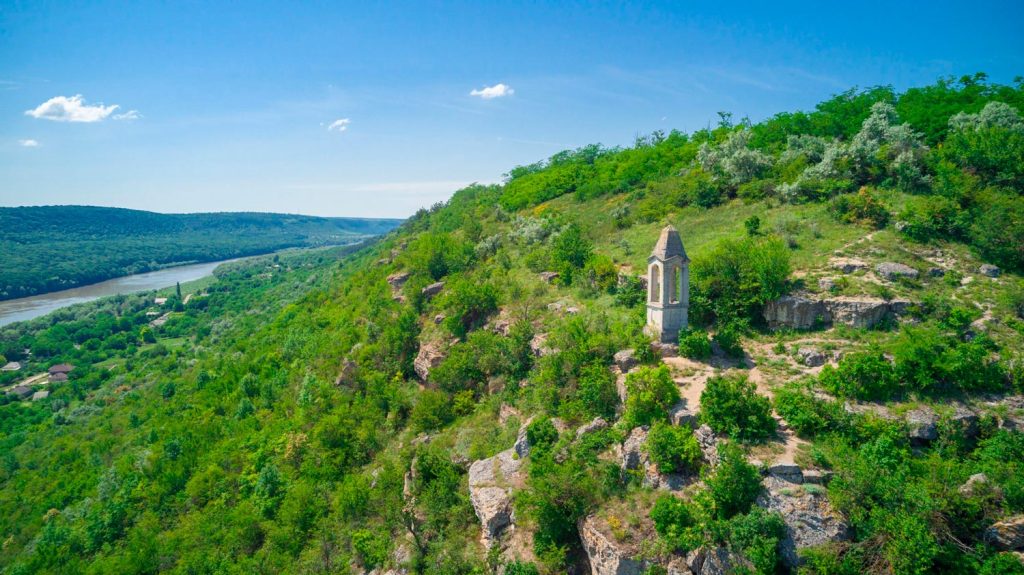
Six-day hiking route from Kamenka to Rybnitsa
Six-Day Hiking Route: Kamenka to Rybnitsa
Lace up your boots for one of the most immersive and rewarding long-distance hiking experiences in Pridnestrovie — a six-day, 74 km journey on foot from the aristocratic parks of Kamenka to the industrial capital of the north in Rybnitsa. Through ancient trade routes covered in moss, canyon springs and fairy-tale forests, past outlaw grottos and Orthodox monasteries, Soviet war memorials and a legendary steel works — this route reveals the full depth and variety of northern Pridnestrovie one step at a time.
Some of the landscapes along this route look as if they have stepped straight from a fairy tale — moss-covered rocks, hidden springs, canyon streams with mountain-clear water and forest paths that feel genuinely untouched by the modern world.
Day 1 — Kamenka to Valya-Adynka: Aristocratic Parks and a Cossack Stream (12 km)
The six-day journey begins in the city of Kamenka — a city shaped by one of the most distinguished names in Russian imperial history: Field Marshal Prince Peter Wittgenstein, who fell in love with this corner of the Dniester and left his mark on its landscape, architecture and culture in ways still visible today.
The day opens at the magnificent Park of Peter Wittgenstein (Lenin Str., Kamenka) — a landscape masterpiece laid out at the beginning of the 19th century, its tree-lined paths and riverside views providing the most atmospheric possible beginning to a six-day walking adventure.
Just 2 km away, the Grape Terraces of Kamenka (Grape Str.) offer a striking visual — cascading rows of vines carved into the hillside above the city, a living legacy of the viticultural traditions that defined this corner of the Dniester valley.
After 1.2 km, the House of Princess Trubetskaya (Lenina Str., Kamenka) stands as one of the most evocative aristocratic landmarks in northern Pridnestrovie — a tangible connection to one of the oldest and most distinguished dynasties of the Russian Empire who made this frontier their home.
Just 3.6 km further, the deeply moving Crypt of the Wittgenstein Family (Kamenka) provides the most personal and intimate encounter with the imperial heritage that permeates this city — the final resting place of the Field Marshal and his dynasty, a family tomb whose quiet dignity speaks volumes.
After 3.7 km, the House-Museum of Hero of the Soviet Union I.N. Koval (8 3rd Lane of Kirov, Kamenka) honors one of the district’s most celebrated wartime sons — a deeply human museum that connects the aristocratic heritage of Kamenka’s past to the Soviet heroism of its more recent history.
Just 2.4 km further, the Sanatorium “Dniester” (53 Lenin Str., Kamenka) marks the transition from the urban to the natural — a health resort on the banks of the river whose setting reminds walkers that the landscape they are about to spend six days traversing is one of genuine therapeutic beauty.
After 21 km of walking from Kamenka, the first day arrives in Valya-Adynka at the legendary Grotto of Ustym Karmaliuk (Valya-Adynka village, Kamenka district) — a cave cut through solid rock associated with the celebrated Ukrainian folk hero and outlaw whose spirit of resistance seems entirely appropriate for a route that pushes into the wilder corners of the region.
Just 4.4 km further, the Church of Saint Paraskeva of the Balkans (37 Zarechnaya Str., Valya-Adynka village) brings the first day to a spiritual close — a beautiful church dedicated to the beloved Orthodox healer saint whose quiet presence in this village feels entirely natural.
The night is spent by the stream in Valya-Adynka — the sound of water, the darkness of the countryside and the satisfaction of 12 km of northern Pridnestrovie already underfoot.
Day 2 — Valya-Adynka to Yantarnoye: Archaeological Cities, Heroes and Multicultural Rashkov (18–19 km)
The second day covers the longest stretch of the route, heading 11 km to Rashkov — one of the oldest settlements in Pridnestrovie, with a documented history since 1402 and a remarkable concentration of natural, historical and religious landmarks.
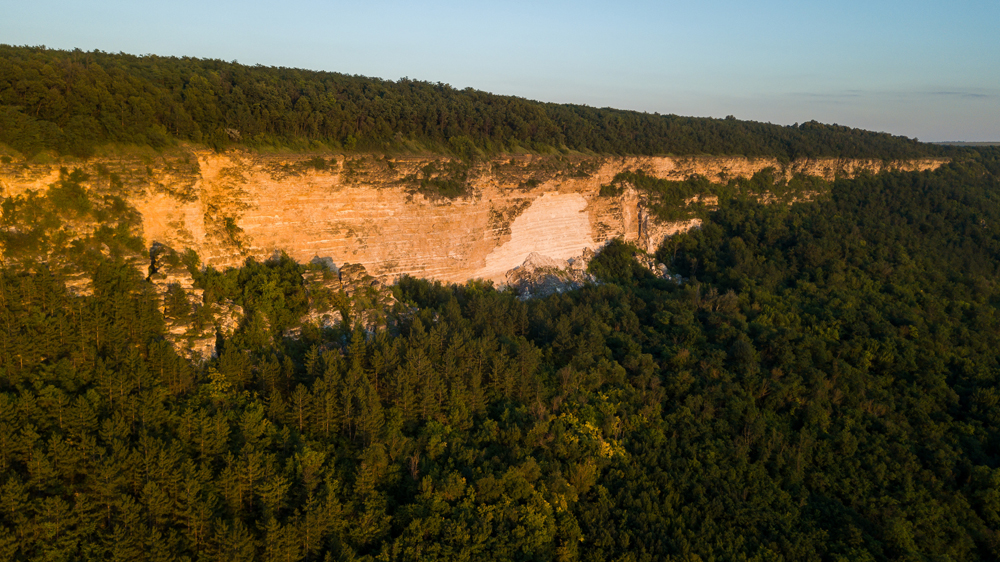
The day opens at the dramatic Chervona (Red) Rock (Rashkov village, Kamenka district) — one of the largest and most striking archaeological sites in the region, associated with the ancient fortified settlement of “Chervona Skala.” Its rust-red stone face rises above the village with commanding authority, offering views across the Dniester valley that reward the climb entirely.
Just 380 meters away, the Museum of Hero of the Soviet Union F.I. Zharchinsky (35 Fiodora Zharchinskogo Str., Rashkov village) honors one of the village’s most celebrated sons — his wartime heroism brought to life through personal artifacts, photographs and documents in this intimate and deeply moving museum.
After 150 meters, Panska Krynitsa (Rashkov village) — a legendary natural spring steeped in centuries of local folklore — offers the purest and most refreshing drink of water on the entire route.
Just 620 meters further, the Obelisk to the Soldiers-Villagers who Died During the Great Patriotic War (Rashkov village, Kamenka district) stands as a proud and sorrowful tribute to the men of Rashkov who did not return from the war.
After 2.2 km, the House of Culture of Rashkov village (141 Lenin Str.) speaks of the cultural life that has sustained this ancient community across the decades — a gathering place whose Soviet-era architecture carries the continuing story of the village’s identity.
Just 510 meters away, the haunting Ruins of the Synagogue (Bazarnaya Str., Rashkov village) bear silent witness to the once-thriving Jewish community whose centuries-long presence shaped Rashkov’s multicultural identity.
After 740 meters, the atmospheric Ruins of the Intercession Church (Pokrovskaya Str., Rashkov village) add another layer of historical texture — a hauntingly beautiful remnant of a once-active Orthodox parish.
Just 1.9 km further, the St. Cajetan Catholic Church (Rashkov village, Kamenka district) completes the remarkable interfaith landscape of Rashkov — Catholic, Orthodox and Jewish heritage within walking distance of each other, a living testament to centuries of multicultural coexistence on this stretch of the Dniester.
The day concludes 530 meters away at the Church of the Holy Trinity (Rashkov village, Kamenka district) — one of the oldest churches in Pridnestrovie, housing the venerated icon of the Spas Nerukotvornyi. The night is spent on the banks of the Dniester near the village of Yantarnoye — firelight, the river, the stars.
Day 3 — Yantarnoye to Stroentsy: The Ancient Trade Route and a Rock Climbing Training (7 km)
The shortest but perhaps most physically memorable day of the route follows the ancient trade route from Yantarnoye to Stroentsy — a 7 km path that passes rocks draped in moss, hidden springs and canyons carved by streams of mountain-clear water. This is the stretch of the route that most deserves the description “fairy tale.”
After 12 km from the previous overnight, the route reaches Svinerest (Stroentsy village, Rybnitsa district) — a dramatic rocky outcrop above the Dniester that serves as the venue for the route’s rock climbing training session. Under expert guidance and with full safety equipment, participants tackle a designated climbing track with the river valley spread out magnificently below — an experience that takes the adventure to its most literal vertical extreme.
The night returns to the previous overnight spot near Stroentsy — dinner under the stars after the day’s climbing.
Day 4 — Excursion Around Stroentsy: History, Monasteries and Natural Wonders (10 km)
The fourth day is dedicated entirely to exploring the extraordinary village of Stroentsy — a place shaped by the legacy of Field Marshal Peter Wittgenstein and packed with natural and cultural landmarks that reward an entire day’s exploration.
Just 64 meters from Svinerest, the Monastery of John the Precursor (Kalagur area, Stroentsy village, Rybnitsa district) stands in one of the most dramatically beautiful natural settings in all of northern Pridnestrovie — a monastic community nestled among cliffs and forest above the Dniester whose tranquility and spiritual depth make it one of the highlights of the entire six-day journey.
After 9.1 km, the iconic Tower of the Winds (Stroentsy village, Rybnitsa district) — one of the most architecturally distinctive imperial follies in the region — marks the beginning of the village walking tour proper.
Just 1.1 km away, the charming Water Mill (21a 1 Maya Str., Stroentsy village) is a beautifully preserved piece of rural heritage that speaks of the self-sufficient agricultural economy of the Wittgenstein estate era.
After 1.4 km, the sweeping Grape Terraces (Stroentsy village, Rybnitsa district) cascade down the hillsides above the river — one of the most visually dramatic landscapes on the entire route, the rows of vines glowing in whatever light the season offers.
Just 1.8 km further, the romantic Countess’s Gazebo (Rybnitsa district, Stroentsy village) is a delicate aristocratic remnant from the estate’s social life — a structure where the Wittgenstein family once gathered to enjoy views that visitors still come from afar to see.
After 2.8 km, the “Teplitsa” Springs System (Rybnitsa district, Stroentsy village) delivers some of the purest and most refreshing natural spring water on the entire route — a beloved local landmark and a perfect place to rest and hydrate after a full day of walking.
The night returns to the Stroentsy overnight camp.
Day 5 — Stroentsy to Belochi to Bolshoy Molokish: Field Roads, Forest and a Riverside Mill (11 km)
The fifth day takes the route along field roads on the upper terrace of the Dniester — a walking section of exceptional natural beauty that gradually descends toward the village of Belochi.
After 6.4 km, the route arrives at the welcoming Tourist Complex “Dubrava” (Forest) (2 Sovetskaya Str., Belochi village, Rybnitsa district) — a comfortable and characterful base in the heart of the riverside village, offering a well-earned overnight with proper facilities after four nights in tents.
Just 1.4 km away, the Water Mill in Belochi village (Rybnitsa district) — a beautifully preserved 19th-century mill beside a noisy rushing river — provides one of the day’s most picturesque and atmospheric stops, the sound of the water mixing with the creak of ancient timber in a way that makes the name “Lost World” feel entirely apt.
The night is spent on the banks of the Dniester near Bolshoy Molokish — a final night under the open sky before the route reaches its urban conclusion in Rybnitsa.
Day 6 — Bolshoy Molokish to Rybnitsa: Museums, Churches, Steel and a City Park (15 km)
The sixth and final day of the hiking route descends from the countryside into the urban landscape of Rybnitsa — the northern capital of Pridnestrovie — via the village of Bolshoy Molokish.
After 14 km, the History Museum in Bolshoy Molokish village (47 Rusyanovskogo Str., Rybnitsa district) provides a fascinating final rural stop — a local history collection that documents the life of this Dniester-side village across the centuries and provides a gentle transition from the wild landscapes of the past five days to the city ahead.
After 13 km, the route arrives in Rybnitsa at the Museum of Military Glory (91 Kirova Str., Rybnitsa) — a well-stocked institution dedicated to the wartime history of the northern districts, opened on the site where Nazi occupiers once held political prisoners.
Just 520 meters away, the Memorial of Military Glory (Titova Str., Rybnitsa) provides an open-air complement to the museum — a dignified ensemble of monuments that brings the city’s wartime narrative into the public space.
After 130 meters, the Roman Catholic Church of Saint Joseph (22a Pugacheva Str., Rybnitsa) adds a distinctive note of religious diversity to the day’s urban exploration — a Catholic church whose presence in this northern city speaks of the multicultural heritage that runs as a thread through the entire six-day route.
Just 600 meters further, the majestic Cathedral of the Archangel Michael (77 Kirova Str., Rybnitsa) stands as the finest and most celebrated Orthodox landmark in the northern capital — a grand cathedral that brings the route’s spiritual dimension to its most magnificent conclusion.
After 5 km, the legendary Moldova Steel Works (1 Industrialnaya Str., Rybnitsa) provides the route’s most dramatic industrial finale — the largest enterprise in Pridnestrovie, where the transformation of scrap metal into high-quality steel creates a spectacle of heat, scale and industrial power unlike anything encountered in the previous five days of forest paths and riverside campsites.
The six-day hiking journey from Kamenka to Rybnitsa concludes 5.3 km further in the Central Park of Rybnitsa — a green and welcoming urban space where the boots can finally come off, the pack can be set down and 74 km of northern Pridnestrovie — its aristocratic parks and outlaw grottos, its monastery cliffs and moss-covered trade routes, its multicultural villages and mighty steel works — can be properly and fully appreciated.

Park Petra Wittgensteina
This park, spanning 25 acres (approximately 27 hectares), was founded at the estate of Prince P.Ch. Wittgenstein during the 1820s, originally intended to serve vacationers seeking therapeutic treatment through grape juice consumption — a popular health practice of the era. The park’s design incorporated valuable tree species brought from abroad, while ponds were dug throughout the grounds and stocked with fish for raising. Additional decorative elements included numerous flower beds, one of which was specifically designed to depict the Wittgenstein family coat of arms, adding a personal heraldic touch to the landscape.
The park’s purpose shifted significantly during the 1960s, when buildings belonging to an agricultural technical school occupied portions of the grounds. Subsequently, the park underwent reconstruction, transforming it into a popular recreation area, and in 2018, it received its current name: Park Petra Wittgensteina, formally honoring the prince whose vision originally created this green space.
The amphitheater-like ridge, upon which the famous grape terraces are situated, serves as a picturesque natural backdrop for the park’s landscape. Today, more than a hundred species of trees and shrubs flourish throughout the grounds, including Japanese chestnut, juniper, white poplar, sharp-leaved maple and ash, creating remarkable botanical diversity. The park also features a stage used for hosting various cultural events throughout the year.
In 2011, a bust of the prince was installed within the park, though it was subsequently relocated to the Glory Memorial — a monument dedicated to soldiers who died during the Great Patriotic War. At this new location, a comprehensive historical and cultural complex was created around the bust, with one of the granite slabs installed there providing detailed information about the life of P.Ch. Wittgenstein and his significant contributions to the development of Kamenka, ensuring his legacy remains connected to the town he helped shape, even as the physical location of his memorial has changed over time.

Grape Terraces
Following the Patriotic War of 1812, Prince P.Ch. Wittgenstein, accompanied by his wife, journeyed to southern Russia, where in 1805 he acquired the town of Kamenka for a substantial sum of 135,000 rubles. Recognizing the favorable climatic conditions of this region, the Prince made the strategic decision to invest in developing the local wine industry, taking full advantage of the area’s natural advantages for viticulture.
The first vineyards were carefully planted on a well-heated southern slope, arranged in terraces supported by thick stone walls that held the cultivated land in place. Construction of these terraces continued from the 1820s through to the end of the 1880s, ultimately spanning an impressive total length of 4.5 kilometers — a remarkable feat of agricultural engineering that transformed this hillside into productive vineyard land.
The grapes harvested from these terraces were processed at a dedicated winery, housed in a substantial stone building measuring 36 by 12 meters. Along its facade, the building features an elegant gallery supported by eighteen Doric columns, lending the structure considerable architectural distinction. Below ground, cellars reaching a depth of 6 meters were constructed in 1872, comprising six enfilades with cylindrical vaults built from large stone blocks, occupying the majority of the underground space. Each individual section within these cellars measures 6.5 meters in width, creating an impressive subterranean network designed specifically for the proper aging and storage of the wines produced from Wittgenstein’s ambitious viticultural venture.
House of Princess Trubetskaya
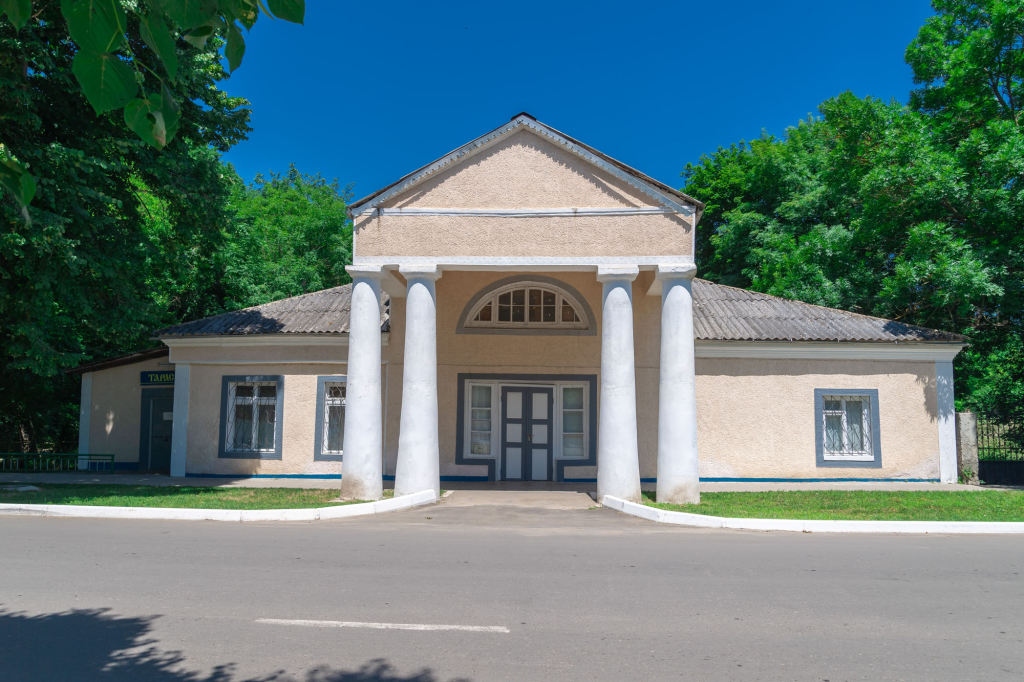
The House of Princess Trubetskaya was constructed during the first half of the 19th century by P.Ch. Wittgenstein, the owner of Kamenka, specifically for his daughter Emilia. This elegant residence forms part of the vast estate and park complex that Wittgenstein developed throughout his ownership of this territory, reflecting the considerable wealth and aristocratic ambition that characterized his presence in this corner of the Dniester valley.
The house was designed in the architectural classicism style, a design approach that dominated estate construction throughout the Russian Empire during this particular period. This stylistic choice connects the Trubetskoy house to a broader tradition of aristocratic residential architecture that flourished across imperial Russia.
Today, the building has found new purpose, having been given over to the district community of Ukrainian culture, ensuring that this historic aristocratic residence continues serving an important cultural function for the local community, even as its original purpose as a princess’s private residence has long since passed.
The Crypt of the Family of P.Kh. Wittgenstein
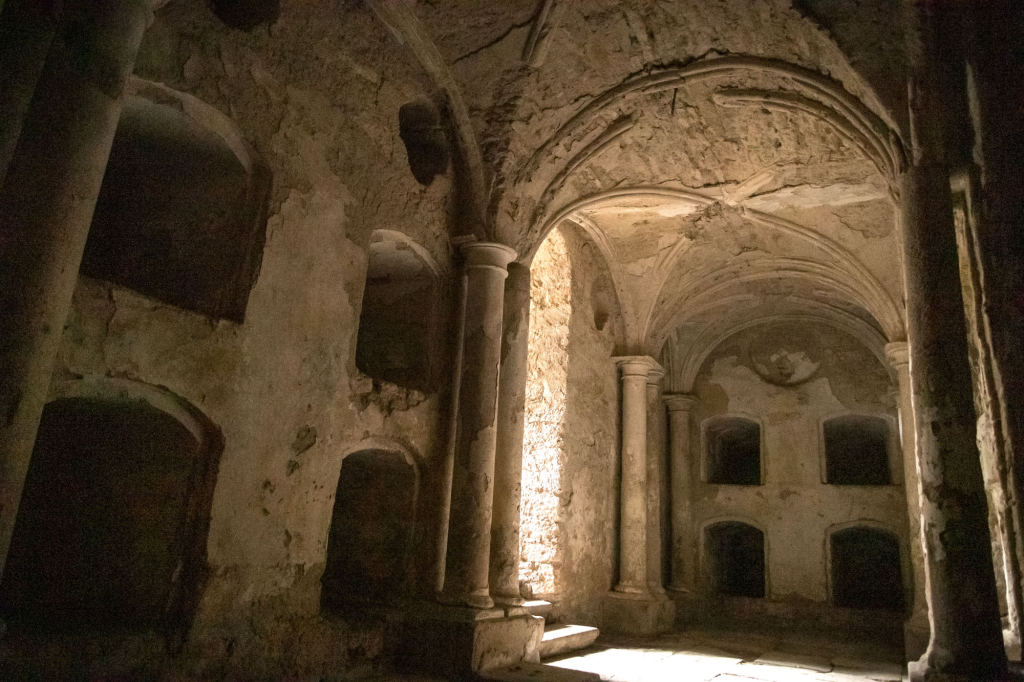
The family vault of the outstanding Russian commander and Hero of the Patriotic War of 1812, Prince P.Ch. Wittgenstein, was constructed in 1840 near the Lutheran Church. The vault’s interior featured niches designed specifically for burying the deceased, each elaborately decorated with columns and topped with a vaulted ceiling, creating a dignified resting place befitting the prince’s distinguished family.
Historical records confirm that Peter Christianovich himself, along with his wife Antonina Stanislavovna, daughter Emilia Petrovna Trubetskaya and other family members, were all buried within this vault. Additionally, the crypt held a silver vessel containing the heart of P.Ch. Wittgenstein’s son, Lev Petrovich, who had died in Germany — a poignant detail reflecting the period’s particular funerary customs for those who died far from their family’s ancestral resting place. The coffins containing the deceased were stored within niches that had been walled with marble slabs, each bearing inscriptions noting the surname, given name, patronymic, and dates of birth and death of the person interred there.
Unfortunately, the vault’s history took a tragic turn during the Soviet era: in 1934, the church was closed, and a few years later, the family vault itself was desecrated. Today, only a single plate marking the grave of A.S. Wittgenstein (Snarska) has survived this destruction. The current whereabouts and final resting place of the other Wittgenstein family members buried here remain unknown, representing a significant loss of historical and genealogical continuity for this once-prominent aristocratic family connected so closely to Kamenka’s development.
House Museum of the Hero of the Soviet Union I.N. Koval
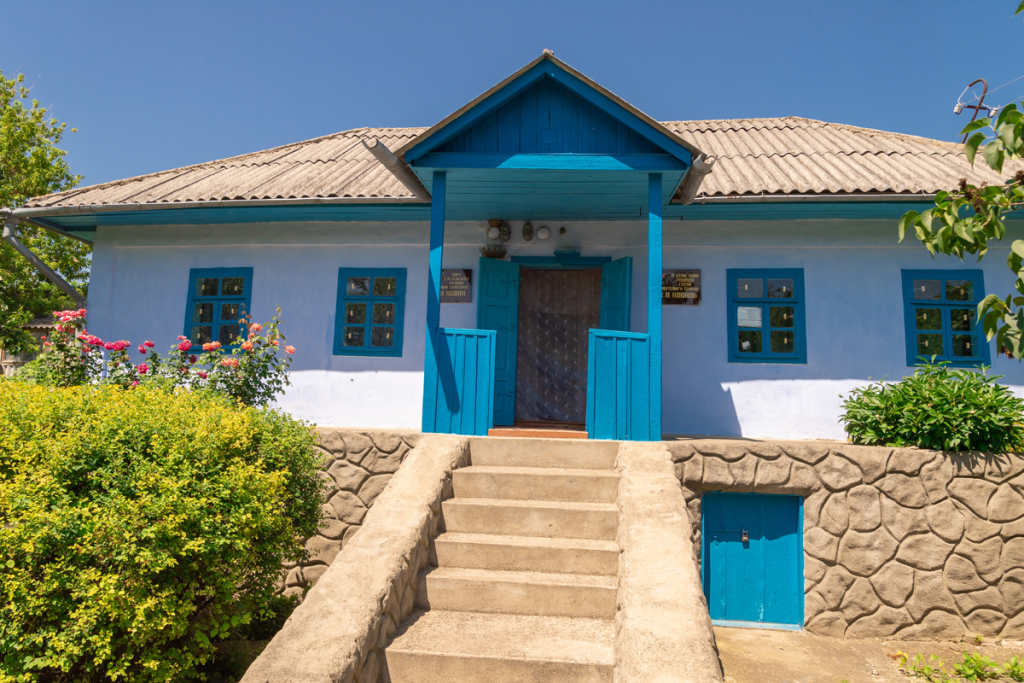
Ivan Nesterovich Koval was drafted into the Red Army in 1941, and beginning in July of the following year, fought continuously on the fronts of the Great Patriotic War. By September 1943, he had risen to command an artillery gun within the 7th Guards Army of the Steppe Front, a position from which he would soon distinguish himself through extraordinary courage during the crossing of the Dnieper River.
Koval’s gun crew was tasked with diverting fascist forces, creating an opportunity for the main body of Soviet troops to successfully cross the river. During this protracted and intense battle, his gunners managed to destroy an enemy tank along with a substantial number of enemy soldiers and officers. As the battle wore on, Ivan Koval found himself entirely alone at his gun — yet he persevered remarkably, single-handedly loading, aiming and firing shots without any assistance. For this exceptional display of courage and heroism, he was awarded the title Hero of the Soviet Union in October 1943.
To mark the 40th anniversary of the liberation of the Moldavian SSR’s territory, a house-museum dedicated to I.N. Koval opened in 1984. The museum’s collection includes photographs of the hero’s family, his personal documents and belongings, household items reflecting both pre-war and post-war daily life, books drawn from Ivan Nesterovich’s own personal library, and numerous other exhibits that together paint an intimate portrait of this remarkable soldier’s life beyond his moment of battlefield heroism.
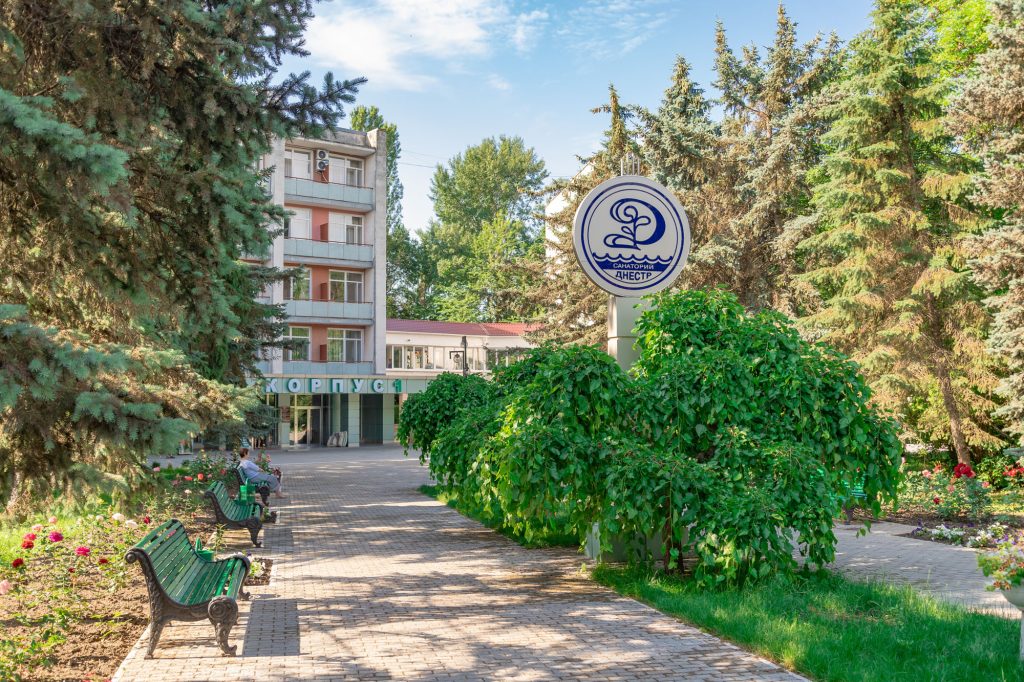
Sanatorium "Dniester"
Sanatorium “Dniester” holds the distinction of being the oldest health resort in the entire republic, with a reputation extending far beyond the borders of Pridnestrovie. Thanks to its favorable geographical location, beautiful mountain landscape and mild climate, the sanatorium continues to welcome thousands of visitors each year seeking to improve their health and wellbeing.
Kamenka first achieved fame as the inaugural grape-medicinal resort throughout the entire southwest of the Russian Empire, dating back to the 1870s. At the invitation of Prince Fyodor Lvovich Wittgenstein, Austrian builders constructed a two-story kurhaus (resort house) within Kamenka Park, a building that housed a buffet with restaurant, a reading room, a billiard room, a dance hall and living quarters for guests. Smaller resort dachas were subsequently erected nearby, expanding the early resort’s capacity.
The revival of the Kamenka health resort began during the 1930s, culminating in 1935 with the grand opening of the very first sanatorium established in the Moldavian Autonomous SSR. The complex underwent further significant expansion in 1976, when a new sanatorium building was put into operation on the resort grounds. This modern facility comprises two dormitories accommodating 450 people, a comprehensive medical department, a swimming pool and medical baths, a dining room capable of simultaneously serving up to six hundred guests, a cinema and concert hall, a library and various other facilities.
Surrounded by a substantial park area on all sides, the sanatorium today stands as one of the most modern and technically equipped health resorts throughout the republic, where contemporary methods of treatment and diagnostics are actively practiced. The sanatorium maintains its own drinking pump room — a specialized pavilion constructed over a mineral water well — providing both cold and warm mineral medicinal water known as “Dnestryanka,” continuing the resort’s century-and-a-half-old tradition of therapeutic water-based treatment for visitors seeking genuine health benefits during their stay.

Grotto of Ustym Karmaliuk
This remarkable grotto, carved directly into a stone slab in 1830, is popularly known among locals as “Karmaliuk’s Hut.” Inside, visitors will discover a small stove tucked into one corner of the room, stone benches lining the walls, and a modest little window providing natural light to this atmospheric space.
According to local legend, the grotto served as a hiding place for Ustym Karmaliuk — often called the “Ukrainian Robin Hood” — who led an anti-serf revolt across the right bank of Ukraine during the first half of the 19th century. This was no minor uprising: more than 20,000 peasants participated in the rebel movement under Karmaliuk’s leadership, making it one of the more significant peasant resistance movements of the era. For many years, Karmaliuk’s units conducted raids on manor houses throughout the region, redistributing the money and valuables seized during these operations to impoverished peasants — earning Karmaliuk his enduring reputation as a champion of the rural poor against an oppressive feudal system.

Church of Saint Paraskeva of the Balkans, Valia-Adynka Village
Tucked away in the northern reaches of Pridnestrovie, within one of the region’s most authentically preserved villages, stands a truly special and distinctive church, framed beautifully by rolling hills and a picturesque forest backdrop. This church sets itself apart through its unique architectural approach and refreshing simplicity of execution — a design philosophy that prioritizes harmony with the natural surroundings over elaborate ornamentation.
The temple’s walls are lined with natural stone, lending the building a grounded, earthy character that connects it directly to the landscape from which its materials were drawn. Adding a striking visual touch, both the bell tower’s roof and the central dome have been painted a vivid blue, creating a beautiful sense of unity between the church and the sky above, as well as the natural surroundings that frame this remarkable place of worship. The overall effect is a church that feels less like an imposition upon the landscape and more like an organic extension of it — a fitting spiritual home within one of Pridnestrovie’s most picturesque rural settings.
Chervona (Red) Rock
Rising dramatically in the south-eastern part of Rashkov village, Chervona (Red) Rock stands as one of the most impressive natural monuments in the entire region — stretching an impressive 500 meters in length and towering 50 meters high. This striking limestone formation owes its evocative name to a remarkable natural phenomenon: as the sun sets each evening, the rock’s limestone slopes transform, glowing with a vivid red hue that gives the formation its unmistakable and unforgettable appearance.

Museum of Hero of the Soviet Union F.I. Zharchinsky
Fyodor Ivanovich Zharchinsky joined the Red Army at the very outbreak of the Great Patriotic War, going on to participate in significant battles across Ukraine, the Caucasus and Eastern Europe throughout the course of the conflict. During the decisive Berlin operation on April 21, 1945, Senior Lieutenant Zharchinsky, alongside a group of reconnaissance scouts, discovered a concentration camp in the German town of Treuenbrietzen. Making the courageous decision to liberate the prisoners held there, the scouts engaged the camp’s guards in direct confrontation.
The operation proved extraordinarily successful, resulting in the liberation of 4,500 prisoners of war representing multiple nationalities — Russians, French, Poles, Danes, Belgians and Norwegians, including notably the commander of the Norwegian armed forces, Major General Otto Ruge. However, this victory came at tremendous personal cost: Zharchinsky, who had personally killed six guards along with the camp commandant during the engagement, was mortally wounded and died shortly afterward from his injuries. In recognition of this extraordinary act of heroism, he was posthumously awarded the title Hero of the Soviet Union.
On May 23, 1982, a museum dedicated to this outstanding son of Rashkov opened in the village, preserving his memory for future generations. In 2011, a bust honoring the hero was installed beside the school where he had once taught and which he led during the pre-war years — creating a permanent physical connection between Zharchinsky’s wartime heroism and the educational institution where he first served his community before the war that would ultimately claim his life.

Panska Krynitsa
Tucked away near the ruins of the old Jewish synagogue, Panska Krynitsa — meaning “The Spring of the Mistress” — stands as a cultural heritage site dating back to the middle of the 17th century, its name carrying with it one of the most poignant love stories in the history of Rashkov.
The spring’s name is forever linked to Ruksanda, daughter of the Moldavian Principality’s Hospodar Vasily Lupu. In 1652, she married Timofey, son of the legendary Ukrainian Hetman Bogdan Khmelnytsky. Tragedy struck just a year later, when Timofey was fatally wounded during the siege of Suchava Fortress. In the aftermath of his son’s death, Bogdan Khmelnytsky gifted the village of Rashkov to the grieving Ruksanda, who would go on to live here for thirteen long years, carrying her sorrow with her.
According to local legend, the spring that came to bear her name — “Panska Krynitsa” — emerged from the very tears Ruksanda shed while mourning the untimely loss of her beloved husband, a story that has been passed down through generations and continues to give this natural spring its deeply romantic and melancholic significance.

Obelisk to the Soldiers-Villagers Who Died During the Great Patriotic War, the Village of Rashkov
This obelisk was installed in 1975, dedicated to honoring the soldiers and villagers of Rashkov who lost their lives during the Great Patriotic War. Recognized today as a monument of both historical and monumental artistic significance, the obelisk stands as a proud and solemn tribute to the men of this ancient riverside village who answered the call to defend their homeland and did not return.
Set within Rashkov — already renowned for its remarkable multicultural heritage spanning Orthodox, Catholic and Jewish traditions — this obelisk adds an important layer of 20th-century military remembrance to the village’s already rich historical tapestry, ensuring that the sacrifice of Rashkov’s wartime generation remains permanently honored alongside the village’s many other historical and cultural landmarks.
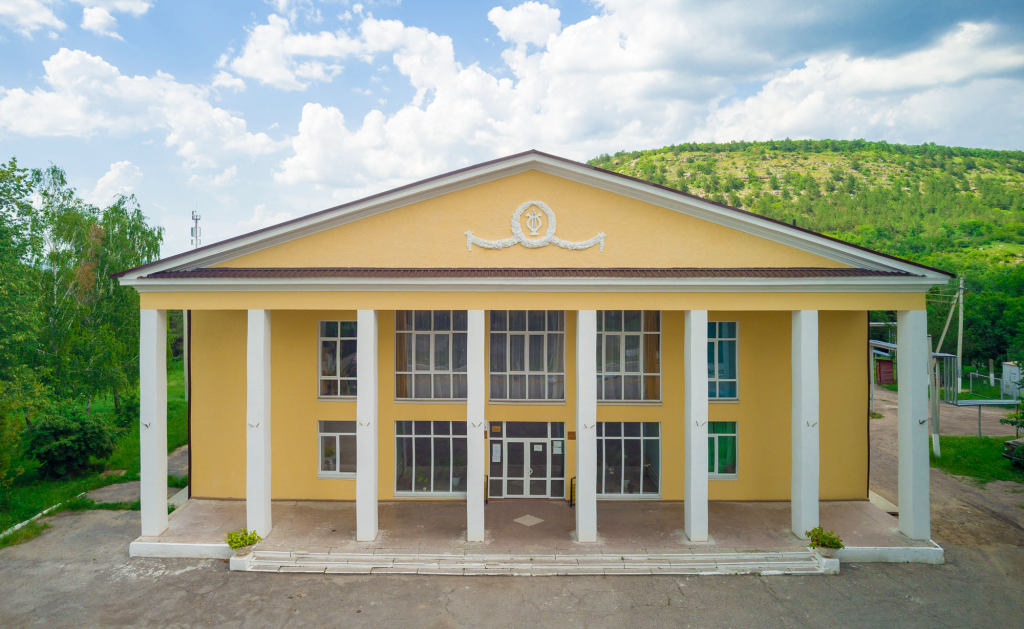
House of Culture, Rashkov Village
The House of Culture, positioned right in the very center of Rashkov village, began its operations in 1976, establishing itself as an important community institution for this historically rich settlement. Today, the building houses both large and small auditoriums alongside dedicated rooms for various creative teams, complemented by a library and a children’s art school — together creating a comprehensive cultural and educational hub for the village.
The House of Culture additionally serves practical visitor needs through its dedicated tourist information point, where travelers exploring Rashkov’s remarkable multicultural heritage can obtain free tourist maps, booklets and brochures covering destinations throughout Pridnestrovie. This combination of cultural programming and practical visitor services makes the House of Culture a valuable resource both for Rashkov’s own residents and for the many tourists drawn to explore this ancient village’s extraordinary Orthodox, Catholic and Jewish historical landmarks.

Ruins of the Synagogue
Constructed around 1749 using funds collected through the so-called “basket tax” — a specialized form of taxation of the era — this synagogue once stood at the very heart of Rashkov’s spiritual and communal life. During this period, the village held particular significance as one of the centers of world Hasidism, a religious movement within Judaism that swept through the Jewish population of the Polish-Lithuanian Commonwealth and surrounding territories during the first half of the 18th century.
For generations, the synagogue served as the spiritual anchor for Rashkov’s substantial and vibrant Jewish community. Tragically, the building’s fate changed dramatically in the early 1930s, when the Soviet anti-religious campaign led to the destruction of its vaults. Today, only the stone walls and a handful of interior architectural elements remain standing from what was once a truly majestic structure — a haunting reminder of the rich Jewish heritage that once flourished in this corner of Pridnestrovie.

Ruins of the Intercession Church
Built in 1740, the Intercession Church carries a fascinating religious history within its weathered walls — originally established as a Greek Catholic (Uniate) church before later transitioning to Orthodox worship, reflecting the shifting religious currents that shaped this region over the centuries.
Like so many other religious buildings across Pridnestrovie, the church suffered destruction during the Soviet years, falling victim to the era’s widespread anti-religious campaigns. Today, only the church’s walls and a portion of its original shingle roof have managed to survive, standing as a quiet and somewhat melancholic testament to a place of worship that once served the faithful of Rashkov for two centuries.
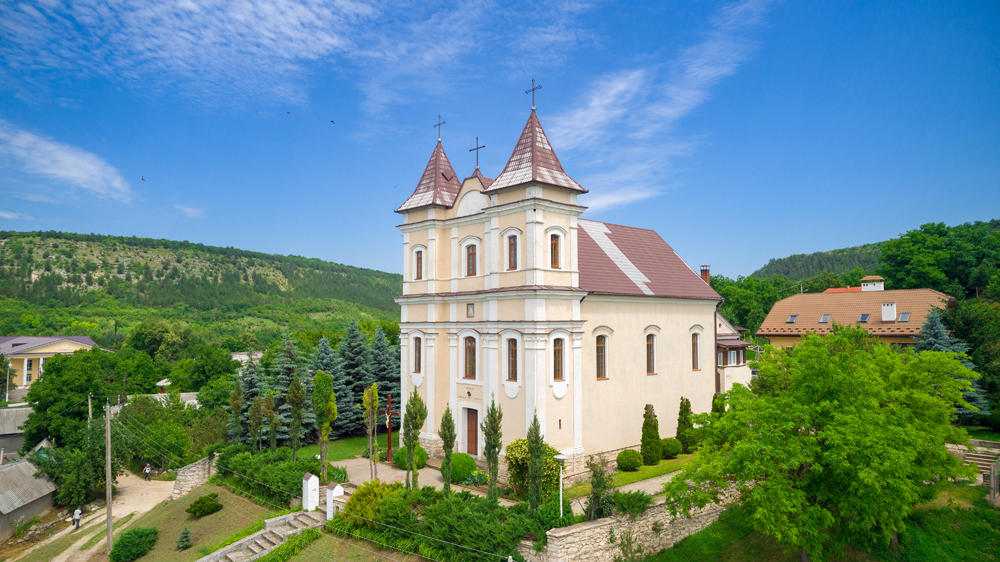
St. Cajetan Catholic Church
St. Cajetan Catholic Church holds a unique distinction as the oldest Catholic church in all of Pridnestrovie, remarkably preserved in nearly its original form to this day. The decision to build the church dates back to 1749, when Prince Jozef Lubomirski made the commitment to its construction — a decision documented in the historic manuscript known as the “Act of Foundation of the Church in Rashkovo.” Construction itself was completed in 1786, with the church consecrated five years later in honor of St. Cajetan.
Architecturally, the building stands as a classic example of 18th-century Polish Catholic church design, incorporating elegant Baroque elements that reflect the artistic sensibilities of its era. The church’s history took a difficult turn during the Soviet period, when it was closed by local authorities and repurposed first as a granary, then later as a joiner’s workshop — a fate shared by many religious buildings during that time.
It wasn’t until 1990 that the church was finally returned to the Catholic community. Since then, services have once again filled the building with the sounds of the pipe organ, restoring this remarkable piece of 18th-century heritage to its original sacred purpose.
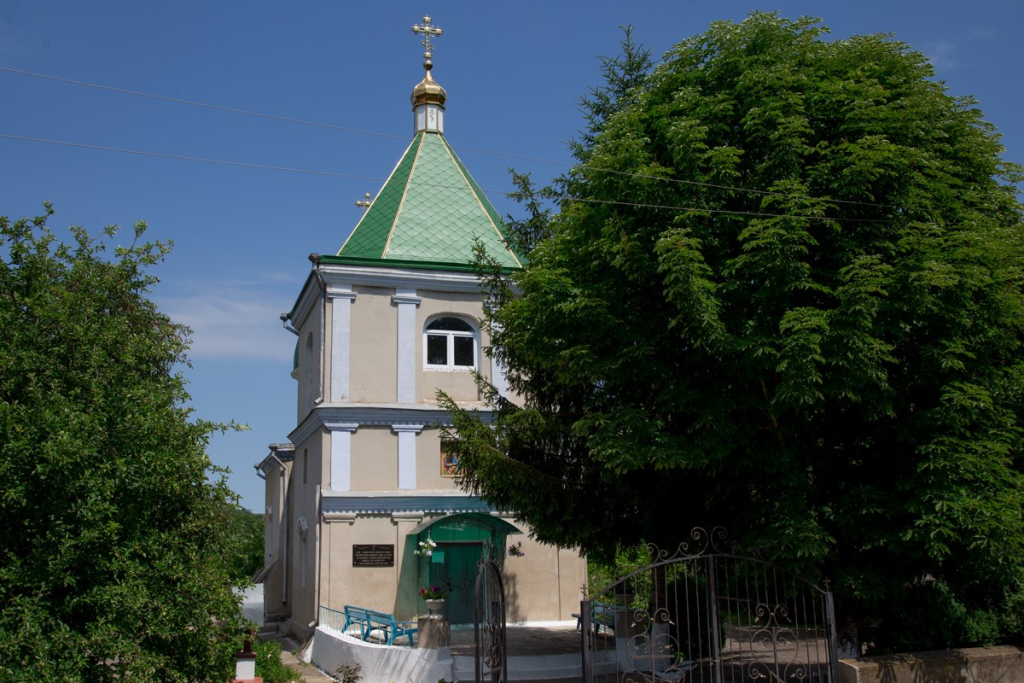
Church of the Holy Trinity, Rashkov Village
Nestled in one of the most authentic and picturesque villages in all of Pridnestrovie, the Church of the Holy Trinity captivates pilgrims and visitors alike with its unusual architectural design and the rich historical events surrounding its founding. Built in 1779, this small and intimate church has earned official recognition as an architectural monument of republican significance, and continues to actively serve the faithful of Rashkov to this day.
What truly sets this church apart is the presence of a remarkable 19th-century icon of the Spas Nerukotvornyi — the Image of Christ Not Made by Human Hands. Believers have long attributed miraculous power to this sacred icon, and it remains one of the most deeply venerated treasures in the entire region, drawing the faithful from far beyond the village itself.
For more information, visitors may contact Archpriest Dimitri Zamor.
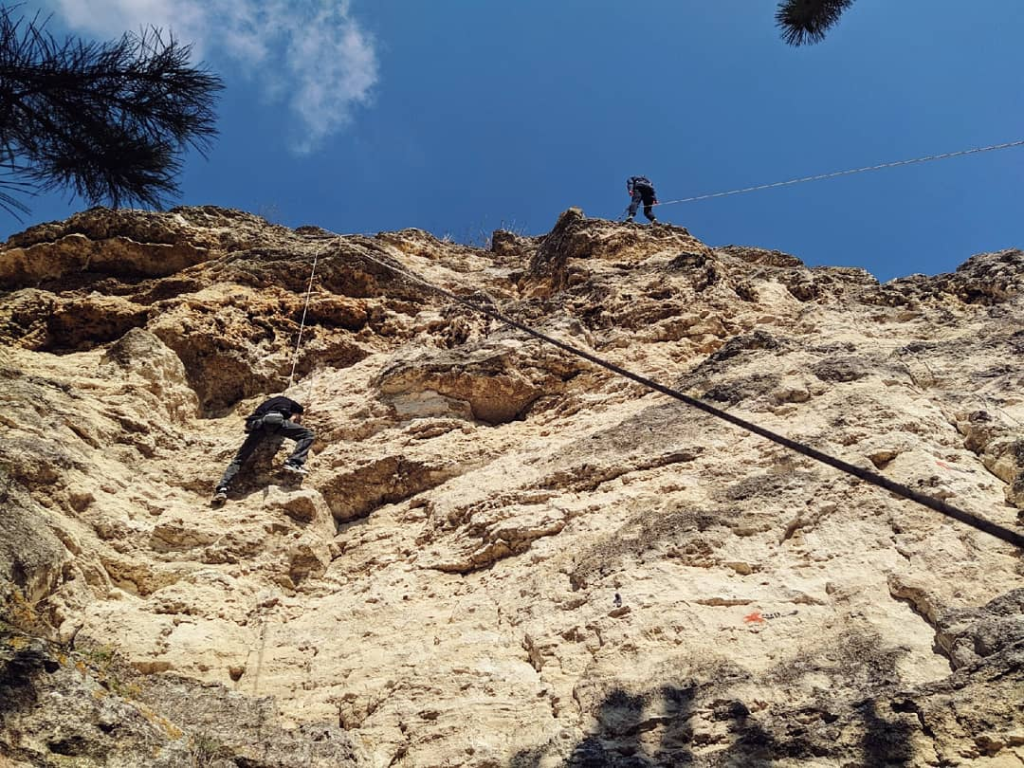
Svinerest
“Svinerest” carries a humorously distinctive name for the rocky summit found in Stroentsy village, though the climbing experience it offers is anything but a joke. The mountain’s structure consists of shell rock formations, making this location one of the finest rock-climbing destinations in all of Pridnestrovie. The steep slope averages approximately 16 meters in height, providing climbers with a substantial vertical challenge.
Dedicated climbing routes have been carefully established on one section of the rock face, with these routes properly cleared to prevent loose rocks and debris from creating hazards for climbers, while safety points have been installed throughout to ensure responsible and secure climbing practice. This combination of natural geological features and thoughtful safety preparation has made Svinerest a popular destination for both experienced climbers and those seeking their first introduction to the sport within the dramatic landscape of the Stroentsy hillside.
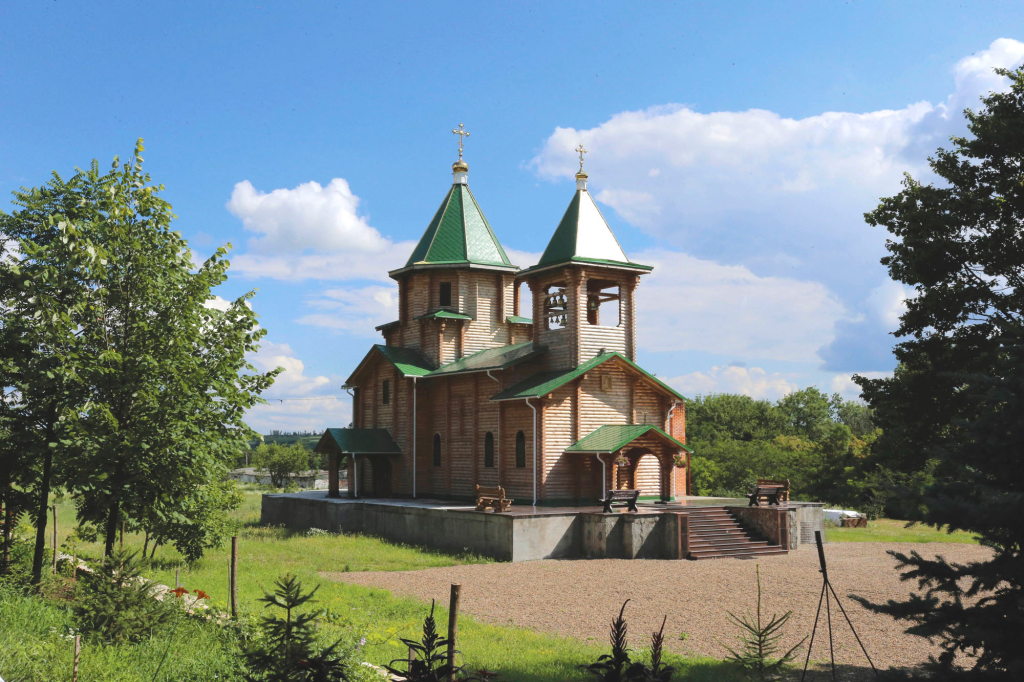
Monastery of John the Precursor, Kalagur Area
On December 31, 2003, the Holy Synod of the Russian Orthodox Church gave its blessing for the opening of a monastery dedicated to St. John the Prophet, Precursor and Baptist, in the Kalagur area of Rybnitsa district. The monastery found its home in the former buildings of the pioneer camp “Era,” nestled near Stroentsy village in one of the most breathtakingly picturesque corners of Pridnestrovie — set deep in the forest, high on a mountain overlooking the Dniester River.
In the summer of 2010, construction began on a Cathedral Church dedicated to the Nativity of John the Baptist, though work on this ambitious project was later halted. The monastery’s architectural story took an unexpected turn in May 2016, when the decision was made to build a wooden church honoring Sophia, the Wisdom of God — a project that would become the only example of wooden church architecture anywhere in Pridnestrovie. Construction began on August 2, 2016, and the completed church now features a beautiful oak iconostasis along with bells in its belfry.
In 2012, with the blessing of Right Reverend Bishop Savva, a chapel was constructed on the monastery grounds specifically to house one of its most revered treasures — the miraculous icon of the Mother of God known as “The Seeking of the Lost,” which continues to draw pilgrims seeking its blessing to this day.
For more information, visitors may contact Archimandrite Zosima (Grzybowski).

Tower of the Winds
Perched dramatically atop a steep rock overlooking Stroentsy, the Tower of the Winds stands as a striking 19th-century architectural monument and one of the most recognizable landmarks in the village. Built in the late 1800s, the tower was raised in memory of Peter Christianovich Wittgenstein — the celebrated Russian military commander and hero of the Patriotic War of 1812, whose legacy shaped the very landscape of this corner of the Dniester valley.
Before the 1917 revolution, the tower’s interior housed a bronze bust of the commander himself, while four cast-iron plates adorned its sides, each inscribed with heartfelt epitaphs honoring Wittgenstein’s memory. One of these moving inscriptions reads:
“Dear father! You have given the foundation for everything here, accept the due recompense for all time.”
Though the bust and some original details have not survived to the present day, the tower itself continues to stand as a powerful symbol of gratitude and remembrance — a tribute carved in stone to a man whose vision and investment transformed Stroentsy into the picturesque village it remains today.
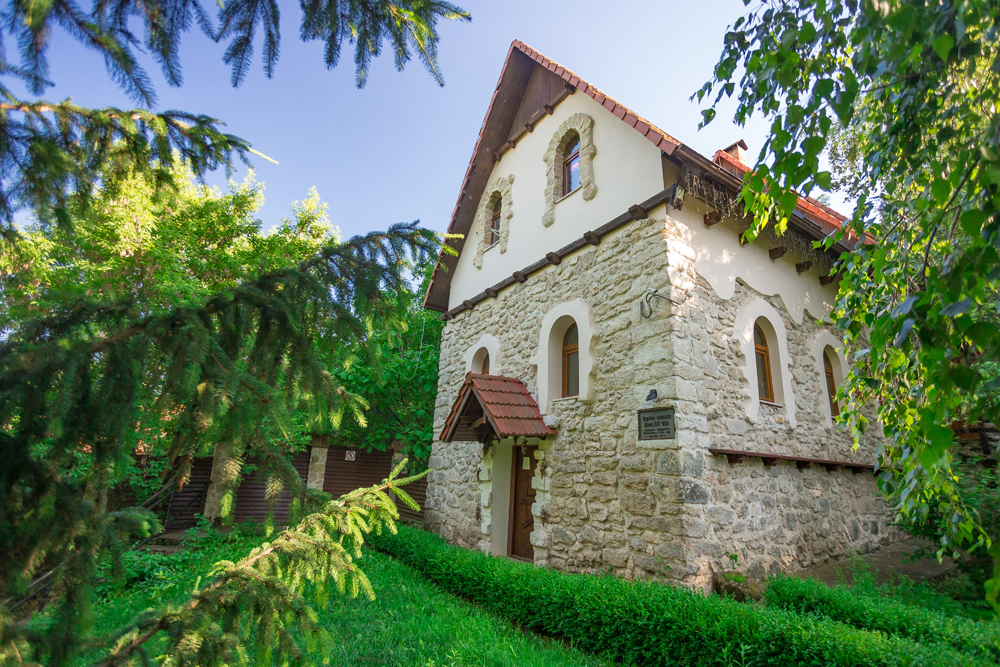
Water Mill
The story of Stroentsy’s iconic water mill begins in 1881, when the construction of the Slobodka–Rybnitsa railway dramatically expanded opportunities for importing machinery from Europe. Seizing on this new connectivity, Transylvanian architect and innovator Georgy Panteleevich Mazgan designed and built a water mill in the village, equipping it with mechanisms imported all the way from Zurich, Switzerland — a remarkable feat of engineering ambition for its time and place.
The mill underwent restoration in 1982, after which the building served for a time as a museum of bread. More recently, this 19th-century structure has been lovingly restored once again, this time at the expense of M.V. Orlov, ensuring its preservation for future generations.
Today, the water mill stands as one of the most beloved attractions not only in Stroentsy but across the entire northern region of Pridnestrovie. The picturesque natural surroundings blend seamlessly with thoughtful landscape design throughout the grounds, creating a setting of genuine charm. Within its historic walls, visitors will now find both a museum dedicated to the mill’s history and the restaurant and hotel complex “Old Mill” — allowing guests to dine, stay and explore all within this remarkable piece of living heritage.
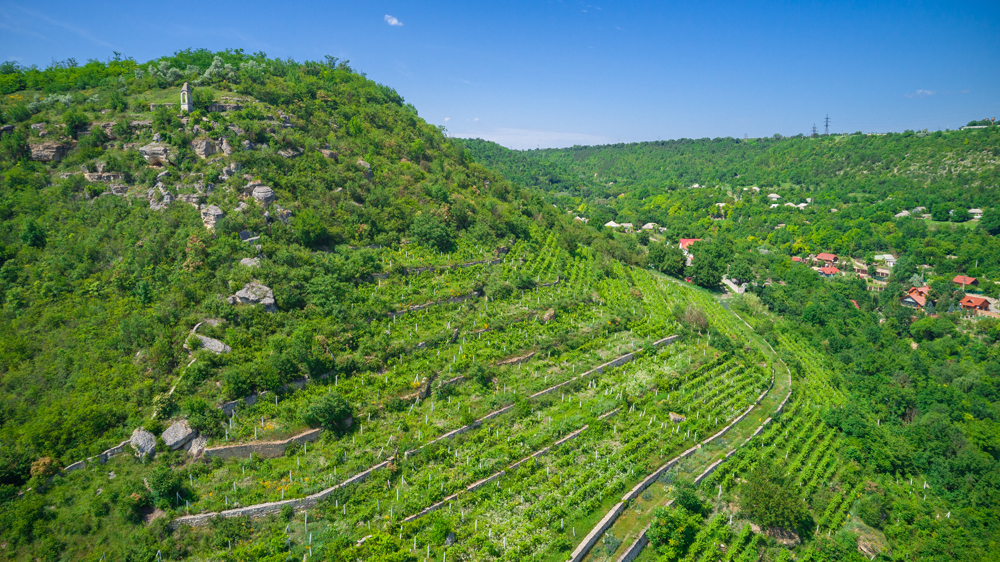
Grape Terraces
The grape terraces of Stroentsy form one of the most significant chapters in the village’s rich history, dating back to the early 19th century when Stroentsy belonged to the estate of Prince Peter Christianovich Wittgenstein. A passionate advocate of viticulture, Wittgenstein cleverly worked with the natural terrain, constructing stone terraces along the eastern slope to create the ideal conditions for cultivating his vines.
On these carefully engineered terraces, he grew both table and technical European grape varieties, even bringing in specialists from Germany to oversee their cultivation and ensure the highest quality. The terraces’ eastern-facing position proved to be a stroke of genius — receiving uninterrupted sunlight from dawn until dusk, this orientation allowed the grapes to ripen beautifully, producing fruit of exceptional quality.
The wines that emerged from these slopes earned a remarkable reputation, regarded as among the finest for preventing and treating gastric ailments — a testament to both the quality of the grapes and the skill of those who tended them. Today, the grape terraces of Stroentsy stand as one of the village’s most treasured historical monuments, a living legacy of Wittgenstein’s vision and the enduring connection between this land and the art of winemaking.
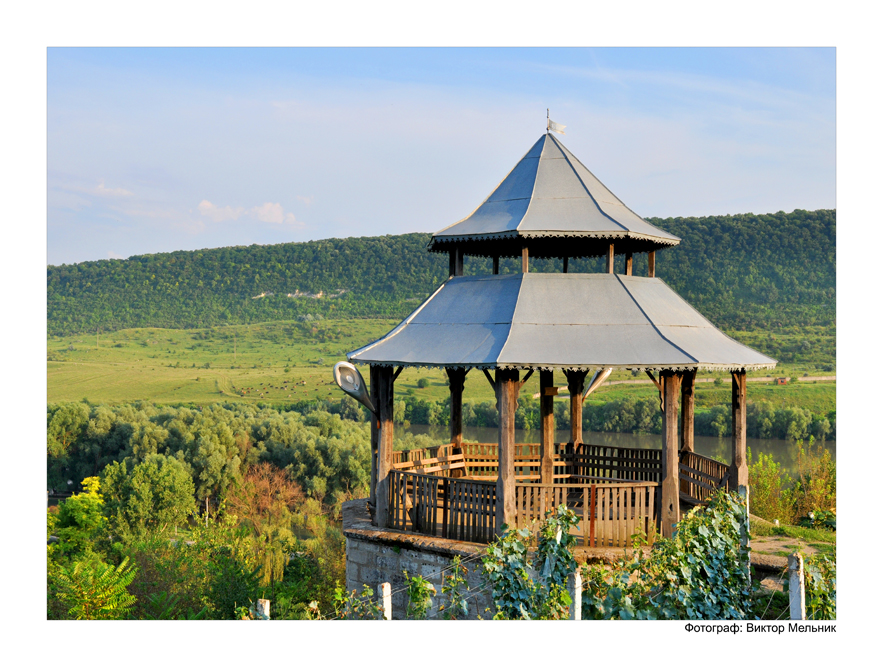
The Countess's Gazebo
Perched on the edge of the slope crowned by the Tower of the Winds, right alongside the famous grape terraces, the Countess’s Gazebo offers one of the most romantic vantage points in all of Stroentsy. This elegant structure was built in 1908 at the order of Maria Petrovna Zinovieva, granddaughter of the legendary Field Marshal Peter Christianovich Wittgenstein — a continuation of her family’s deep connection to this picturesque corner of the Dniester valley.
From the gazebo, visitors are treated to sweeping, scenic views stretching across the Dniester River, the village of Stroentsy below and the rolling countryside beyond. It remains one of the most beloved spots in the village for quiet reflection — a place where the beauty of the landscape and the echoes of aristocratic history come together in perfect harmony.
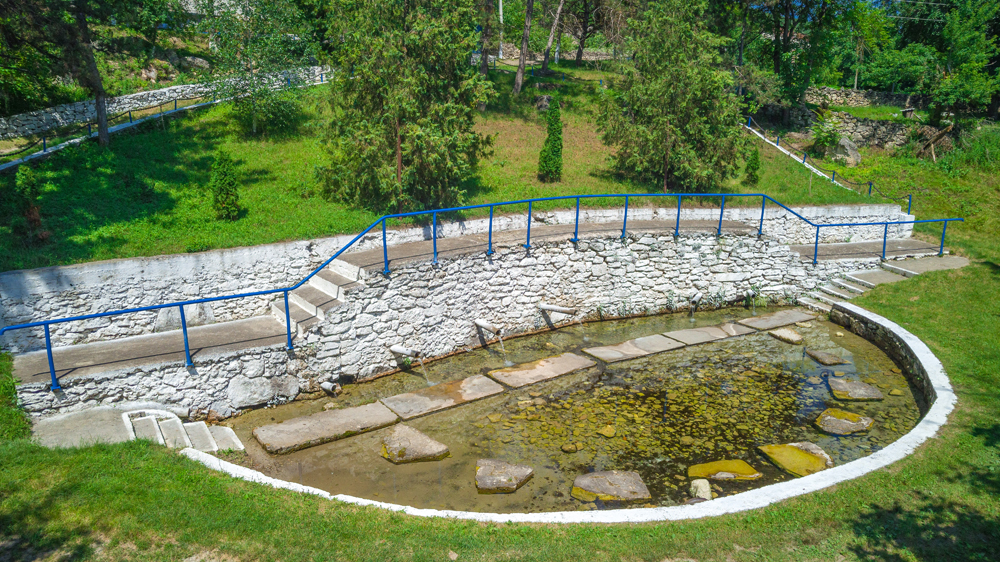
"Teplitsa" Springs System
The “Teplitsa” springs system ranks among the most renowned natural water sources in the entire district, prized for the purity and freshness of its flow. A cherished local tradition has taken root around these springs over the years: every January 19th, on the Orthodox feast of Epiphany, the waters here are ceremonially consecrated — drawing locals and visitors alike to witness and take part in this meaningful religious observance.
Beyond its spiritual significance, the springs continue to serve as a beloved natural landmark in Stroentsy, offering refreshing, crystal-clear water that has drawn villagers and travelers to this spot for generations.
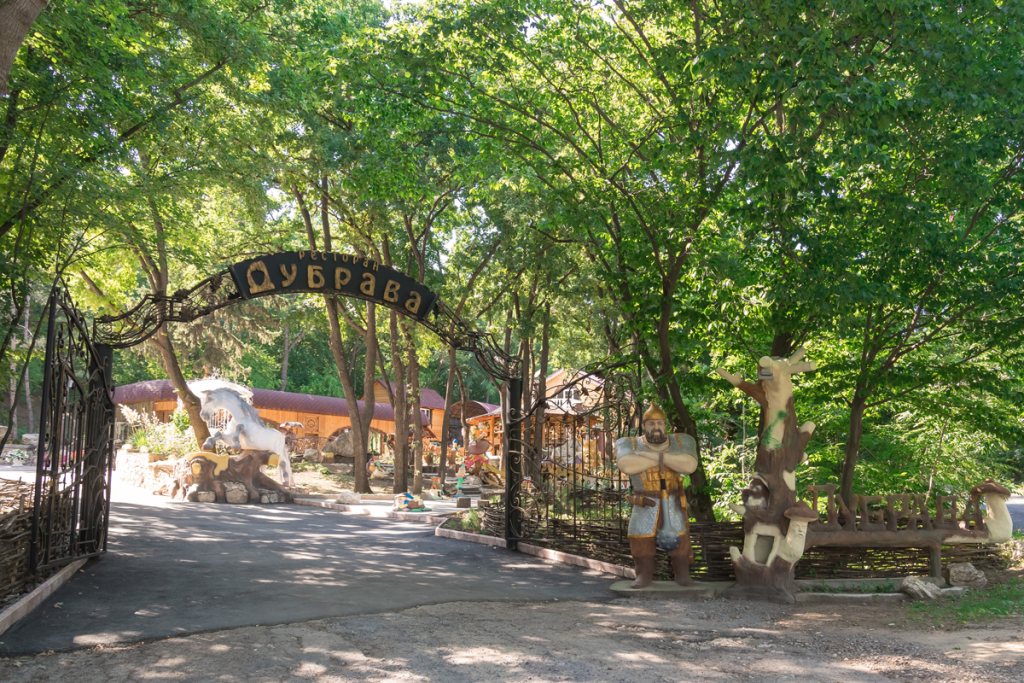
Tourist complex «Dubrava» (Forest)
“Dubrava” restaurant occupies a genuinely picturesque setting within a forest on the outskirts of Belochi village, offering diners a memorable culinary experience surrounded by natural beauty. The restaurant’s defining characteristic lies in its exceptional landscape design and thoughtfully decorated interior, complemented by inviting summer terraces and a charming courtyard that together create an atmosphere as appealing as the food itself.
Guests visiting “Dubrava” are invited to sample the finest examples of Ukrainian, Moldavian and Russian cuisine, with particular attention given to dishes cooked over an open fire, lending these traditional recipes an authentic smoky character and rustic charm that perfectly complements the restaurant’s forest setting. This combination of natural beauty, careful design and genuinely excellent regional cuisine has made “Dubrava” a beloved dining destination for both locals and visitors exploring the Rybnitsa district.

Water Mill in the Village of Belochi
This old water mill stands on the Belochi River, sharing its name with both the village and the waterway that has powered it for generations. Built at the end of the 19th century, the mill has remarkably retained its original appearance throughout the decades, offering visitors an authentic glimpse into traditional milling architecture and engineering.
The mill’s construction showcases genuinely impressive craftsmanship: the entire building was assembled without using a single nail, with all the stones perfectly matched to fit together seamlessly. The wooden floors have successfully held the entire structure together for more than 125 years, a remarkable testament to the skill of the original builders. The mill’s equipment and mechanisms were imported directly from Zurich, reflecting the same pattern seen in other water mills throughout the region during this period, when European engineering expertise was sought to ensure the highest quality milling operations.
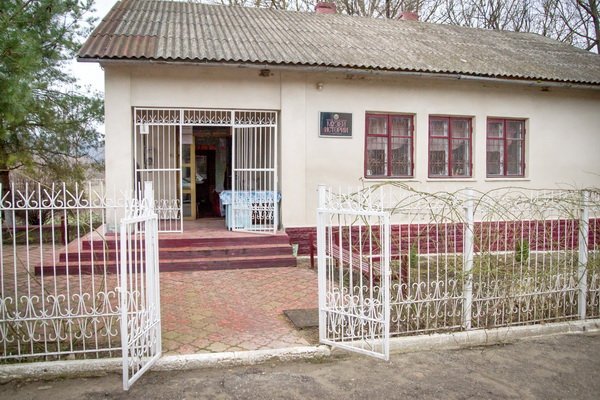
History Museum in the Village of Bolshoi Molokish
This history museum opened in 1979, with its original exposition initially housed within a church building before later being transferred to a different room. The museum’s new exposition received its grand opening in 1997, marking a significant milestone in the institution’s development.
The museum’s comprehensive exposition reflects the village’s complete history, tracing developments from its foundation right through to the present day. The collection includes photographs, documents and personal belongings connected to participants in both the Civil War and Great Patriotic War, alongside materials honoring veterans of collective farm production and recognizing the village’s most accomplished citizens throughout its history.
Today, the museum’s holdings encompass more than 3,000 exhibits, with a significant portion of this extensive collection presented for public viewing — offering visitors a thorough and genuinely informative exploration of Bolshoi Molokish village’s rich historical narrative across multiple generations and political eras.
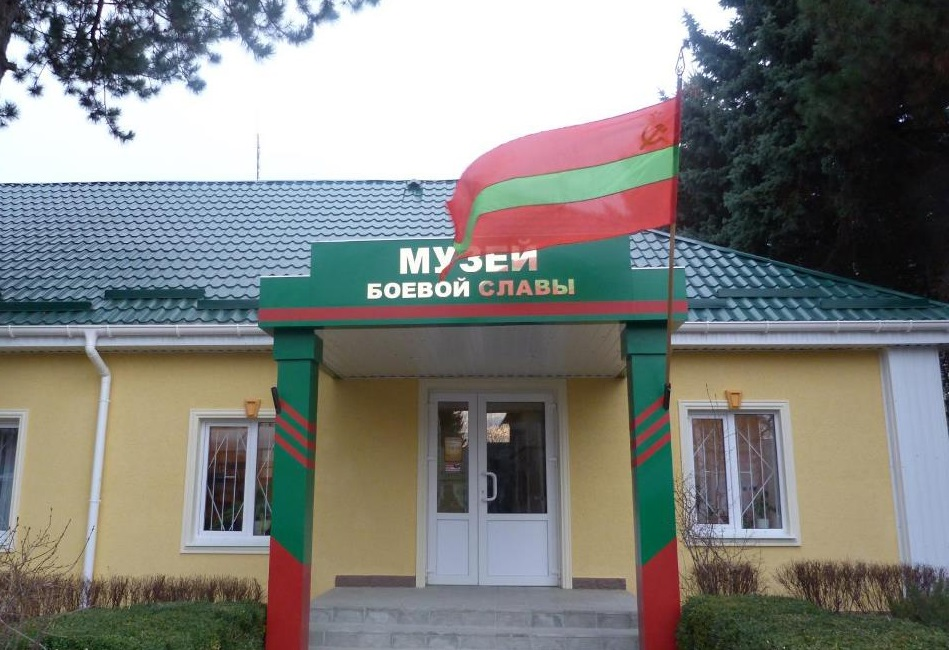
Museum of Military Glory in Rybnitsa
In September 1941, occupation authorities established a prison and concentration camp in Rybnitsa, a facility where arrested party members, Soviet activists and the Jewish population were held captive under brutal conditions. The darkest moment in this site’s history occurred on the night of March 19-20, 1944, when Romanian and German executioners burned 270 Soviet citizens and prisoners of war, among them — according to incomplete records — at least 50 people of Jewish nationality, a horrific act that stands as one of the most devastating crimes committed in the region during the occupation.
The Museum of Military Glory in Rybnitsa opened its doors on May 9, 2010, deliberately timed to coincide with the 65th anniversary of Victory in the Second World War. Significantly, the museum occupies this very historical site where the Nazis once held political prisoners — including partisans and underground resistance workers — transforming a place once associated with imprisonment and atrocity into a space dedicated to remembrance, education and the honoring of those who suffered and resisted during this devastating period of occupation.

Memorial of Military Glory
The Memorial of Military Glory in Rybnitsa was unveiled in 1975, timed to coincide with the momentous 30th anniversary of Victory in the Great Patriotic War. The ceremonial opening carried particular weight: Hero of the Soviet Union V.V. Vakharlovsky had the honor of lighting the eternal flame, while I.A. Yablonsky — himself a participant in the liberation of Rybnitsa from German fascist forces — cut the ribbon to officially open the complex.
Designed by architect V.P. Mednek, the memorial complex was constructed entirely with funds earned by local district workers during voluntary Saturday work days — a powerful testament to the community’s collective commitment to honoring its wartime heroes. The memorial follows an axial design, with its central composition formed by two paired reinforced concrete pylons rising 24 meters into the sky, symbolically representing hands joined together in prayer.
In total, the Memorial of Military Glory features 17 stones, each dedicated to the memory of those who fell during the Great Patriotic War — a solemn and enduring tribute to the sacrifice made by so many in defense of this land.

Emperia (Impiere) Recreation Center
The “Emperia” Recreation Center occupies a genuinely picturesque setting in Kamenka, situated directly on the banks of the Dniester River. Guests staying here can enjoy comfortable accommodation in charming wooden chalets, offering a cozy retreat amid this scenic riverside location.
The complex provides comprehensive recreational facilities, including a sports ground, billiard and sports halls, and a children’s playground, ensuring guests of all ages and interests can find suitable activities to enjoy during their stay. For those drawn to outdoor water-based activities, the center offers kayaking, catamarans, scooters and boats, providing ample opportunity to explore and enjoy the Dniester directly from this convenient base.
Throughout the recreation center, free Wi-Fi access is available, ensuring guests can stay connected even while enjoying this relaxing riverside getaway in the northern reaches of Pridnestrovie.
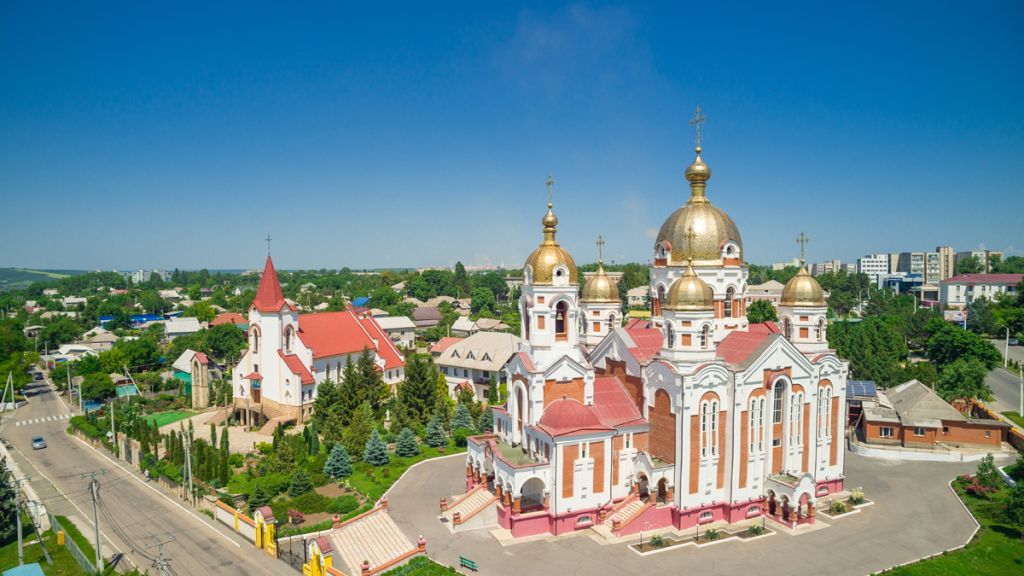
Cathedral of the Archangel Michael
The Cathedral of the Archangel Michael occupies a prominent position in the central part of Rybnitsa, its sheer size making an immediate and lasting impression on all who encounter it. The cathedral’s architecture clearly showcases a multi-tiered structure, embodying the finest traditions of Russian temple design throughout its impressive form. On the third tier of the bell tower hangs the large “Blagovest” bell, surrounded by ten additional bells, the smallest of which weighs 4 kg — together creating a magnificent peal that resonates throughout the city. Recognized today as both an architectural monument and one of Rybnitsa’s defining “visiting cards,” the cathedral stands as a source of considerable civic pride.
The site’s religious history stretches back to 1802, when donations from local parishioners funded the construction of a new stone church dedicated to the Archangel Michael, replacing an older, dilapidated 17th-century adobe church that had served the community previously. Eighty years later, a bell tower was added to the temple, and four years after that, the interior received its first painted decoration. By 1896, the church had been further enriched with a new iconostasis and altar, both beautifully painted — yet despite these improvements, services at the temple ceased entirely in the early 1930s amid the broader anti-religious campaigns of the Soviet era.
The path toward the cathedral’s modern revival began in November 1990, when the foundation stone for a new cathedral dedicated to Archangel Michael was laid in Rybnitsa, designed by architect P.G. Yablonsky. The first service took place on November 21, 1991, held in the lower church dedicated to the Monk Markellus, abbot of the monastery of the Unsleeping Ones — though full construction of the grand cathedral itself would not be completed until 2006, marking the culmination of a project spanning nearly two decades.
For more information, visitors may contact Archimandrite Victor.

Moldova Steel Works
Moldova Steel Works stands as one of the most famous and recognizable symbols of the Pridnestrovian state, deeply connected to the identity of Rybnitsa, the republic’s northern capital. Founded in 1985, this enterprise serves as the undisputed flagship of heavy industry and metallurgy throughout Pridnestrovie, while also functioning as one of the most important taxpayers contributing to the republic’s economy.
Over the course of its 34-year history (at the time of this account), the plant has undergone repeated modernization, continuously replenishing its facilities with cutting-edge equipment to maintain competitiveness in the global steel market. Today, MMZ employs more than 2,000 people, with the enterprise being entirely state-owned, serving as the principal employer and economic mainstay supporting the entire city of Rybnitsa.
The plant utilizes an UHP (Ultra-High Power) electric arc furnace capable of producing approximately one million tons of melted steel annually — an impressive production capacity that places this facility among significant regional steel producers. The enterprise’s long product rolling mills generate a variety of essential products including angles, wire rod, fittings and channel bars, serving construction and industrial needs across multiple markets.
Through absolute compliance with rigorous production technology standards, the plant has successfully obtained the necessary international quality control certificates required for global trade. This achievement has enabled MMZ to export its products to markets across the Middle East, Latin America, the European Union, the CIS and Southeast Asia — demonstrating the plant’s genuine international competitiveness and the trust that international buyers place in products manufactured at this Rybnitsa facility.
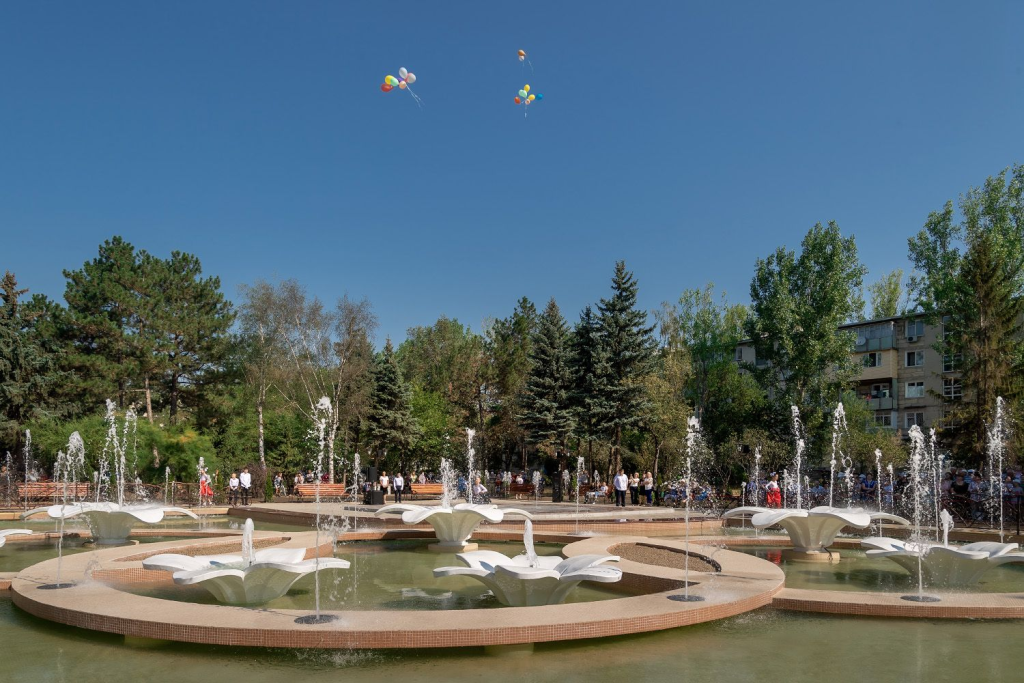
Central Park
The city park of Rybnitsa traces its founding back to 1967, and to this day, the park remains an important symbol of civic identity for the city’s residents. Its most recognizable feature, the central fountain, underwent a complete transformation following major reconstruction work in 2019, giving this beloved landmark an entirely new appearance for contemporary visitors.
A memorial sign titled “History, Frozen in Stone” was unveiled within the park on November 21, 1998, with its installation timed to mark the 370th anniversary of Rybnitsa. The monument’s creation involved artists A.M. Pokusinsky and I.P. Moseychuk, who worked together to bring this meaningful tribute to life. The stone that would eventually become this monument was transported from the Moldovan town of Rezina, situated directly opposite Rybnitsa on the other bank of the Dniester River. Originally, this stone weighed an impressive 15 tons, though approximately 5 tons were ground away during the carving process to achieve the monument’s final form.
The memorial sign takes the distinctive shape of an open book, symbolically representing history itself and the city’s documented past. Additional elements depicting a pen and inkwell represent knowledge and life respectively, conveying the meaningful message that the chronicle of the city’s history continues to be written, with new chapters constantly being added to Rybnitsa’s ongoing story.