Skip to content
Caponier Gun, Model of 1902

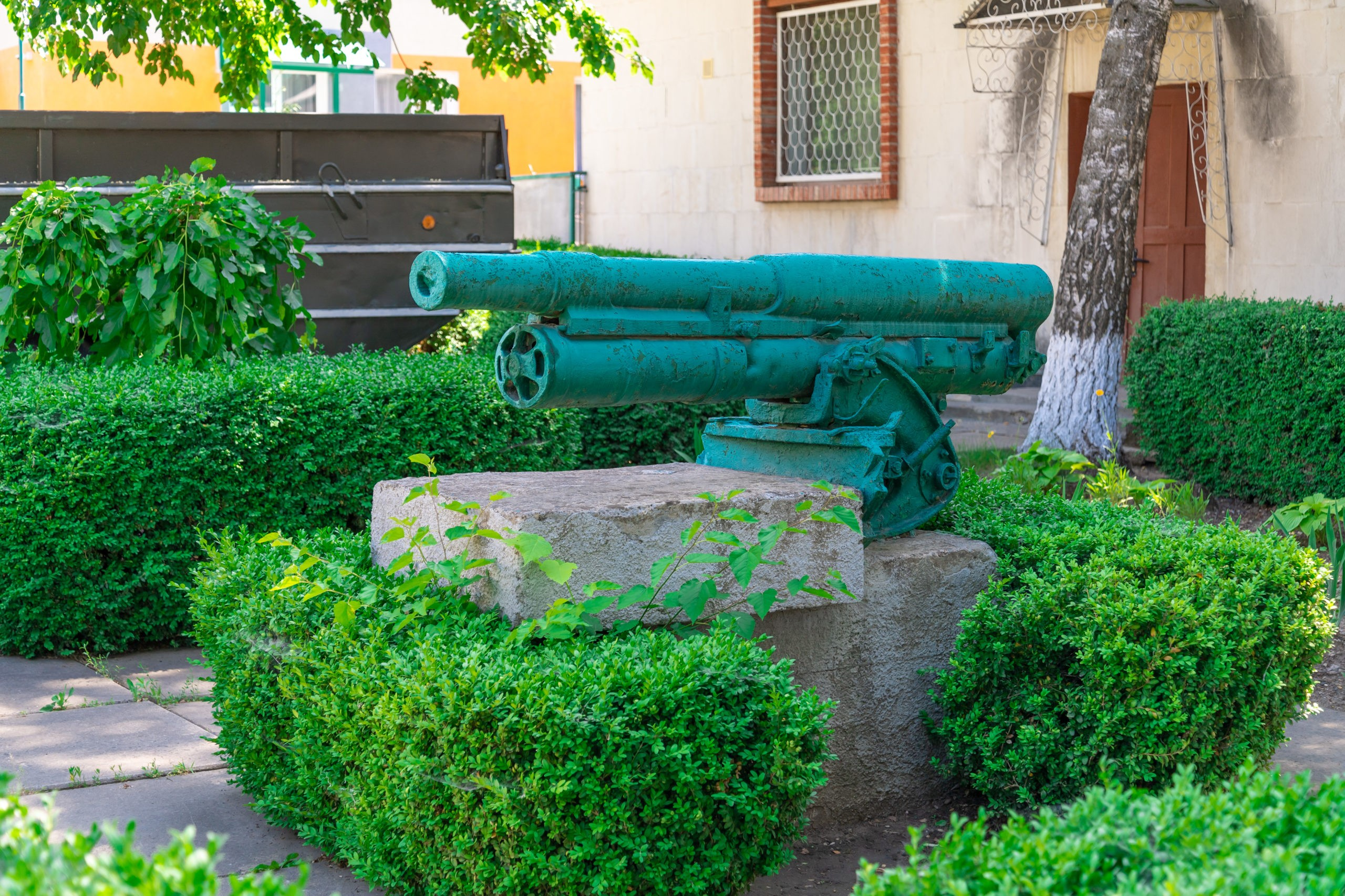
Standing near the building of the Rybnitsa Museum of Local History, this remarkable artillery piece is rightly considered a unique exhibit of its kind — a survivor against extraordinary odds.
The 76.2-mm field quick-firing gun, popularly known as the “three-inch,” was developed in 1902 by designers L.A. Bishlyak, K.M. Sokolovsky and K.I. Lipnitsky at the Putilovsky plant, and was regarded as one of the finest artillery pieces of its era. Of the approximately 2,500 such guns available to the Red Army by 1928, these weapons were the most common type — yet the particular example in Rybnitsa had almost no chance of surviving to the present day.
What makes this gun genuinely exceptional is its mounting: it was placed on a stationary caponier carriage of the 1932 model, specifically designed for installation in fixed fortifications rather than mobile battlefield use. This carriage made quick movement or evacuation essentially impossible — and as a consequence, such guns were almost always detonated by retreating forces to prevent capture, or destroyed by the enemy when positions fell. The gun in Rybnitsa was installed in a pillbox near the railway bridge over the Dniester River, and apparently survived by what can only be described as a miracle, making it an extraordinarily rare physical remnant of this particular chapter of Soviet defensive military engineering.
Location: Near the Rybnitsa Museum of Local History, Rybnitsa