

Four day bike trip
Four-Day Cycling Adventure: Tiraspol Loop
Saddle up for the most ambitious cycling adventure in Pridnestrovie — a four-day, 250 km bike trip that takes you from the heart of Tiraspol through suspension bridges, ancient monasteries, cascading waterfalls, a fake house where movies were filmed, a rock monastery, a hydro power plant, mysterious mine tunnels and centuries-old oak forests before returning to where it all began. Suitable for beginners and experienced cyclists alike, this route promises four days of magnificent views, unforgettable discoveries and the pure freedom of the open road.
⚠️ Please ride safely and follow Chapter 24 of the PMR Traffic Rules governing cyclists on public roads.
Day 1 — Tiraspol to the Tomashlyk Valley: Fields, Bridges and a Waterfall Picnic
The adventure departs from Suvorov Square (Pokrovskaya Str., center, Tiraspol) — the iconic heart of the Pridnestrovian capital and the perfect launchpad for four days of cycling freedom. From here the route heads west through open fields and rolling hills toward the Grigoriopol district.
After 70 km of scenic countryside riding, the first major stop arrives at the Suspension Bridge near Mocharovka village (Grigoriopol district) — a thrilling crossing that rewards the first long stretch of the journey with a genuinely exhilarating experience. The views from the swaying bridge across the valley below are worth every kilometer pedaled to reach it.
Just 5.4 km further, the route arrives at one of the most surprising stops on the entire trip — the Church of the Kazan Icon of the Mother of God in Karmanovo village (65 Oktyabrskaya Str., Grigoriopol district). This is the church that does not look like a church at all — its unusual architecture stopping cyclists in their tracks and prompting the question that has no easy answer: what exactly were they thinking when they built it? Whatever the answer, it is one of the most memorable and photographable stops of the four days.
The first day concludes 23 km further at the spectacular Three-Tier Waterfall in the Tomashlyk Valley (Grigoriopol district) — the ideal spot to end a long day in the saddle. Pull out the picnic, listen to the water cascading down three natural levels and let the valley work its magic. This is exactly the kind of place that makes a four-day bike trip worth every effort.
Day 2 — Rogi Village: The Fake House, the Rock Monastery and a Night at the Waterfall
After 33 km of riding from the Tomashlyk Valley, the second day arrives in the remarkable village of Rogi (Dubossary district) — a destination that packs two extraordinary sights into a very short distance.
The Fake House in Rogi village is one of the most talked-about curiosities in all of Pridnestrovie — a structure whose trompe-l’oeil facade creates a disorienting and delightful optical illusion that has famously served as a filming location for the movie “Bird’s Milk.” Stand in front of it, walk around it, photograph it from every angle — it never quite makes sense, and that is precisely the point.
Just 7.4 km further, the Rock Monastery in Rogi village provides a profound and atmospheric counterpoint to the Fake House — an ancient place of worship carved directly into the living rock, its dim interior spaces and sacred carvings speaking of centuries of faith practiced in extraordinary circumstances. Few stops on the entire route carry as much raw spiritual and historical power as this one.
The second night is spent near the waterfall in Rogi village — cooking over a fire, listening to the water and sleeping close to one of the most scenic natural spots in the Dubossary district.
Day 3 — Dubossary to Bychok: Zoo, Dam and Underground Tunnels
The third day opens with a 9.7 km ride to the Dubossary Zoo (26 Energetikov Str., Dubossary) — a charming and family-friendly institution that offers a welcome change of pace after two days of natural and historical discovery. Home to a wonderful variety of animals including the celebrated brown bear Masha, the zoo is a genuinely enjoyable morning stop before the day’s more dramatic highlights.
Just 2.6 km away, the mighty Dubossary Hydro Power Plant (34 Naberezhnaya Str., Dubossary) presents one of the most visually impressive industrial stops on the entire route — the first hydroelectric power station on the Dniester River, its massive Soviet-era structure rising from the riverbank with a drama that demands the camera come out.
After a long 68 km ride that takes the route south and west into the Grigoriopol district, the Tunnels of Mines near Bychok village (Grigoriopol district) offer one of the trip’s most intriguing and atmospheric discoveries. These mysterious underground passages carved into the earth create a striking contrast with the open countryside and riverside scenery of the day’s riding — a subterranean adventure that gives day three its most memorable and unexpected moment.
Day 4 — Kitskany: Bridgehead, Ancient Oaks and the Road Home
The fourth and final day opens 33 km from Bychok at the legendary Kitskany Bridgehead (Kitskany village, Slobodzeya district) — one of the most historically and visually powerful stops on the entire four-day journey. The panoramic views from the bridgehead across the Dniester valley are magnificent, and the military heritage of this site adds a depth of historical meaning that transforms a scenic viewpoint into something genuinely moving.
Just 5.8 km further, the route makes its final natural stop at the Centuries-Old Oaks near Kitskany village (Slobodzeya district) — an ancient grove of magnificent trees whose age and scale put the entire four-day journey in perspective. Standing beneath canopies that have watched over this landscape for centuries, the 250 km covered since Suvorov Square feel simultaneously monumental and intimate — a human-scale journey through a landscape that operates on an entirely different timescale.
The four-day adventure concludes with a final 10 km ride back to Suvorov Square in Tiraspol — where the journey began and where it ends, the city looking exactly the same as when you left it four days ago, while you, having crossed fields and forests, waterfalls and tunnels, ancient monasteries and Soviet dams, are something quite different entirely.
Suvorov Square
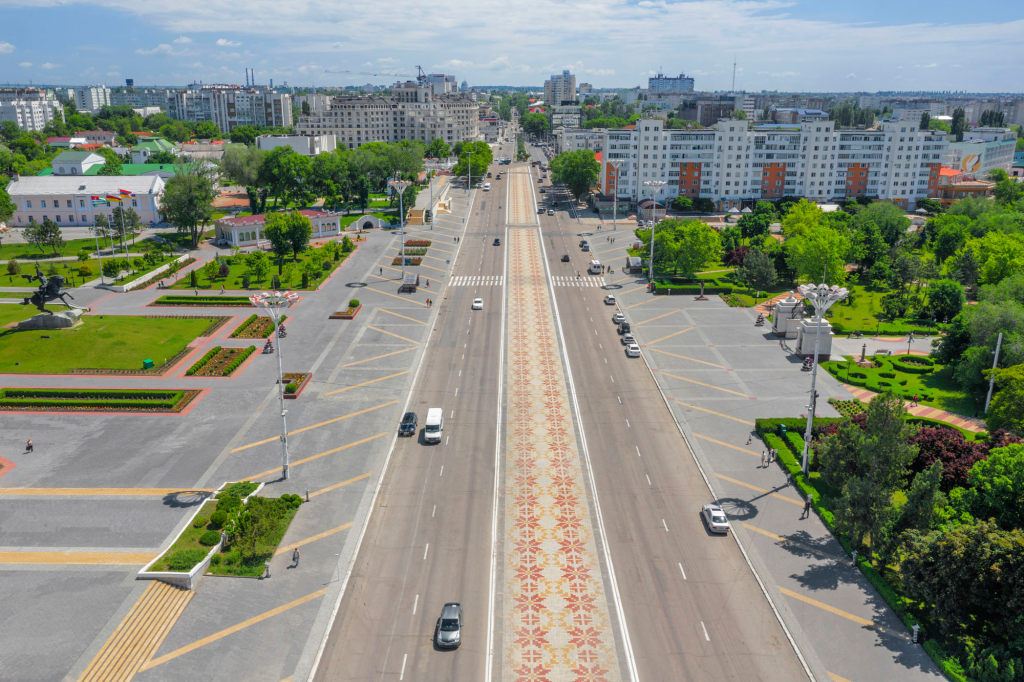
Suvorov Square rightfully claims its place as the heart of both Tiraspol and the entire Pridnestrovian republic. The square is surrounded by an impressive cluster of significant landmarks — the monument to A.V. Suvorov himself, De Wollant Square, the riverside embankment, the Memorial of Glory, the Palace of Children and Youth Creativity, a cinema and the building of the Supreme Council of the PMR, all converging to make this one of the most important civic spaces in the entire country.
During the Soviet era, the square bore a different name — Stalin’s Constitution Square — and it wasn’t until the 1970s, following large-scale restructuring of the town center, that the square took on the appearance familiar to visitors today. Suvorov Square continues to play a central ceremonial role in national life, hosting military parades on the country’s most important holidays, including Victory Day commemorating the Great Patriotic War and Republic Day itself.
Looking ahead, the entire area surrounding the square is set for further transformation, with plans to develop the surrounding space into Catherine Park — a project whose construction was slated for completion in 2020, promising to add even more green space and grandeur to this already iconic central gathering place.

Suspension Bridge Near Mocharovka Village
In the vicinity of Mocharovka village stands a charming suspension bridge that offers far more than simply a picturesque photo opportunity, though it certainly delivers on that front as well. The bridge’s surroundings have been thoughtfully equipped for genuine relaxation and comfort, featuring a table, benches, a barbecue area and large swings positioned right at the bridge’s entrance.
This combination of scenic beauty and practical recreational amenities makes the suspension bridge an ideal stopping point for travelers exploring the Grigoriopol district, whether arriving by car, bicycle or on foot. Visitors can capture memorable photographs while crossing or admiring the suspension bridge itself, then settle in for a relaxing meal or simply enjoy the swings and surrounding natural beauty before continuing their journey through this scenic corner of Pridnestrovie.

Church of the Kazan Icon of the Mother of God, Karmanovo Village
Until 1946, the village now known as Karmanovo existed as the German colony of Neudorf, and the church building at the heart of this story was originally constructed by German settlers in 1854 to serve as a place of Lutheran prayer. The building’s purpose shifted dramatically during the Soviet era, when it was repurposed first as a community center and later transformed into a House of Young Naturalists.
By the late 20th century, the ethnic German population of Karmanovo began emigrating in significant numbers to Germany for permanent resettlement, eventually leaving no Lutheran-practicing residents in the village at all. With the original congregation gone, the church building was ultimately transferred to the local Orthodox community of Karmanovo. Beginning in 1997, parishioners worked steadily to restore the building to good condition, and on August 27, 2006, their efforts culminated in a formal consecration ceremony led by Bishop Justinian of Tiraspol and Dubossary, dedicating the church in honor of the Kazan Icon of the Mother of God.
This remarkable transformation — from Lutheran prayer house to Soviet community center to Orthodox church — reflects the broader story of cultural and religious change that has shaped so many villages across Pridnestrovie over the past two centuries.
Three-Tier Waterfall in the Tomashlyk Valley
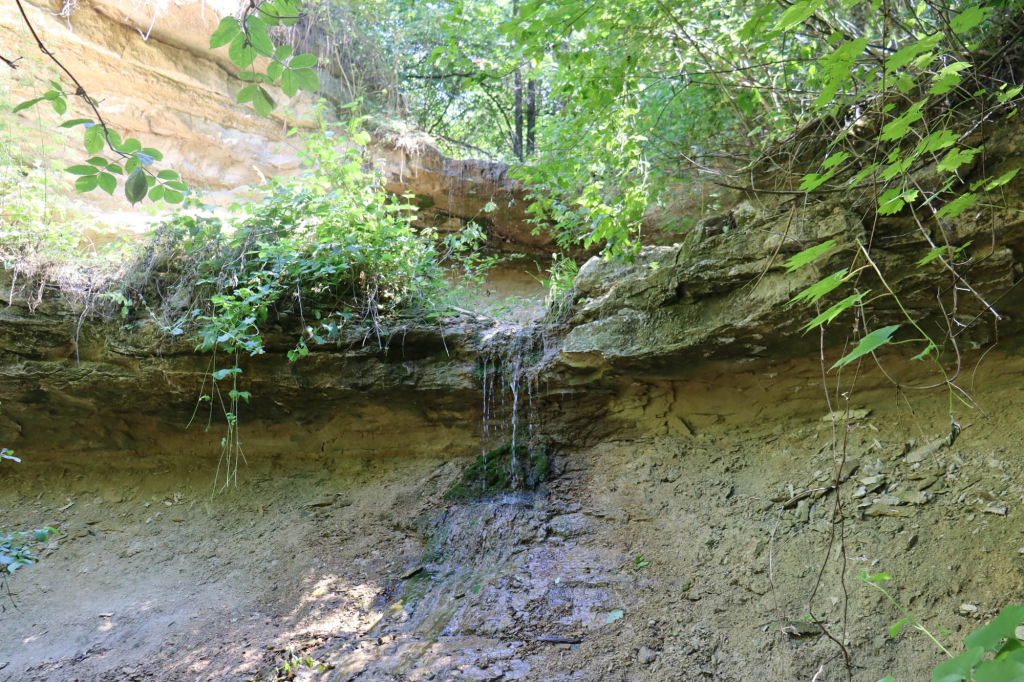
Nestled within the lush green Tomashlyk valley just outside Grigoriopol, this striking 10-meter waterfall stands as one of the area’s most treasured natural jewels. The story behind its formation is as fascinating as the waterfall itself: roughly 200 years ago, this valley was home to the flowing waters of the Chernaya River. Over the centuries, the river gradually dried up completely — yet in an unexpected twist of nature, this very process gave rise to the rare and beautiful three-tier waterfall that visitors can now observe and admire, transforming what was once a riverbed into one of the most picturesque natural attractions in the entire Grigoriopol district.
Fake House in Rogi Village
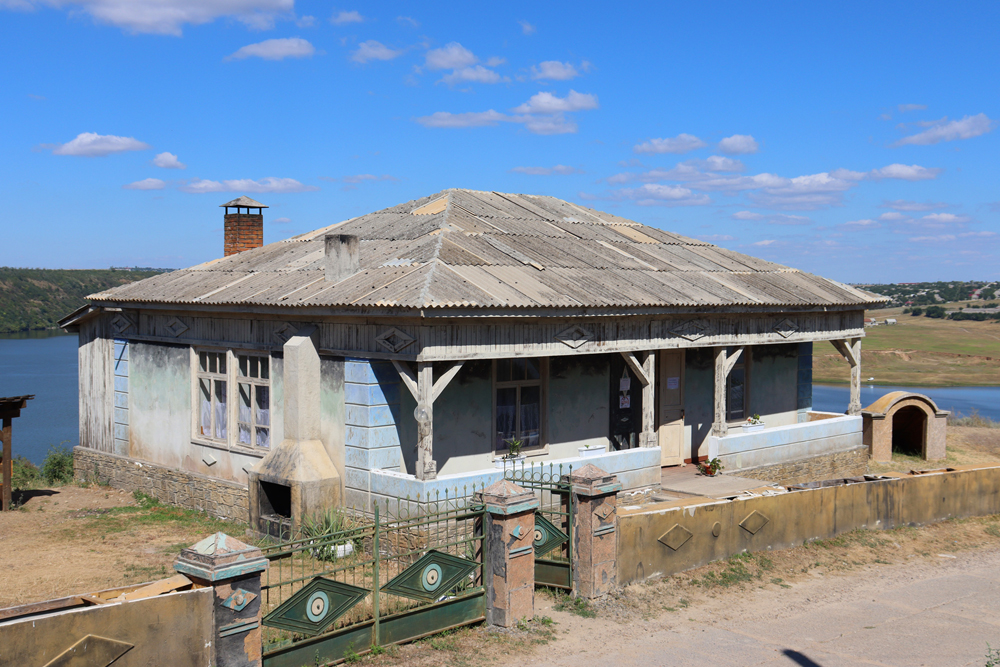
In 2019, the village of Rogi gained an unexpected and delightful new landmark — a fake house, purpose-built for the filming of the feature film “Bird’s Milk.” This authorial film drama was produced by the Russian film studio “Koktebel,” brought to life by young Tiraspol-born director Yevgeny Maryan.
Once filming wrapped, the cinematographers made a generous gesture, leaving the house behind as a gift to the residents of Rogi, complete with a collection of folk art and household items used during production. Employees of the local House of Culture have since enriched this unexpected gift even further, adding more fascinating exhibits crafted by local folk artisans. Today, the building welcomes visitors through guided excursions, transforming what began as a temporary film set into a genuine and growing celebration of local folk heritage.

Sights
This celebrated monastery in Dubossary district, located near the village of Rogi, holds the distinction of being the oldest Orthodox monastery in all of Pridnestrovie. While scientists have yet to pinpoint the exact date of its construction, the prevailing belief places its origins at no later than the 16th century, making it a site of genuine historical depth and mystery.
What makes this monastery truly extraordinary is its construction — carved directly into the living rock itself. Within this stone sanctuary, builders created a church alongside three monk’s cells, forming a complete monastic dwelling hewn entirely from the cliffside. Modern research has revealed that the monastery was dedicated to Saint Simeon Stylites, adding another layer of historical context to this remarkable site.
Inside, visitors can discover an array of mysterious symbols, inscriptions and drawings carved into both the walls and ceiling — markings that have proven invaluable to researchers, helping establish the approximate founding date of this ancient sanctuary. The monastery’s elevated position means that the journey to reach it rewards visitors with picturesque and genuinely memorable views across the Dniester and the surrounding landscape. Adding to the area’s natural charm, a small waterfall can be found not far from the monastery itself, completing this atmospheric and historically rich destination.

Dubossary Zoo
This private zoo opened its doors in Dubossary in 2010, established with the support of local authorities by founder and owner P. Bilsky. Since then, the zoo has welcomed animals from across Russia, Ukraine and Moldova, building a diverse and ever-growing collection of fauna for visitors to enjoy.
The majority of the zoo’s residents belong to the “feathered world” — pheasants, guineafowls, swans, peacocks, colorful parrots and even striking black ostriches make their home here, with the ostriches enjoying their own special enclosure where they can freely roam in the open air. Beyond the birds, the zoo houses a wide variety of mammals as well, including foxes, roe deer, ferrets, Vietnamese pigs and charming ponies, among others.
Perhaps the zoo’s most beloved resident is a brown she-bear, who arrived here as a gift from the Kishinev tent circus and has since become something of a local celebrity. In total, the zoological park features approximately 40 enclosures, thoughtfully designed to house this remarkable diversity of animals. During colder months, all heat-loving species are carefully relocated to specially heated pavilions, ensuring their comfort and wellbeing throughout the changing seasons.

Dubossary Hydro Power Plant
In 1955, a milestone moment arrived for the entire region with the launch of the first hydroelectric power plant on the Dniester River — the Dubossary Hydro Power Plant. Since that historic commissioning, the plant has continuously supplied electricity throughout Pridnestrovie, serving as a cornerstone of the region’s energy infrastructure for nearly seven decades.
The construction of this ambitious project drew support from enterprises across the entire Soviet Union, with the five-year building process engaging thousands of workers representing more than thirty different nationalities — a genuinely massive collaborative effort. The completion and commissioning of Dubossary HPP marked the beginning of centralized power supply in this particular region of the USSR, fundamentally transforming the area’s access to electricity.
The plant’s excellence didn’t go unnoticed: in 1977, Dubossary HPP was showcased at the Exhibition of Achievements of the USSR’s National Economy, celebrated specifically for its high degree of reliability and automation. In recognition of this achievement, the HPP team earned a place in the Republican Book of Honor of Leading Enterprises, while the plant itself was included on the prestigious All-Union Tourist Route — a mark of its significance not just as an industrial facility, but as a destination worth visiting.
The plant’s dam adjoins the Dubossary reservoir, widely regarded as one of the most picturesque locations in the entire district. This rich natural beauty, combined with the engineering marvel of the dam itself, has continued to attract visitors and tourists drawn to the striking views and tranquil waters that have come to define this corner of the Dniester valley.
Tunnels of Mines, Bychok Village
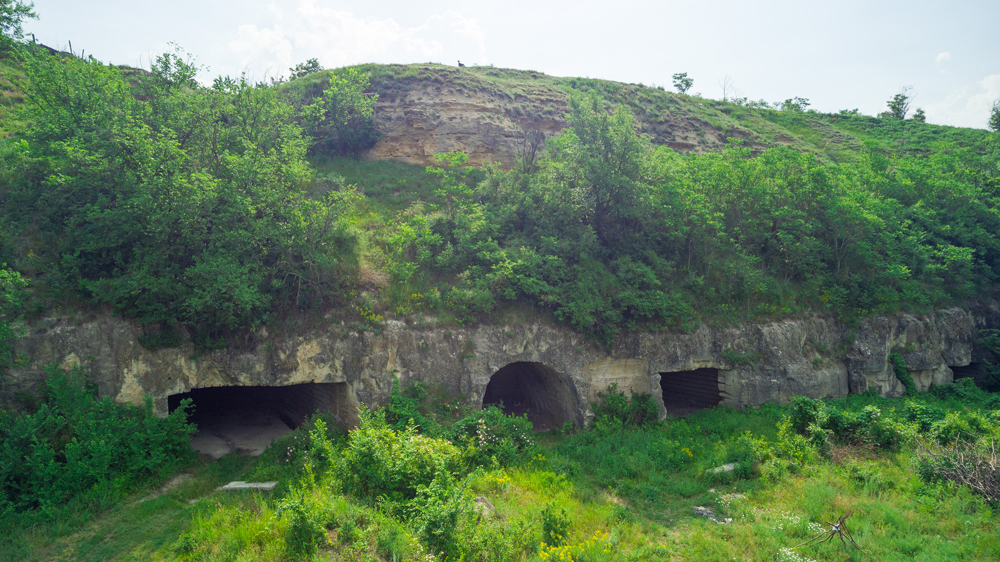
Bychok village occupies a striking position along the banks of the Dniester River, perched atop an impressive rocky hill that hides a valuable secret beneath its surface — extensive deposits of limestone, one of the republic’s most important natural resources. Until the 1990s, large-scale mining operations were active in Bychok, extracting high-quality white ashlar limestone widely prized for use in construction throughout the region.
What remains today is something far more extraordinary than an abandoned industrial site: the mine galleries have formed the largest complex of artificial catacombs anywhere in the region, creating a labyrinthine underground world that has become particularly fascinating to adventure seekers and thrill enthusiasts from Pridnestrovie and beyond. These atmospheric tunnels, carved by generations of miners, now offer a uniquely captivating destination for those drawn to explore the hidden, subterranean side of the Dniester valley’s landscape.
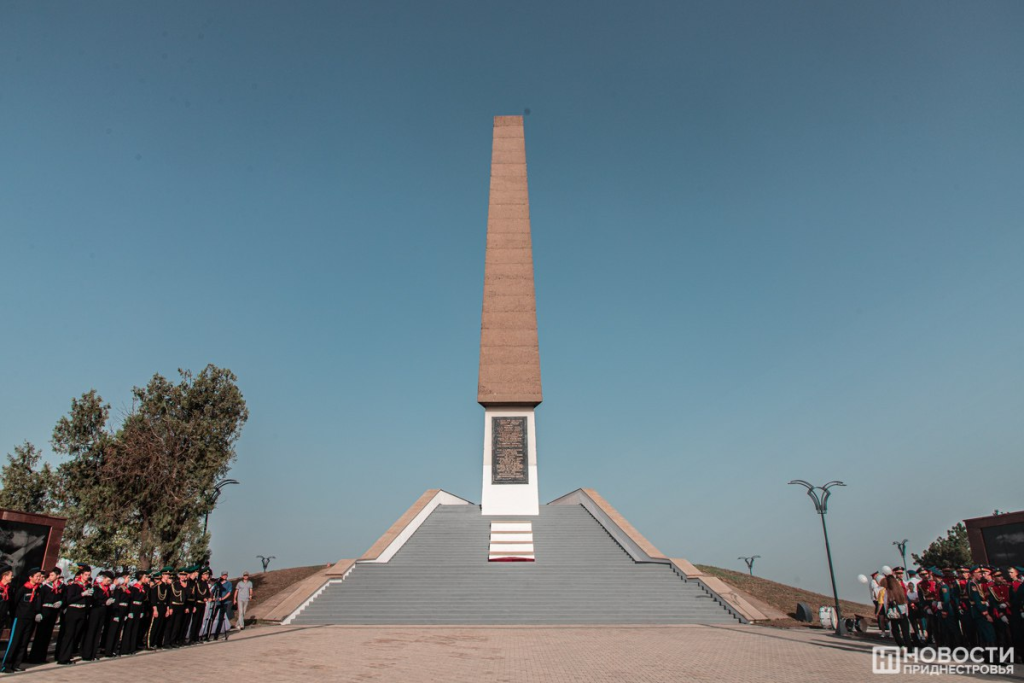
Kitskany Bridgehead
The Kitskany bridgehead occupies a place of profound strategic significance in the history of the Great Patriotic War, having served as a crucial Soviet army position that played a decisive role in the success of the Iasi-Chisinau Operation. Troops of the 3rd Ukrainian Front seized the bridgehead during the Odessa operation of 1944, establishing a foothold stretching up to 18 kilometers along the front line, with a depth ranging from 6 to 10 kilometers.
The battle for control of this critical position raged for more than four months, during which Soviet forces transformed the bridgehead into a formidable engineering achievement. By the start of the major offensive, this relatively confined space had been equipped to hold five infantry corps, a mechanized corps, 51 artillery regiments and as many as 30 specialized units — an extraordinary concentration of military force.
On August 20, 1944, the troops of the 3rd Ukrainian Front launched their main offensive strike from the Kitskany bridgehead, an assault that laid the groundwork for the complete defeat of German-Romanian forces across Soviet Moldavia. The resulting Iasi-Chisinau operation ultimately led to the full liberation of what is now the entire territory of Pridnestrovie.
To honor and preserve the memory of the soldiers’ heroism for future generations, a towering 35-meter memorial known as the “Obelisk of Glory” — designed in the striking form of a concrete bayonet by architect S.M. Shoichet — was unveiled at the highest point of the former bridgehead on May 9, 1972. The monument remains an enduringly popular destination today, with its observation deck offering visitors spectacular panoramic views across the surrounding landscape.

Centuries-Old Oaks Near the Village of Kitskany
Near Kitskany village stands the oldest documented tree anywhere in Pridnestrovie’s territory — a magnificent Pedunculate Oak exceeding 315 years of age. This remarkable specimen boasts a trunk diameter of 135 cm measured at chest height, while standing at a relatively modest height of just 19 meters, characteristic of the way ancient oaks often grow wider and more gnarled rather than continuing to reach upward over centuries of growth.
Alongside this venerable old-timer, two additional oaks grow nearby, possibly sharing a similarly ancient age with their famous neighbor. The most visually spectacular among these companion trees features a distinctive forked trunk and an impressively spreading crown, growing prominently right in the middle of an open field — creating a striking silhouette against the sky that has likely drawn the attention of countless generations of villagers and visitors who have passed by this remarkable natural landmark over the centuries of its long life.
Suvorov Square
Suvorov Square rightfully claims its place as the heart of both Tiraspol and the entire Pridnestrovian republic. The square is surrounded by an impressive cluster of significant landmarks — the monument to A.V. Suvorov himself, De Wollant Square, the riverside embankment, the Memorial of Glory, the Palace of Children and Youth Creativity, a cinema and the building of the Supreme Council of the PMR, all converging to make this one of the most important civic spaces in the entire country.
During the Soviet era, the square bore a different name — Stalin’s Constitution Square — and it wasn’t until the 1970s, following large-scale restructuring of the town center, that the square took on the appearance familiar to visitors today. Suvorov Square continues to play a central ceremonial role in national life, hosting military parades on the country’s most important holidays, including Victory Day commemorating the Great Patriotic War and Republic Day itself.
Looking ahead, the entire area surrounding the square is set for further transformation, with plans to develop the surrounding space into Catherine Park — a project whose construction was slated for completion in 2020, promising to add even more green space and grandeur to this already iconic central gathering place.