

Orthodox shrines of the north of Pridnestrovie
Two-Day Pilgrimage: Orthodox Shrines of Northern Pridnestrovie
Leave the noise of everyday life behind and embark on a soul-enriching journey through the Orthodox shrines of northern Pridnestrovie — a 140 km, two-day pilgrimage across 11 magnificent churches and monasteries nestled in the picturesque landscapes of Kamenka and Rybnitsa districts. Here, ancient icons and sacred relics, centuries-old stone walls and the deep silence of rural sanctuaries offer something rare and precious: true spiritual harmony.
Day 1 — Kamenka District: Ancient Temples and Sacred Icons
The first day opens with a visit to the Church of the Ascension of the Lord in Katerinovka village (Gorky Str., Kamenka district) — a beautifully maintained rural church that sets a reverent and contemplative tone for the journey ahead.
After 4.3 km, the route arrives at one of the most historically significant stops on the entire pilgrimage — the Church of the Holy Trinity in Rashkov village (Kamenka district). As one of the oldest churches in Pridnestrovie, this sacred place houses the venerated icon of the Spas Nerukotvornyi — the image of Christ Not Made by Human Hands — to which believers have long attributed miraculous powers. A place of profound spiritual significance that rewards quiet prayer and reflection.
Continuing 9.8 km, the Church of the Nativity of the Blessed Virgin Mary in Podoymitsa village (Frunze Str., Kamenka district) offers a moment of gentle devotion — a modest yet deeply beautiful rural church dedicated to one of the most beloved feasts of the Orthodox calendar.
After 6.6 km, the route reaches Kamenka and the Church of the Assumption of the Blessed Virgin Mary (Kirov Str.) — an elegant and well-preserved town church that serves as the spiritual heart of the district’s main settlement.
The first day concludes 14 km further at the Church of the Holy Great Martyr Demetrius of Thessalonica in Ocnitsa village (Shevchenko Str., Kamenka district) — a church dedicated to one of the most beloved warrior saints of the Orthodox world, whose intercession is sought by the faithful across the Slavic lands. The evening is best spent in Kamenka, where comfortable accommodation awaits after a day of rich spiritual experience.
Day 2 — From Kamenka to Rybnitsa: Monasteries, Ancient Parishes and a Cathedral Finale
The second day begins with a 26 km drive to Khrustovaya village and the Church of the Archangel Michael (Kamenka district) — a parish whose history stretches back nearly three centuries. Standing within its walls, one can feel the weight of generations of prayer and devotion that have accumulated here across the ages.
After 31 km, the route arrives at the Church of Saint Paraskeva of the Balkans in Valia-Adynka village (37 Zarechnaya Str., Kamenka district) — a church dedicated to the beloved saint of healing and protection, deeply venerated across the Orthodox Balkans and Slavic world alike.
Just 23 km further, the journey reaches one of its most awe-inspiring destinations — the Monastery of John the Precursor in the Kalagur area near Stroentsy village (Rybnitsa district). Set within a breathtaking natural tract of cliffs and forest beside the Dniester River, this monastery offers an experience of extraordinary spiritual and natural beauty. The silence here is profound; the sense of being apart from the world, complete.
After 8.5 km, the route visits the Church of St. Michael the Archangel in Stroentsy village (Polevaya Str., Rybnitsa district) — a parish whose construction began in 1829, making it one of the most historically distinguished churches on the second day’s route. Its graceful architecture speaks of the devout communities that have gathered within its walls across nearly two centuries.
Continuing 22 km toward Rybnitsa, a final stop at the Church of St. Paraskeva in Zozulyany village (Rybnitsa district) adds one more moment of quiet devotion before the route reaches its grand conclusion.
The pilgrimage culminates 20 km further at the magnificent Cathedral of the Archangel Michael (77 Kirova Str., Rybnitsa) — one of the finest and most celebrated Orthodox landmarks in northern Pridnestrovie. A fitting and uplifting finale to two days of spiritual discovery, this grand cathedral closes the journey on a note of beauty, faith and profound gratitude.
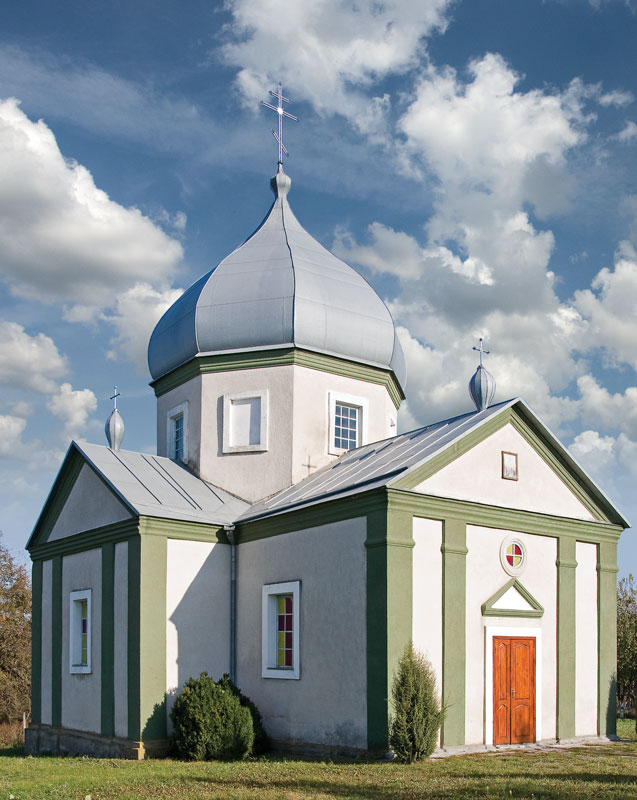
Church of the Ascension of the Lord, Village Katerinovka
The Church of the Ascension of the Lord in Katerinovka village owes its existence to the diligence and dedication of local landowner Major General Alexei Tutolmin, who oversaw its construction in 1825. The church’s history, however, has not been without interruption — nearly a century later, during the 1930s, the building was forced to close, reflecting the broader anti-religious campaigns of the Soviet era. It reopened in 1941, continuing to serve the local faithful until 1960, when its doors closed once more.
Today, this historic building holds official recognition as an architectural monument of republican significance, acknowledging both its aesthetic and historical value to the broader heritage of Pridnestrovie. For more information about the church, visitors may contact Priest Alexander Ryabov.
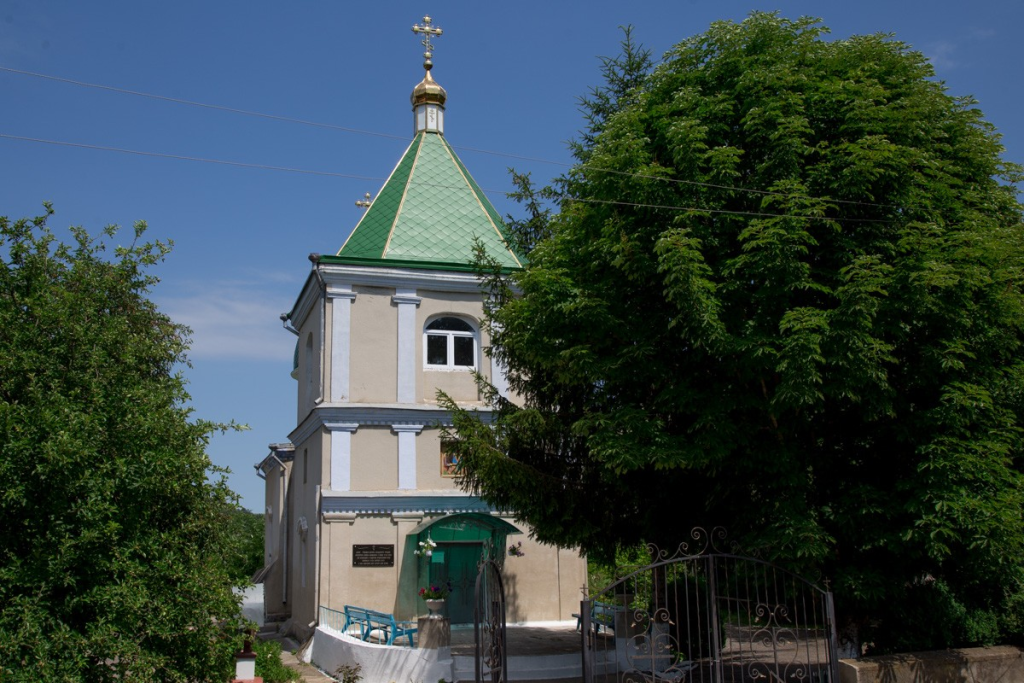
Church of the Holy Trinity, Rashkov Village
Nestled in one of the most authentic and picturesque villages in all of Pridnestrovie, the Church of the Holy Trinity captivates pilgrims and visitors alike with its unusual architectural design and the rich historical events surrounding its founding. Built in 1779, this small and intimate church has earned official recognition as an architectural monument of republican significance, and continues to actively serve the faithful of Rashkov to this day.
What truly sets this church apart is the presence of a remarkable 19th-century icon of the Spas Nerukotvornyi — the Image of Christ Not Made by Human Hands. Believers have long attributed miraculous power to this sacred icon, and it remains one of the most deeply venerated treasures in the entire region, drawing the faithful from far beyond the village itself.
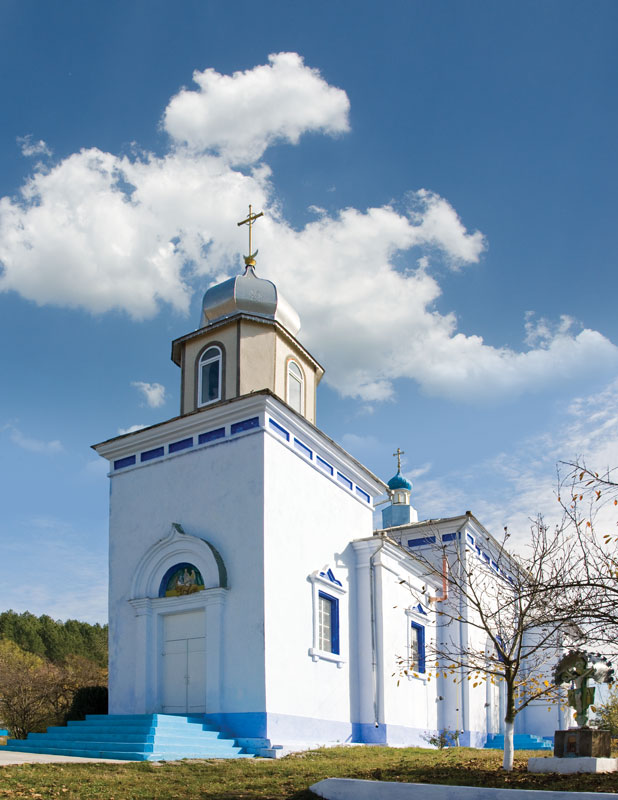
Church of the Nativity of the Blessed Virgin Mary, Podoymitsa Village
The Church of the Nativity of the Blessed Virgin Mary in Podoymitsa village was constructed between 1867 and 1870, funded entirely through the contributions of local parishioners who came together to build this important spiritual center for their community. Like so many religious buildings of the era, the church was forced to close during the 1930s amid the Soviet anti-religious campaigns, but reopened in 1941, marking a return to active worship after years of enforced silence.
What makes this particular church genuinely remarkable is its distinction as one of only two Orthodox churches in all of Pridnestrovie that remained open continuously even during the renewed period of religious persecution under Khrushchev — a period that saw many other churches throughout the Soviet Union forced to close once again. This rare continuity of worship gives the church a special significance within the broader religious history of the region, representing an unbroken thread of faith that survived even the most challenging periods of state opposition to organized religion.
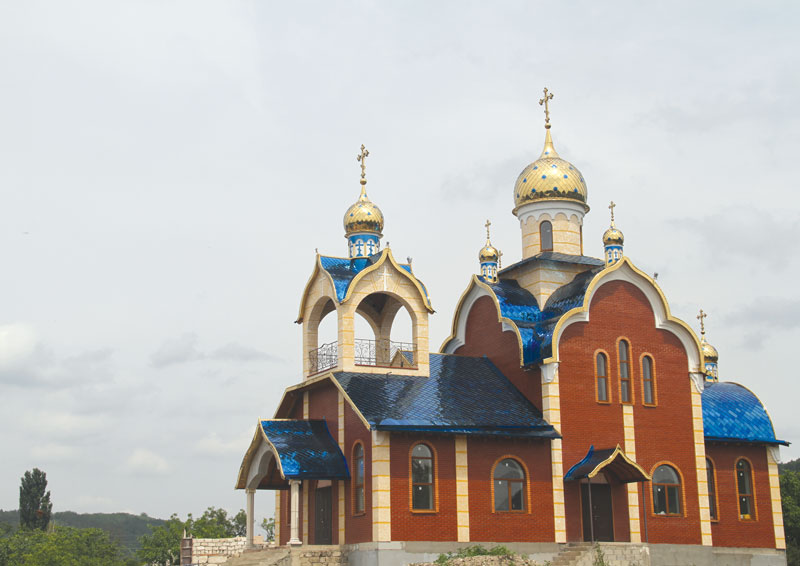
Church of the Assumption of the Blessed Virgin Mary
The Church of the Assumption of the Blessed Virgin Mary in the city of Kamenka represents one of the more recently constructed religious buildings in the region, having been built between 2015 and 2018. This relatively new addition to Kamenka’s spiritual landscape reflects the continuing vitality and growth of Orthodox faith in the district, demonstrating that the tradition of church construction remains very much alive in contemporary Pridnestrovie, even as the region honors its centuries-old religious heritage elsewhere.

Demetrius-Solunskaya Church in Ocnitsa Village
The Demetrius-Solunskaya Church in the village of Ocnitsa was built in 1808, and today holds official recognition as an architectural monument of republican significance. Dedicated to St. Demetrius of Thessalonica, one of Orthodoxy’s most revered warrior saints, this historic church has stood as a spiritual anchor for the Ocnitsa community for more than two centuries, its enduring presence reflecting the deep and lasting roots of Orthodox faith throughout the Kamenka district.
For more information, visitors may contact Priest Valentin Salko.

Church of the Archangel Michael, Village Khrustovaya
The history of the Church of the Archangel Michael in Khrustovaya village spans nearly three centuries, though the current building — a striking one-domed structure in the Byzantine style — was completed by 1853. Originally, the temple stood atop a mountain, dramatically surrounded by massive blocks of sandstone, towering impressively over the entire village below.
Like so many religious buildings throughout the region, the church suffered closure during the Soviet era. For a considerable period, the building served as a village club, before later being repurposed as a warehouse for pesticides — a stark departure from its original sacred purpose. Restoration efforts finally began in 1991, marking a turning point in the building’s fortunes; the church was consecrated that same year in honor of the Archangel Michael, beginning a gradual process of revival that would unfold over the following decades.
Step by step, the roof, domes and iconostasis were carefully installed, beautiful painting gradually appeared throughout the temple’s interior, and additional structures including cells, a refectory and dining rooms were constructed to support the growing religious community. The restoration reached a significant milestone in 2011-2012, when a substantial bell tower, standing 37 meters high and crowned with a cross, was erected beside the temple — ultimately housing 10 bells that now ring out across the village, completing this remarkable three-decade journey from abandonment back to full spiritual life.
For more information, visitors may contact Archpriest Eugene Kamenshchik.

Church of Saint Paraskeva of the Balkans, Valia-Adynka Village
Tucked away in the northern reaches of Pridnestrovie, within one of the region’s most authentically preserved villages, stands a truly special and distinctive church, framed beautifully by rolling hills and a picturesque forest backdrop. This church sets itself apart through its unique architectural approach and refreshing simplicity of execution — a design philosophy that prioritizes harmony with the natural surroundings over elaborate ornamentation.
The temple’s walls are lined with natural stone, lending the building a grounded, earthy character that connects it directly to the landscape from which its materials were drawn. Adding a striking visual touch, both the bell tower’s roof and the central dome have been painted a vivid blue, creating a beautiful sense of unity between the church and the sky above, as well as the natural surroundings that frame this remarkable place of worship. The overall effect is a church that feels less like an imposition upon the landscape and more like an organic extension of it — a fitting spiritual home within one of Pridnestrovie’s most picturesque rural settings.
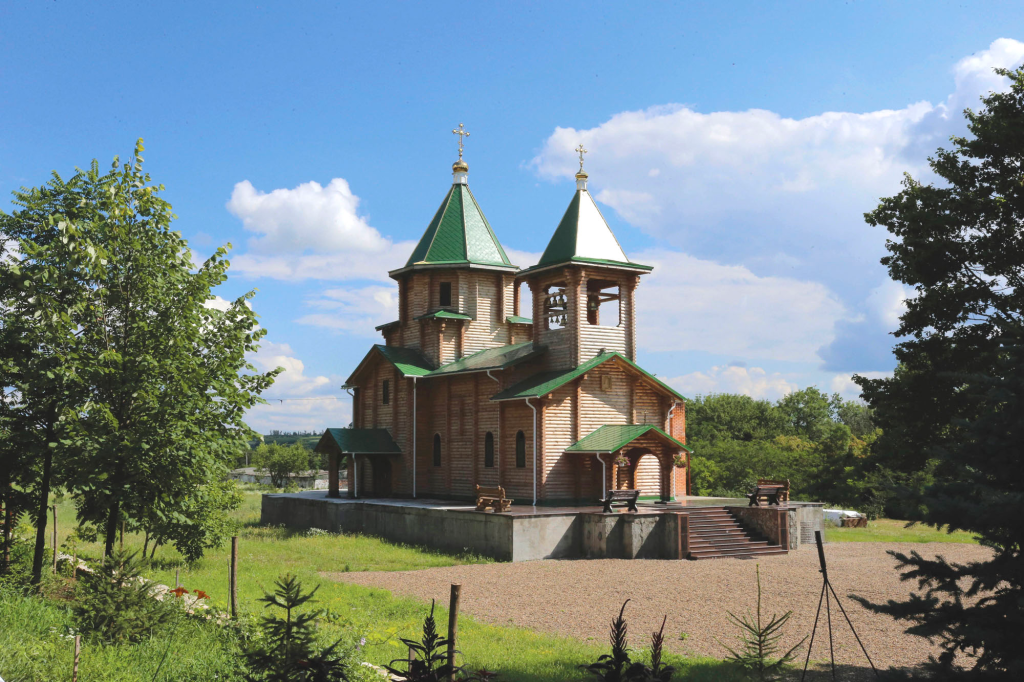
Monastery of John the Precursor, Kalagur Area
On December 31, 2003, the Holy Synod of the Russian Orthodox Church gave its blessing for the opening of a monastery dedicated to St. John the Prophet, Precursor and Baptist, in the Kalagur area of Rybnitsa district. The monastery found its home in the former buildings of the pioneer camp “Era,” nestled near Stroentsy village in one of the most breathtakingly picturesque corners of Pridnestrovie — set deep in the forest, high on a mountain overlooking the Dniester River.
In the summer of 2010, construction began on a Cathedral Church dedicated to the Nativity of John the Baptist, though work on this ambitious project was later halted. The monastery’s architectural story took an unexpected turn in May 2016, when the decision was made to build a wooden church honoring Sophia, the Wisdom of God — a project that would become the only example of wooden church architecture anywhere in Pridnestrovie. Construction began on August 2, 2016, and the completed church now features a beautiful oak iconostasis along with bells in its belfry.
In 2012, with the blessing of Right Reverend Bishop Savva, a chapel was constructed on the monastery grounds specifically to house one of its most revered treasures — the miraculous icon of the Mother of God known as “The Seeking of the Lost,” which continues to draw pilgrims seeking its blessing to this day.
For more information, visitors may contact Archimandrite Zosima (Grzybowski).

Church of St. Michael the Archangel, Stroentsy Village
The story of the Church of St. Michael the Archangel in Stroentsy begins with the original wooden church, first established in 1702. This early structure was destroyed in the 1820s, and the land was subsequently used to build a palace for Prince Trubetskoy, which itself eventually collapsed in 1918, marking another chapter in this site’s layered architectural history.
Construction of the present church began in 1829, funded by Peter Christianovich Wittgenstein, whose patronage shaped so much of Stroentsy’s development during this period. A particularly distinctive feature of this temple lies in its architecture, which thoughtfully blends Orthodox and Lutheran traditions — the stone bell tower, topped with a distinctive spoke-shaped peak, bears a clear resemblance to German church design, creating a fascinating cross-cultural architectural statement that reflects the diverse influences present in this corner of the Dniester valley.
The church’s role in the community extended beyond purely religious functions: a school was established on its grounds in 1861, embedding the temple within the educational life of the village as well as its spiritual life. In the 20th century, to mark the 40th anniversary of Victory over Nazi Germany in the Great Patriotic War, a military history museum was opened here, named after P.A. Rumyantsev-Zadunaisky, adding yet another dimension to this multifaceted site. Finally, in the 1990s, the church underwent restoration and resumed functioning according to its original sacred purpose, completing a journey that saw this remarkable building serve religious, residential, educational and museum functions across more than three centuries.
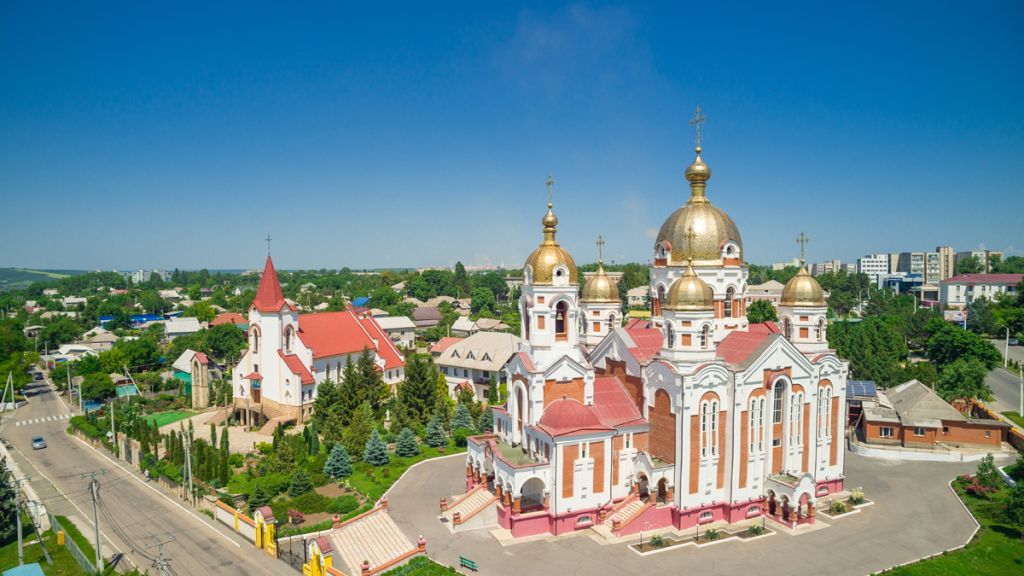
Cathedral of the Archangel Michael
The Cathedral of the Archangel Michael occupies a prominent position in the central part of Rybnitsa, its sheer size making an immediate and lasting impression on all who encounter it. The cathedral’s architecture clearly showcases a multi-tiered structure, embodying the finest traditions of Russian temple design throughout its impressive form. On the third tier of the bell tower hangs the large “Blagovest” bell, surrounded by ten additional bells, the smallest of which weighs 4 kg — together creating a magnificent peal that resonates throughout the city. Recognized today as both an architectural monument and one of Rybnitsa’s defining “visiting cards,” the cathedral stands as a source of considerable civic pride.
The site’s religious history stretches back to 1802, when donations from local parishioners funded the construction of a new stone church dedicated to the Archangel Michael, replacing an older, dilapidated 17th-century adobe church that had served the community previously. Eighty years later, a bell tower was added to the temple, and four years after that, the interior received its first painted decoration. By 1896, the church had been further enriched with a new iconostasis and altar, both beautifully painted — yet despite these improvements, services at the temple ceased entirely in the early 1930s amid the broader anti-religious campaigns of the Soviet era.
The path toward the cathedral’s modern revival began in November 1990, when the foundation stone for a new cathedral dedicated to Archangel Michael was laid in Rybnitsa, designed by architect P.G. Yablonsky. The first service took place on November 21, 1991, held in the lower church dedicated to the Monk Markellus, abbot of the monastery of the Unsleeping Ones — though full construction of the grand cathedral itself would not be completed until 2006, marking the culmination of a project spanning nearly two decades.
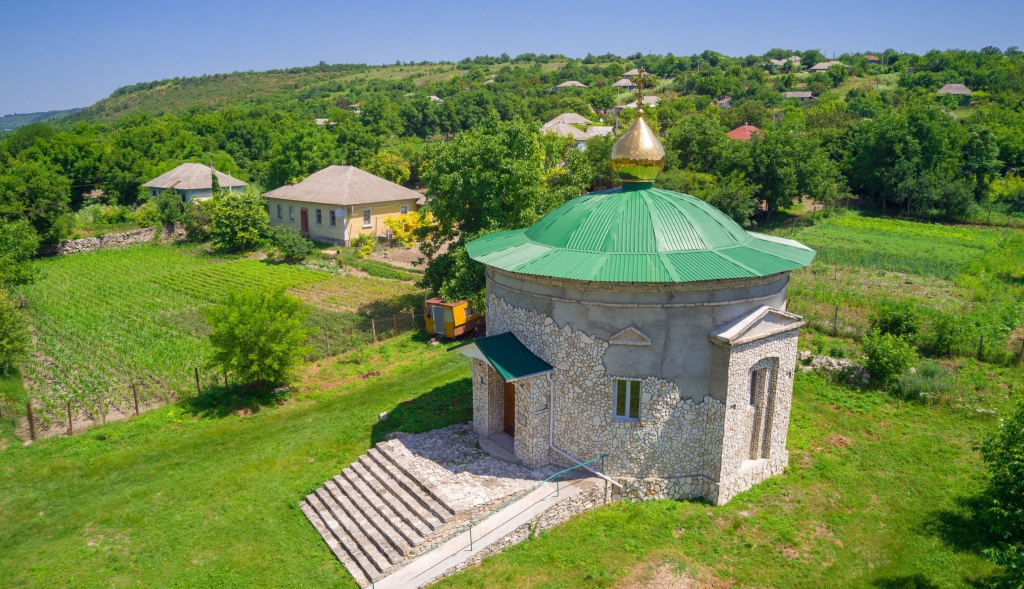
Church of St. Paraskeva Serbian, Zozulyany Village
As with many other settlements throughout Pridnestrovie, the very first church built in Zozulyany in 1709 was constructed of wood, reflecting the building practices typical of that era. This original wooden structure was eventually replaced in 1826 by a stone church, funded jointly by a local landowner and the community’s parishioners, who together invested in creating a more permanent place of worship for their village.
The church’s history followed a familiar trajectory during the Soviet period — closed during the 1930s amid widespread anti-religious campaigns, the building would remain inactive for decades until restoration efforts finally began in 2009. The Church of St. Paraskeva of Serbia holds particular architectural significance as one of the relatively few rotunda-type churches in the region — meaning the building is round in its architectural design, a distinctive feature that sets it apart from the more typical rectangular church layouts found throughout Pridnestrovie.
In 1895, a vestibule featuring elegant carved columns was added to the temple, and remnants of this decorative addition can still be observed by visitors today, offering a glimpse into the church’s architectural evolution across more than two centuries of history.