

Rashkov
Tourist Route Through Rashkov
Step back in time on this compact yet deeply enriching tourist route through Rashkov — the oldest rural settlement in Transnistria, with a history dating back to 1402. Covering just 2.15 km with 6 memorable stops, plan to spend around 1–1.5 hours to fully soak in the atmosphere, history and natural beauty this extraordinary village has to offer.
Rashkov is a place where nature and heritage intertwine seamlessly. Dramatic cliffs, the flowing Dniester River and ancient streets create a backdrop unlike anywhere else in the region.
The route opens at the Church of the Holy Trinity — a beautiful Orthodox landmark standing just 250 meters from the starting point, representing the deep spiritual roots of this ancient village.
A short 660-meter walk brings you to the St. Cajetan Catholic Church — a rare and remarkable testament to the multicultural history of Rashkov, where different faiths once coexisted peacefully side by side.
At 530 meters away rises Chervona (Red) Rock — one of the most striking natural landmarks in the area, offering dramatic views and a vivid reminder of the raw power of the region’s geology.
Just 260 meters further lies Panska Krynitsa — a legendary natural spring shrouded in local folklore, where fresh water has drawn visitors and villagers alike for generations.
The Ruins of the Synagogue on Bazarnaya Street, 450 meters along the route, stand as a poignant reminder of the once-thriving Jewish community that shaped Rashkov’s rich multicultural identity.
The journey concludes at the Ruins of the Intercession Church on Pokrovskaya Street — a hauntingly beautiful remnant of the past that closes this historical route on a deeply reflective note.
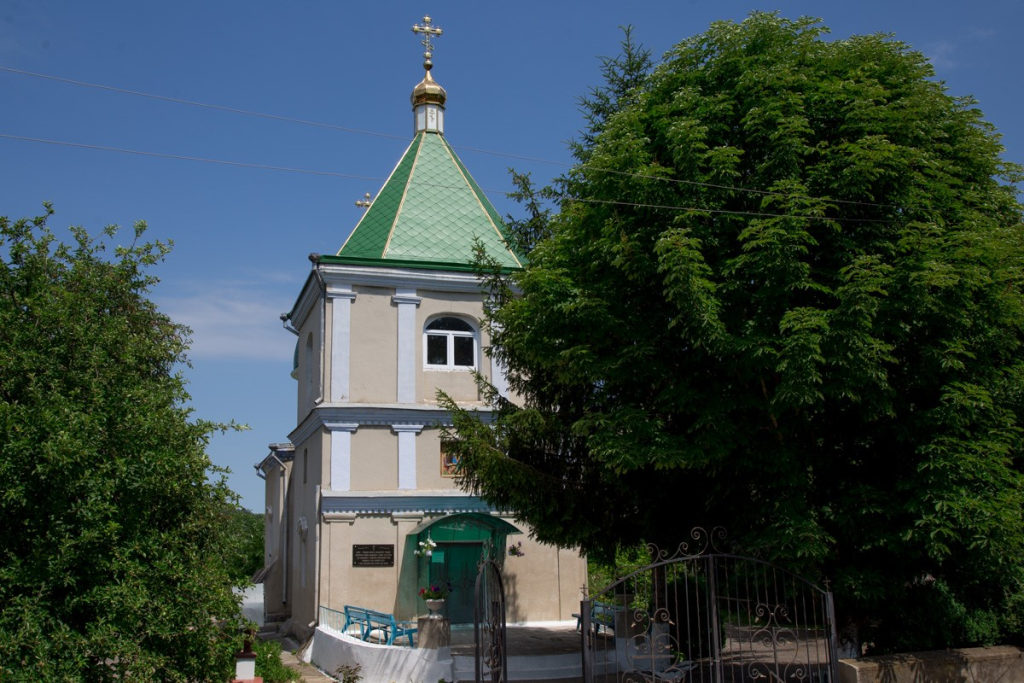
Church of the Holy Trinity, Rashkov Village
Nestled in one of the most authentic and picturesque villages in all of Pridnestrovie, the Church of the Holy Trinity captivates pilgrims and visitors alike with its unusual architectural design and the rich historical events surrounding its founding. Built in 1779, this small and intimate church has earned official recognition as an architectural monument of republican significance, and continues to actively serve the faithful of Rashkov to this day.
What truly sets this church apart is the presence of a remarkable 19th-century icon of the Spas Nerukotvornyi — the Image of Christ Not Made by Human Hands. Believers have long attributed miraculous power to this sacred icon, and it remains one of the most deeply venerated treasures in the entire region, drawing the faithful from far beyond the village itself.
For more information, visitors may contact Archpriest Dimitri Zamor.
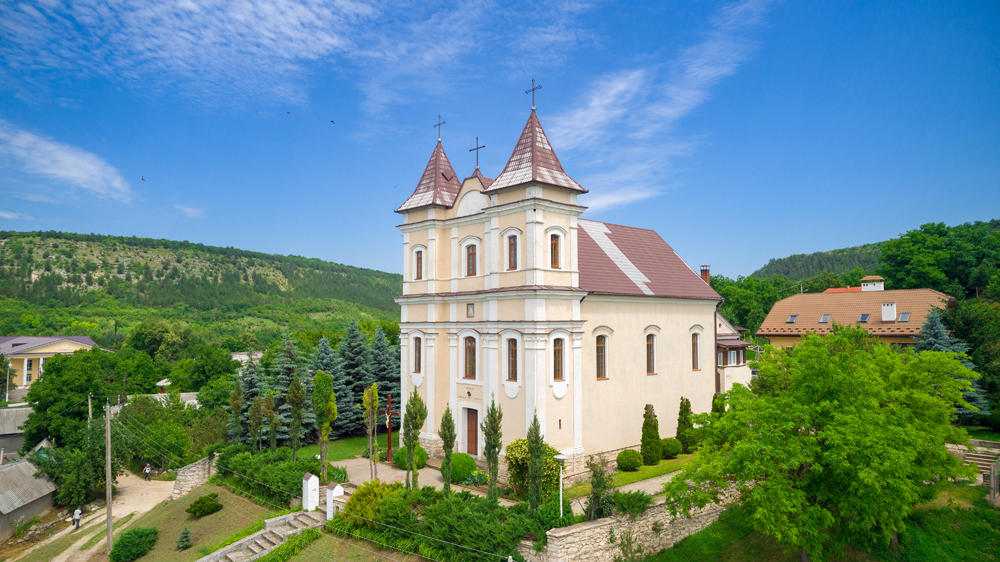
St. Cajetan Catholic Church
St. Cajetan Catholic Church holds a unique distinction as the oldest Catholic church in all of Pridnestrovie, remarkably preserved in nearly its original form to this day. The decision to build the church dates back to 1749, when Prince Jozef Lubomirski made the commitment to its construction — a decision documented in the historic manuscript known as the “Act of Foundation of the Church in Rashkovo.” Construction itself was completed in 1786, with the church consecrated five years later in honor of St. Cajetan.
Architecturally, the building stands as a classic example of 18th-century Polish Catholic church design, incorporating elegant Baroque elements that reflect the artistic sensibilities of its era. The church’s history took a difficult turn during the Soviet period, when it was closed by local authorities and repurposed first as a granary, then later as a joiner’s workshop — a fate shared by many religious buildings during that time.
It wasn’t until 1990 that the church was finally returned to the Catholic community. Since then, services have once again filled the building with the sounds of the pipe organ, restoring this remarkable piece of 18th-century heritage to its original sacred purpose.
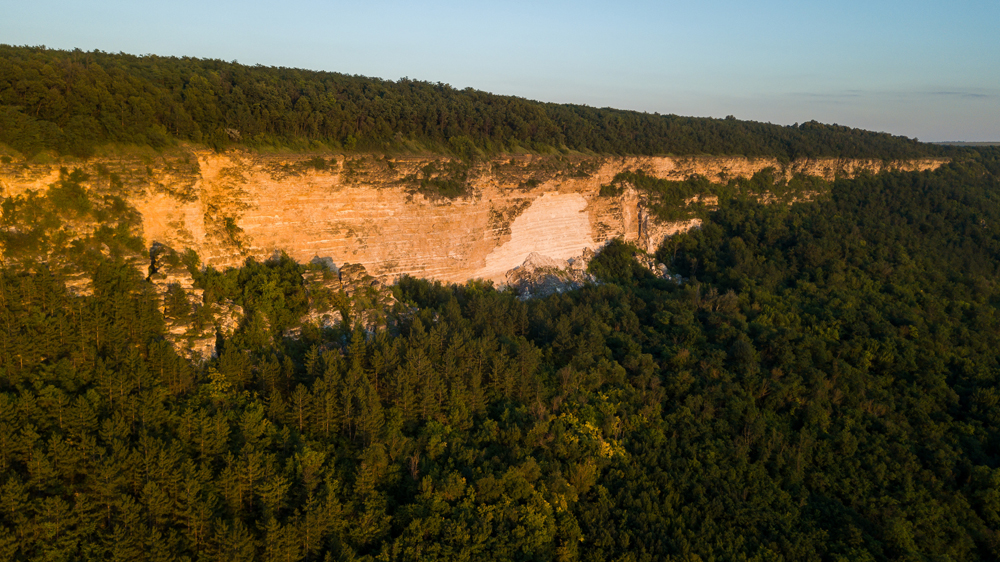
Chervona (Red) Rock
Rising dramatically in the south-eastern part of Rashkov village, Chervona (Red) Rock stands as one of the most impressive natural monuments in the entire region — stretching an impressive 500 meters in length and towering 50 meters high. This striking limestone formation owes its evocative name to a remarkable natural phenomenon: as the sun sets each evening, the rock’s limestone slopes transform, glowing with a vivid red hue that gives the formation its unmistakable and unforgettable appearance.

Panska Krynitsa
Tucked away near the ruins of the old Jewish synagogue, Panska Krynitsa — meaning “The Spring of the Mistress” — stands as a cultural heritage site dating back to the middle of the 17th century, its name carrying with it one of the most poignant love stories in the history of Rashkov.
The spring’s name is forever linked to Ruksanda, daughter of the Moldavian Principality’s Hospodar Vasily Lupu. In 1652, she married Timofey, son of the legendary Ukrainian Hetman Bogdan Khmelnytsky. Tragedy struck just a year later, when Timofey was fatally wounded during the siege of Suchava Fortress. In the aftermath of his son’s death, Bogdan Khmelnytsky gifted the village of Rashkov to the grieving Ruksanda, who would go on to live here for thirteen long years, carrying her sorrow with her.
According to local legend, the spring that came to bear her name — “Panska Krynitsa” — emerged from the very tears Ruksanda shed while mourning the untimely loss of her beloved husband, a story that has been passed down through generations and continues to give this natural spring its deeply romantic and melancholic significance.

Ruins of the Synagogue
Constructed around 1749 using funds collected through the so-called “basket tax” — a specialized form of taxation of the era — this synagogue once stood at the very heart of Rashkov’s spiritual and communal life. During this period, the village held particular significance as one of the centers of world Hasidism, a religious movement within Judaism that swept through the Jewish population of the Polish-Lithuanian Commonwealth and surrounding territories during the first half of the 18th century.
For generations, the synagogue served as the spiritual anchor for Rashkov’s substantial and vibrant Jewish community. Tragically, the building’s fate changed dramatically in the early 1930s, when the Soviet anti-religious campaign led to the destruction of its vaults. Today, only the stone walls and a handful of interior architectural elements remain standing from what was once a truly majestic structure — a haunting reminder of the rich Jewish heritage that once flourished in this corner of Pridnestrovie.

Ruins of the Intercession Church
Built in 1740, the Intercession Church carries a fascinating religious history within its weathered walls — originally established as a Greek Catholic (Uniate) church before later transitioning to Orthodox worship, reflecting the shifting religious currents that shaped this region over the centuries.
Like so many other religious buildings across Pridnestrovie, the church suffered destruction during the Soviet years, falling victim to the era’s widespread anti-religious campaigns. Today, only the church’s walls and a portion of its original shingle roof have managed to survive, standing as a quiet and somewhat melancholic testament to a place of worship that once served the faithful of Rashkov for two centuries.