 Skip to content
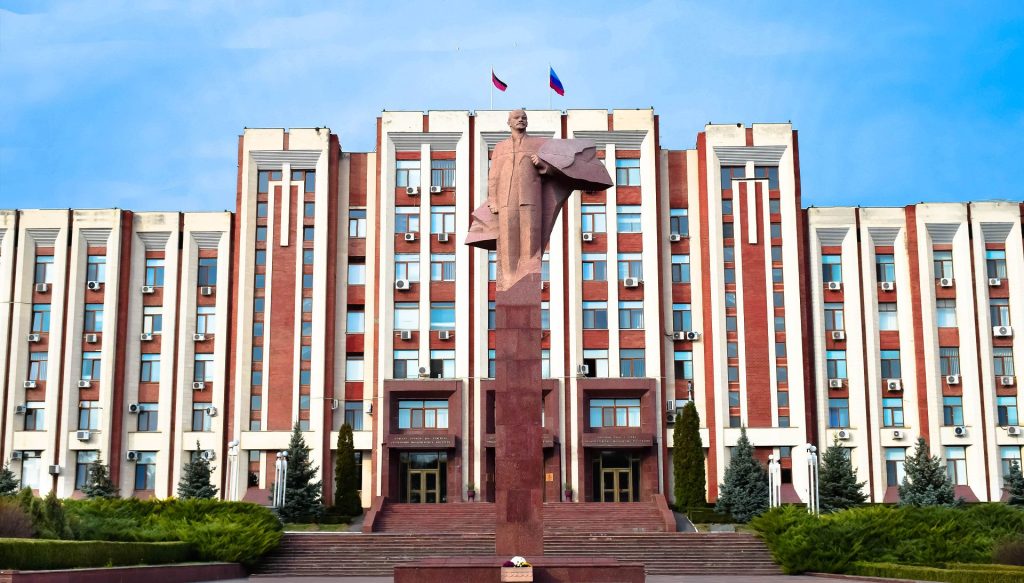
The Pridnestrovian Moldavian Republic is a self-proclaimed state not officially recognized by a single UN member country, Russia included. For a tourist, that status sounds alarming — in practice it comes down to a handful of concrete, entirely predictable specifics.
No visa needed — but you do need a migration card. Because the PMR isn’t recognized as a separate state, there’s no such thing as an ordinary visa for entry. Instead, the checkpoint issues a migration card — a paper document stating your length of stay, usually up to 45 days. Formally it isn’t a visa, but it performs the entry-control function, and you need to keep it until you leave.
Legally, it’s Moldovan territory. Under international law, and in Moldova’s own view, Transnistria remains part of Moldovan territory with special status. In practice, the region runs under its own laws, with its own currency, police and government bodies — but formally, entering the PMR counts as entering Moldovan territory, not a separate country, which simplifies a number of border questions for foreigners.
Is it actually safe? Unrecognized-state status doesn’t equal a conflict zone — there’s been no active fighting here for over 30 years, and the region lives an ordinary, fairly orderly life. For a detailed breakdown of specific precautions, see our separate article, Is Transnistria Safe to Visit? — short version: ordinary tourist caution applies here just as it would anywhere else.
Its own currency and banking system. One of the most tangible practical effects of the status: the Transnistrian ruble, which has no use outside the region, and foreign bank cards, which mostly don’t work due to international sanctions. This isn’t an ideological issue, it’s a concrete fact to account for when planning your trip budget.
Phone and internet. Mobile service and internet run through local operators — a SIM card from another country may not catch a signal, or will roam at high cost. Wi-Fi in Tiraspol’s hotels and cafes is generally reliable, but don’t count on your usual carrier.
What it means for your documents and stamps. Crossing the PMR border leaves no separate stamp in your passport — the migration card isn’t a visa document and isn’t recorded as formal entry into another country. For most tourists this simplifies further travel: officially, you’re considered to have been in Moldova the whole time.
Insurance and emergencies. An ordinary travel policy taken out for a Moldova trip usually covers Transnistria too, since legally it’s the same territory — but it’s worth confirming that specifically with your insurer beforehand, since not every policy handles this kind of border case the same way. Emergency medical care in Tiraspol and Bendery is available on standard terms, but for serious cases, evacuation to Chisinau remains the more reliable option.
Repeat visits. Travelers planning to return to the region multiple times need to fill out a new migration card at every crossing — there’s no standing or multi-entry permit for foreigners. It’s not a hassle, but worth factoring in when planning frequent trips out of Chisinau.
The main practical takeaway. Unrecognized-state status affects a tourist in three concrete ways — a migration card instead of a visa, cash Transnistrian rubles instead of cards, and a local SIM instead of your usual roaming. Everything else is ordinary travel logistics, no different from visiting any other country in the region.
Also read: Is Transnistria Safe to Visit? · The Transnistrian Ruble · Entry Rules & Migration Card